
Madonna and Child with an Angel — History & Facts
In the crowded artistic ferment of Florence around 1465, a young Sandro Botticelli painted Madonna and Child with an Angel—one of his earliest known works, created while he was still under the influence of his teacher, Filippo Lippi. This painting stands at the threshold of Botticelli’s career, capturing a moment when the future master was absorbing and transforming the lessons of his predecessors. Scholars note that several versions of this tender grouping exist, attesting to its popularity in Florentine households and workshops.
The survival of this early piece offers a rare glimpse into Botticelli’s formative years, before the poetic line and idealized beauty of his later masterpieces. The scene Botticelli selects is intimate: the Virgin Mary, absorbed in gentle contemplation, cradles the Christ Child while an angel supports the infant from behind. The Child’s hand reaches up, perhaps in blessing or playful curiosity, while Mary’s eyes lower in quiet devotion. The angel, rendered with youthful delicacy, looks out, inviting the viewer into this sacred moment.
Botticelli’s use of soft contours and luminous faces echoes Lippi’s approach, but already hints at the grace and linear elegance that would define his own style. Unlike the more formal, hieratic Madonnas of Fra Angelico, Botticelli’s figures are approachable, their humanity as central as their divinity. The precise origins of Madonna and Child with an Angel remain uncertain; no contemporary record of its commission survives, and the original patron is unknown. Works like this were often intended for private devotion, reflecting both the piety and the taste of Florence’s merchant elite.
Over the centuries, the painting’s attribution has shifted, with earlier scholars sometimes crediting Lippi himself, but consensus now recognizes Botticelli’s hand. Today, the painting is cherished as a key to understanding the artist’s early development, bridging the world of his teacher and the singular vision he would soon bring to the Florentine Renaissance.
More Artworks by Sandro Botticelli
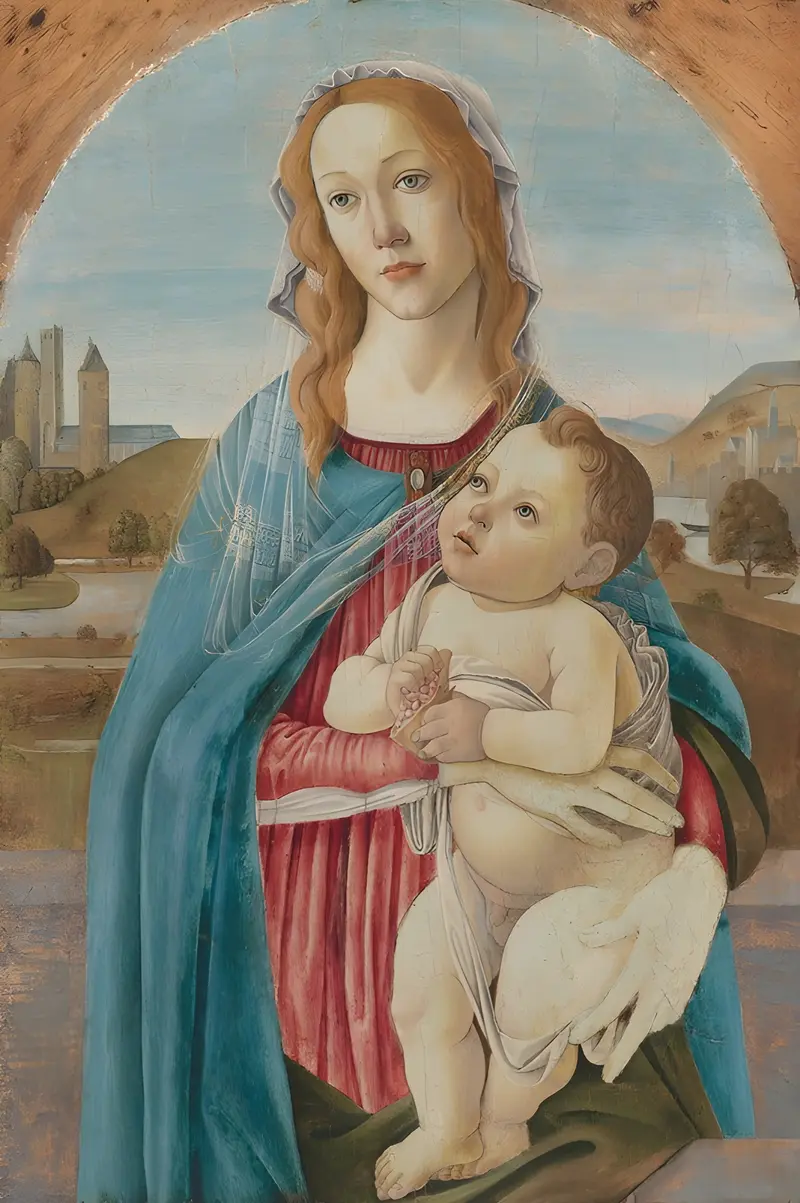
Virgin and Child
Sandro Botticelli
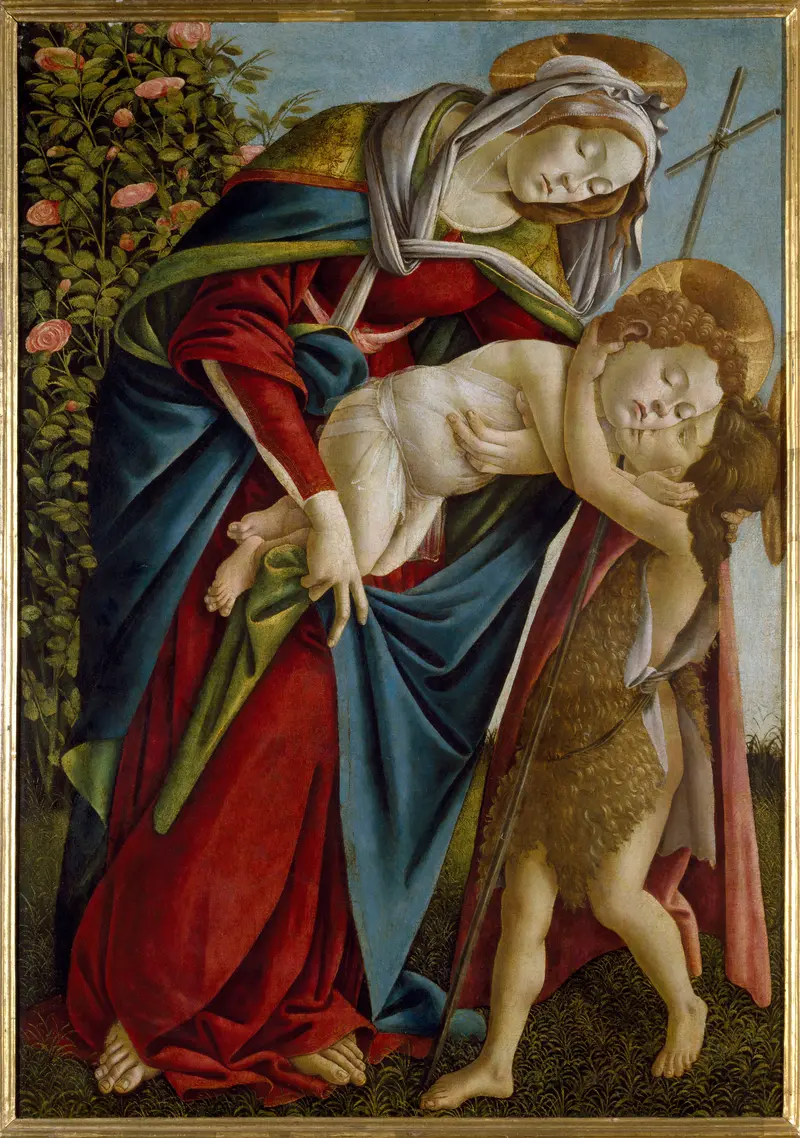
Madonna and Child and the Young St John the Baptist
Sandro Botticelli
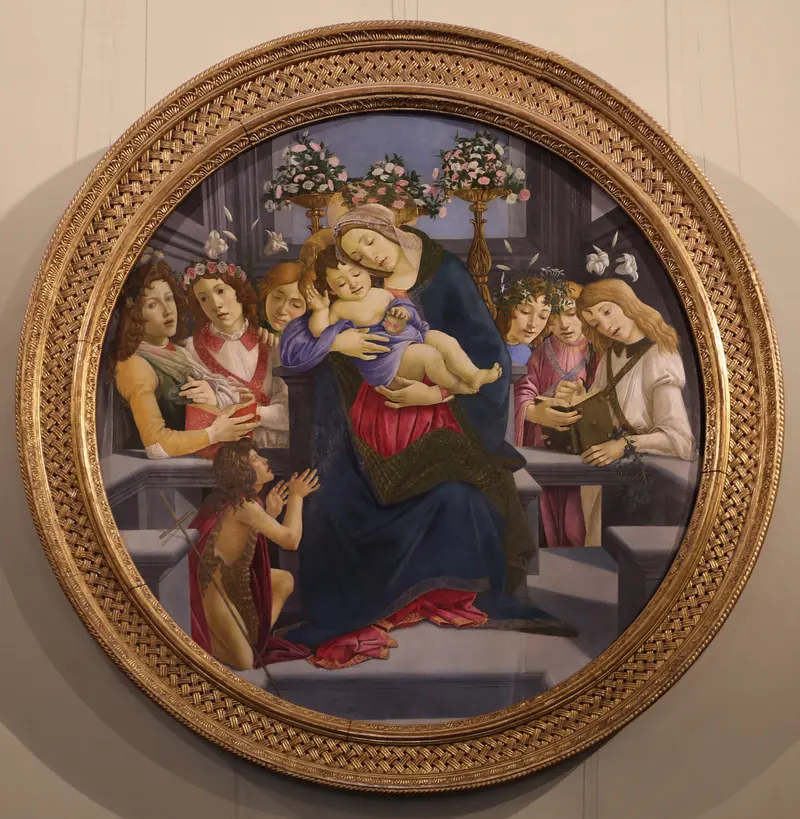
Madonna and Child with six angels and Saint John the Baptist as Child
Sandro Botticelli
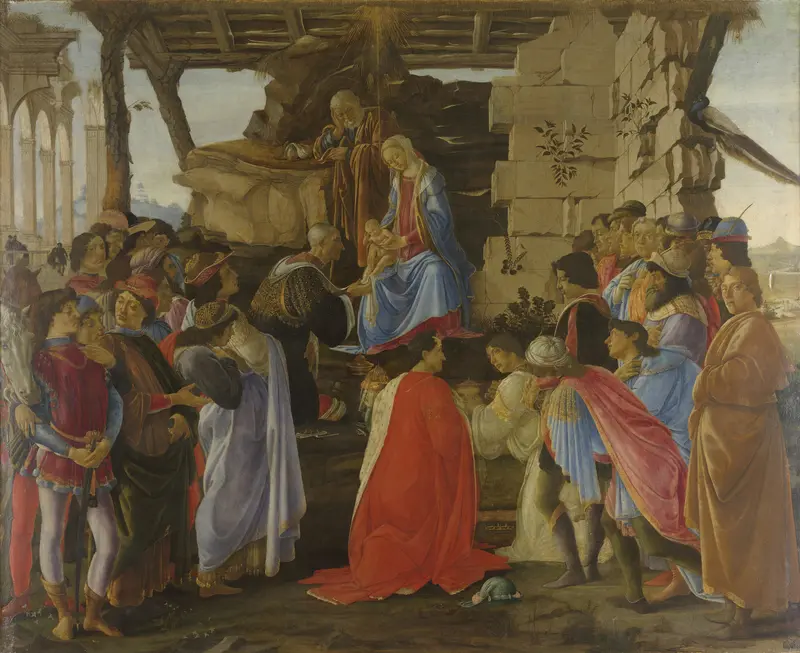
Adoration of the Magi
Sandro Botticelli

Virgin and Child with the Young Saint John the Baptist
Sandro Botticelli
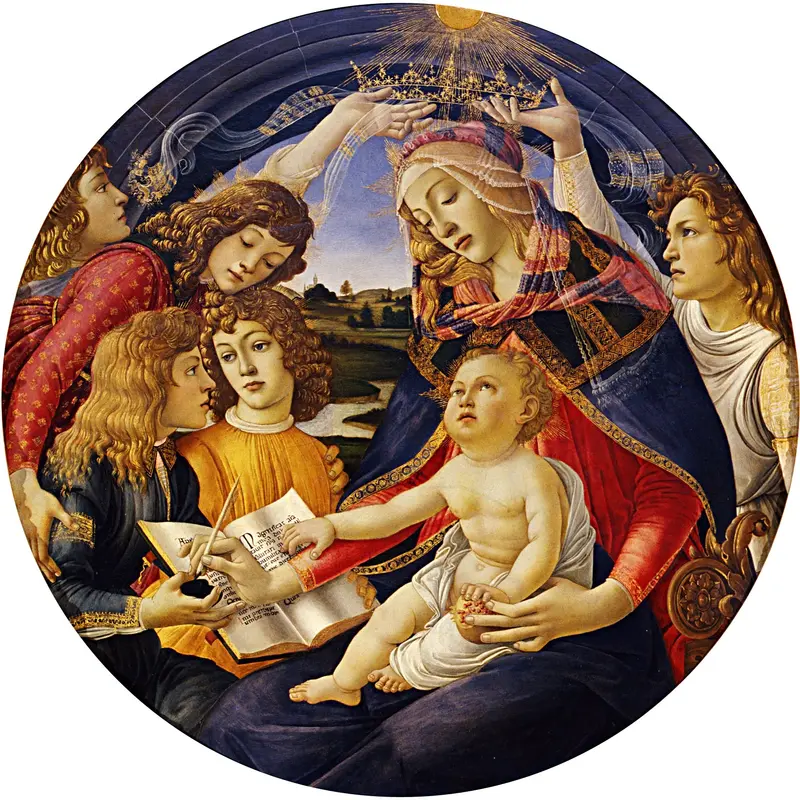
Madonna of the Magnificat
Sandro Botticelli
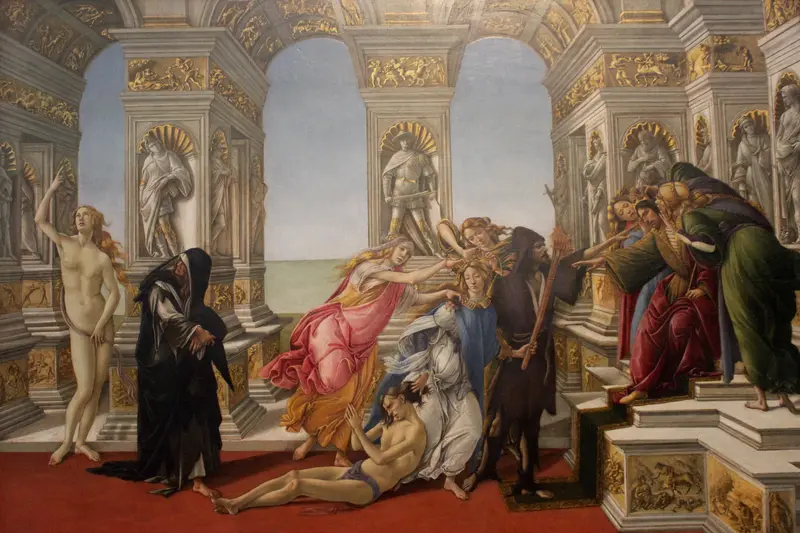
Calumny of Apelles
Sandro Botticelli
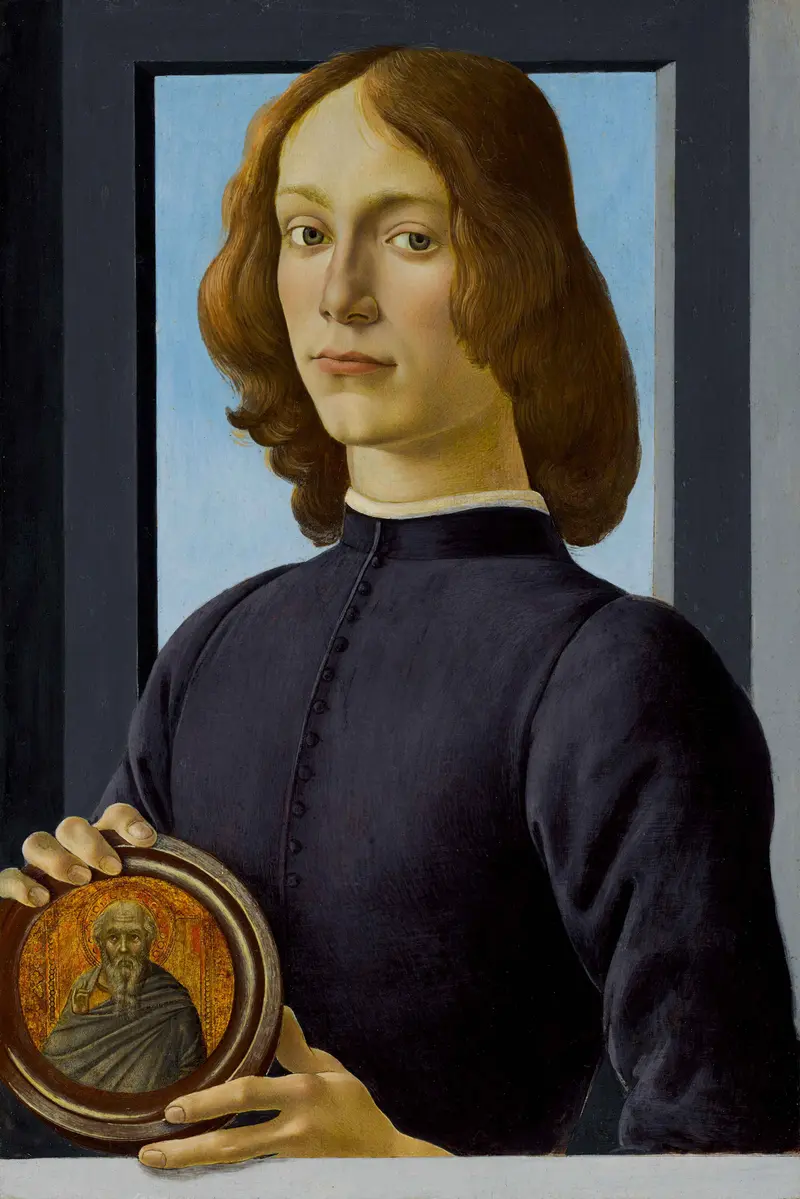
Portrait of a young man holding a roundel
Sandro Botticelli

The Trinity with Saint Mary Magdalene and Saint John the Baptist, the Archangel Raphael and Tobias
Sandro Botticelli
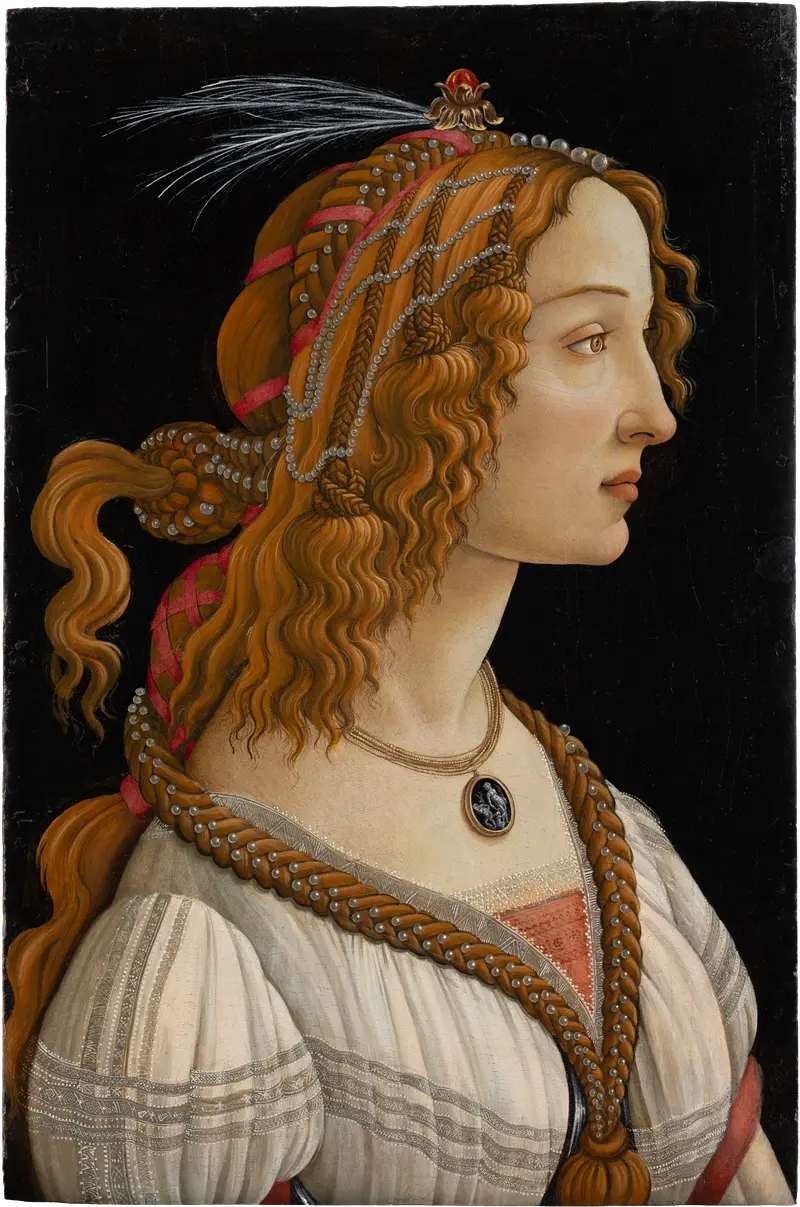
Idealized Portrait of a Lady (Portrait of Simonetta Vespucci as Nymph)
Sandro Botticelli





