Magnolien — History & Facts
Can beauty exist without sorrow? Oskar Laske's Magnolien invites us to ponder this question as it encapsulates an exquisite tranquility intertwined with an underlying sense of fragility. Look to the center of the canvas, where the magnolia blossoms unfurl in gentle perfection, their blush petals catching the soft light. The painter employs a delicate palette of whites and soft pinks, contrasting beautifully against the muted greens of the leaves. Notice how the brushstrokes blend seamlessly, creating a sense of both realism and ethereality, as if the flowers are suspended between this world and another.
The composition feels almost meditative, drawing the eye into the heart of the arrangement. Yet, amidst this serenity lies a profound tension. The contrast between the blooming petals and the shadowy backdrop suggests the fleeting nature of beauty—each blossom is a reminder of life's impermanence. The subtle play of light hints at the bittersweet passage of time, accentuating the fragility of the moment.
This duality evokes a quiet contemplation of joy and melancholy, capturing a fleeting instant that resonates deeply with our own experiences of love and loss. In 1947, Oskar Laske painted Magnolien in post-war Europe, a time marked by recovery and reflection. Having experienced the turmoil of the Second World War, Laske sought solace in nature's beauty, channeling his emotions into his art. This painting represents not only his personal healing journey but also a broader cultural desire to reconnect with beauty and peace in a world still grappling with the echoes of conflict.
More Artworks by Oskar Laske
Browse all →
Faschingsumzug am Stock im Eisen Platz
Oskar Laske

Schönbrunn (Winter)
Oskar Laske
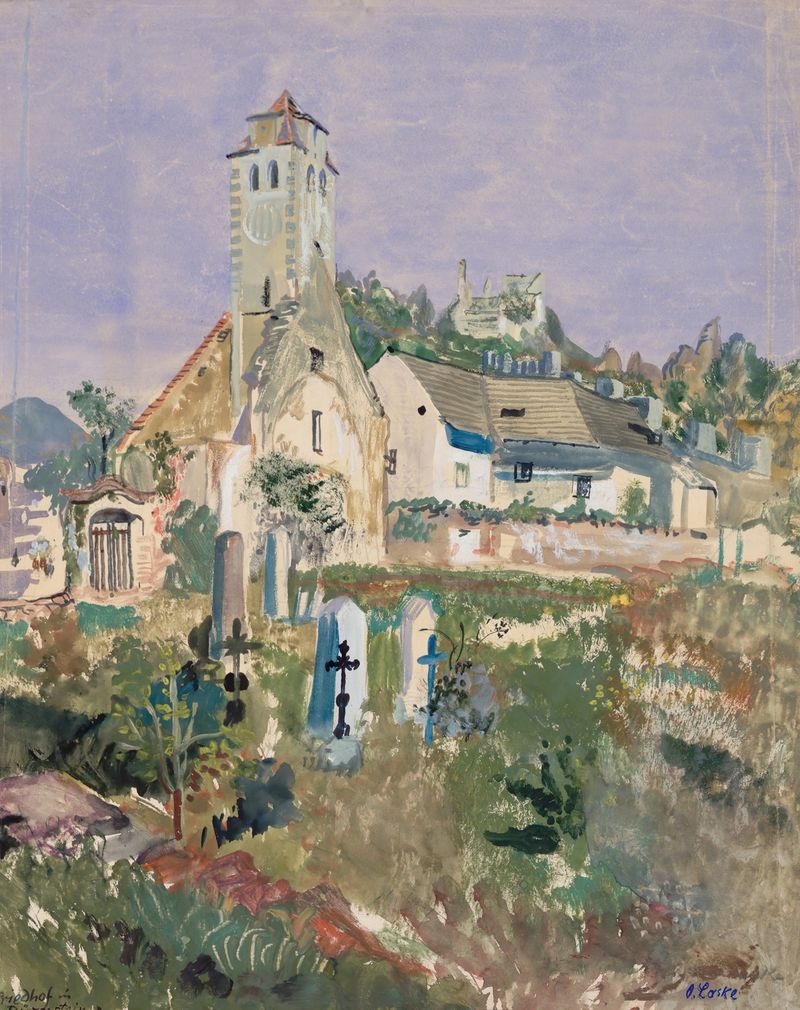
Friedhof in Dürnstein
Oskar Laske

Pratermotiv an der alten Donau
Oskar Laske

Frühjahrsnebel in Niederösterreich
Oskar Laske

Begräbnis des Wiener Bürgermeisters Dr. Karl Lueger
Oskar Laske

Maria Theresien-Denkmal mit Blick gegen das Burgtor
Oskar Laske
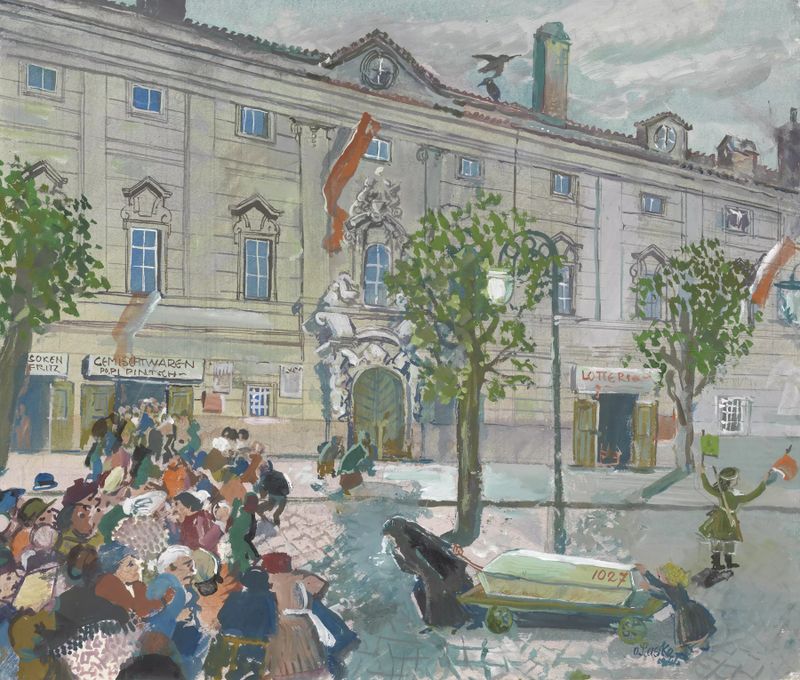
Wiener Straßenbild vom Mai 1945
Oskar Laske

Winterlandschaft in Pressbaum
Oskar Laske

Ansicht von Positano
Oskar Laske