
Maid Watering Flowers — History & Facts
What draws the eye first in Maid Watering Flowers is not the flowers themselves, but the careful choreography of the maid’s gesture—a moment suspended between duty and quiet absorption. The painter, Theodoros Rallis, chooses to spotlight the young woman’s concentration, her body bent in a gentle arc, arm outstretched with the watering can tilted just so. The turquoise of her sleeves and apron lining glows against the shadowed backdrop, guiding the viewer’s gaze from her delicate cap down to the pots at her feet.
The light, soft but directional, picks out the crisp folds of her dress and the gleam on the watering can, while the rest of the room recedes into a dusky calm. This is a painting that asks us to linger on the rituals of care, the small acts that animate a quiet interior. Painted in 1876, this work belongs to a world where scenes of domestic service and everyday labor were becoming a favored subject for artists across Europe. The late nineteenth century saw a growing appetite for genre scenes—intimate glimpses of ordinary life—often commissioned by a rising bourgeoisie eager to celebrate both comfort and diligence.
Theodoros Rallis was part of this movement, and while little is recorded about the specific journey of this painting, its presence in a modern collection (as documented by bonhams.com) connects it to a broader history of appreciation for such moments. The image invites us to reflect on the quiet dignity of work and the beauty found in attentive routine; it rewards a second look, where every detail is a clue to the world it came from.
More Artworks by Theodoros Ralli

The Sleeping Concubine
Theodoros Ralli
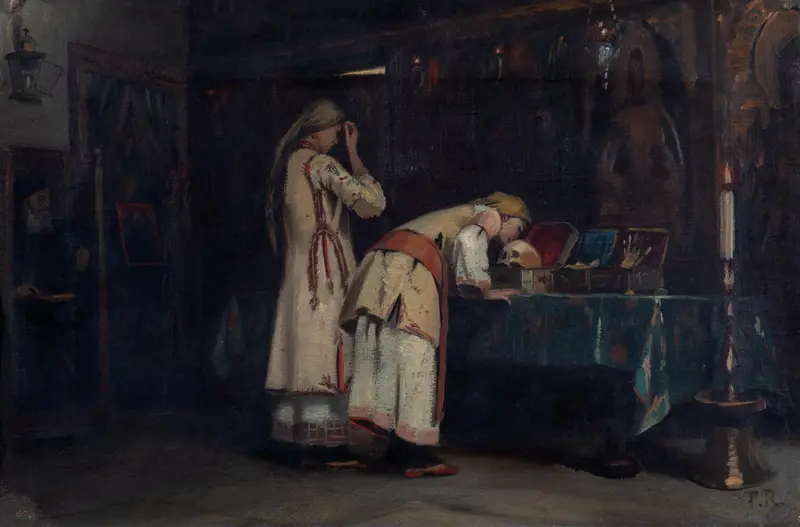
Holy Relics
Theodoros Ralli
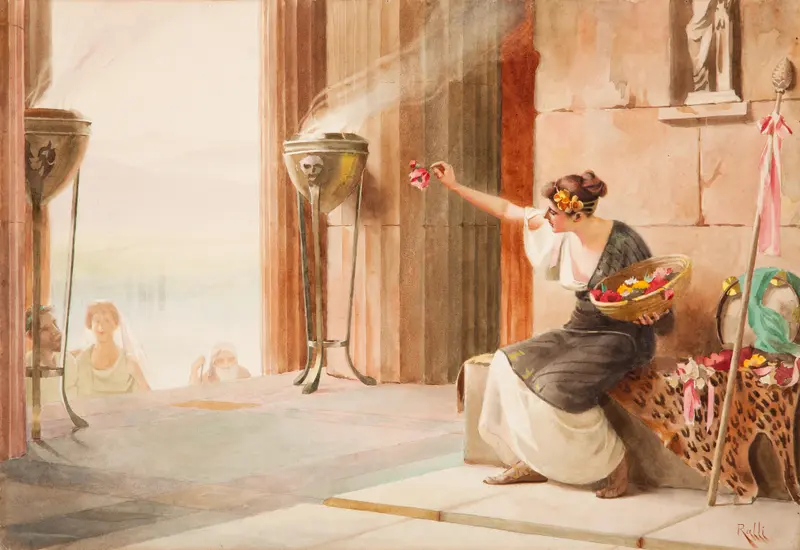
Flower Seller at the Parthenon
Theodoros Ralli
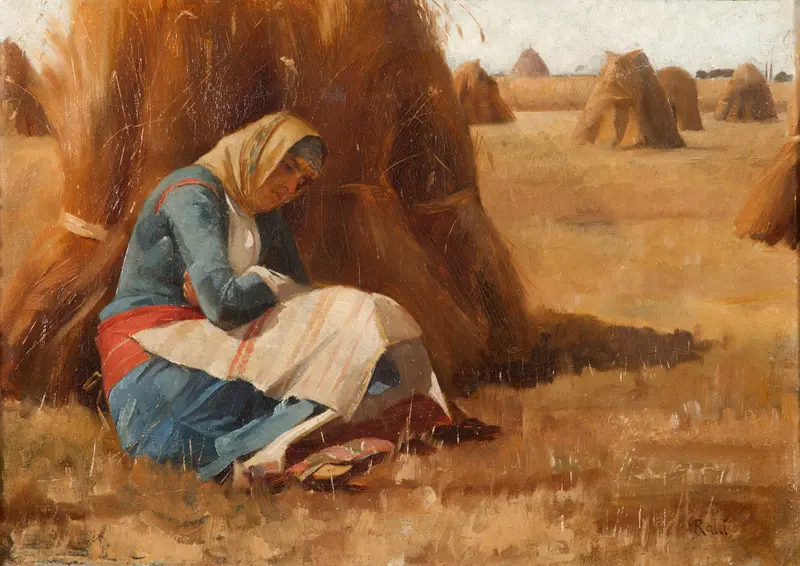
Resting by a Haystack
Theodoros Ralli
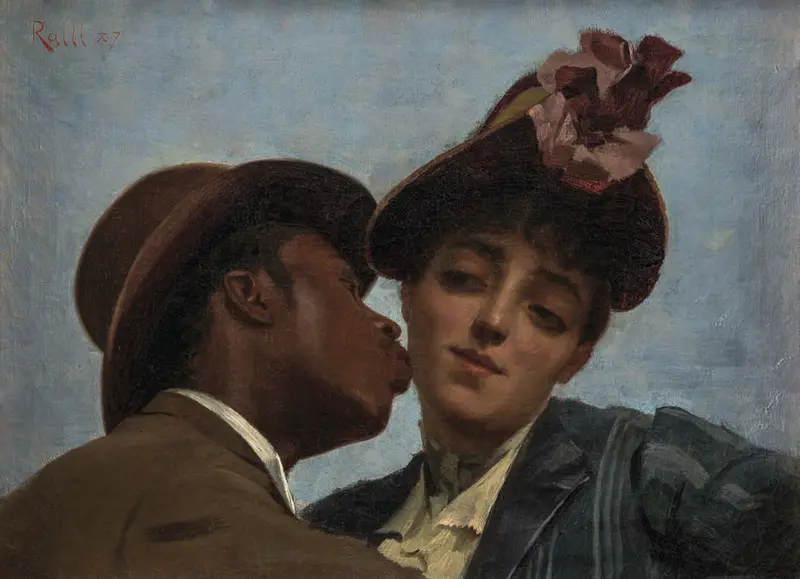
The Kiss (Ralli)
Theodoros Ralli
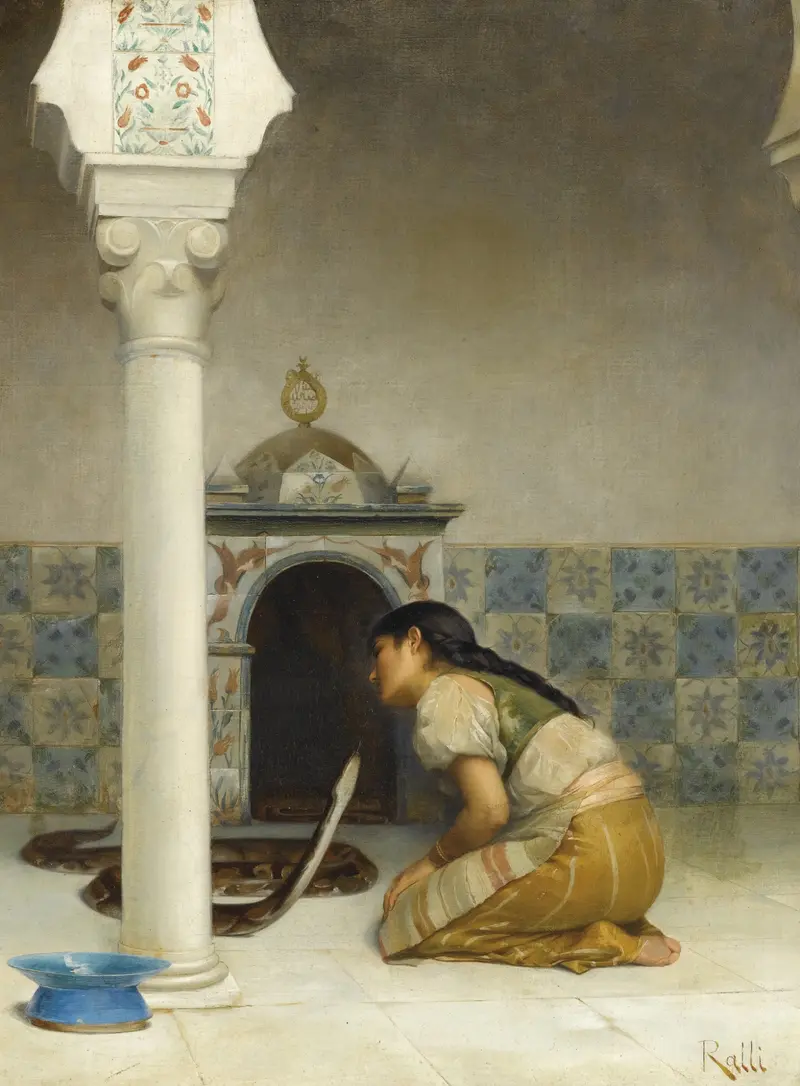
The Sacred Serpent
Theodoros Ralli
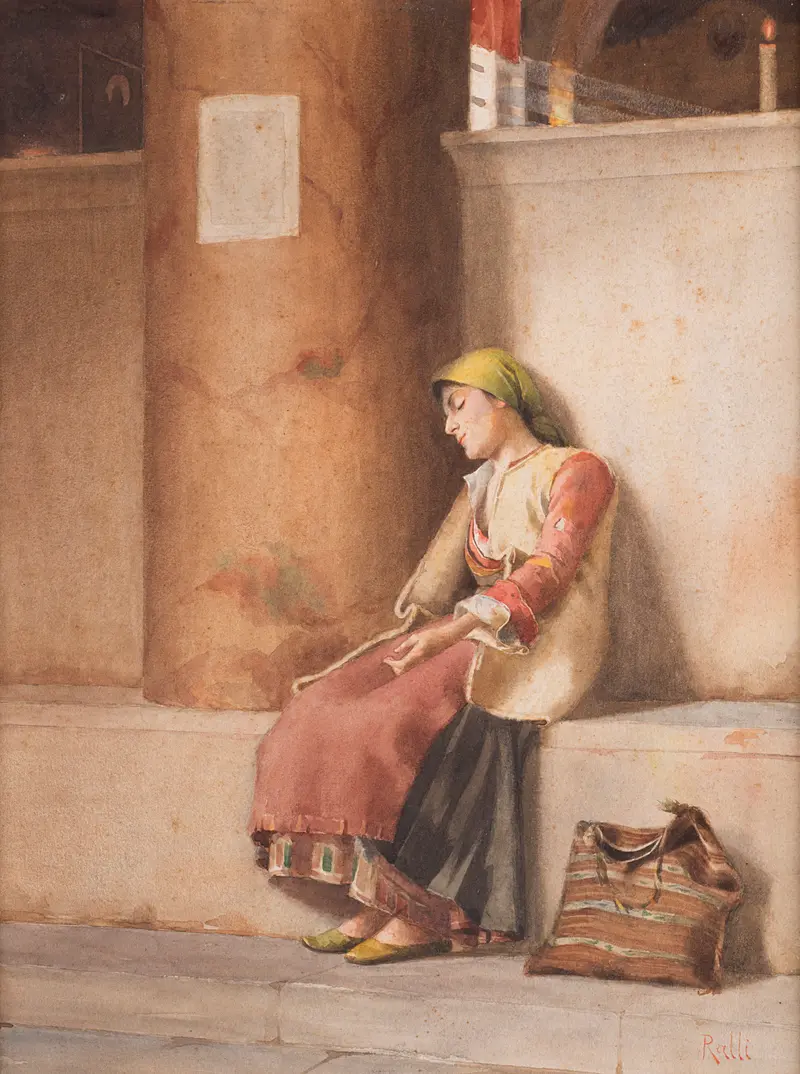
A Moment of Reflection
Theodoros Ralli
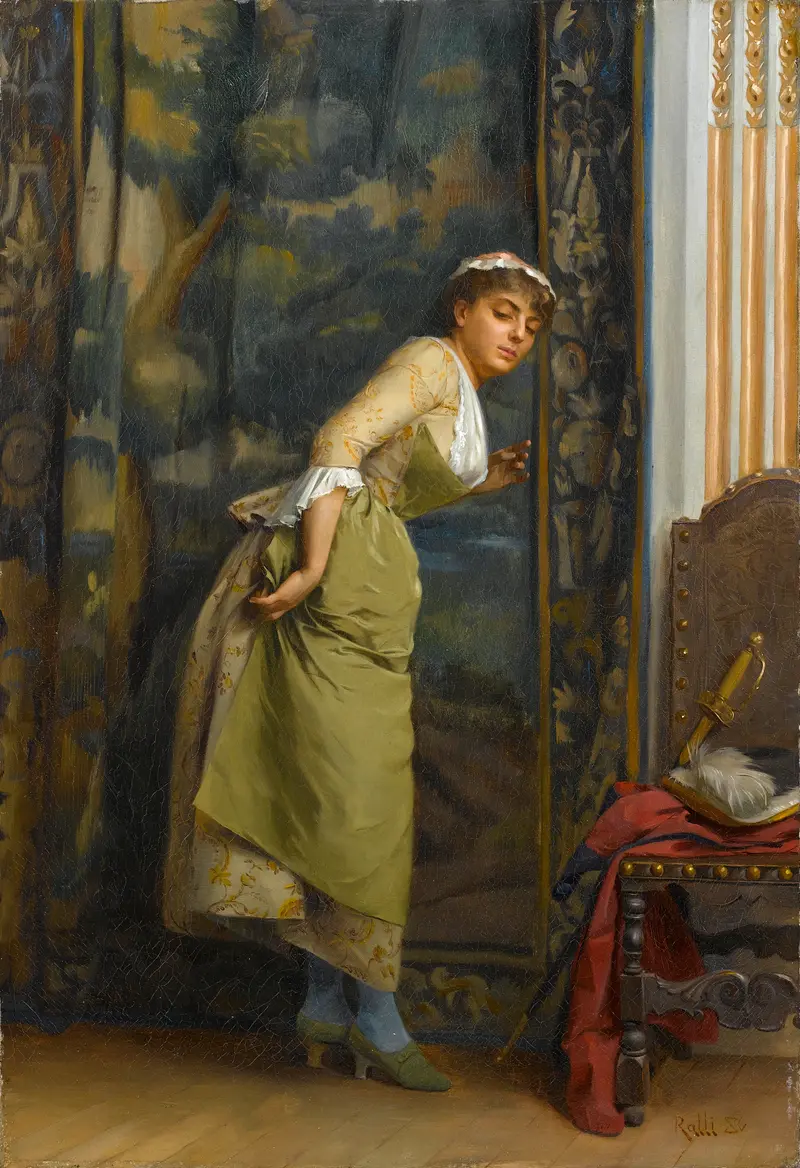
Eavesdropping (Ralli)
Theodoros Ralli
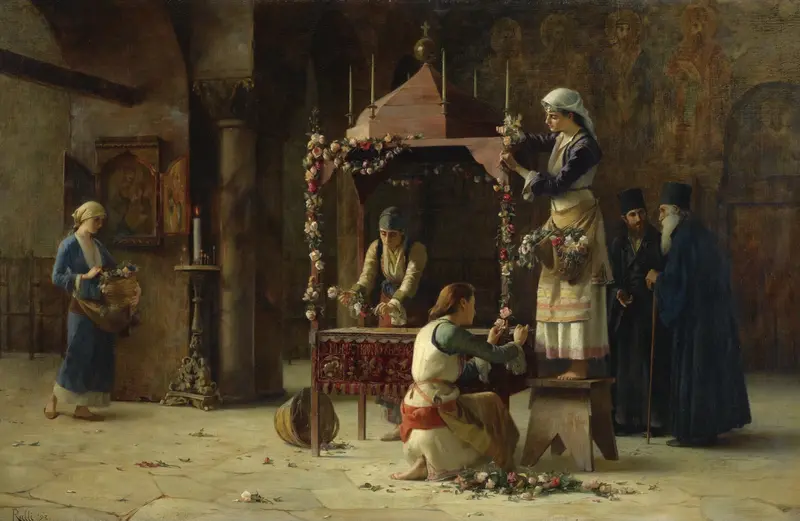
Holy Friday, Greece
Theodoros Ralli
A Moment's Rest
Theodoros Ralli
More Genre Scene Art

Banquet of the Officers of the St George Civic Guard
Frans Hals

Rembrandt and Saskia in the Scene of the Prodigal Son
Rembrandt van Rijn

Bal du moulin de la Galette
Pierre-Auguste Renoir

Quadrille at the Moulin Rouge
Henri de Toulouse-Lautrec

A Burial at Ornans
Gustave Courbet

When Will You Marry?
Paul Gauguin