
Man with a beer jug — History & Facts
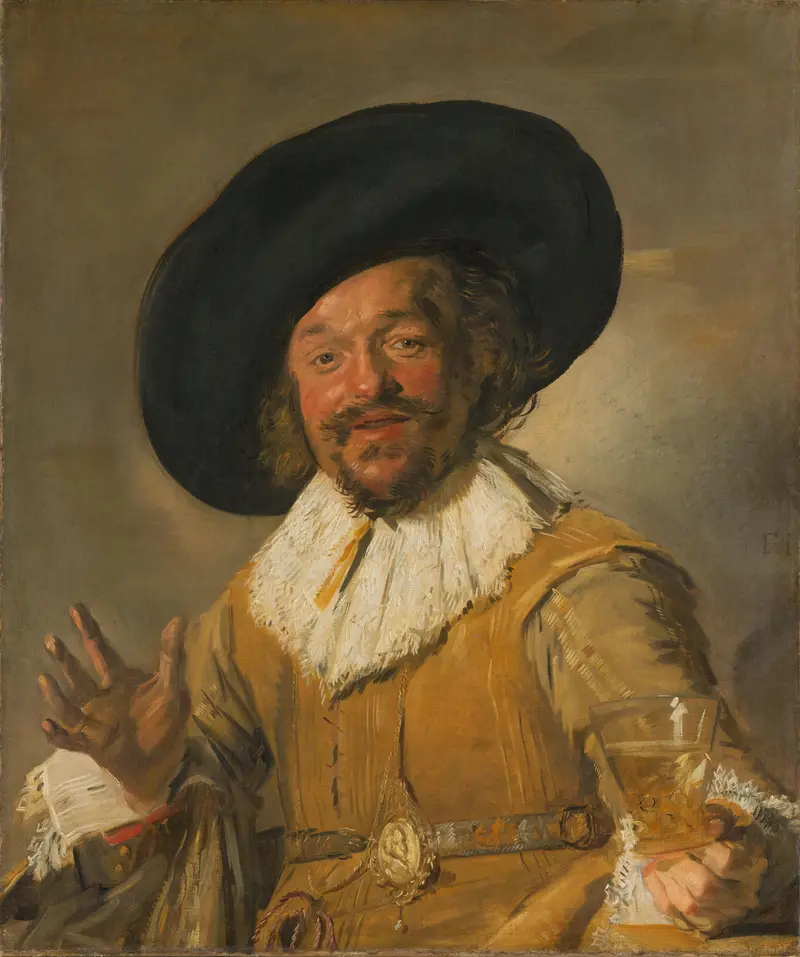
No one knows the name of the man who raises his jug in Man with a beer jug, but his face—ruddy, grinning, alive with mischief—has become one of the most recognizable in the world of Dutch tavern scenes. This painting is often cited as a prime example of Frans Hals’s uncanny ability to capture fleeting expressions, a skill that led 19th-century critics to call him the “magician of the brush.” Scholars still debate whether this work was a portrait of a real Haarlem innkeeper or a genre piece meant to embody the spirit of local merriment. What is certain is that the painting’s infectious energy has made it a touchstone for discussions about the honest, unvarnished humanity of the Dutch Golden Age. The man’s laughter is caught at its peak, his eyes squinting with delight as he hoists a pewter jug—likely filled with Haarlem’s famous beer—toward the viewer, as if inviting us to join his revelry.
Hals’s quick, visible brushwork animates the sitter’s rough beard, battered hat, and the gleam of the jug, creating a sense of immediacy and warmth. The loose handling of paint, particularly in the hands and face, breaks from the more polished style of contemporaries like Rembrandt, emphasizing the spontaneity of the moment over idealized beauty. The direct gaze and open gesture suggest camaraderie and a fleeting connection, qualities that have led some to compare this work to Jan Steen’s later tavern scenes, though Hals’s approach is more direct and less moralizing. The precise origins of Man with a beer jug remain uncertain, as is often the case with Frans Hals’s genre portraits.
No commission records survive, and the sitter’s identity has been lost to time, but the painting’s lively style places it firmly in the 1630s, when Hals was at the height of his powers in Haarlem. Over the centuries, the painting has passed through various private collections, sometimes misattributed to followers or imitators of Hals due to its informal subject. Today, it is celebrated as a quintessential example of the Dutch Baroque fascination with everyday life, and it continues to hang in a major European museum, where it draws visitors into the world of seventeenth-century Haarlem with every glance and raised jug.
More Artworks by Frans Hals

Banquet of the Officers of the St George Civic Guard
Frans Hals

Portrait of Jacob Pietersz Olycan (1596-1638)
Frans Hals
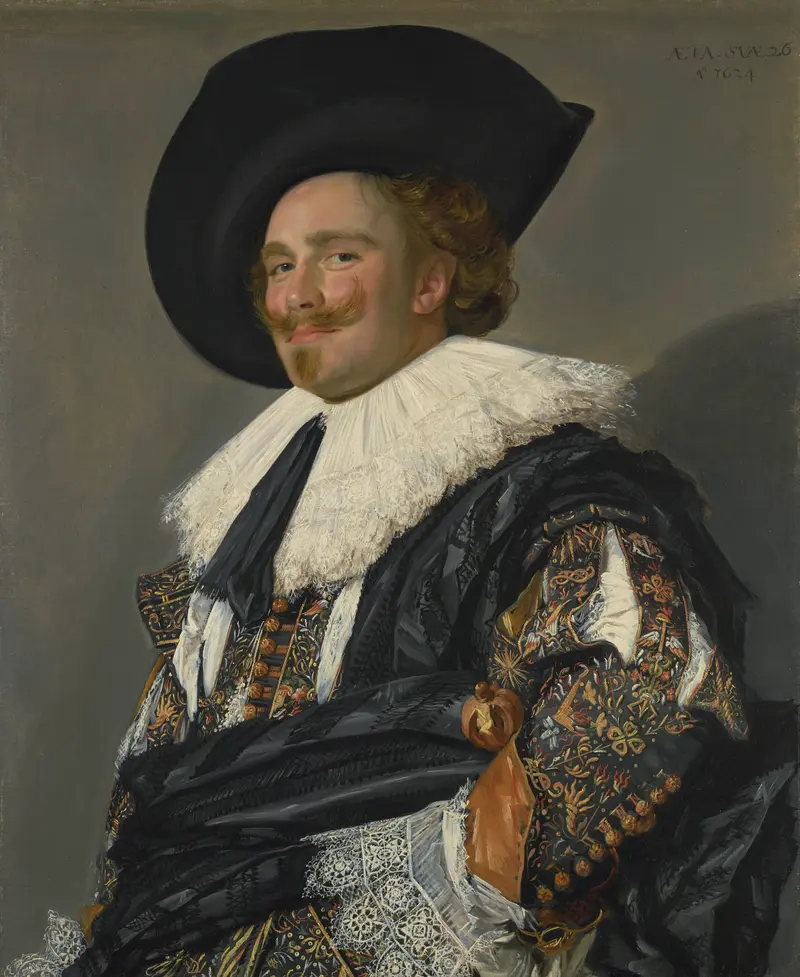
Laughing Cavalier
Frans Hals

Militia Company of District XI under the Command of Captain Reynier Reael, Known as ‘The Meagre Company’
Frans Hals
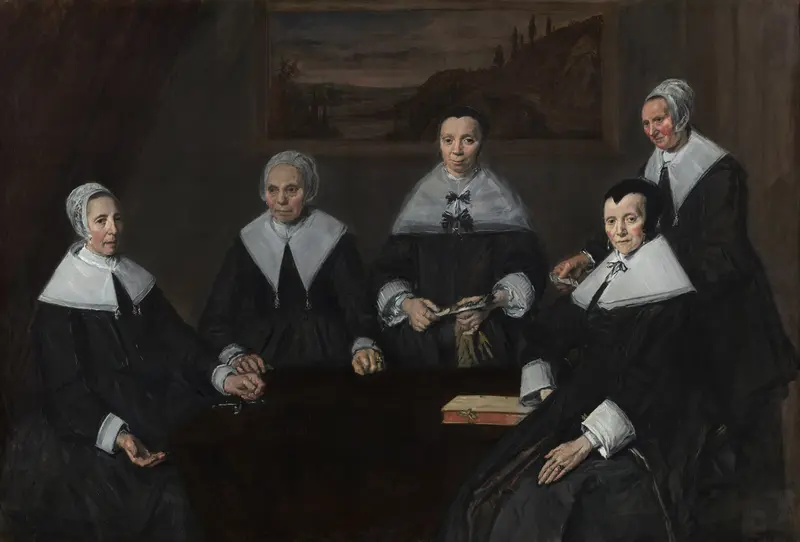
Regentesses of the Old Men's Alms House
Frans Hals
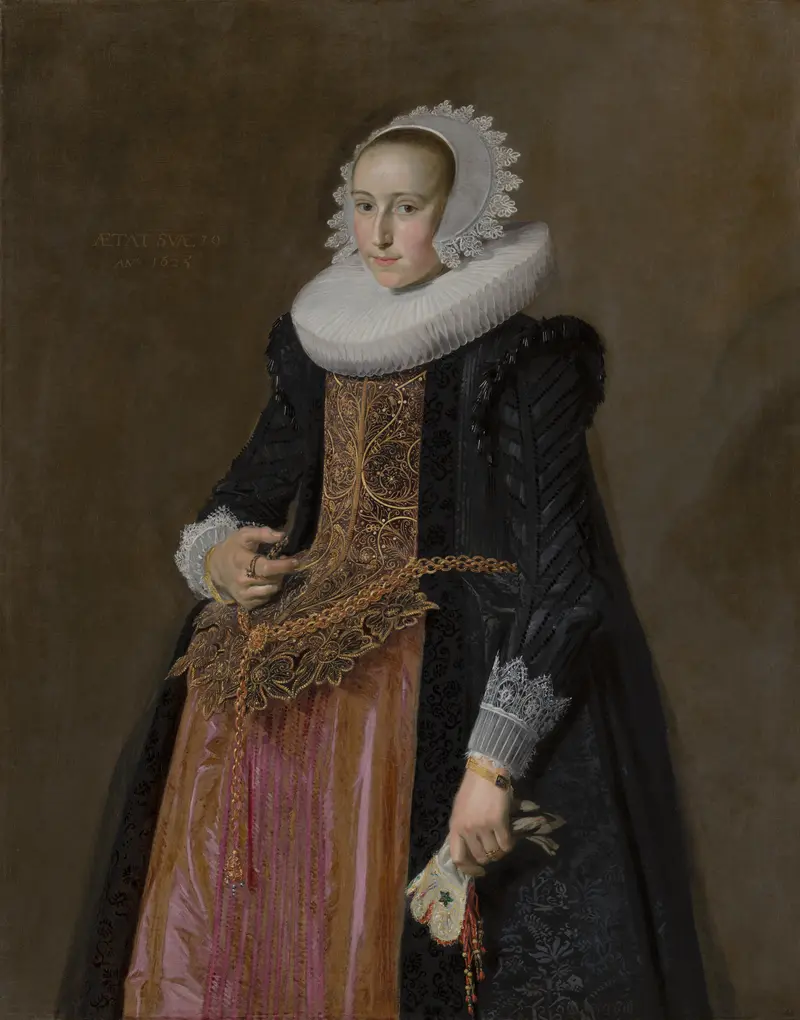
Portrait of Aletta Hanemans (1606–1653)
Frans Hals
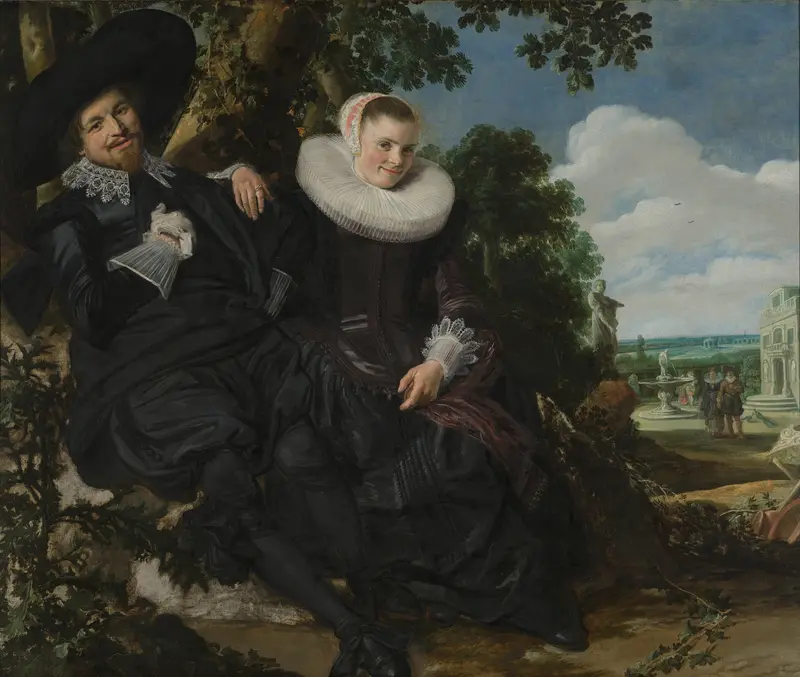
Portrait of a Married Couple, Likely Isaac Abrahamsz Massa and Beatrix van der Laen
Frans Hals
The Merry Drinker
Frans Hals
Portrait of Paulus Verschuur
Frans Hals
Portrait of Pieter van den Broecke
Frans Hals
More Genre Scene Art
Banquet of the Officers of the St George Civic Guard
Frans Hals

Rembrandt and Saskia in the Scene of the Prodigal Son
Rembrandt van Rijn

Bal du moulin de la Galette
Pierre-Auguste Renoir

Quadrille at the Moulin Rouge
Henri de Toulouse-Lautrec

A Burial at Ornans
Gustave Courbet

When Will You Marry?
Paul Gauguin