
Marine À St. Vaast-La Hougue (Manche) — History & Facts
This duality resonates within the calm, inviting scene of a tranquil seaside harbor, where serenity cloaks the tumult of human emotion. Look to the lower right of the canvas, where delicate brushstrokes depict small fishing boats gently bobbing in the water, their reflections shimmering like whispers across the surface. The palette is a soothing blend of soft blues and muted greens, interspersed with hints of warm gold where sunlight kisses the water. Notice how the horizon stretches wide, welcoming the eye to wander, while wispy clouds drift lazily overhead, imbuing the scene with a sense of timelessness and peace. Yet, beneath this serene exterior lies a subtle tension.
The stillness of the boats contrasts sharply with the vastness of the sea, suggesting a world both inviting and isolating. The absence of figures underscores a solitude that can evoke longing, as if the viewer stands alone, yearning for connection amidst the beauty. This juxtaposition between tranquility and isolation invites reflection on the narratives that unfold in quiet spaces, where beauty can mask deeper currents of emotion. In 1892, while creating this piece, the artist was firmly rooted in the Impressionist movement, exploring themes of light and atmosphere along the French coastline.
Boudin was widely regarded for capturing fleeting moments of nature, and during this period, he was influenced by the shifting artistic landscape and his desire to depict the ephemeral beauty of the world around him. The world was on the verge of modernity, and his work embraced the fleeting qualities of the moment, offering a glimpse into the serenity that could be found in both nature and the human experience.
More Artworks by Eugène Boudin
Browse all →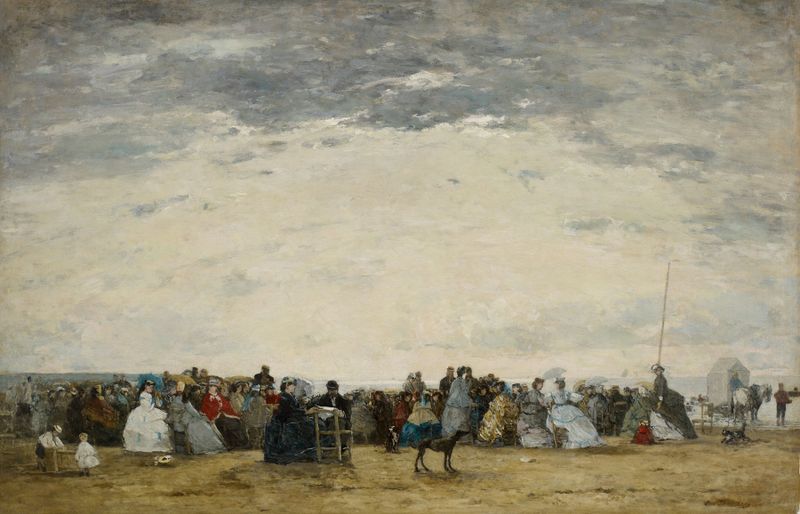
Vacationers on the Beach at Trouville
Eugène Boudin

Washerwoman near Trouville
Eugène Boudin
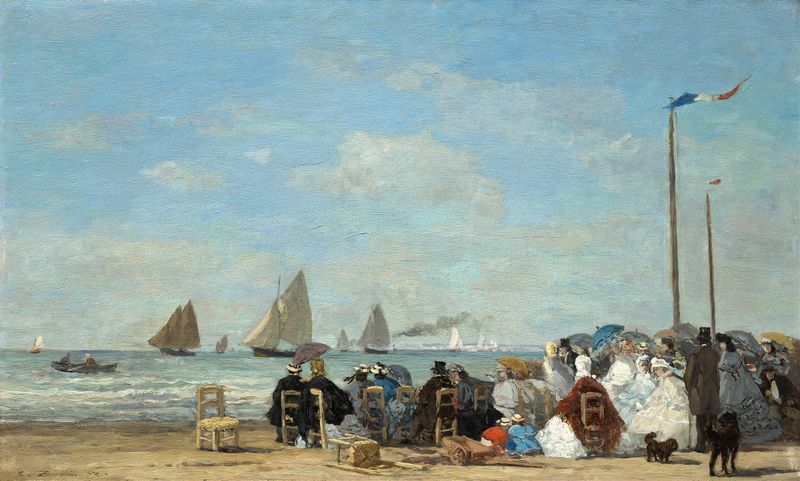
Beach Scene at Trouville
Eugène Boudin

Port aux environs d’Honfleur
Eugène Boudin

Le Faou, un coin du village
Eugène Boudin
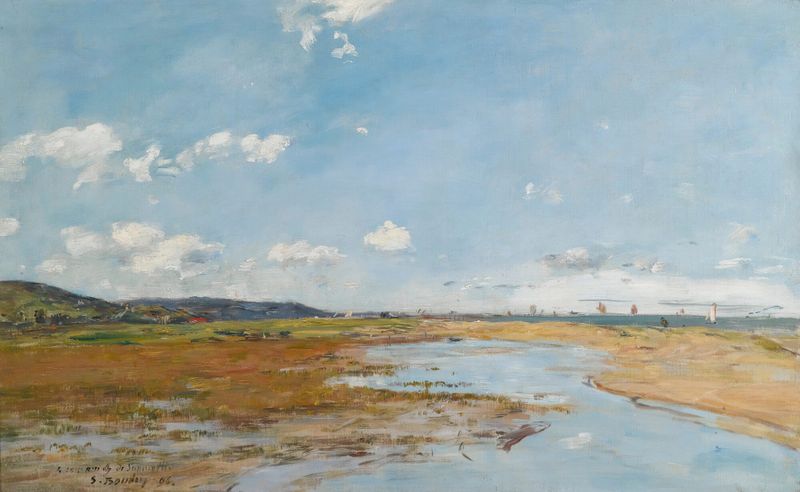
Deauville. Le Rivage
Eugène Boudin
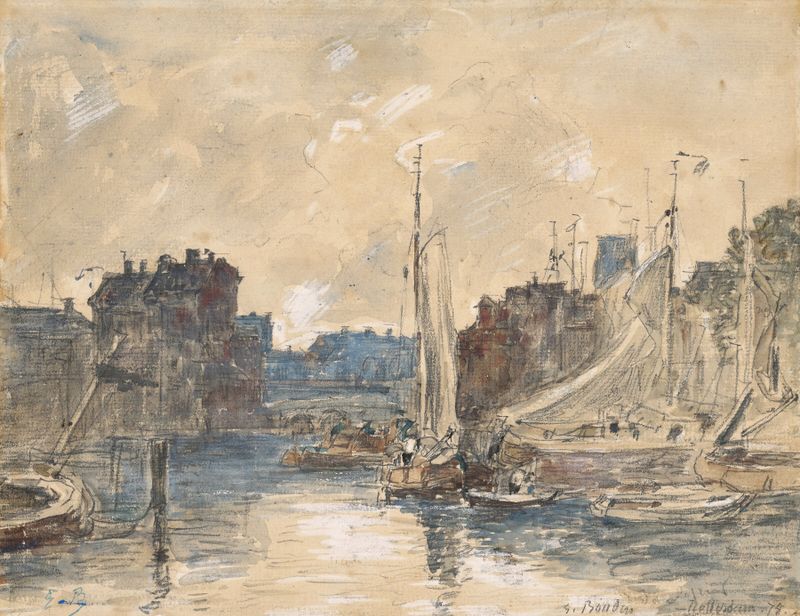
Port de Rotterdam
Eugène Boudin

View of Bordeaux, from the Quai des Chartrons
Eugène Boudin

Trouville, Scène De Plage
Eugène Boudin

Trouville, Le Port
Eugène Boudin





