
Market on the Wharf — History & Facts
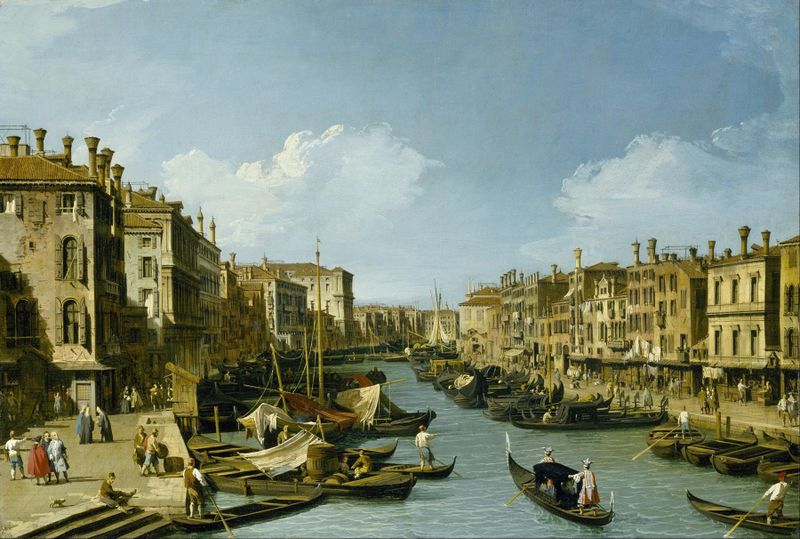
In Market on the Wharf, we are invited to witness a vibrant exchange of life, commerce, and the complexities of human existence. Yet beneath the surface, this bustling scene hints at the struggles and stories that unfold in the shadows of everyday beauty. Look to the left where the warm sunlight bathes the figures and stalls in a golden hue, illuminating the array of goods on display. Notice the careful arrangement of the market’s vibrant colors—a cascade of fruits, textiles, and fish—each detail meticulously rendered.
The artist’s skilled use of perspective draws our eyes down the wharf, creating a sense of depth while the figures’ gestures and interactions breathe life into the scene, evoking a feeling of both joy and urgency. Within this lively marketplace, a subtle tension simmers. The juxtaposition of the market’s brightness against the water’s cool, reflective surface speaks to the contrast between human ambition and the serene yet indifferent nature surrounding it. The onlookers, engaged in their transactions, seem unaware of the looming shadows cast by the structures above, suggesting that beauty often exists alongside unseen struggles, a notion that resonates deeply in the human experience. During the years 1740 to 1745, Canaletto was immersed in the vibrant artistic environment of Venice, a city at the peak of its cultural and commercial powers.
His works often captured the essence of Venetian life, reflecting both its grandeur and its complexities. This painting emerged during a time when Canaletto was experimenting with new techniques to portray light and architecture, solidifying his reputation as a master of the veduta genre.
More Artworks by Canaletto
Browse all →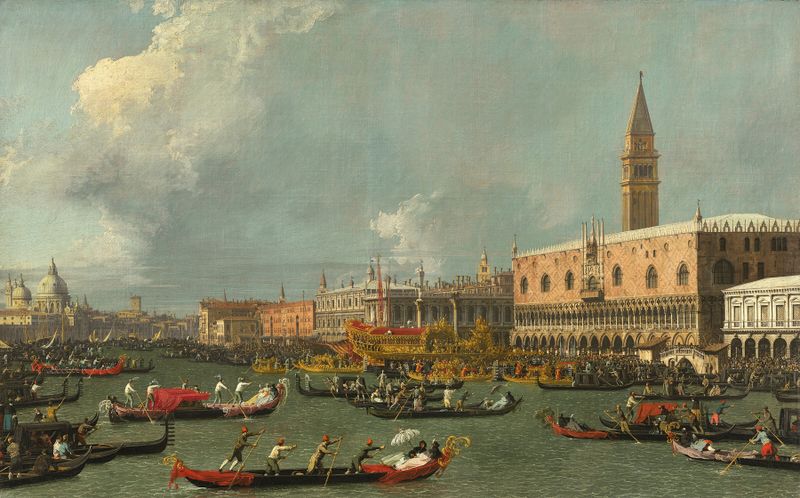
Venice, the Return of the Bucintoro on Ascension Day
Canaletto
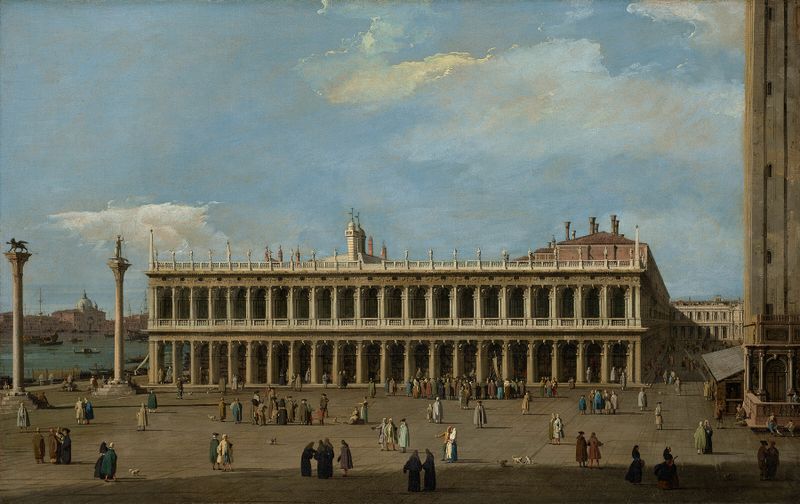
Venice, the Piazzetta, looking west, with the Libreria
Canaletto
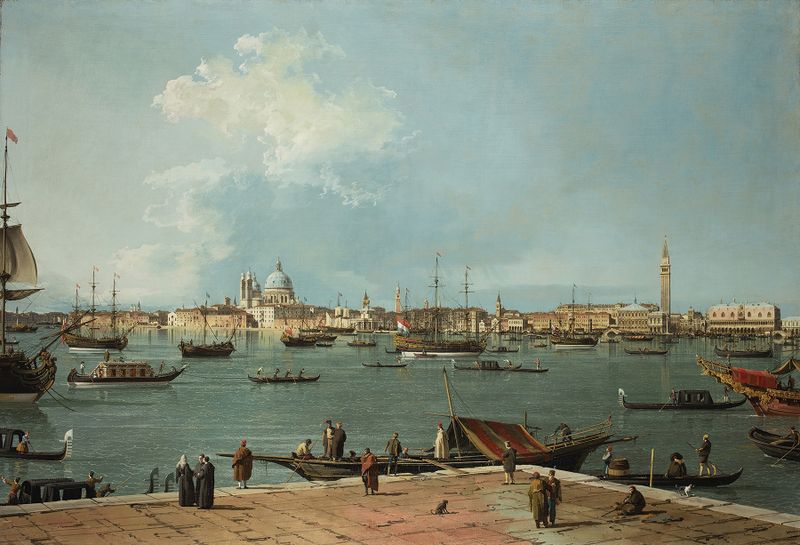
Venice, the Bacino di San Marco from San Giorgio Maggiore
Canaletto
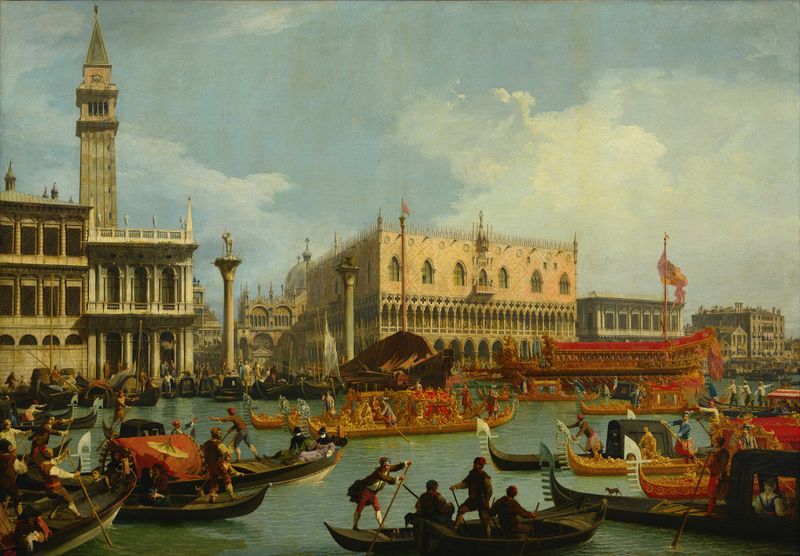
The Bucintore Returning to the Molo on Ascension Day
Canaletto
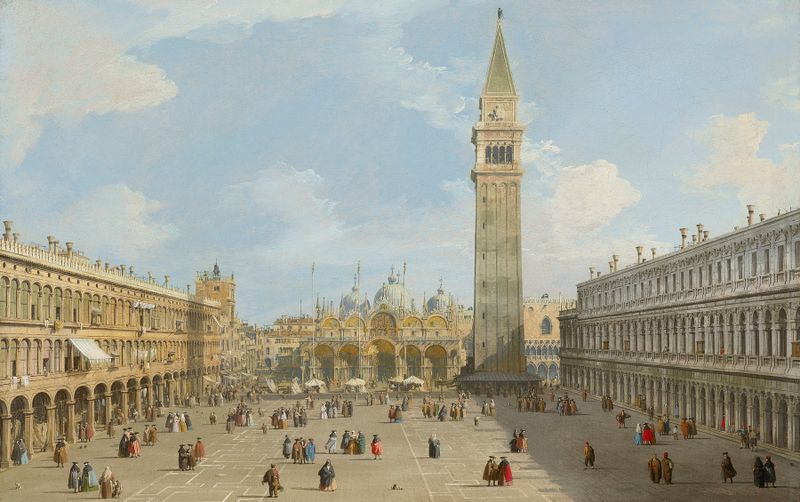
The Piazza San Marco, Venice, looking east towards the basilica
Canaletto
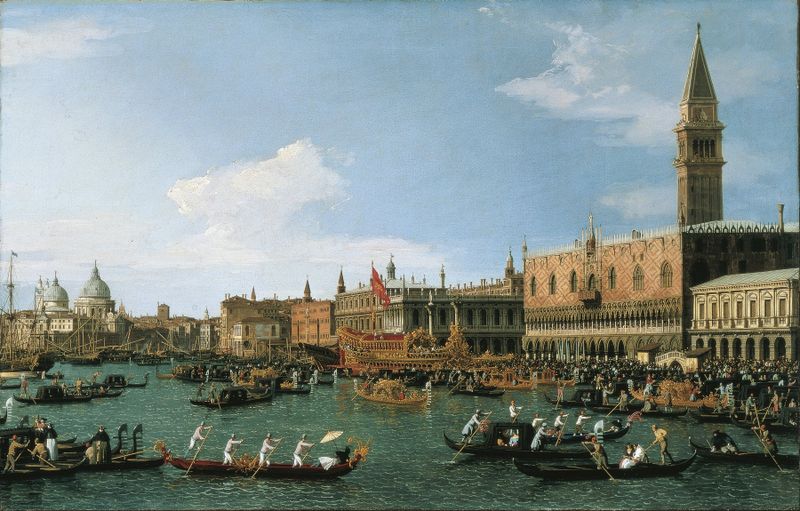
Return of ‘Il Bucintoro’ on Ascension Day
Canaletto
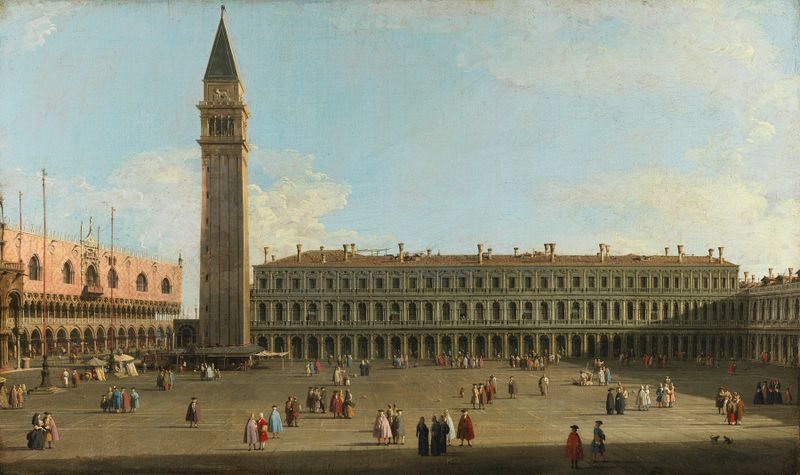
Saint Mark’s Square, Venice
Canaletto
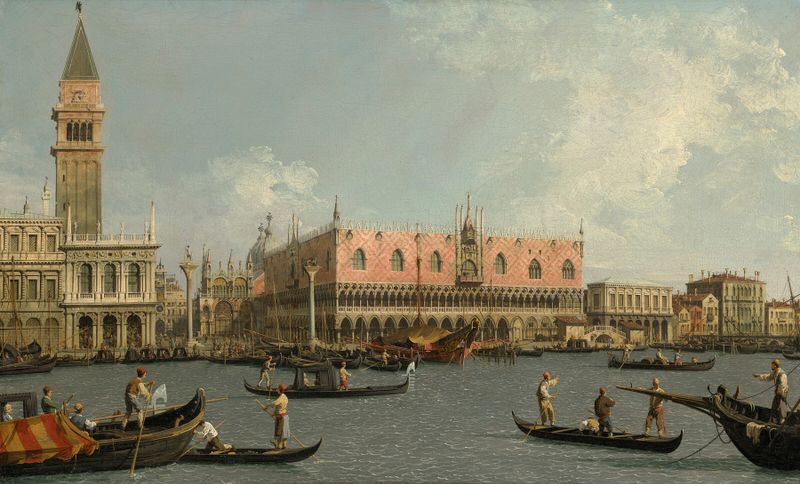
The Molo, with the Piazzetta and the Doge’s Palace, from the Bacino
Canaletto

The Entrance to the Grand Canal, Venice
Canaletto
The Grand Canal near the Rialto Bridge, Venice
Canaletto





