
Market Scene — History & Facts
What first seizes the eye in Market Scene is the swirl of human drama at its heart—faces caught mid-bargain, hands darting between goods and purses, every figure alive with purpose or cunning. A woman leans in, her arms outstretched, her intent gaze fixed on the vendor who, with a wary look, clutches a container as if weighing trust against profit. The crowd presses close, their gestures weaving a tapestry of transaction and tension: a man to the right tugs open his purse, while another figure stoops low, perhaps hoping to snatch what others miss.
The earthy palette and soft, almost smoky handling of light lend the scene a sense of dusk or secrecy, as if commerce here is as much about what is hidden as what is sold. Painted in the 1640s, this work belongs to a world where the market was both stage and battleground—a place where the rising Dutch and Flemish middle classes met, haggled, and watched their fortunes change by the hour. Scenes like this were popular among collectors eager to see their own daily realities reflected with wit or warning; they often served as both celebration and caution, showing the bustle of trade alongside the ever-present risk of theft or deception. Adriaen Pietersz van de Venne was known for his keen observation of social types and sly humor, and here, every posture and sidelong glance seems to hint at a story just out of reach.
Now in the National Museum of Art, Architecture and Design, this painting invites us to step closer, to read the silent negotiations and wonder who, in this crowded market, will come out ahead.
More Artworks by Adriaen Pietersz van de Venne
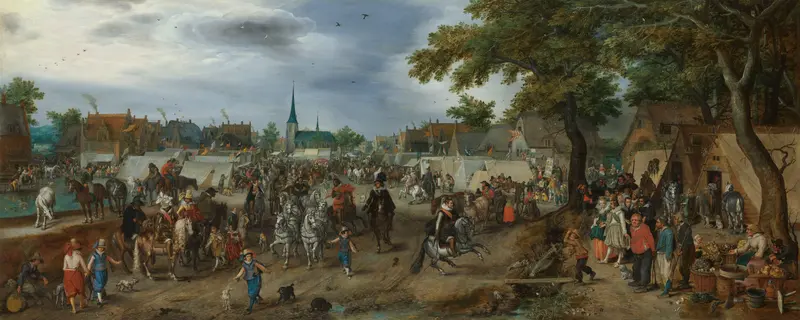
Princes Maurice and Frederick Henry at the Valkenburg Horse Fair
Adriaen Pietersz van de Venne
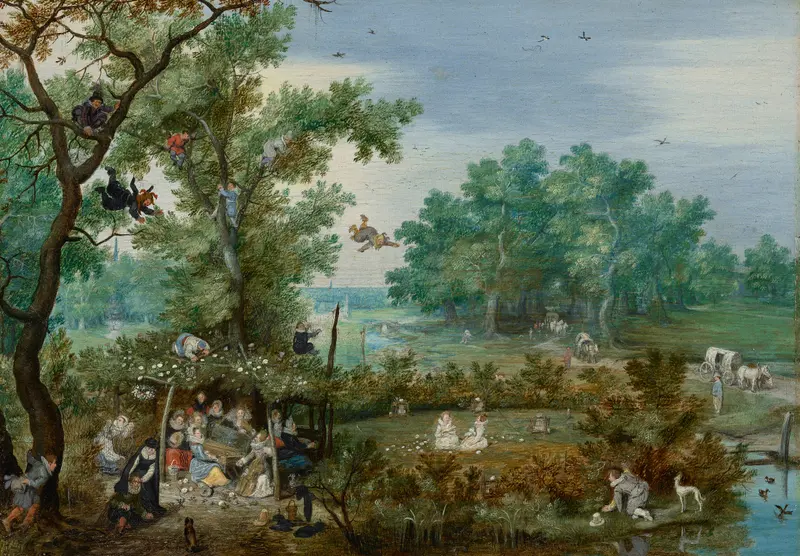
Merry Company in an Arbor
Adriaen Pietersz van de Venne
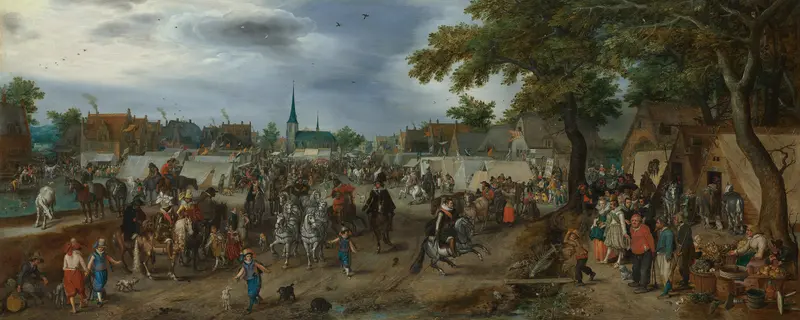
Princes Maurice and Frederick Henry at the Valkenburg Horse Fair
Adriaen Pietersz van de Venne
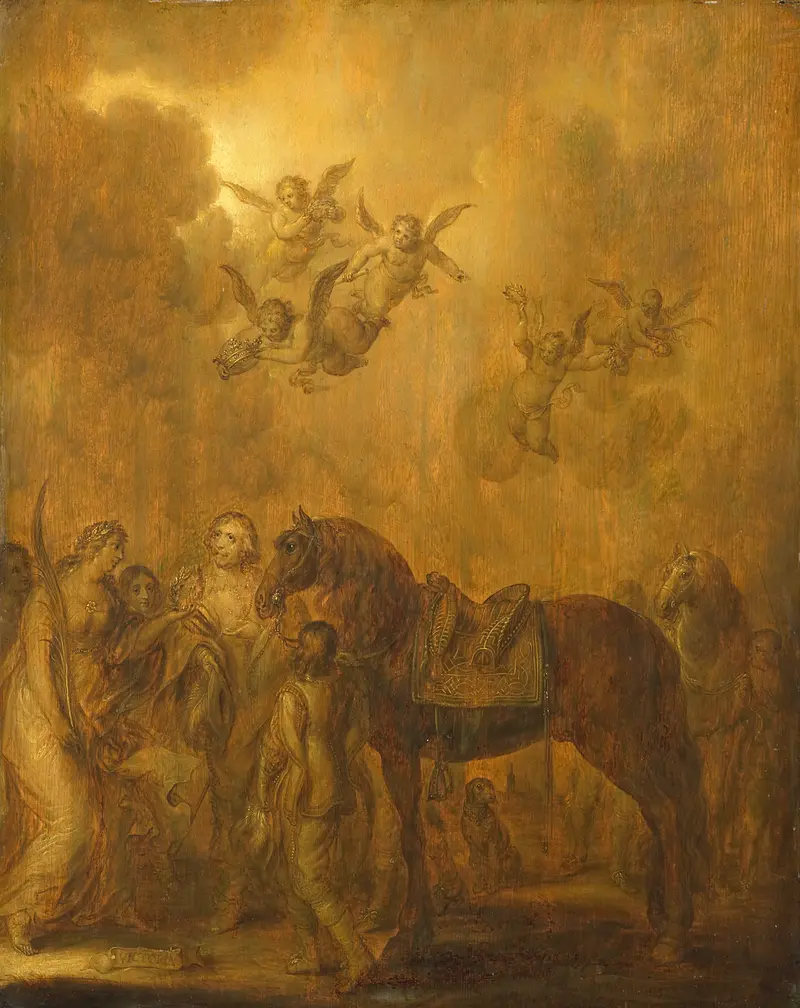
Allegory of the Stadtholdership of Prince Frederick Henry
Adriaen Pietersz van de Venne
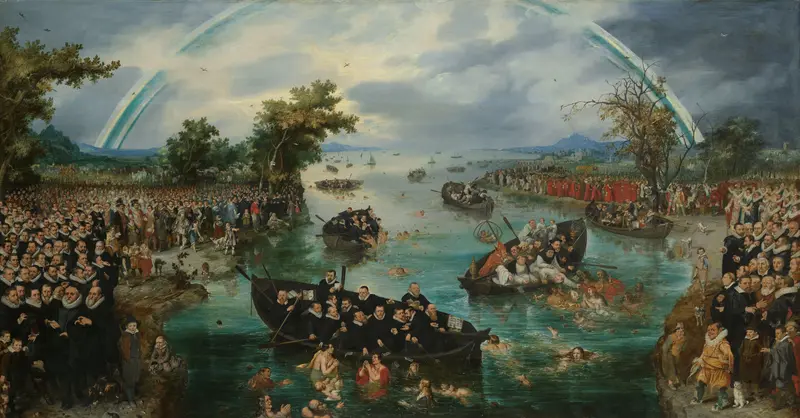
Fishing for Souls
Adriaen Pietersz van de Venne
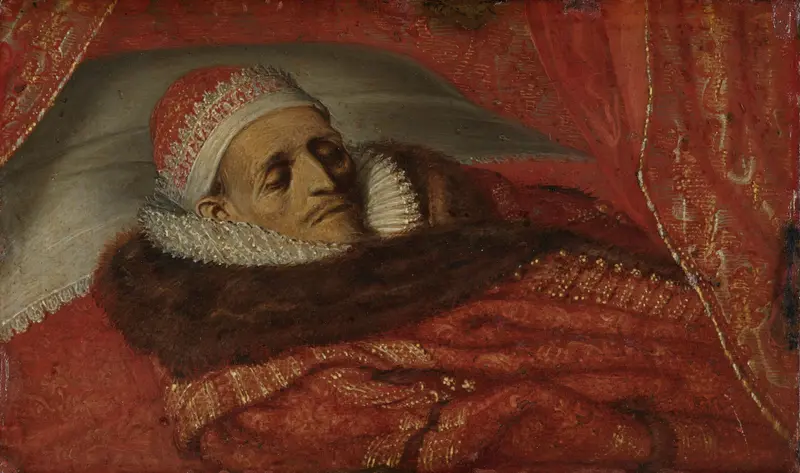
Stadtholder Prince Maurice Lying in State
Adriaen Pietersz van de Venne
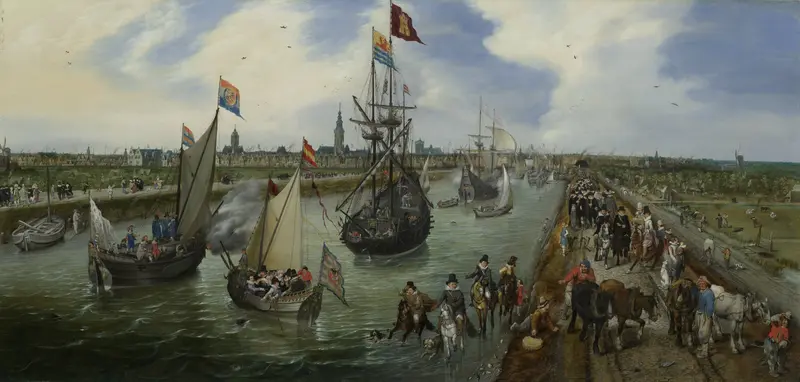
The Departure of a Dignitary from Middelburg
Adriaen Pietersz van de Venne
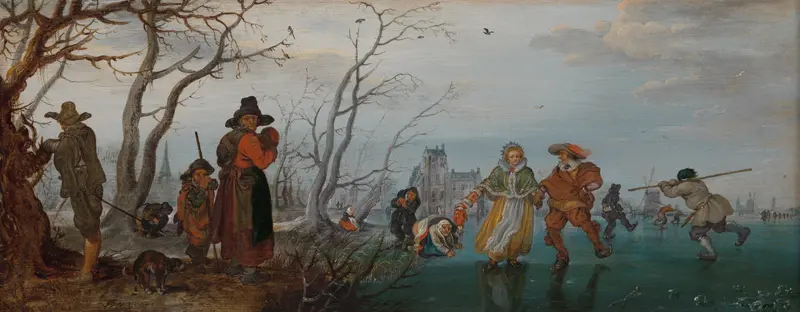
Winter
Adriaen Pietersz van de Venne

A Jeu de Paume Before a Country Palace
Adriaen Pietersz van de Venne
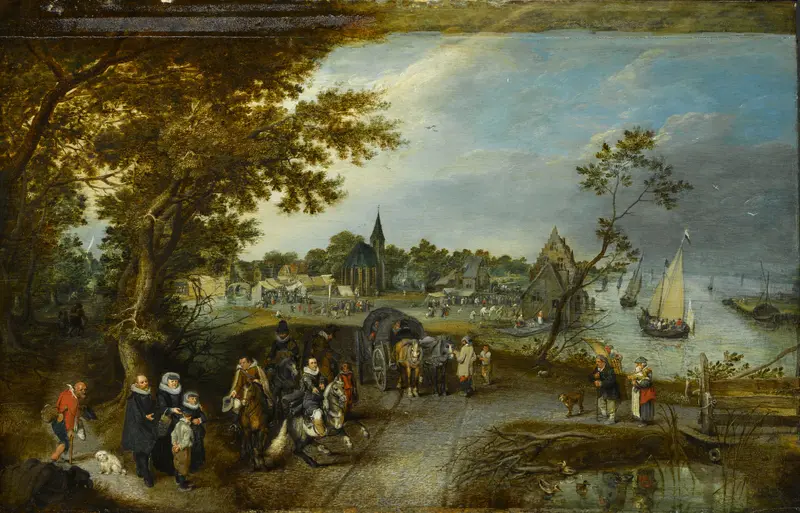
Landscape with Figures and a Village Fair (Village Kermesse)
Adriaen Pietersz van de Venne
More Genre Scene Art

Banquet of the Officers of the St George Civic Guard
Frans Hals

Rembrandt and Saskia in the Scene of the Prodigal Son
Rembrandt van Rijn

Bal du moulin de la Galette
Pierre-Auguste Renoir

Quadrille at the Moulin Rouge
Henri de Toulouse-Lautrec

A Burial at Ornans
Gustave Courbet

When Will You Marry?
Paul Gauguin