
Marketplace in Dobruja — History & Facts
When Marketplace in Dobruja first appeared in exhibition catalogues, it was immediately noted for its rare glimpse into a region seldom depicted by Western European artists in the late 19th century. Tadeusz Ajdukiewicz, a Polish painter known for his cosmopolitan travels, ventured into Dobruja—a borderland between Romania and Bulgaria—at a time when it was a crossroads of cultures, languages, and empires. The painting stands as one of the few visual records of daily life in this multiethnic territory before the sweeping changes of the 20th century.
Its authenticity and attention to local detail have made it a touchstone for historians studying the Ottoman influence in Eastern Europe. In the heart of the canvas, traders and villagers gather under the open sky, their costumes a tapestry of Ottoman, Romanian, and Bulgarian traditions. Ajdukiewicz chooses a moment of lively exchange: a horse dealer gestures animatedly, while a woman in a red headscarf weighs fruit on a balance. The jumble of goods—bright rugs, copper vessels, livestock—spills across the dusty square, drawing the viewer’s eye from foreground to horizon.
The artist’s brisk, almost documentary brushwork captures the bustle and color of the scene, in contrast to the more romanticized marketplaces painted by his French contemporary Jean-Léon Gérôme. Here, the light is harsh and real, casting long shadows that hint at the heat and labor of the day. Little is known about the early provenance of Marketplace in Dobruja, and its date and medium remain uncertain—a rarity among Ajdukiewicz’s otherwise well-documented works. It is believed to have been painted during his Eastern European journeys in the 1880s, a period when he produced several scenes of Balkan and Ottoman life for private patrons and international exhibitions.
The painting’s whereabouts were unrecorded for decades, resurfacing only recently in a private collection. Today, it is valued not just as a work of art, but as a document of a vanished world, and it occupies a unique place within Ajdukiewicz’s oeuvre, bridging his Polish roots and his fascination with the wider, changing world.
More Artworks by Tadeusz Ajdukiewicz
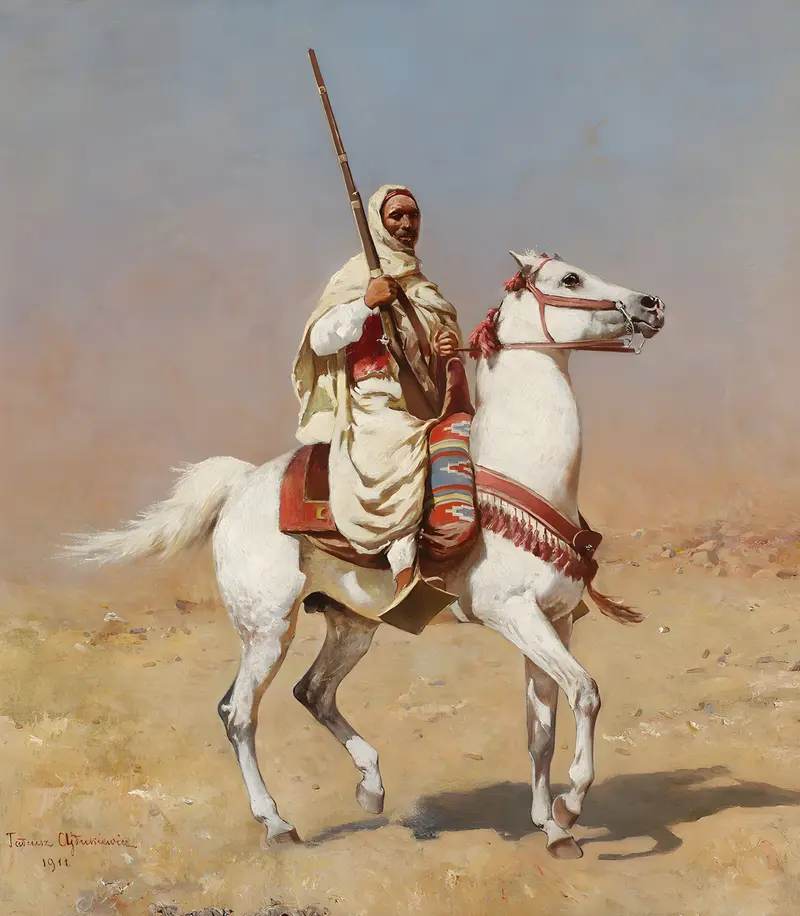
Arab on a grey horse
Tadeusz Ajdukiewicz
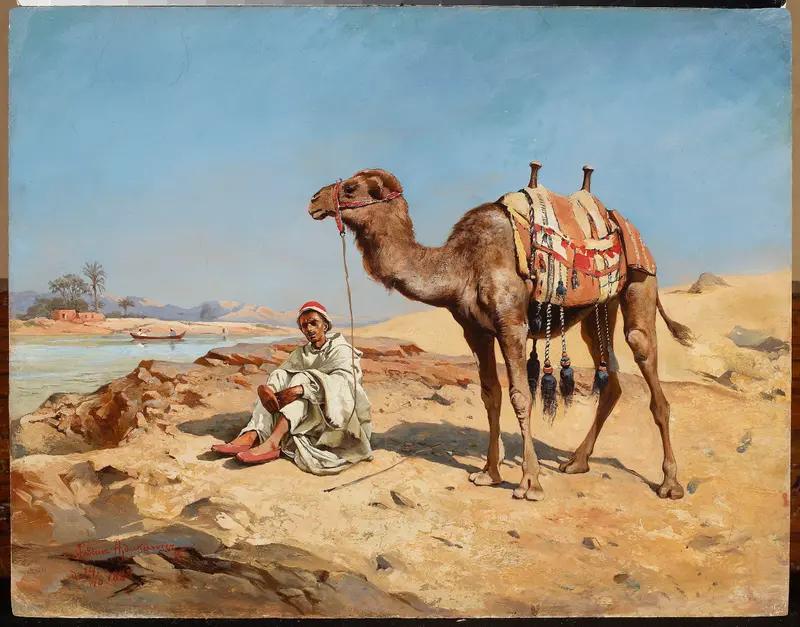
Arab in the desert
Tadeusz Ajdukiewicz
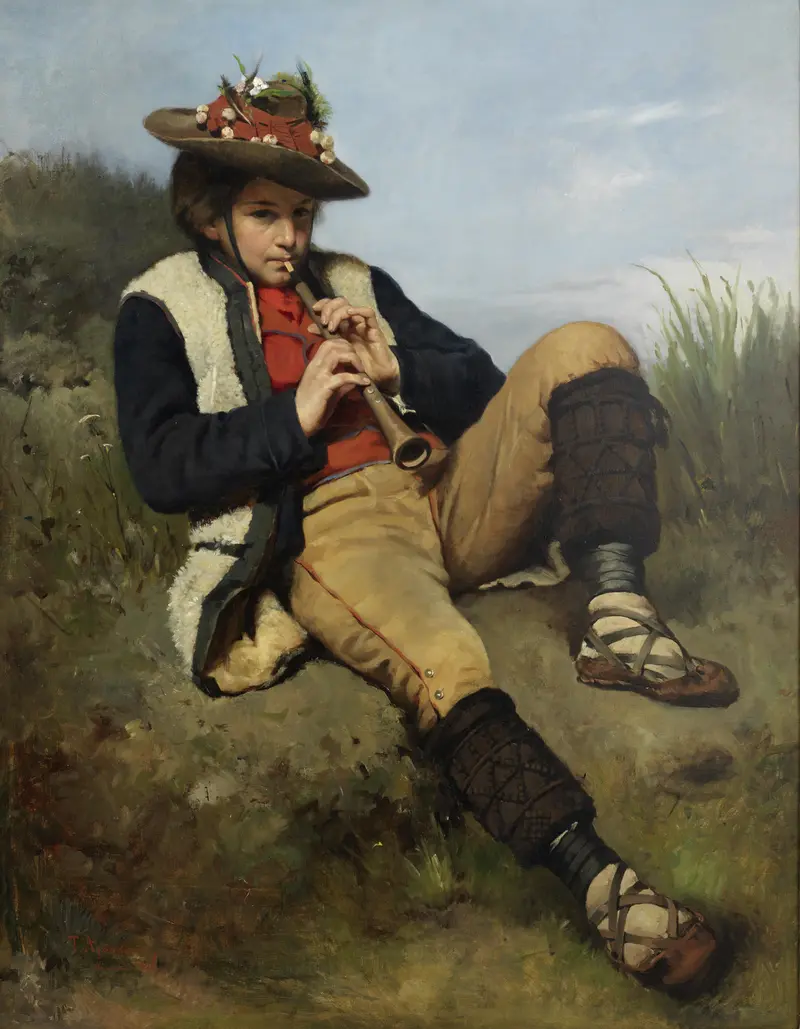
The shepherd boy
Tadeusz Ajdukiewicz

A Parforce Rider in the Forest
Tadeusz Ajdukiewicz
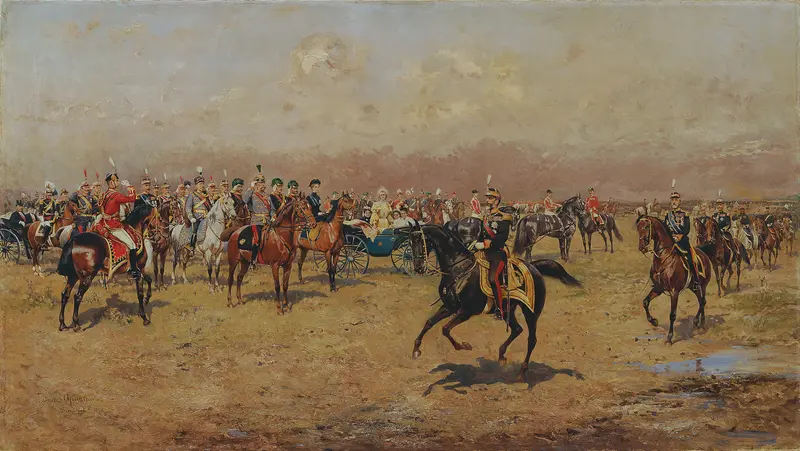
Militärparade vor Kaiser Franz Joseph I.
Tadeusz Ajdukiewicz
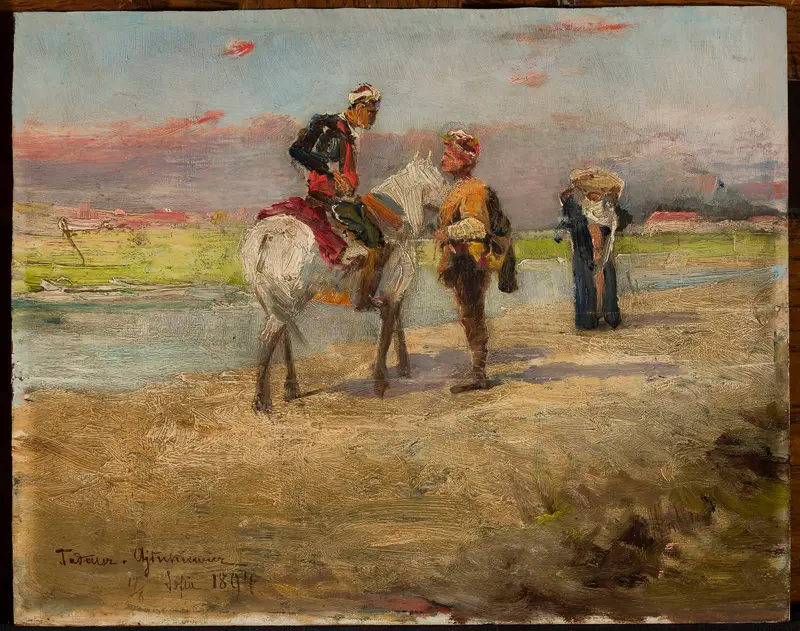
Eastern scene against a landscape
Tadeusz Ajdukiewicz
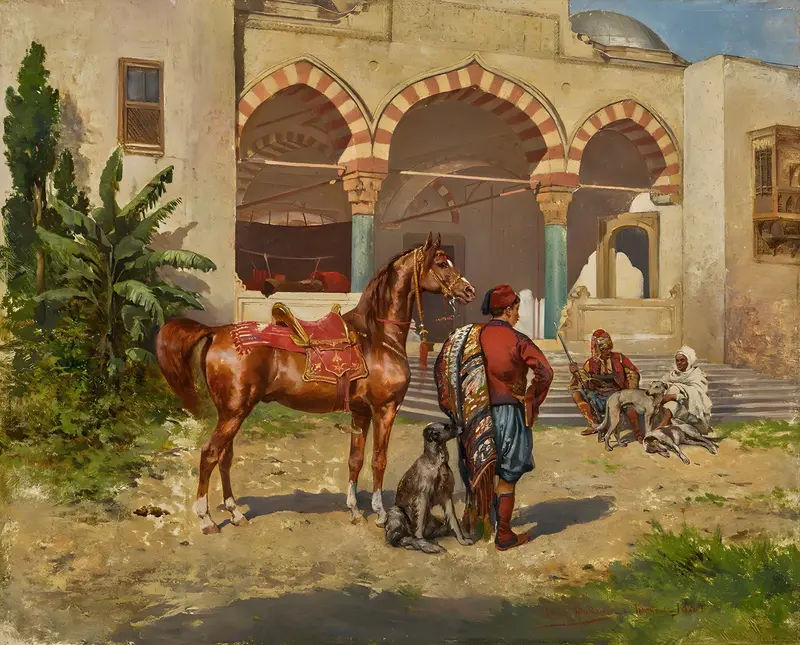
A turkish courtyard
Tadeusz Ajdukiewicz
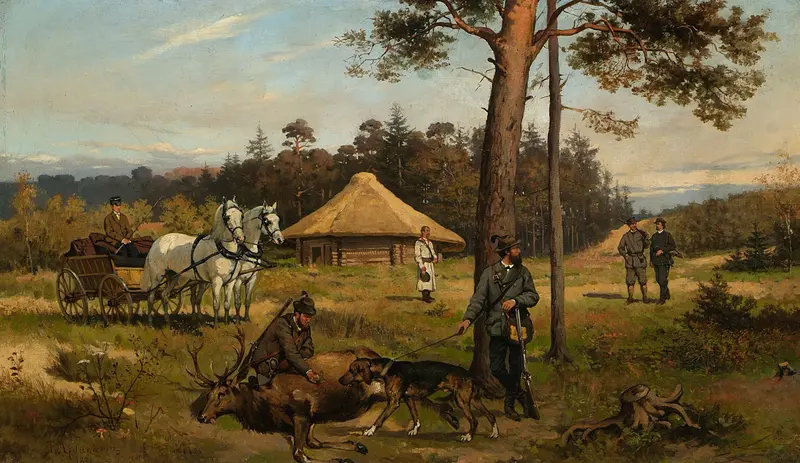
After hunting for a deer
Tadeusz Ajdukiewicz
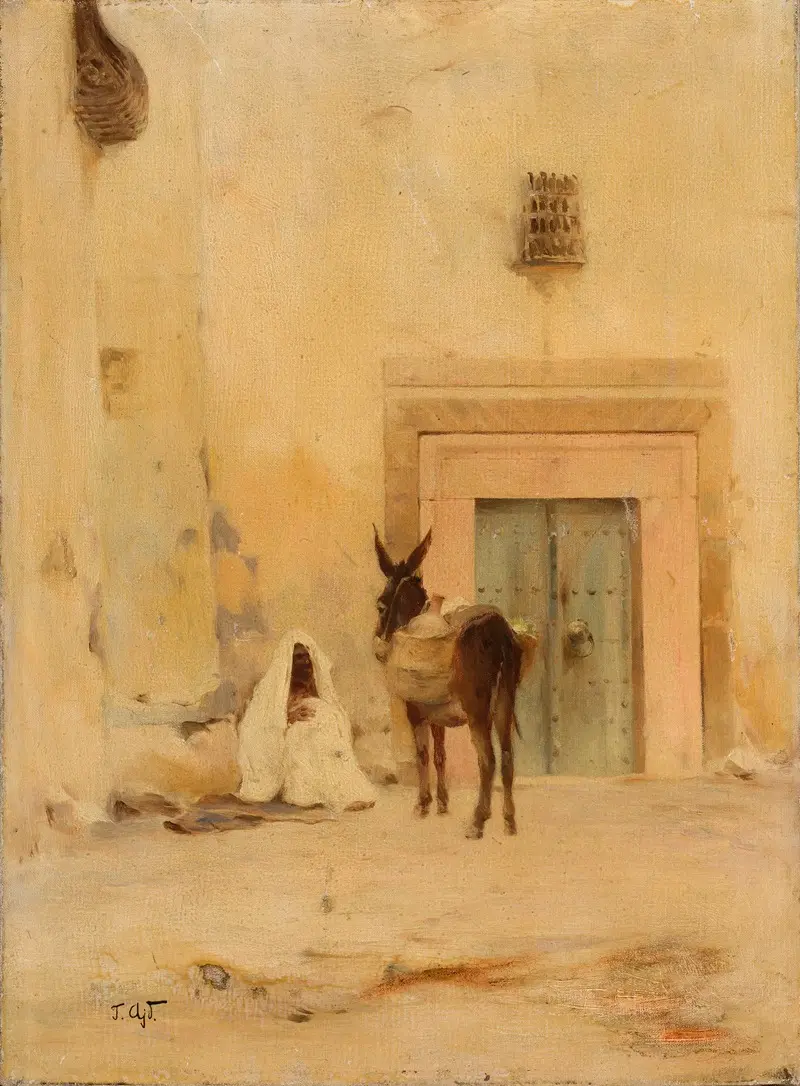
Arab and a donkey at the wall of a house
Tadeusz Ajdukiewicz
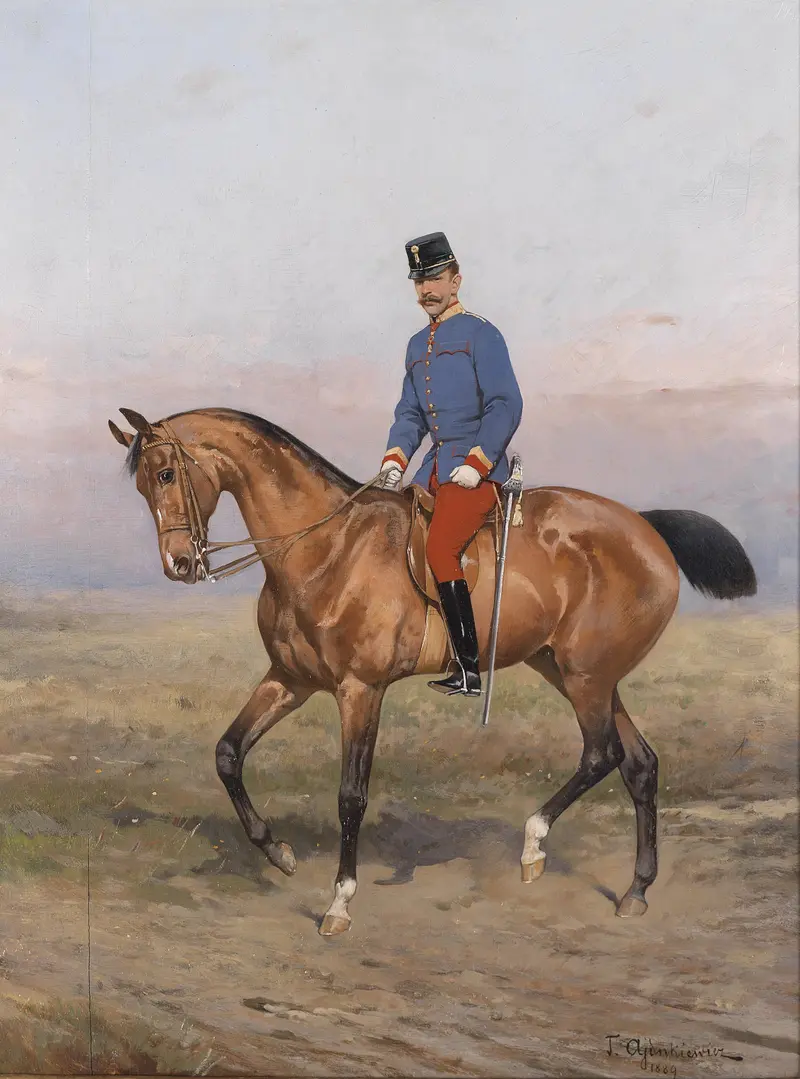
Kronprinz Rudolf zu Pferd
Tadeusz Ajdukiewicz
More Genre Scene Art

Banquet of the Officers of the St George Civic Guard
Frans Hals

Rembrandt and Saskia in the Scene of the Prodigal Son
Rembrandt van Rijn

Bal du moulin de la Galette
Pierre-Auguste Renoir

Quadrille at the Moulin Rouge
Henri de Toulouse-Lautrec

A Burial at Ornans
Gustave Courbet

When Will You Marry?
Paul Gauguin