
Marquise de l'Hôpital — History & Facts
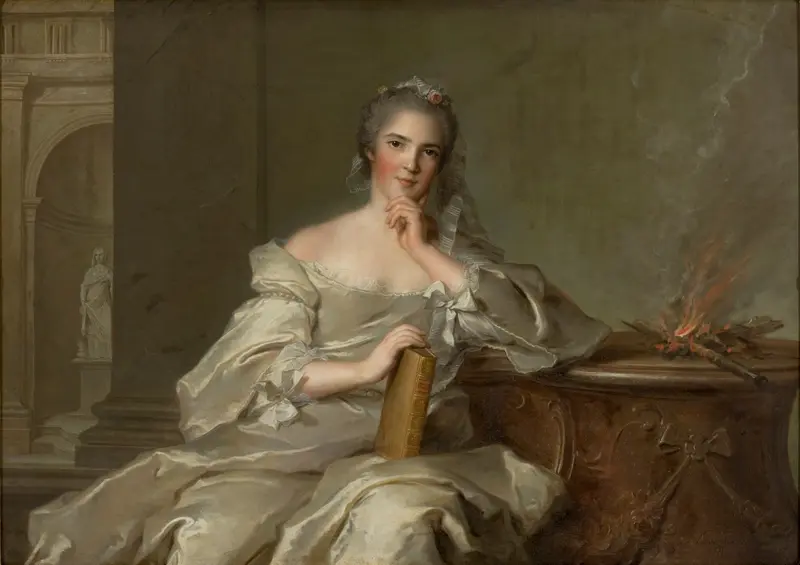
What first draws the eye is the Marquise’s playful confidence, a quality that seems to hover between the powdered delicacy of her complexion and the gentle mischief in her half-smile. The artist, Jean-Marc Nattier, has caught her in a moment that feels both staged and spontaneous: a hand gathers the coral-red silk around her, while the other lifts the edge of her chemise in a gesture that is neither entirely modest nor entirely revealing. The blue flowers woven through her powdered hair add a note of artifice, yet their placement is so casual that they might have been tucked there moments before she sat.
The light falls softly across her bare shoulders, warming the skin and setting off the coolness of the drapery, while the background recedes into a leafy darkness, ensuring all attention remains on her. Portraits like this, painted in the early eighteenth century, were more than likenesses; they were performances, crafted for an audience fluent in the codes of courtly wit and fashion. In the world of Rococo France, women of rank commissioned such images to assert their place in society, to charm, and to be remembered. Nattier was celebrated for his ability to flatter while still capturing a sense of personality, and his sitters often appear as mythological figures or in fanciful dress, blurring the line between reality and masquerade.
This work, now in the Nationalmuseum, is undated and its early history is little recorded, but it stands as a testament to an age when portraiture was a theatre of elegance and self-invention. Look again at the Marquise’s glance—half invitation, half secret—and imagine the world of salons and whispered intrigue from which she emerged.
More Artworks by Jean-Marc Nattier

Madame Crozat de Thiers and Her Daughter
Jean-Marc Nattier
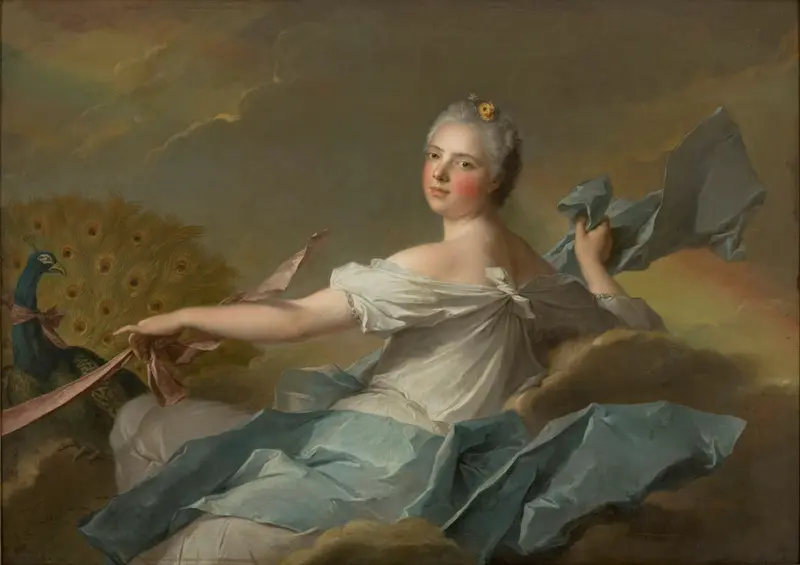
Princess Marie Adélaïde of France - The Air
Jean-Marc Nattier
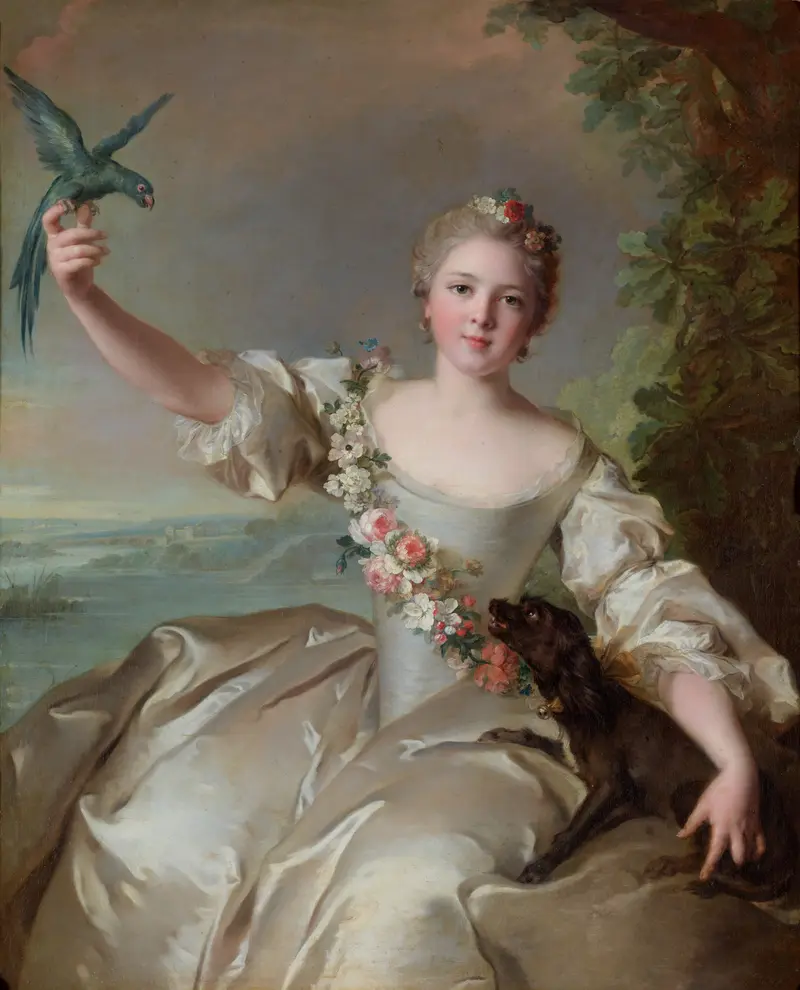
Portrait de Mathilde de Canisy, marquise d'Antin
Jean-Marc Nattier
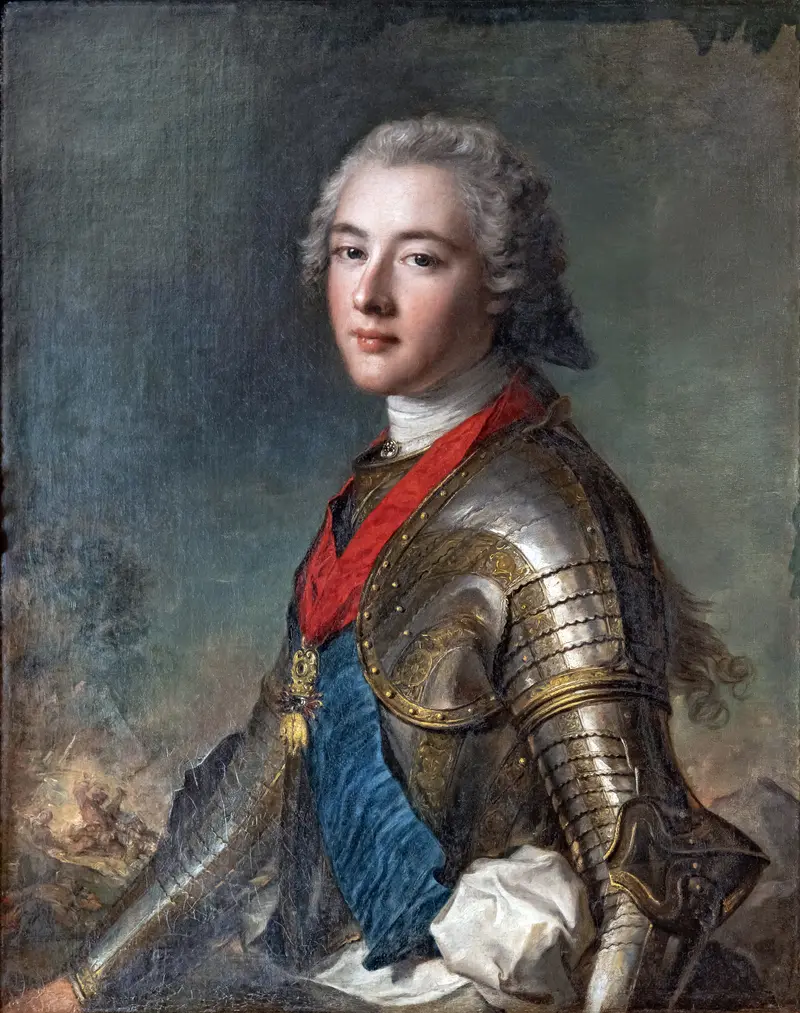
Bemberg Fondation Toulouse - Portrait de Louis Jean Marie de Bourbon, Duc de Penthièvre - Jean Marc Nattier inv.1158 82x65.4
Jean-Marc Nattier
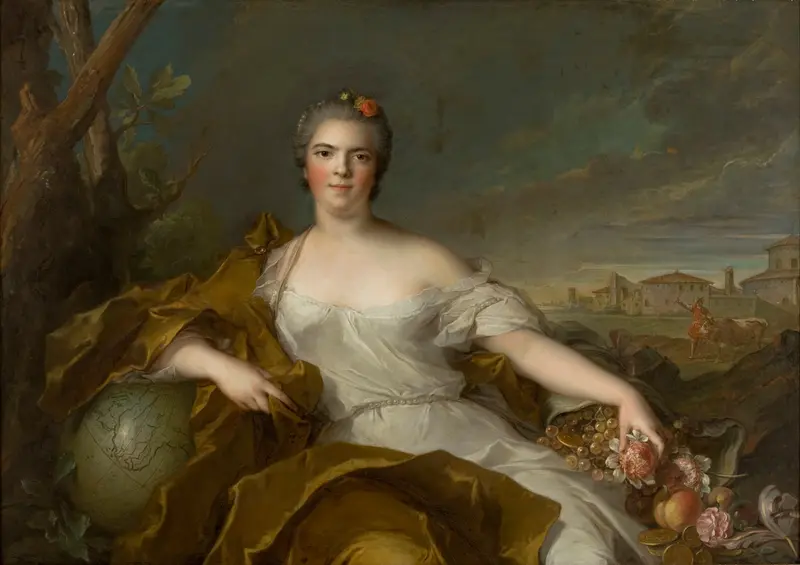
Princess Louise-Élisabeth of France - The Earth
Jean-Marc Nattier
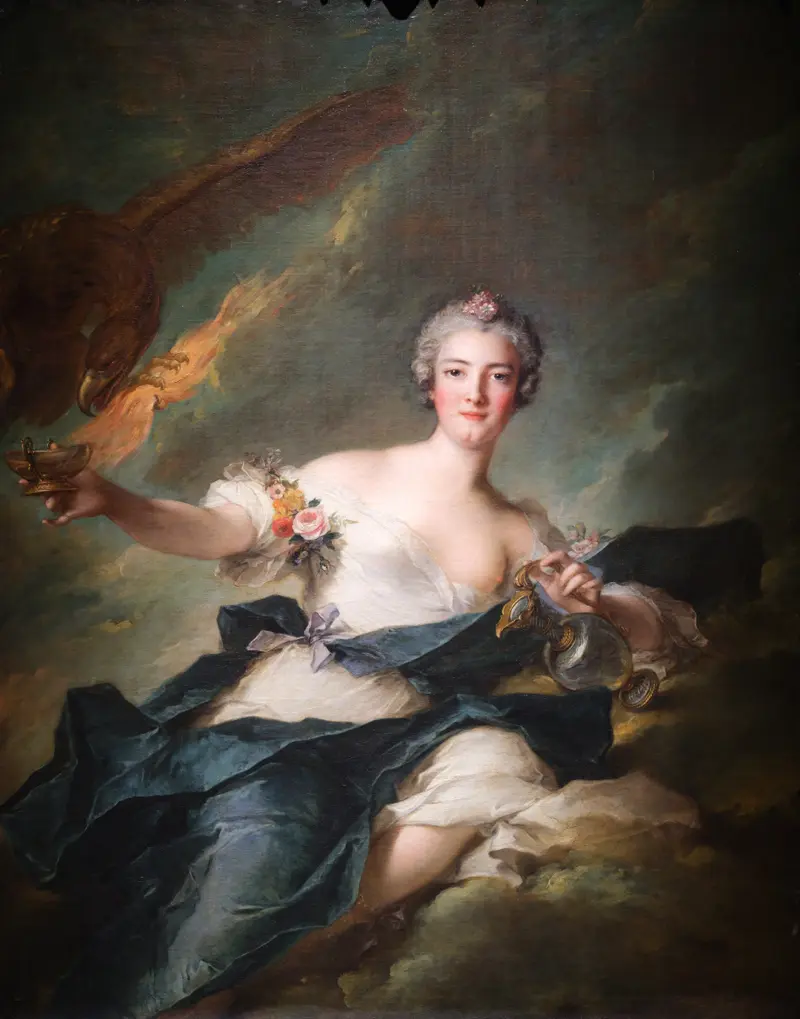
The Duchess of Chaulnes Represented as Hebe
Jean-Marc Nattier
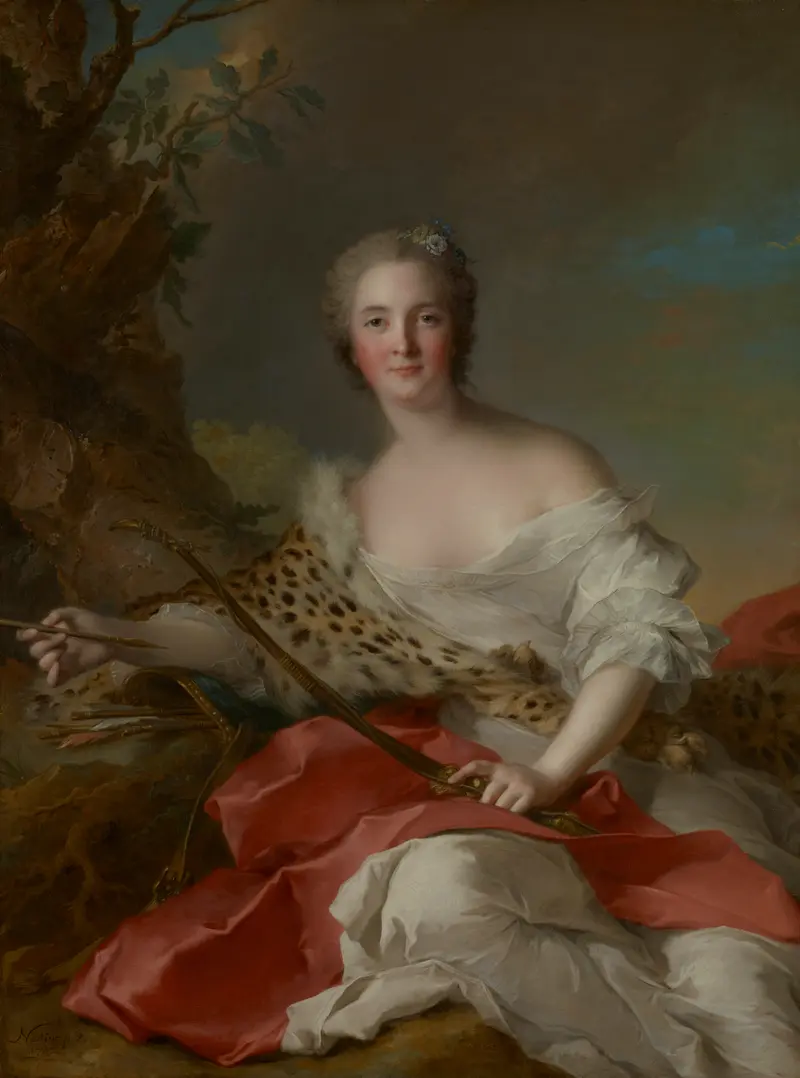
Portrait of Madame Bonnier de la Mosson as Diana (Constance-Gabrielle-Magdeleine du Monciel de Lauraille
Jean-Marc Nattier
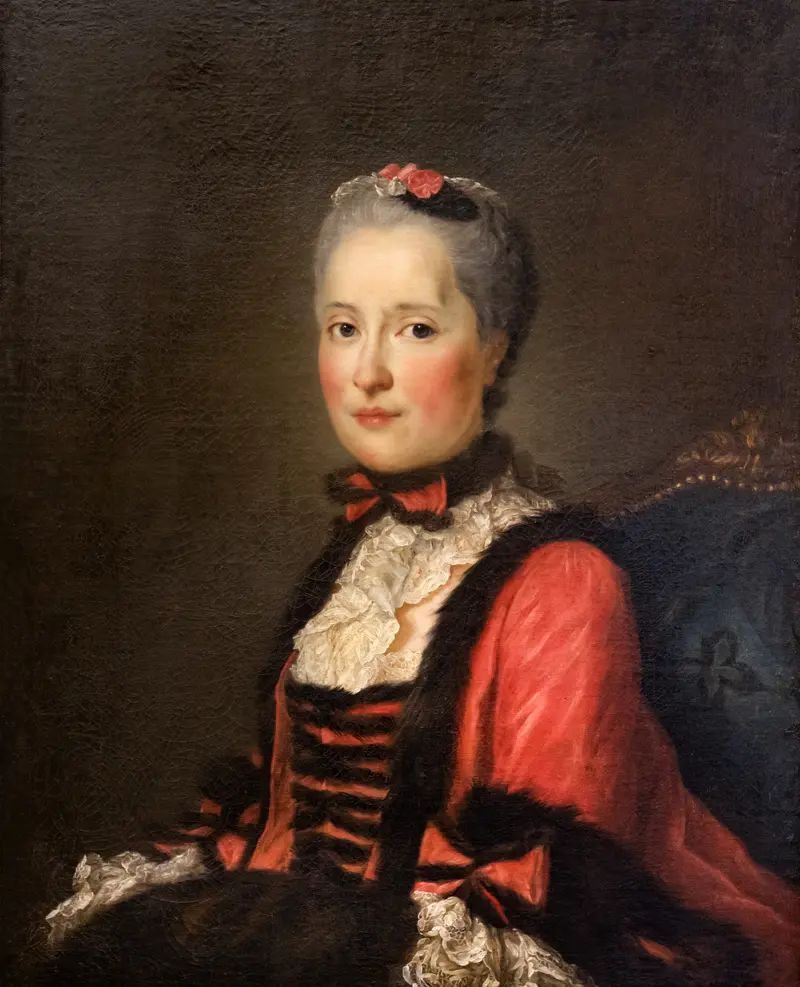
Portrait of Marie-Josephe of Saxony, Dauphine of France
Jean-Marc Nattier
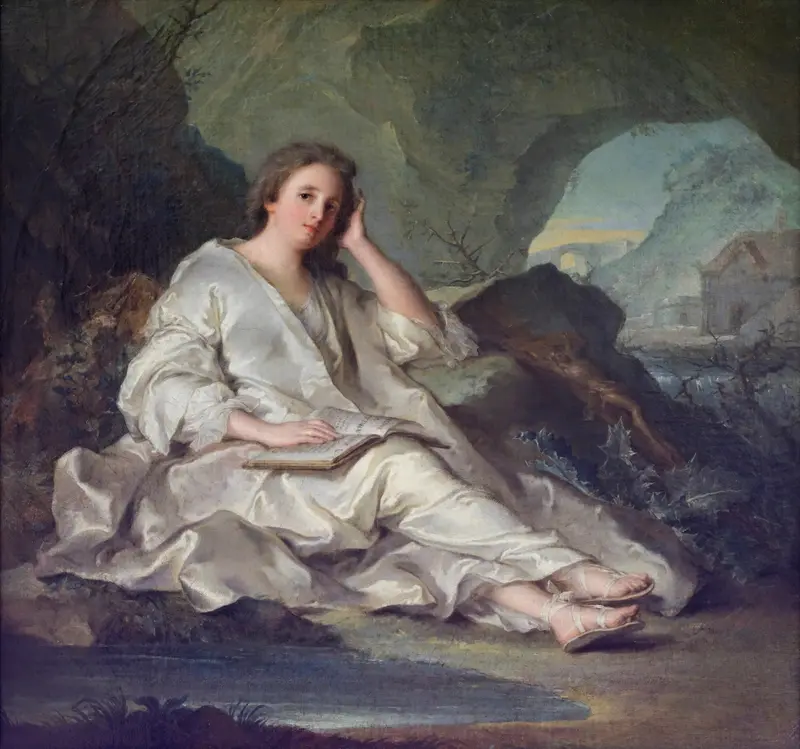
La Madeleine, ou Une Pénitente dans le désert Musée du Louvre Peintures INV 6880 ; MR
Jean-Marc Nattier
Princess Anne-Henriette of France - The Fire
Jean-Marc Nattier





