
Marriage A-la-Mode: 3. The Inspection — History & Facts
A glance at this scene catches the eye with its theatrical tension: a young man, flamboyantly dressed, leans forward with a cane, his expression sly and self-satisfied, while a woman in a vivid red apron recoils in distaste. The room is a cabinet of curiosities, its shelves crowded with skulls, anatomical models, and strange instruments, all cast in a cool, clinical light. Each gesture is a clue—the gloved hand, the averted eyes, the uneasy body language—hinting at secrets and transactions that are anything but innocent.
The palette is somber, with flashes of color drawing attention to the key players and their uneasy alliance. Even the background, with its anatomical specimens and medical paraphernalia, adds to the sense of moral and physical inspection. Painted in 1743, this work belongs to the biting satirical tradition of eighteenth-century English painting, where artists like William Hogarth turned a merciless eye on the follies of the upper classes. Such paintings were rarely private commissions; instead, they were made for public exhibition or print reproduction, meant to spark conversation and laughter—and perhaps a little discomfort—among a growing urban audience hungry for stories of scandal and vice.
Marriage A-la-Mode: 3, The Inspection is now part of the National Gallery’s collection, a reminder of a time when art was both entertainment and social critique. Look again at the faces: every expression is a window into the tangled world of Georgian London, where appearances deceive and every detail tells a story.
More Artworks by William Hogarth
The Graham Children
William Hogarth
Marriage A-la-Mode: 2. The Tête à Tête
William Hogarth
Marriage A-la-Mode: 4. The Toilette
William Hogarth
Marriage A-la-Mode: 5. The Bagnio
William Hogarth

Miss Mary Edwards
William Hogarth
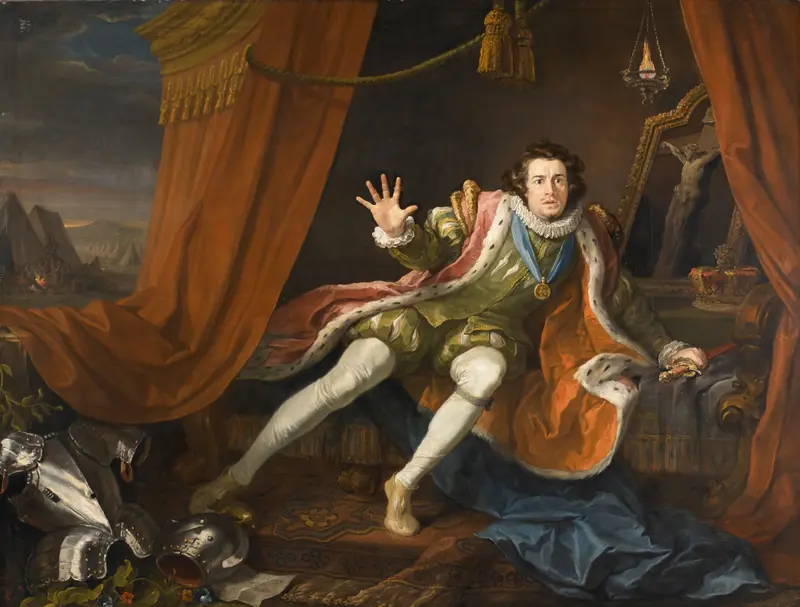
David Garrick as Richard III
William Hogarth
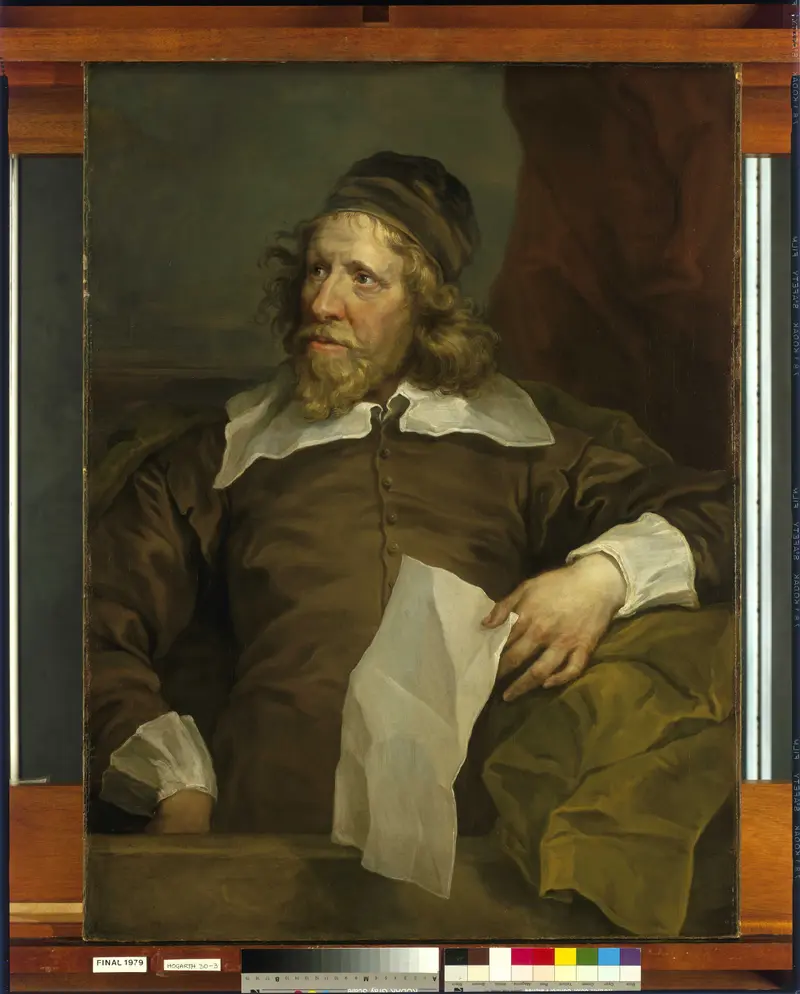
Inigo Jones, 1573-
William Hogarth
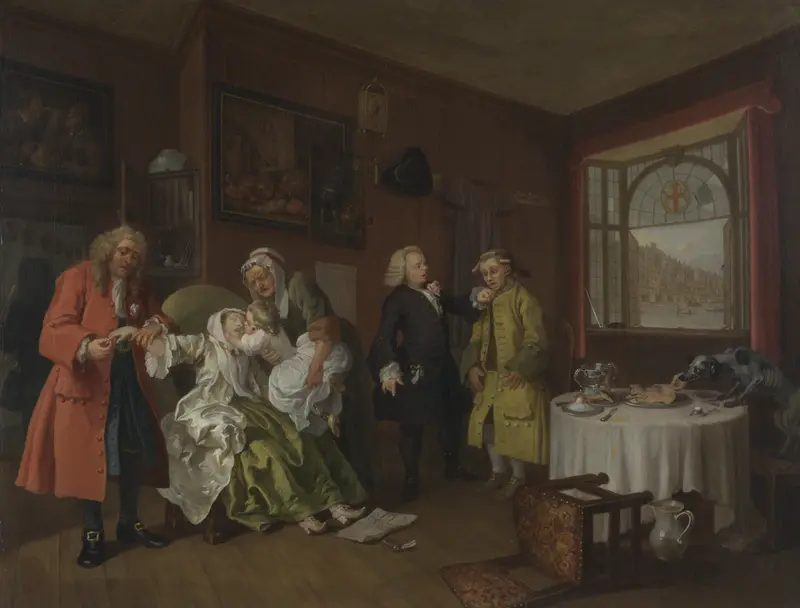
Marriage A-la-Mode: 6. The Lady's Death
William Hogarth
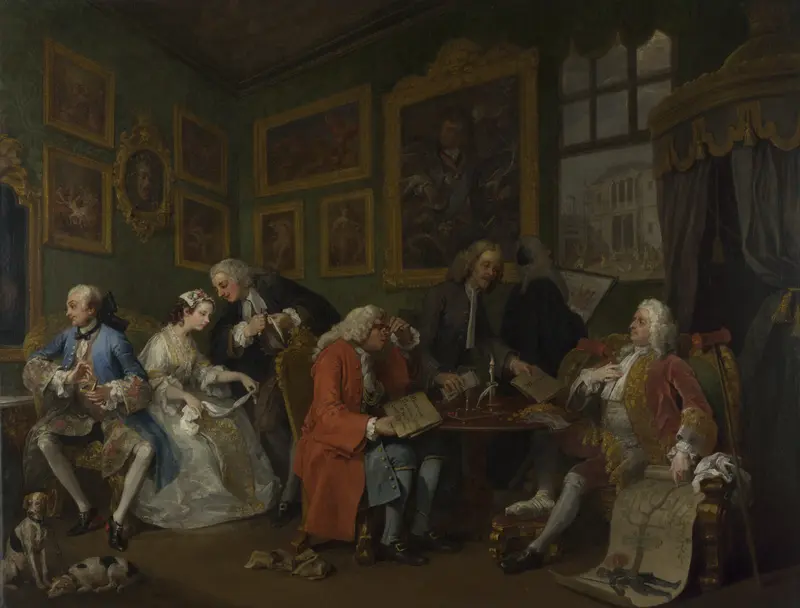
Marriage A-la-Mode: 1. The Marriage Settlement
William Hogarth

Before and After
William Hogarth
More Genre Scene Art

Banquet of the Officers of the St George Civic Guard
Frans Hals

Rembrandt and Saskia in the Scene of the Prodigal Son
Rembrandt van Rijn

Bal du moulin de la Galette
Pierre-Auguste Renoir

Quadrille at the Moulin Rouge
Henri de Toulouse-Lautrec

A Burial at Ornans
Gustave Courbet

When Will You Marry?
Paul Gauguin