
Marriage A-la-Mode: 4. The Toilette — History & Facts
The eye is immediately drawn to the theatrical chaos that fills the room, where every figure seems caught mid-gesture, as if the curtain has just risen on a scene of high society at its most unguarded. At the center, a woman in a pale gown sits at her dressing table, surrounded by a swirl of attendants, musicians, and visitors, each absorbed in their own drama. The clutter of objects—jewels, combs, and a mirror—signals not only wealth but also the distractions of vanity and display.
Light pools around the central figures, picking out the sheen of silk and the glint of gold, while the darker corners of the room hint at secrets and schemes. The mood is lively, even unruly, with the painter’s sharp eye for gesture and expression turning every detail into a clue about the tangled relationships on display. Painted in the mid-eighteenth century, this work belongs to a world where art was both entertainment and social commentary. In Britain, the rise of a wealthy urban class brought new subjects and new audiences for painting—no longer just portraits of aristocrats, but scenes of everyday life, satire, and moral drama.
William Hogarth became famous for these narrative cycles, which poked fun at the follies of his own society. This painting, now in the collection of The National Gallery and dated to around 1743, is part of that tradition: an oil on canvas that invites viewers to read its crowded stage like a novel, searching out the clues to a story that is both of its time and, in its sharp observation, still alive to us today.
More Artworks by William Hogarth
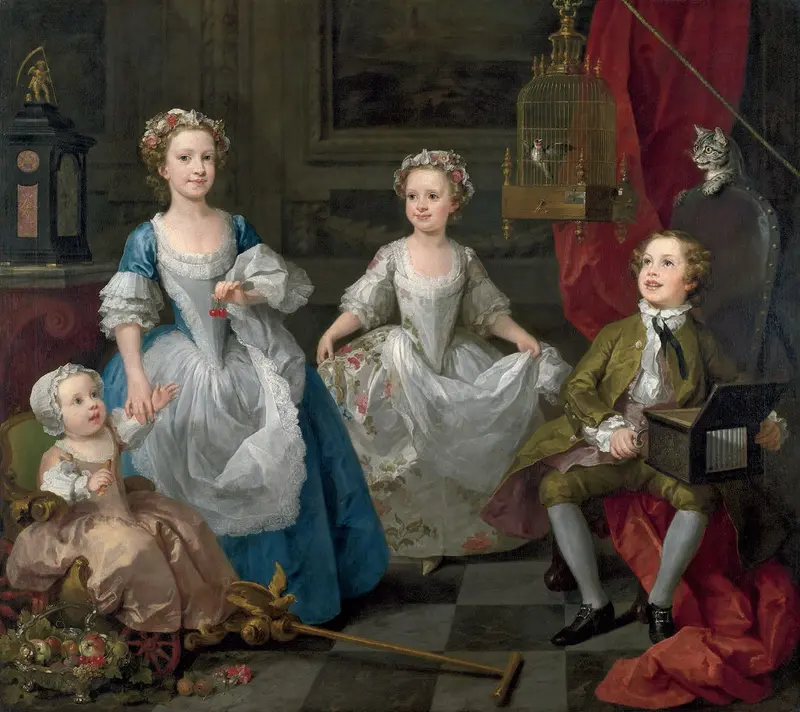
The Graham Children
William Hogarth
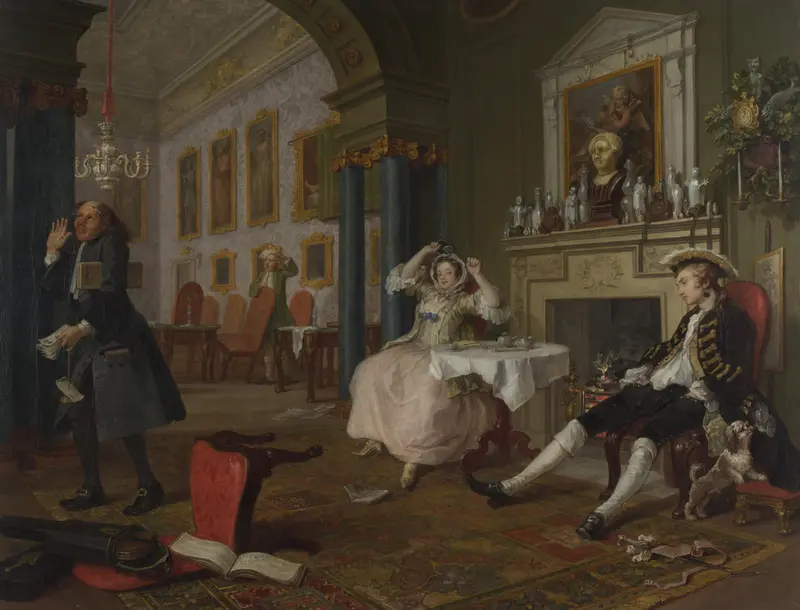
Marriage A-la-Mode: 2. The Tête à Tête
William Hogarth
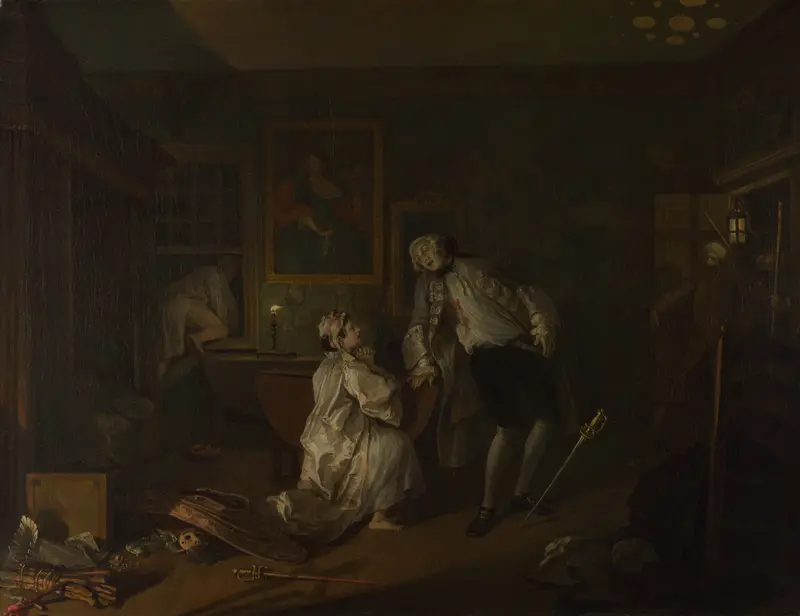
Marriage A-la-Mode: 5. The Bagnio
William Hogarth
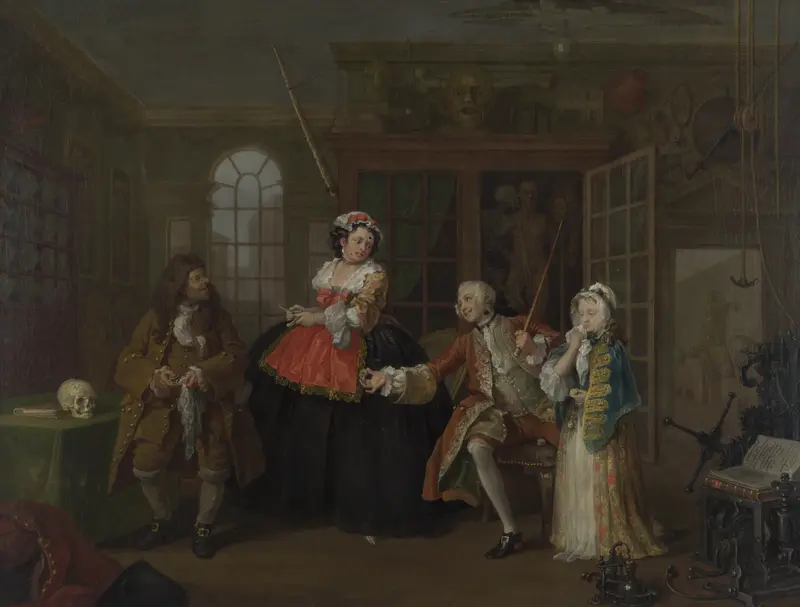
Marriage A-la-Mode: 3. The Inspection
William Hogarth

Miss Mary Edwards
William Hogarth
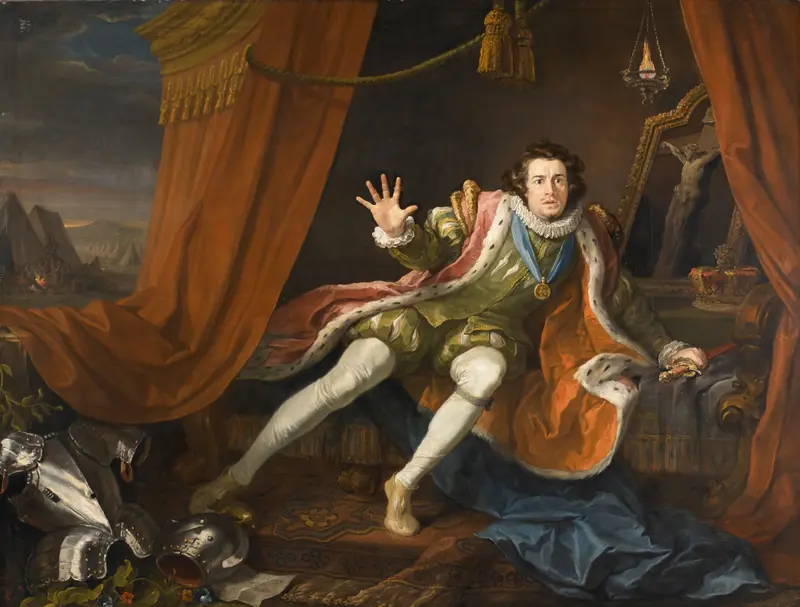
David Garrick as Richard III
William Hogarth
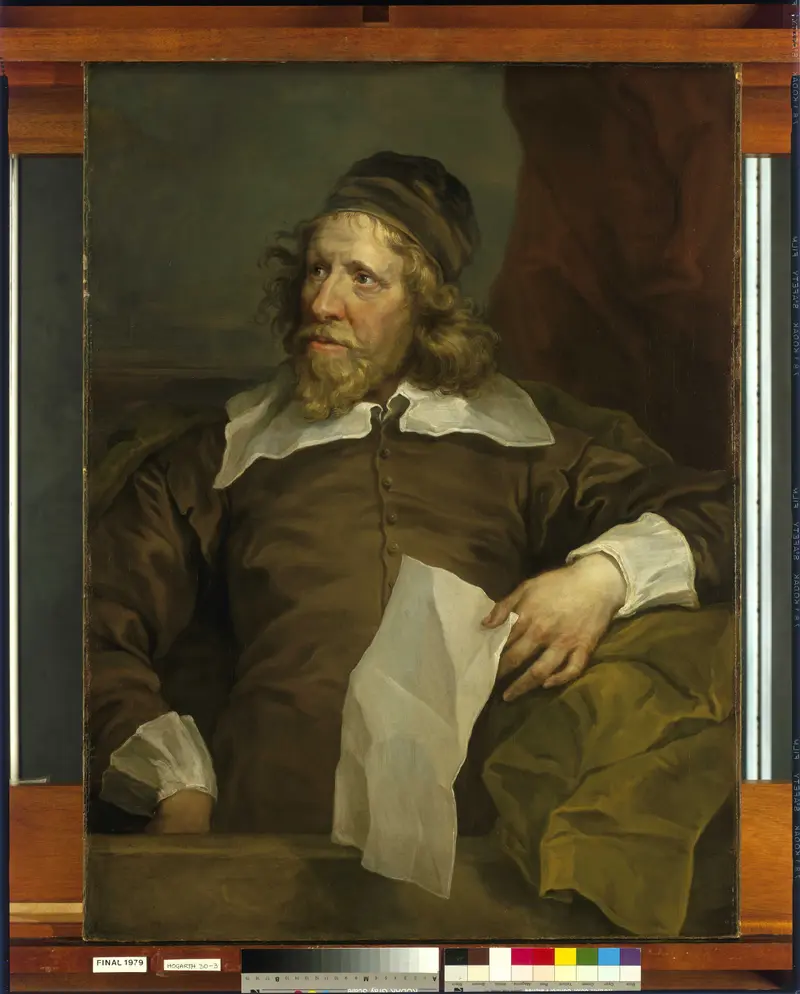
Inigo Jones, 1573-
William Hogarth
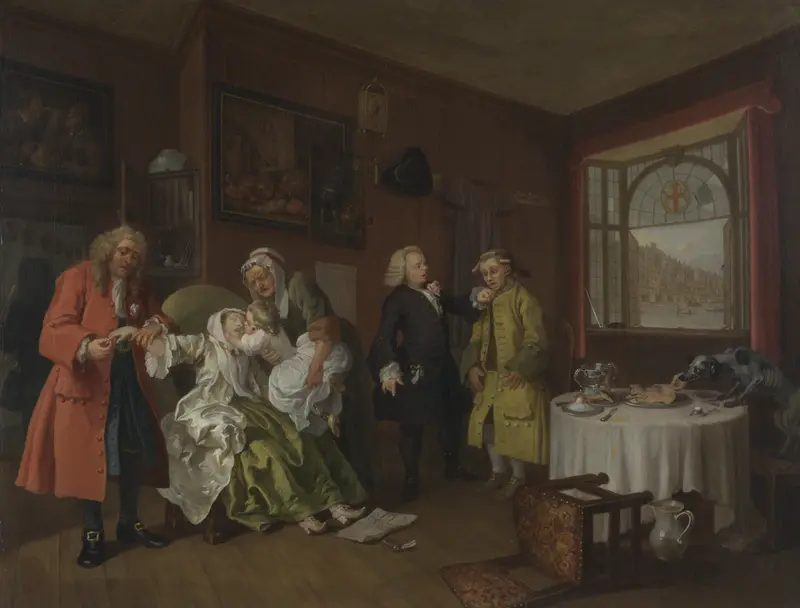
Marriage A-la-Mode: 6. The Lady's Death
William Hogarth
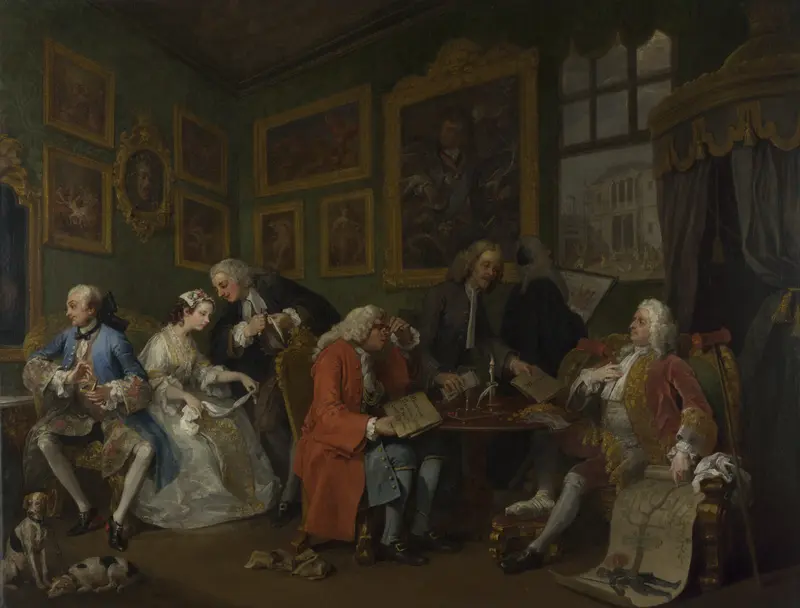
Marriage A-la-Mode: 1. The Marriage Settlement
William Hogarth

Before and After
William Hogarth
More Genre Scene Art

Banquet of the Officers of the St George Civic Guard
Frans Hals

Rembrandt and Saskia in the Scene of the Prodigal Son
Rembrandt van Rijn

Bal du moulin de la Galette
Pierre-Auguste Renoir

Quadrille at the Moulin Rouge
Henri de Toulouse-Lautrec

A Burial at Ornans
Gustave Courbet

When Will You Marry?
Paul Gauguin