
Marriage A-la-Mode: 6. The Lady's Death — History & Facts
A sense of finality grips the room, not just in the lifeless figure slumped in her chair but in the chaos of gestures and glances that swirl around her. The green silk of the woman's dress pools beneath her, its richness now only a reminder of lost status, while the desperate clutch of a child and the wailing of an old nurse sharpen the scene’s tragedy. On the floor, a bottle and a paper hint at poison, and the doctor’s indifferent search for a pulse tells us that help has come too late.
The window, thrown open to a bustling city, frames a world that goes on, indifferent to the private ruin within. Even the dog, gnawing at the remains on the table, seems to echo the disorder and neglect that has overtaken this once-prosperous household. Painted in oil on canvas around 1743, this work by William Hogarth belongs to a tradition of moral storytelling that flourished in eighteenth-century England. Such paintings, often commissioned or purchased by the rising middle class, served as both entertainment and warning, dramatizing the follies and vices of contemporary society.
Hogarth was a master of this genre, weaving together satire and social critique in scenes dense with narrative detail. Today, Marriage A-la-Mode: 6, The Lady's Death hangs in The National Gallery, a testament to the enduring appetite for stories that hold a mirror to the world—inviting us, even now, to read every gesture and shadow for what it reveals about the age that produced it.
More Artworks by William Hogarth
The Graham Children
William Hogarth
Marriage A-la-Mode: 2. The Tête à Tête
William Hogarth
Marriage A-la-Mode: 4. The Toilette
William Hogarth
Marriage A-la-Mode: 5. The Bagnio
William Hogarth
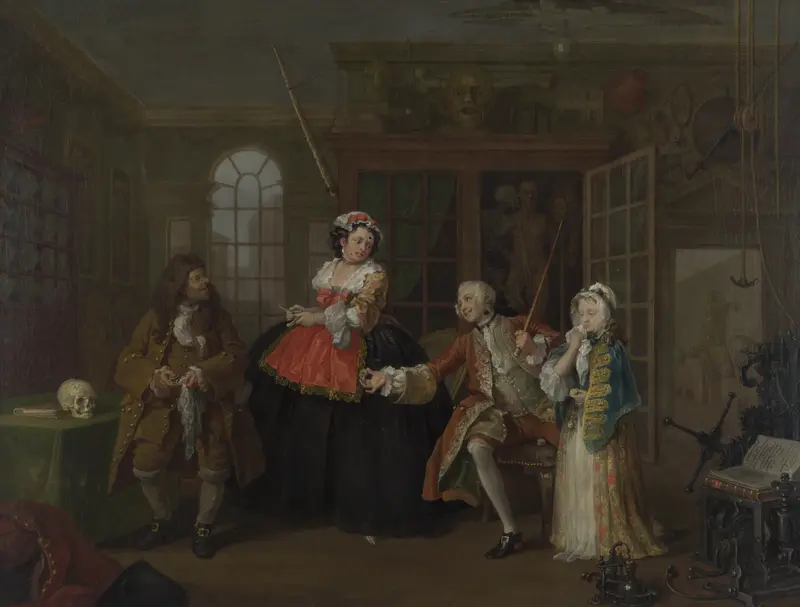
Marriage A-la-Mode: 3. The Inspection
William Hogarth

Miss Mary Edwards
William Hogarth
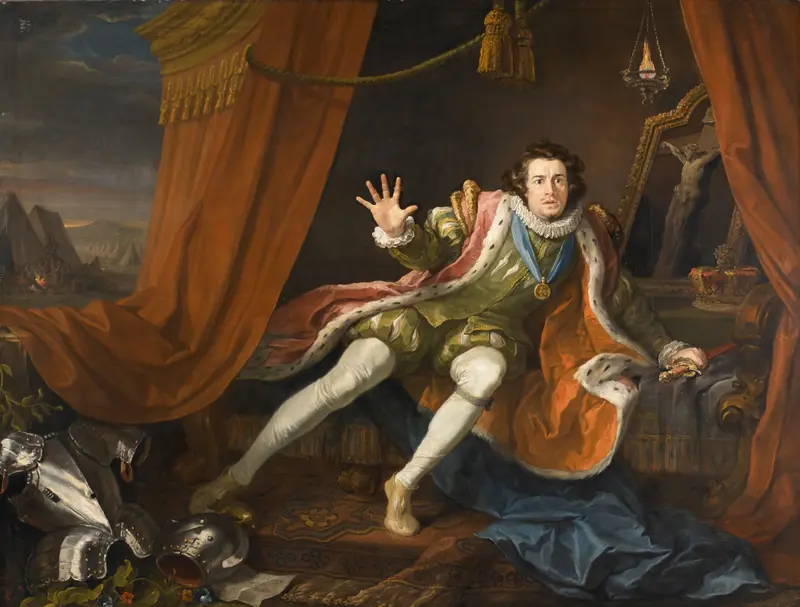
David Garrick as Richard III
William Hogarth
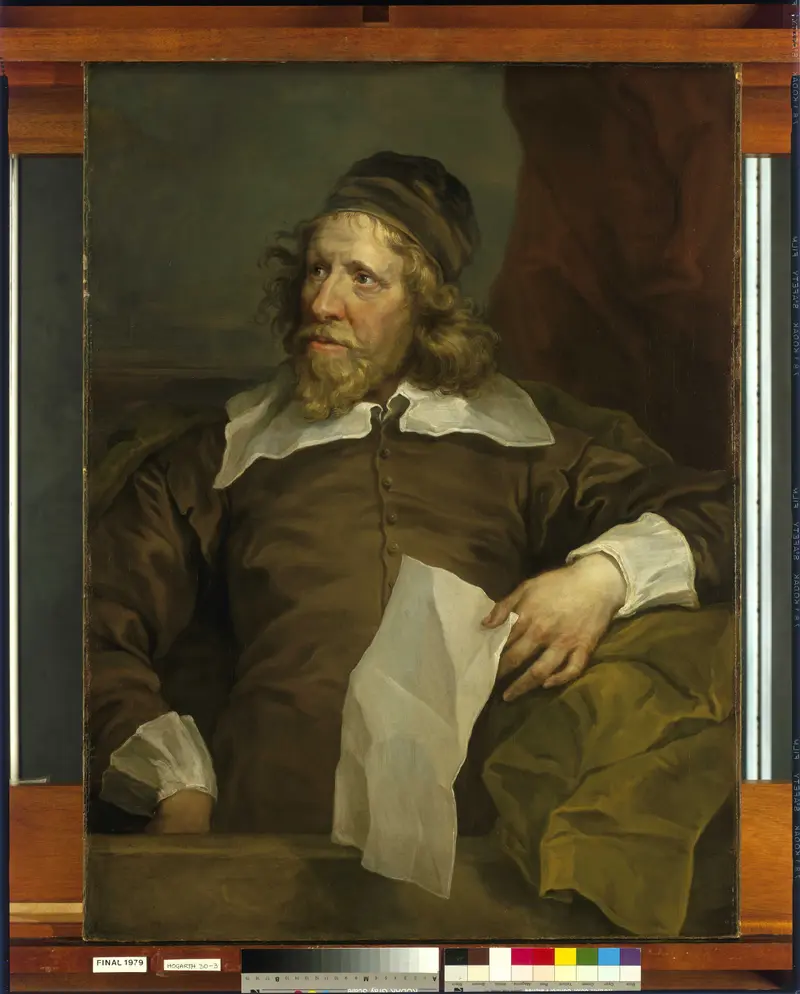
Inigo Jones, 1573-
William Hogarth
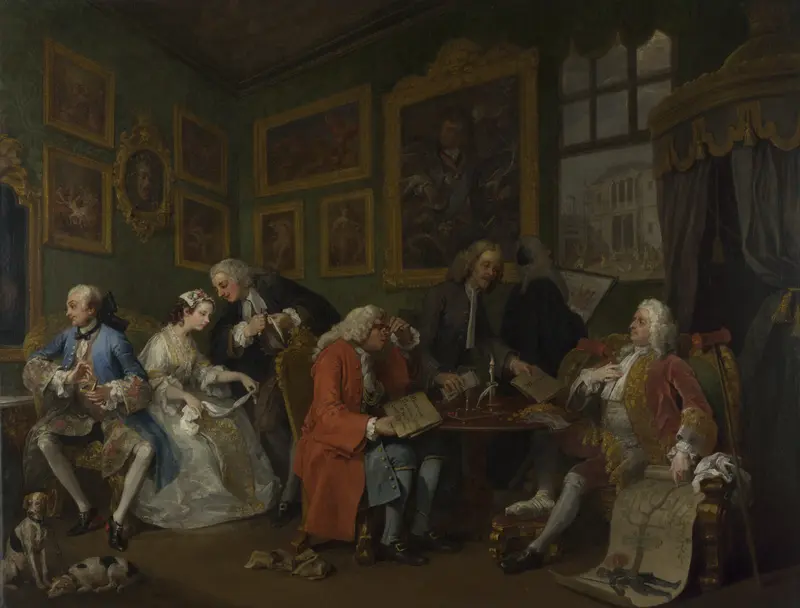
Marriage A-la-Mode: 1. The Marriage Settlement
William Hogarth

Before and After
William Hogarth
More Genre Scene Art

Banquet of the Officers of the St George Civic Guard
Frans Hals

Rembrandt and Saskia in the Scene of the Prodigal Son
Rembrandt van Rijn

Bal du moulin de la Galette
Pierre-Auguste Renoir

Quadrille at the Moulin Rouge
Henri de Toulouse-Lautrec

A Burial at Ornans
Gustave Courbet

When Will You Marry?
Paul Gauguin