
Marriage A-la-Mode: 5. The Bagnio — History & Facts
A single candle burns at the heart of the scene, casting long, nervous shadows across a room that has just witnessed violence. The drama is immediate: a finely dressed man staggers backward, his shirt blooming with blood, while a woman in disarray kneels before him, her face twisted in horror or pleading. To the left, a half-naked figure clambers desperately out of a window, while in the gloom at the right, figures burst through the door—too late to prevent catastrophe.
The room itself is littered with the debris of a hasty encounter: a sword, a mask, a chair overturned. Hogarth’s palette is dark, almost suffocating, the single candle and the white of the woman's gown drawing the eye to the emotional core, while the chaos at the margins hints at secrets and scandal. Painted in the early 1740s, this work belongs to a world in which art was as much a vehicle for moral commentary as for beauty. Satirical narrative paintings like this one, especially in Britain, were prized by a rising middle class eager for both entertainment and instruction; they were often displayed in private homes or public exhibitions, sparking debate and laughter in equal measure.
Marriage A-la-Mode: 5, The Bagnio by William Hogarth (oil on canvas, c. 1743, The National Gallery) stands as a sharp indictment of fashionable vice and folly, its every detail calculated to expose the consequences of reckless desire. The candle’s flicker, the rush of figures, the theatrical gestures—each invites the viewer to linger, to puzzle out the tangled web of guilt and consequence that fills the room.
More Artworks by William Hogarth
The Graham Children
William Hogarth
Marriage A-la-Mode: 2. The Tête à Tête
William Hogarth
Marriage A-la-Mode: 4. The Toilette
William Hogarth
Marriage A-la-Mode: 3. The Inspection
William Hogarth

Miss Mary Edwards
William Hogarth
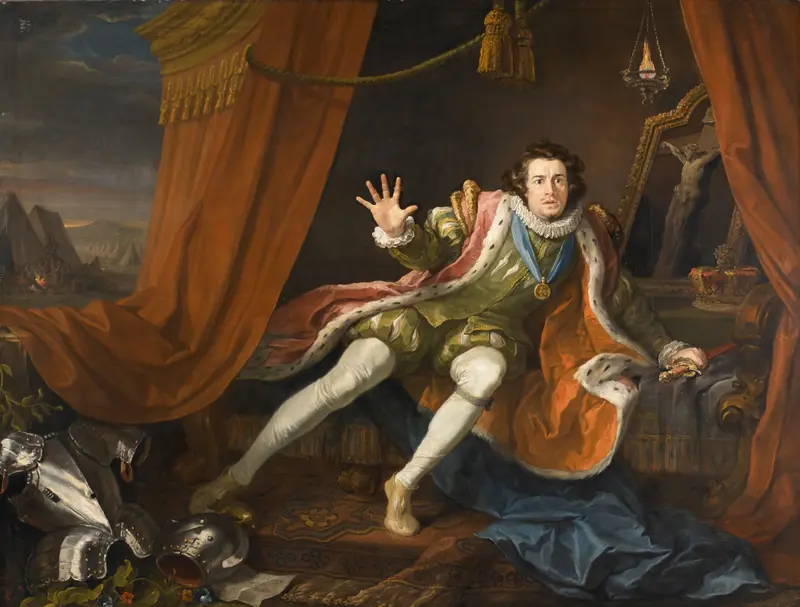
David Garrick as Richard III
William Hogarth
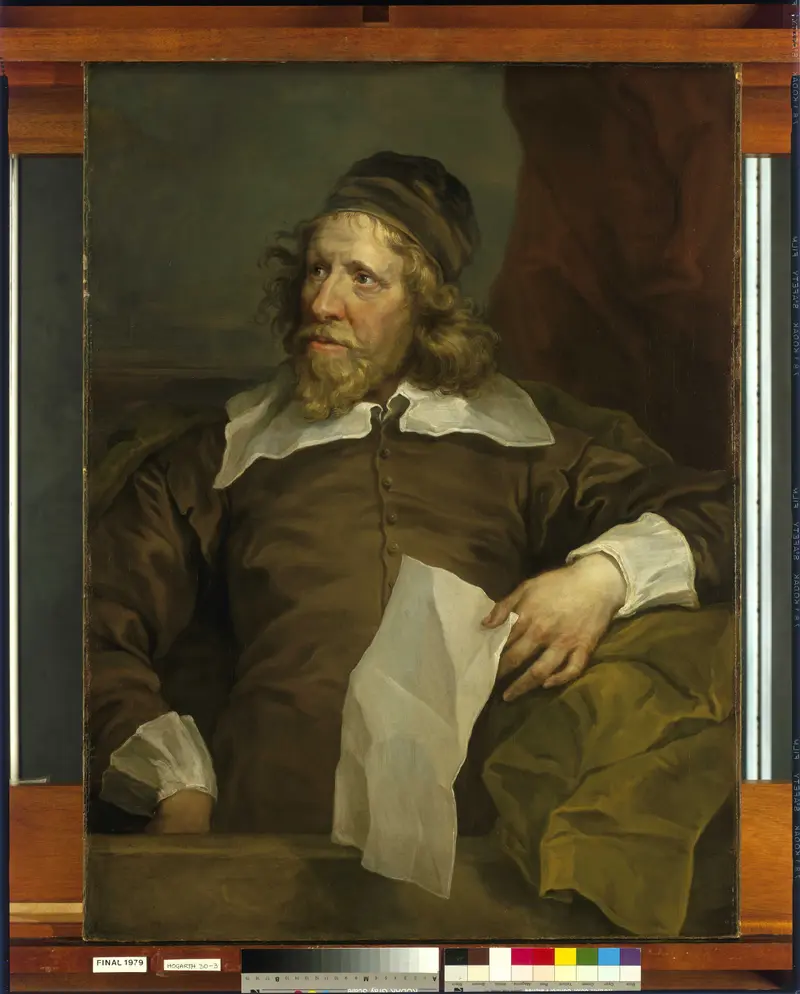
Inigo Jones, 1573-
William Hogarth
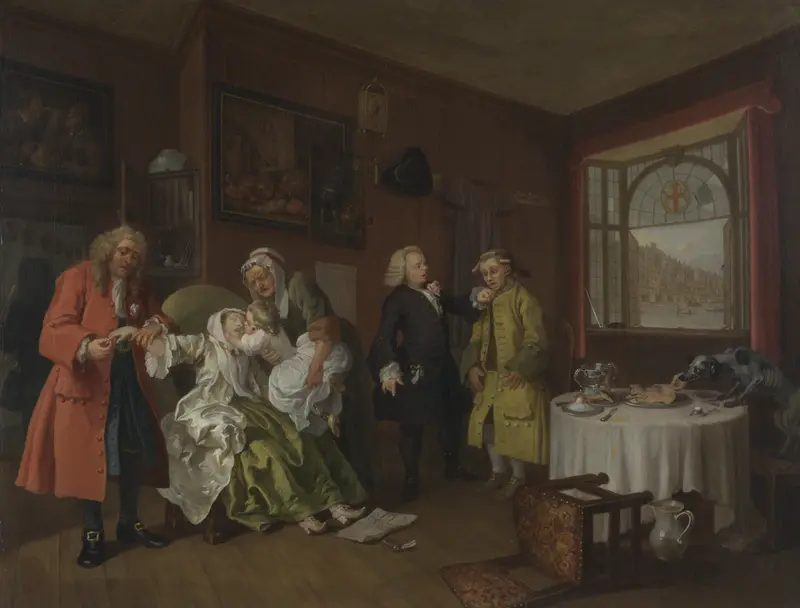
Marriage A-la-Mode: 6. The Lady's Death
William Hogarth
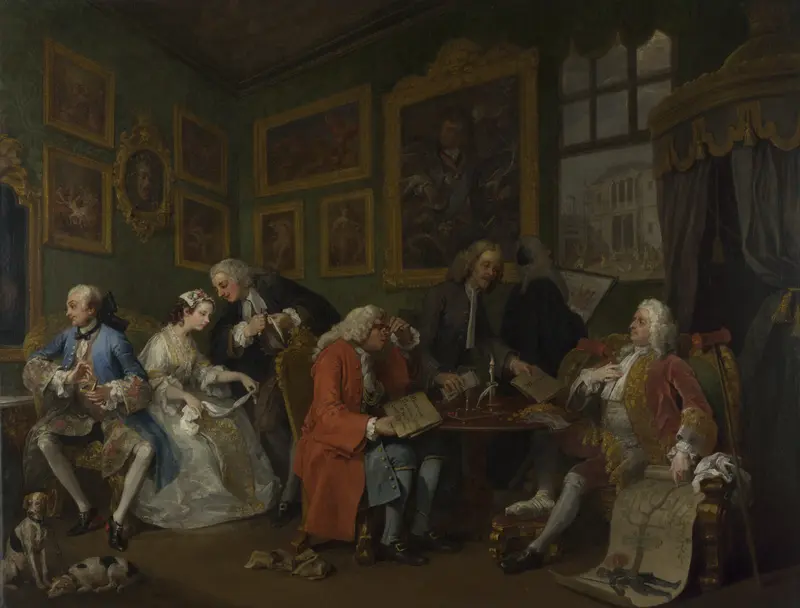
Marriage A-la-Mode: 1. The Marriage Settlement
William Hogarth

Before and After
William Hogarth
More Genre Scene Art

Banquet of the Officers of the St George Civic Guard
Frans Hals

Rembrandt and Saskia in the Scene of the Prodigal Son
Rembrandt van Rijn

Bal du moulin de la Galette
Pierre-Auguste Renoir

Quadrille at the Moulin Rouge
Henri de Toulouse-Lautrec

A Burial at Ornans
Gustave Courbet

When Will You Marry?
Paul Gauguin