
Mars and Venus, Allegory of Peace — History & Facts
The first thing to catch the eye in Mars and Venus, Allegory of Peace is the hush of intimacy: a god of war, bare-chested and alert, gently parts a heavy emerald curtain as if shielding his lover from the world. The goddess Venus lies at ease, her posture loose, her head resting in sleep or satisfied reverie. The light falls softly on her skin, making her the painting’s true center, while Mars—so often imagined in armor—appears disarmed, his gaze fixed on her rather than any distant threat.
The palette is rich but not loud: deep green drapery, a cascade of rose-red fabric, and the cool marble floor all draw the viewer into this private, almost theatrical space. At their feet, doves and a basket of flowers quietly signal love and peace, their presence a gentle counterpoint to Mars’s usual symbols of conflict. Painted in 1770, this work by Louis-Jean-François Lagrenée belongs to a world where mythological scenes were more than decoration—they were lessons, aspirations, and coded messages for the elite. In the late eighteenth century, French artists often turned to the loves of gods to reflect on human affairs, especially as the Enlightenment brought new ideas about reason, harmony, and the possibility of peace.
Such paintings would have been commissioned for private salons, where they offered both sensual delight and a subtle allegory: here, the union of Mars and Venus stands for the hope that love might tame violence, that beauty and desire might bring respite from war. The documented date, 1770, places this work at the twilight of the Ancien Régime, when the old order’s taste for myth and allegory was soon to be swept away by revolution. Look again at the curtain, the careful staging, the doves at rest—each detail invites us to linger in this fragile, painted peace.
More Artworks by Louis-Jean-François Lagrenée
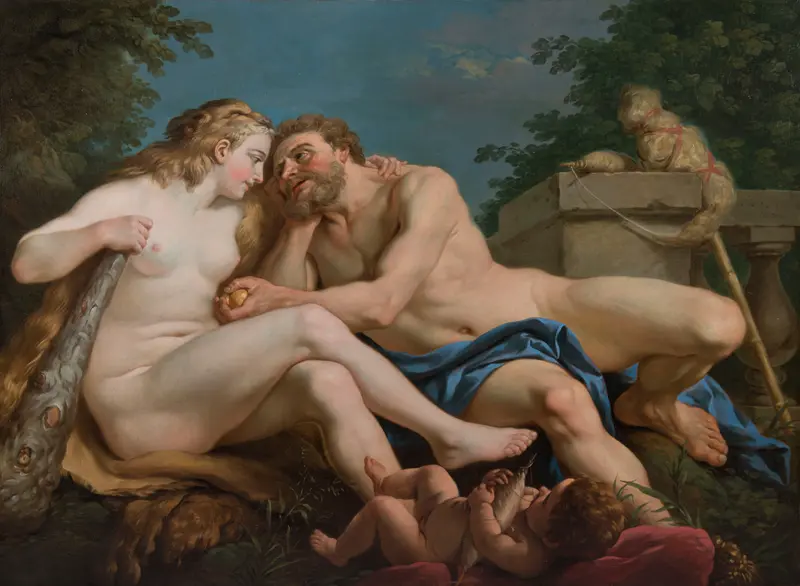
Herkules and Omphale
Louis-Jean-François Lagrenée
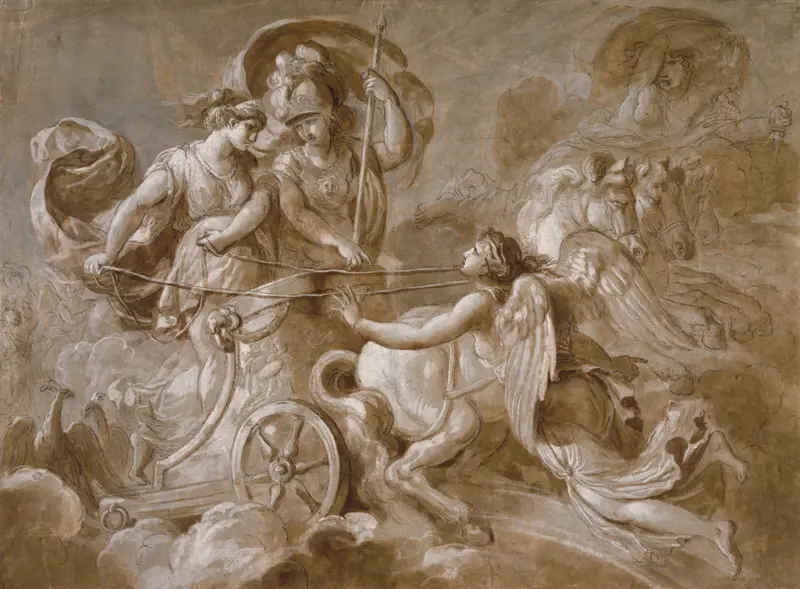
Iris Approaching Athena and Hera
Louis-Jean-François Lagrenée
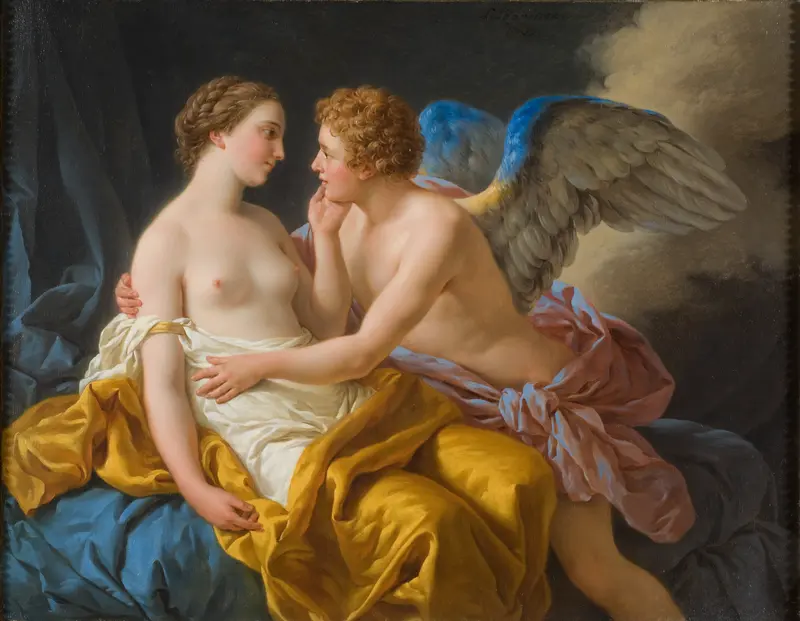
Cupid and Psyche
Louis-Jean-François Lagrenée
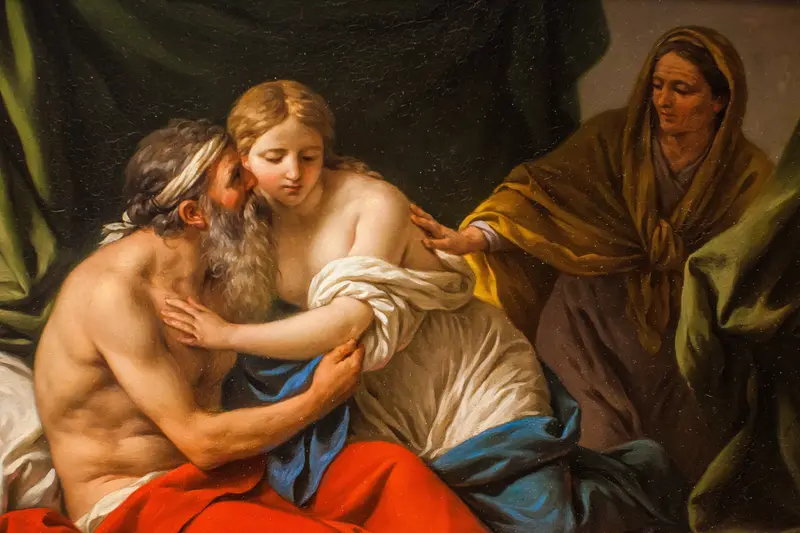
Sarah Presenting Hagar to Abraham
Louis-Jean-François Lagrenée
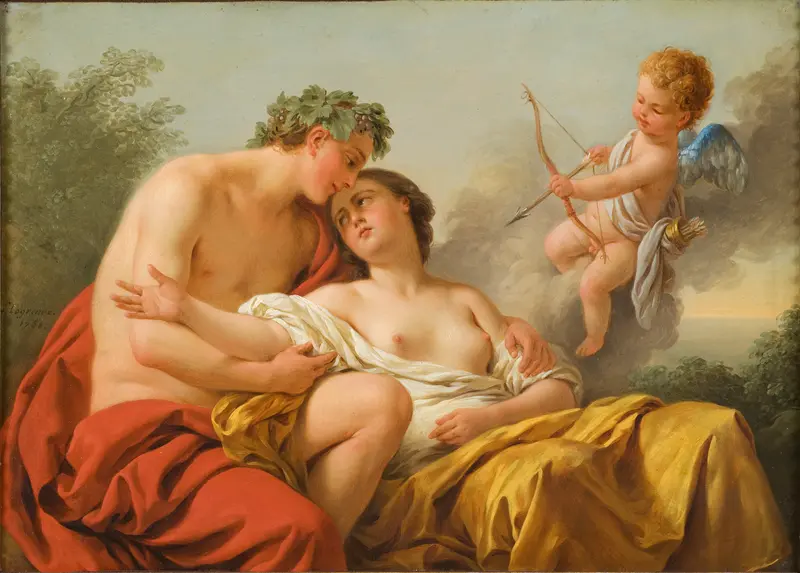
Bacchus and Ariadne
Louis-Jean-François Lagrenée
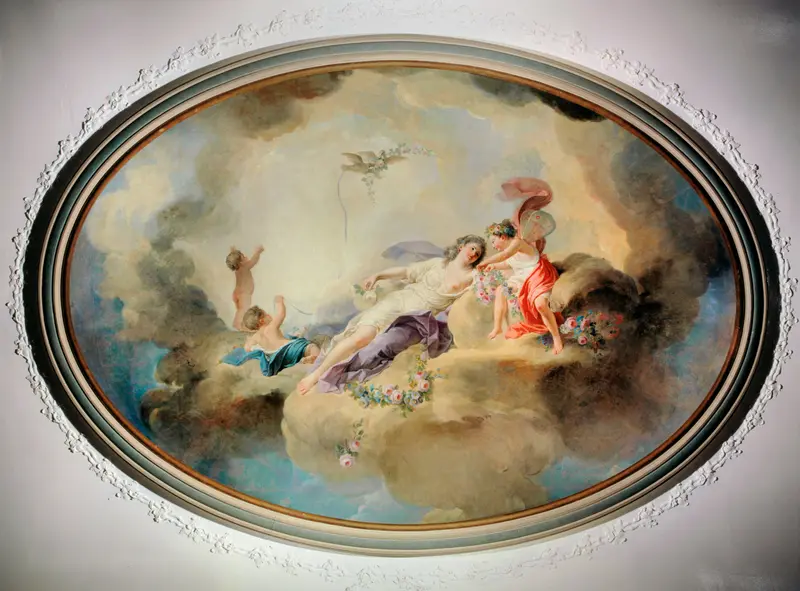
Louis Jean François Lagrenée Le triomphe de Flore P787 Musée Carnavalet
Louis-Jean-François Lagrenée
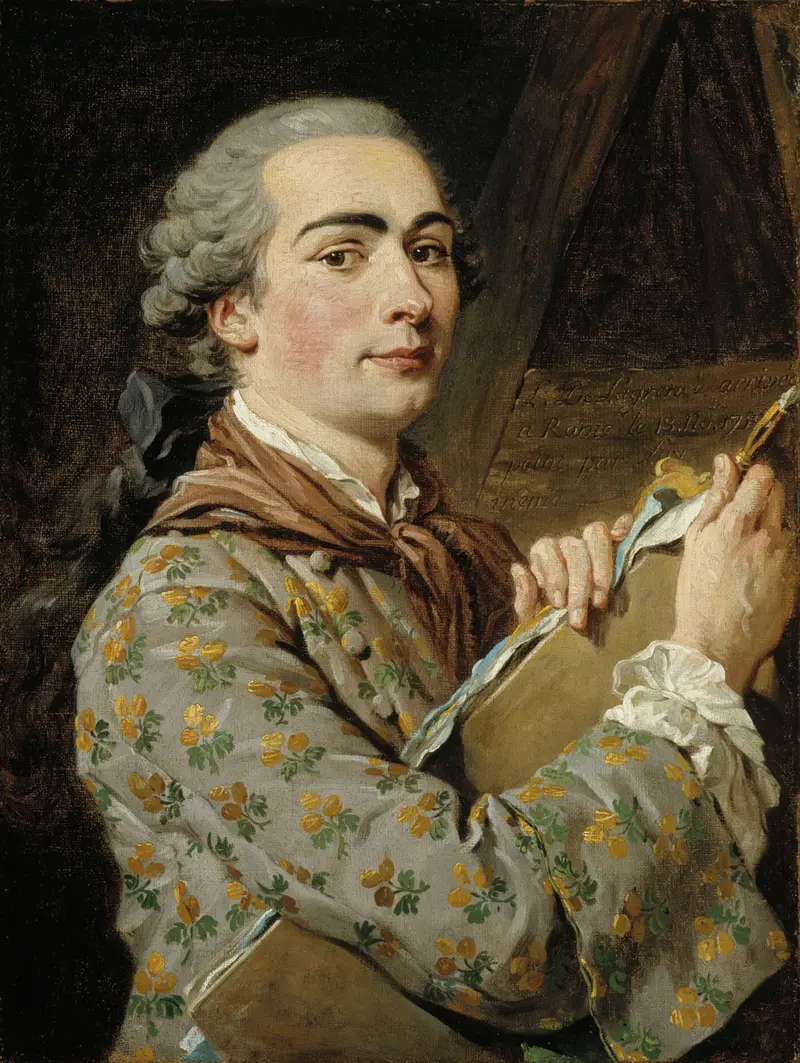
Self-Portrait
Louis-Jean-François Lagrenée
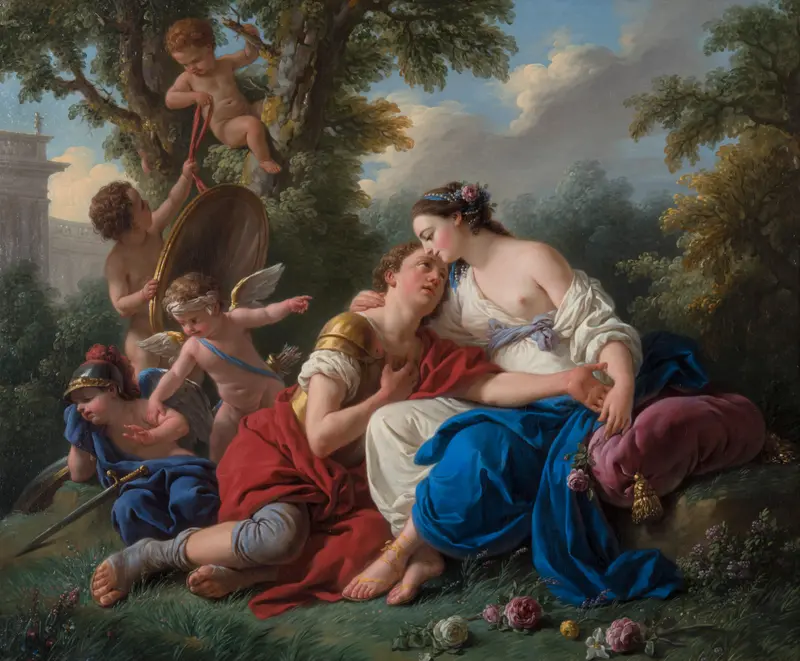
Rinaldo and Armida
Louis-Jean-François Lagrenée
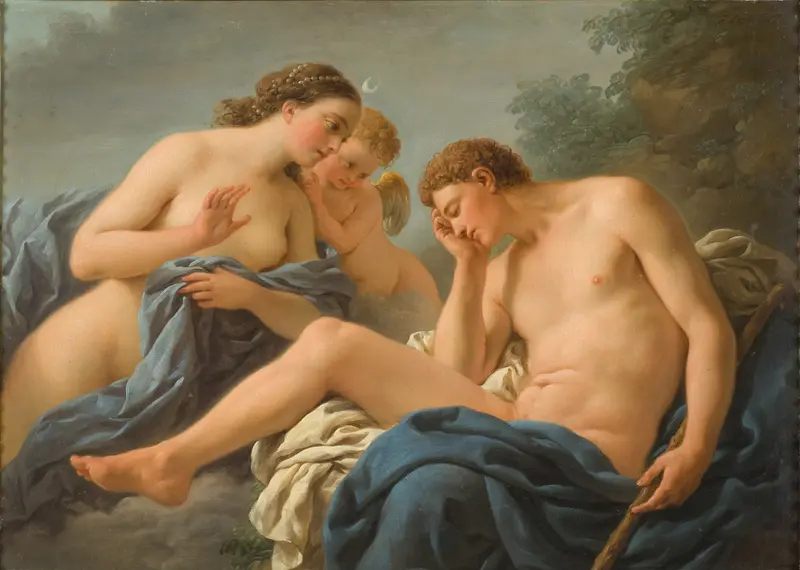
Diana and Endymion
Louis-Jean-François Lagrenée
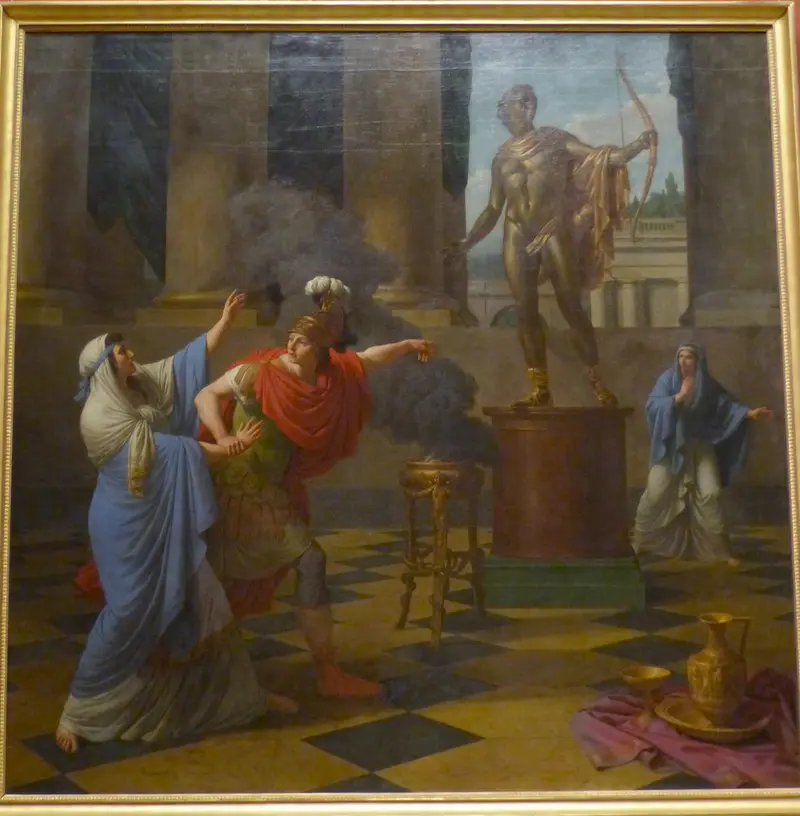
Alexander consulting the Oracle of Apollo
Louis-Jean-François Lagrenée





