
Bacchus and Ariadne — History & Facts
Ariadne’s gaze is the first thing to catch the eye—turned upward, her expression suspended between surprise and wonder as Bacchus, crowned with vines, sweeps toward her. The painter has chosen the moment of encounter, when the god of wine descends to claim the abandoned princess. The figures are arranged in a swirl of movement, Bacchus’s outstretched arm and Ariadne’s poised gesture drawing the viewer into their drama.
The luminous flesh tones and delicate drapery shimmer against a gentle landscape, while the gathering of satyrs and nymphs at the edges hints at the revelry to come. Every detail, from the fluttering fabrics to the attentive cupids, is designed to heighten the sense of a world suspended between myth and reality. Painted in 1768, this work belongs to a moment when French artists like Louis-Jean-François Lagrenée delighted in mythological subjects, blending sensuality with classical poise. Such scenes were favored by aristocratic patrons, who saw in them both a celebration of ancient stories and a reflection of their own cultivated tastes.
The Rococo palette—creamy pinks, soft blues, and warm golds—bathes the figures in a light that is both theatrical and intimate. History has kept few traces of this specific painting’s early life, but today it resides in the Nationalmuseum, a testament to the enduring appeal of myth retold in paint. The longer one looks, the more the painting invites us to linger in this enchanted moment, caught between the mortal and the divine.
More Artworks by Louis-Jean-François Lagrenée
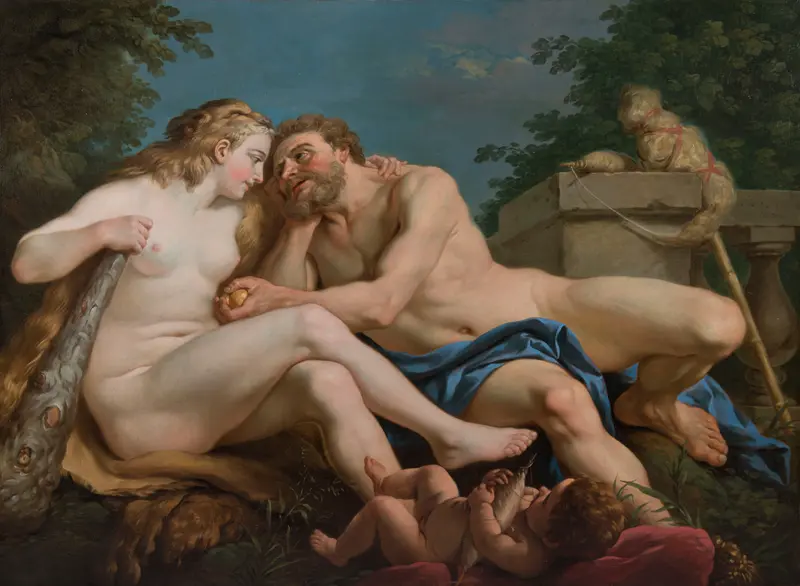
Herkules and Omphale
Louis-Jean-François Lagrenée
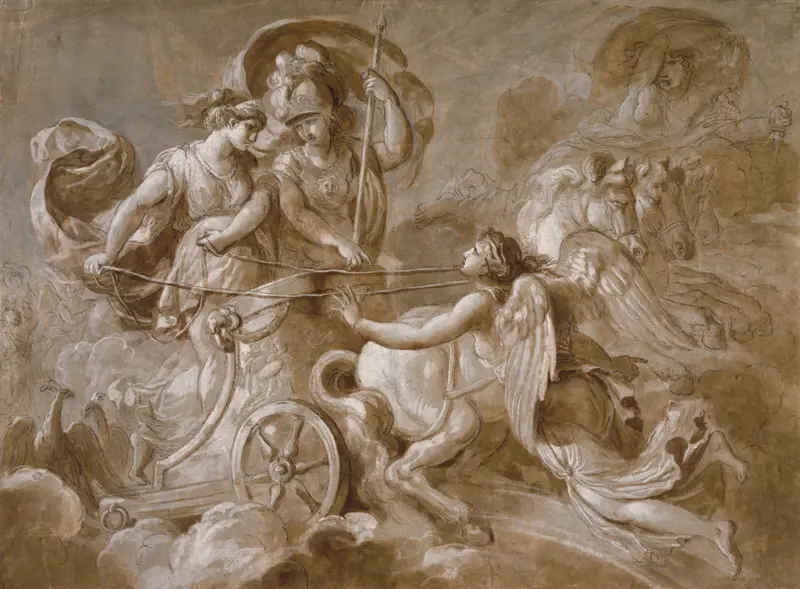
Iris Approaching Athena and Hera
Louis-Jean-François Lagrenée
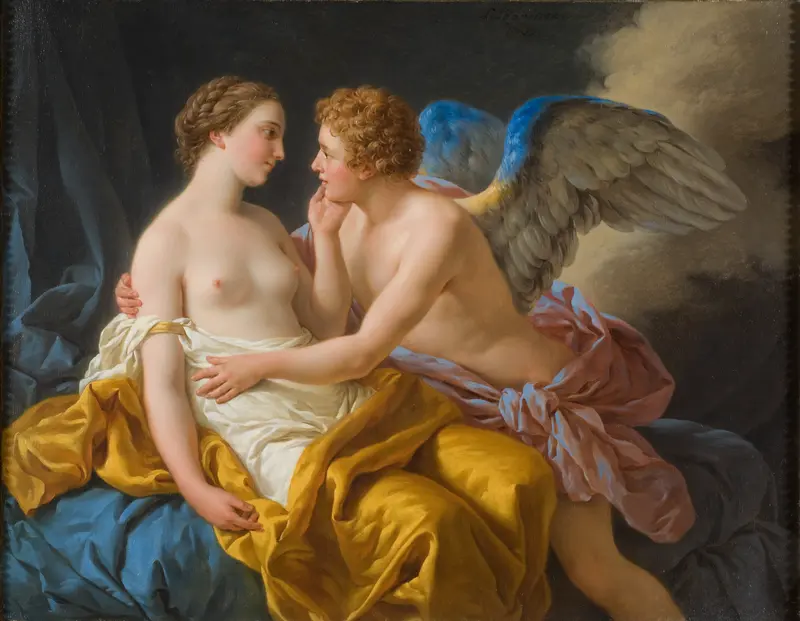
Cupid and Psyche
Louis-Jean-François Lagrenée
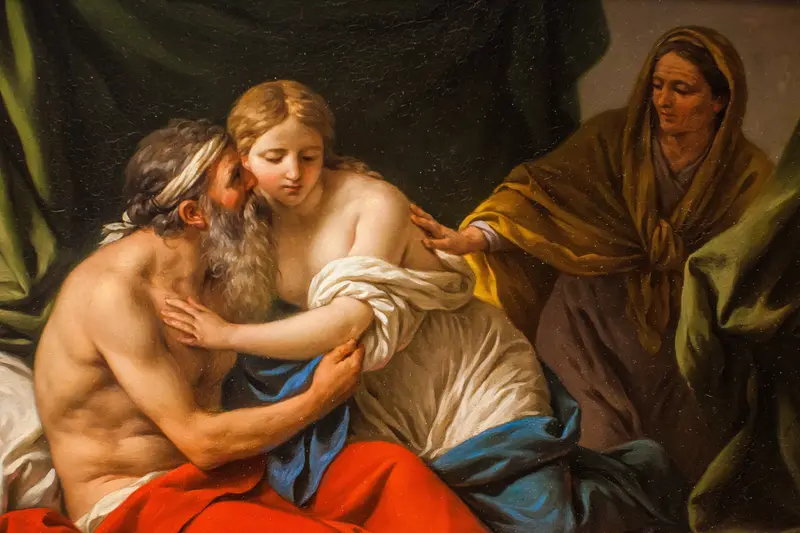
Sarah Presenting Hagar to Abraham
Louis-Jean-François Lagrenée
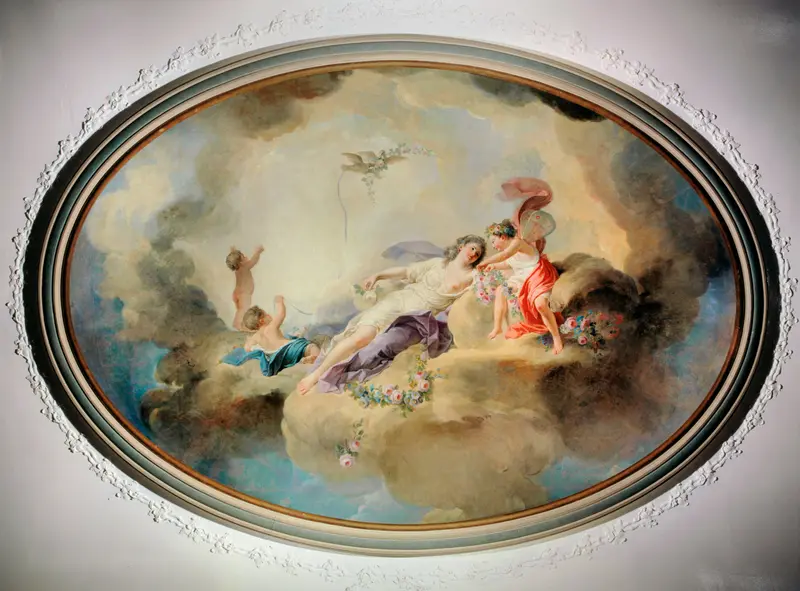
Louis Jean François Lagrenée Le triomphe de Flore P787 Musée Carnavalet
Louis-Jean-François Lagrenée
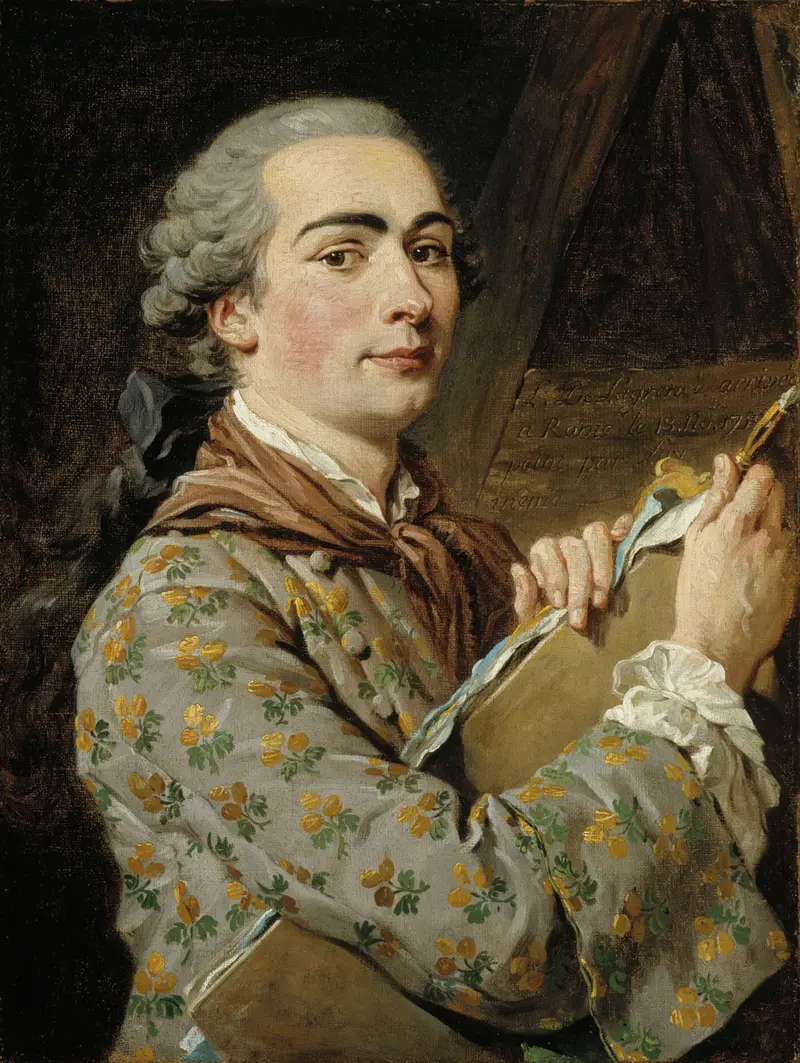
Self-Portrait
Louis-Jean-François Lagrenée
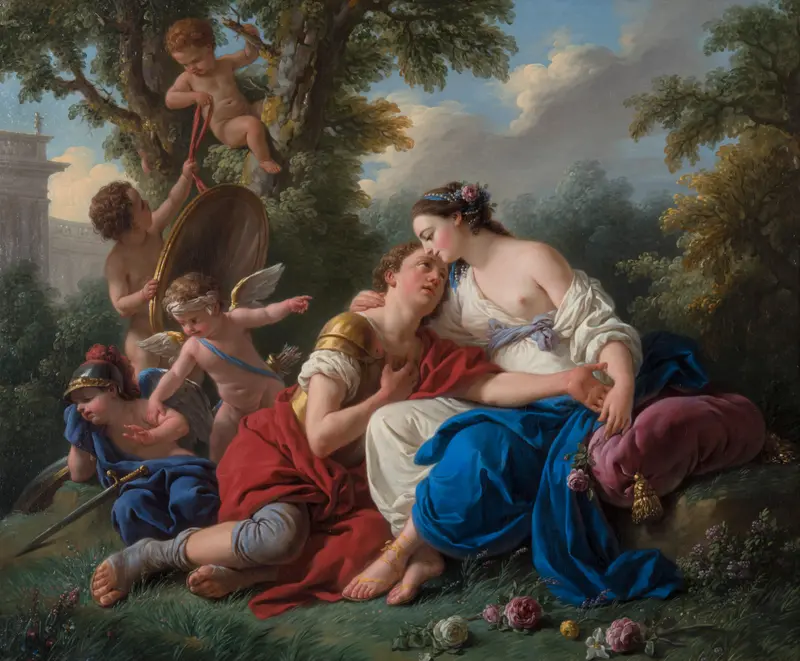
Rinaldo and Armida
Louis-Jean-François Lagrenée
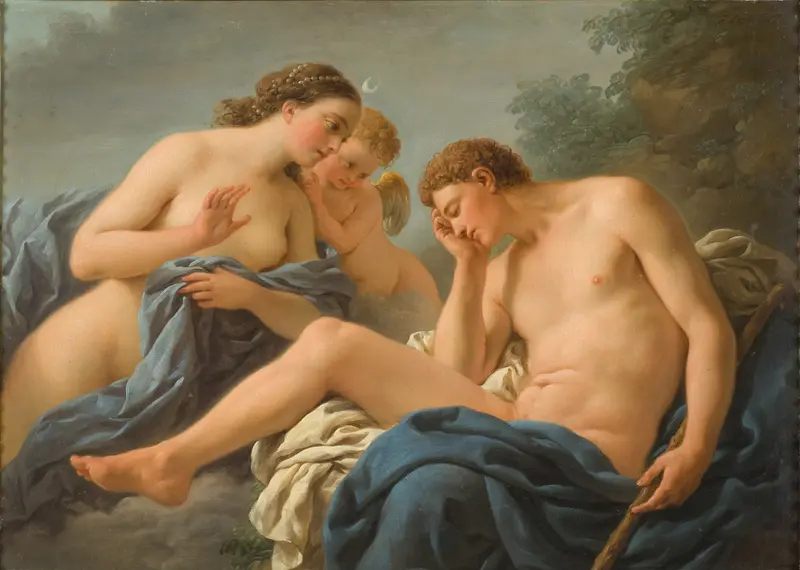
Diana and Endymion
Louis-Jean-François Lagrenée
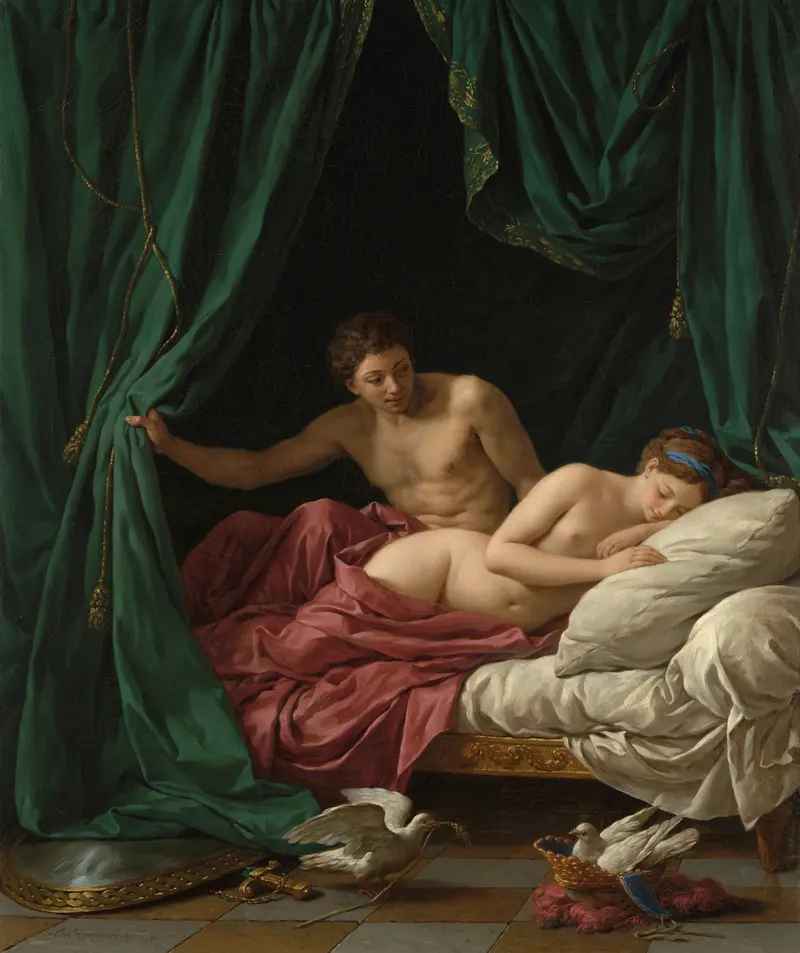
Mars and Venus, Allegory of Peace
Louis-Jean-François Lagrenée
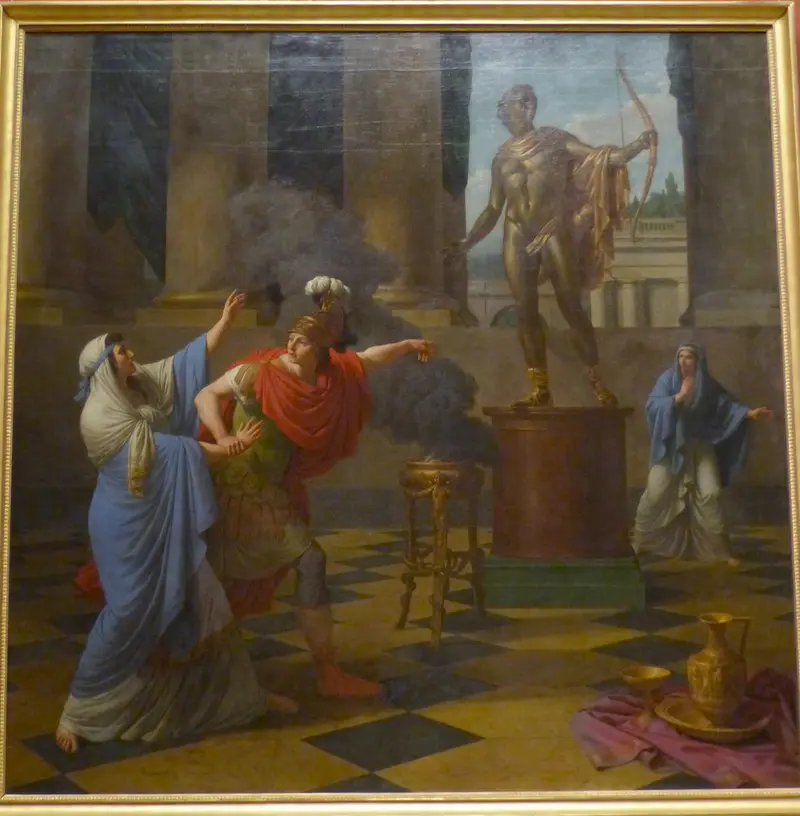
Alexander consulting the Oracle of Apollo
Louis-Jean-François Lagrenée





