
Diana and Endymion — History & Facts
What draws the eye first is the hush that hangs between the figures, a moment suspended between longing and sleep. The goddess, marked by her crescent moon diadem, leans in close to the slumbering youth, her gesture a delicate balance of desire and restraint. A small winged Cupid hovers at her shoulder, his gaze fixed on the sleeping boy, as if urging the goddess onward or perhaps cautioning her to pause.
The cool blue drapery that winds around their bodies both conceals and connects them, guiding the viewer’s gaze from Diana’s poised hand to Endymion’s dreaming face. Light falls softly across their skin, heightening the sense of intimacy and quiet, while the distant, misty landscape recedes into a gentle blur, ensuring that all attention remains on this charged encounter. Painted in 1768, this work by Louis-Jean-François Lagrenée belongs to a world where mythological subjects offered artists a stage for exploring beauty, desire, and the boundaries of the human and divine. In the eighteenth century, such scenes were favored by aristocratic patrons who sought not only classical learning but also the sensual grace that French painting could bring to ancient tales.
The Nationalmuseum in Stockholm now holds this painting, a testament to the era’s taste for polished surfaces and refined storytelling. History has kept few traces of this particular canvas’s journey, but the scene it preserves—half dream, half temptation—invites us to linger, searching for the moment when night gives way to waking.
More Artworks by Louis-Jean-François Lagrenée
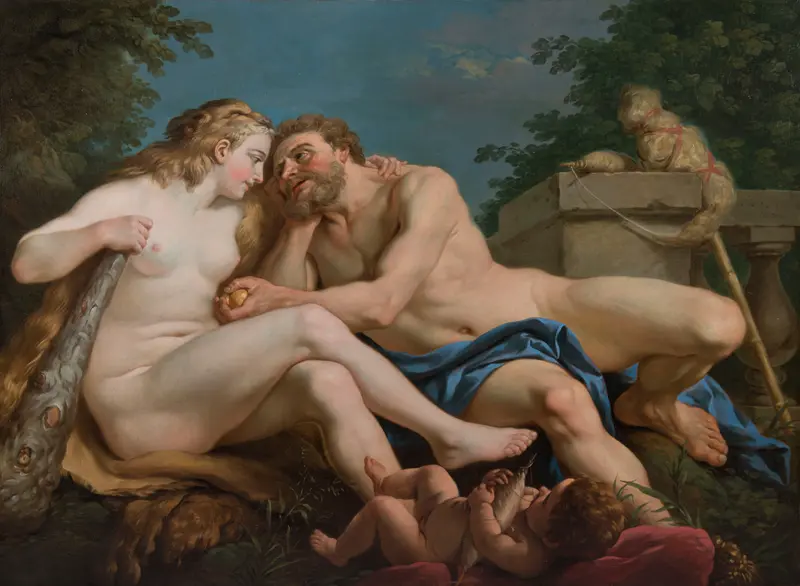
Herkules and Omphale
Louis-Jean-François Lagrenée
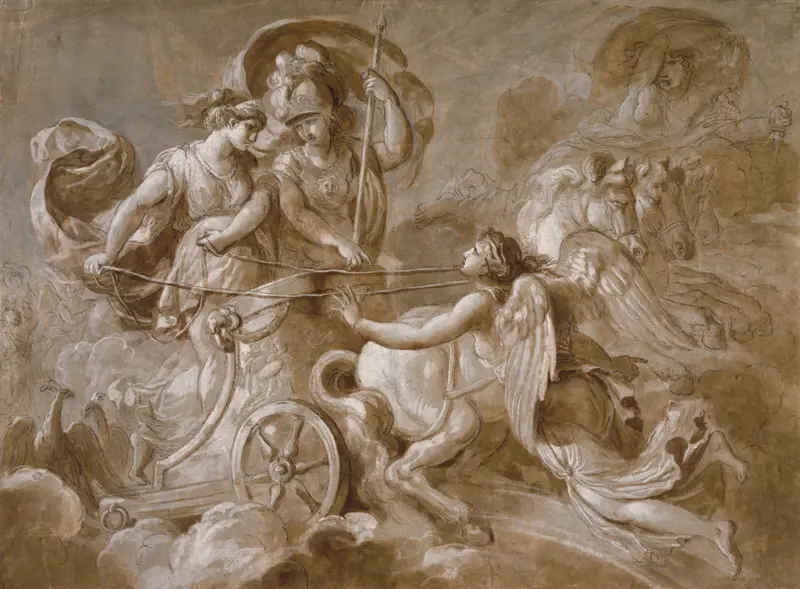
Iris Approaching Athena and Hera
Louis-Jean-François Lagrenée
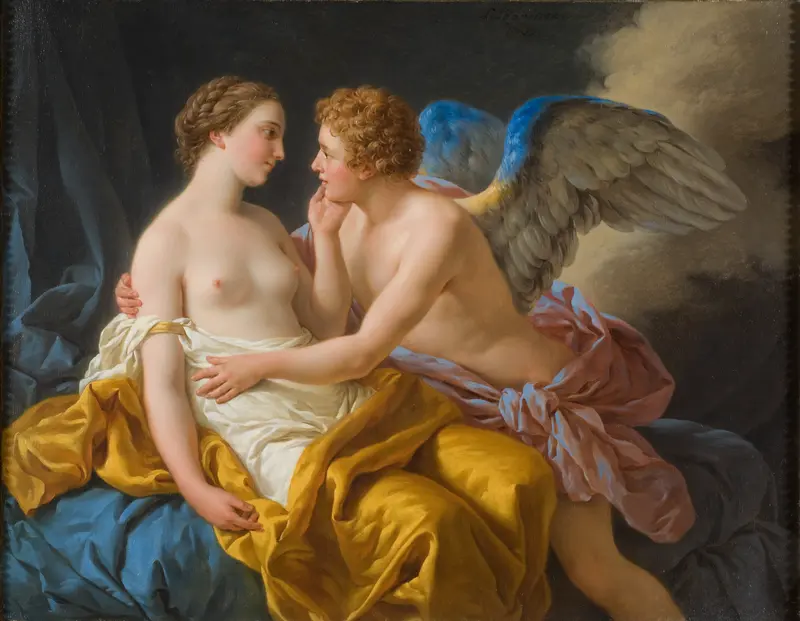
Cupid and Psyche
Louis-Jean-François Lagrenée
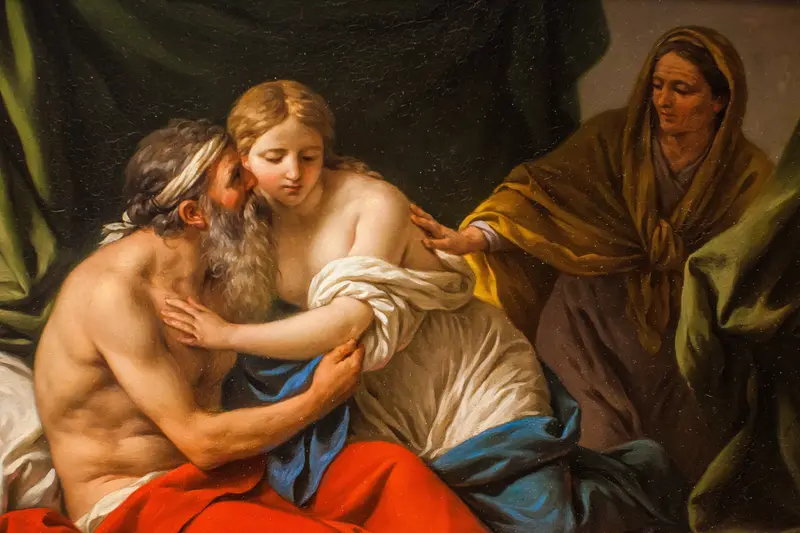
Sarah Presenting Hagar to Abraham
Louis-Jean-François Lagrenée
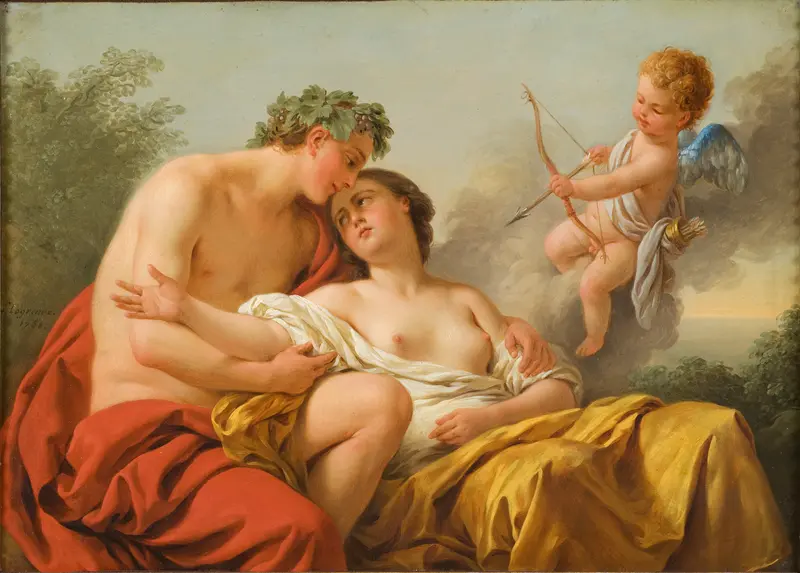
Bacchus and Ariadne
Louis-Jean-François Lagrenée
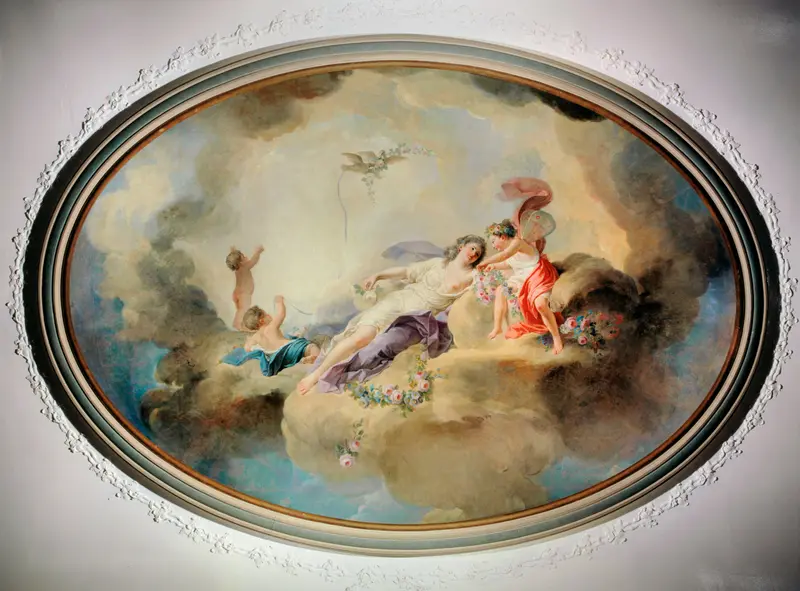
Louis Jean François Lagrenée Le triomphe de Flore P787 Musée Carnavalet
Louis-Jean-François Lagrenée
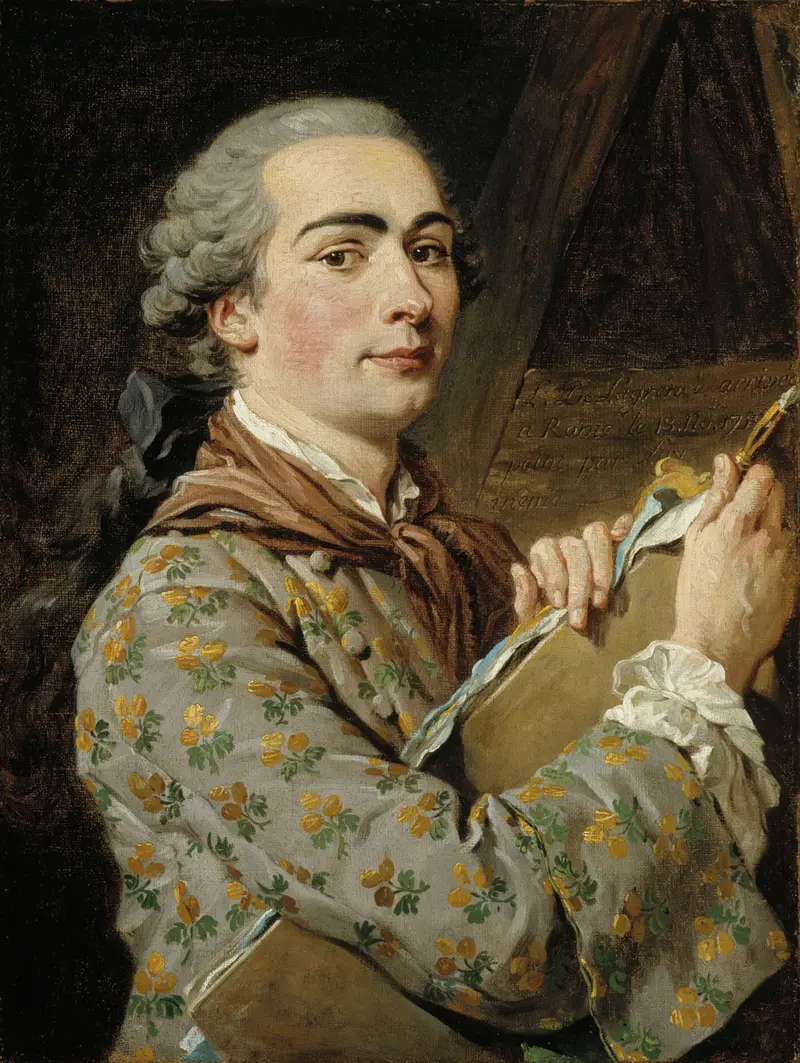
Self-Portrait
Louis-Jean-François Lagrenée
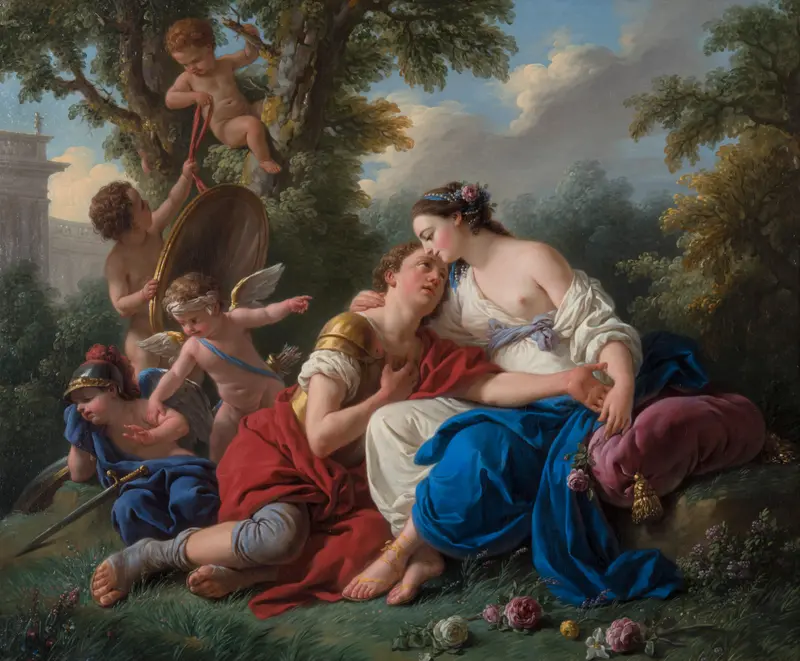
Rinaldo and Armida
Louis-Jean-François Lagrenée
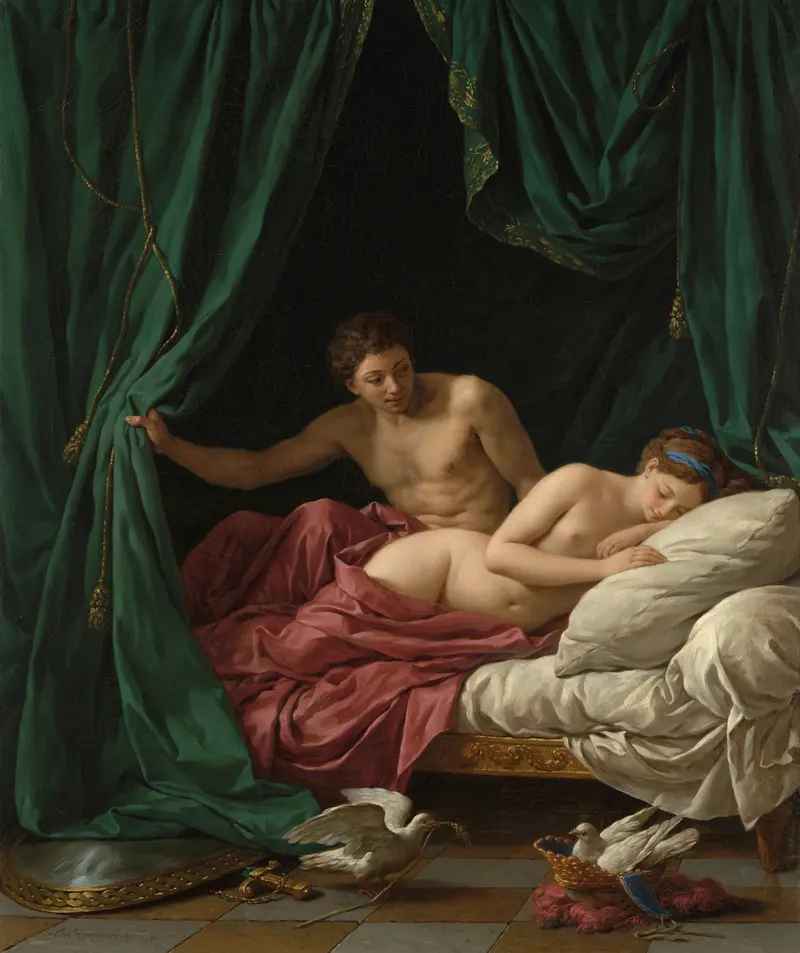
Mars and Venus, Allegory of Peace
Louis-Jean-François Lagrenée
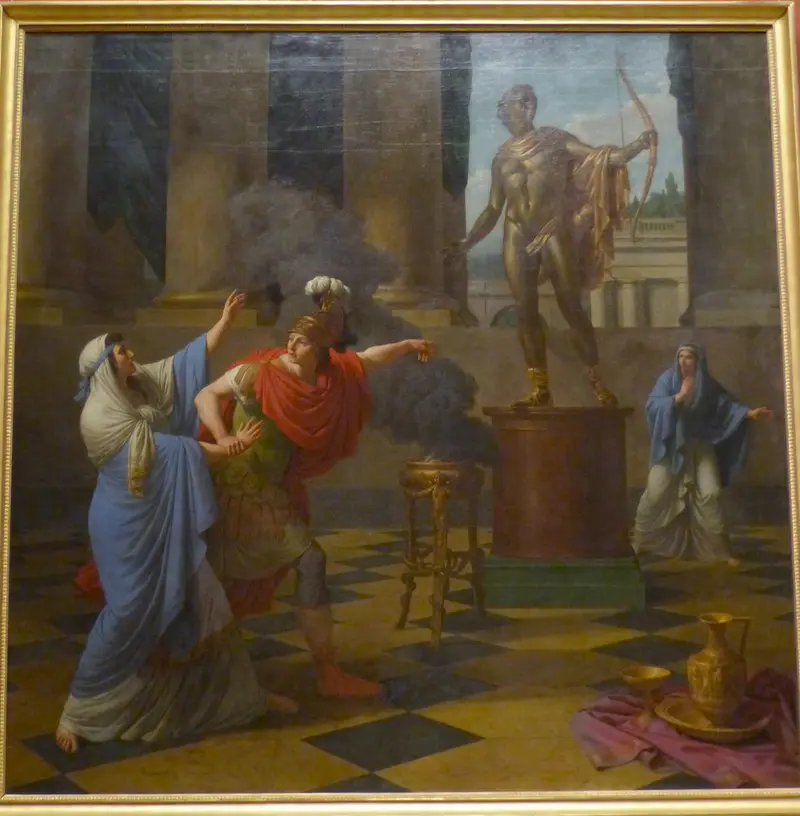
Alexander consulting the Oracle of Apollo
Louis-Jean-François Lagrenée





