
Rinaldo and Armida — History & Facts
What first draws the eye in Rinaldo and Armida is not the embrace at its center, but the way every figure seems caught in a gentle conspiracy to prolong this moment. The lovers recline in a lush woodland, Armida’s hand guiding Rinaldo’s gaze toward her, her gesture both tender and possessive. Around them, putti play their roles: one holds a mirror to reflect Armida’s beauty, another tugs at Rinaldo’s armor as if to disarm him further, while a third, helmeted and pensive, seems to mourn the hero’s lost resolve.
The palette is all softness—rose, blue, and gold—bathed in a warm, even light that smooths every contour and draws the viewer into the lovers’ spell. Nothing here is left to chance: every flower, every glance, every shaft of light serves to heighten the sense of suspended time, as if the outside world has been banished. Painted in 1766, this work by Louis-Jean-François Lagrenée belongs to a world where mythological and literary subjects offered artists a stage for both sensuality and moral reflection. Scenes from Tasso’s Jerusalem Delivered—the doomed romance of the Christian knight and the sorceress—were favored by patrons who delighted in their blend of heroism and seduction.
In the France of Lagrenée’s day, such paintings were often destined for private chambers or salons, where their themes of enchantment and surrender could be savored in intimate company. History has kept few traces of this particular canvas’s early journey, but its survival in the Galerie Jean-François Heim today allows us to see how eighteenth-century artists like Lagrenée balanced theatricality and grace, inviting us to linger, just as Rinaldo does, in the arms of illusion.
More Artworks by Louis-Jean-François Lagrenée
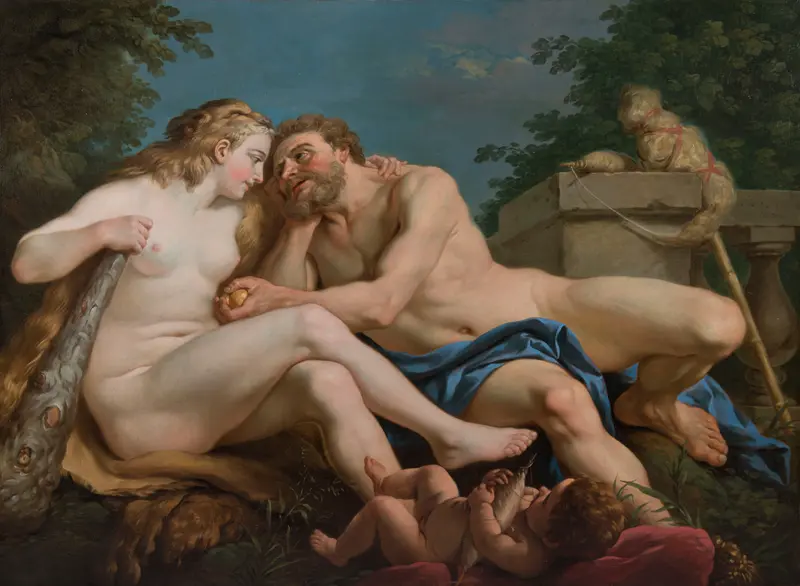
Herkules and Omphale
Louis-Jean-François Lagrenée
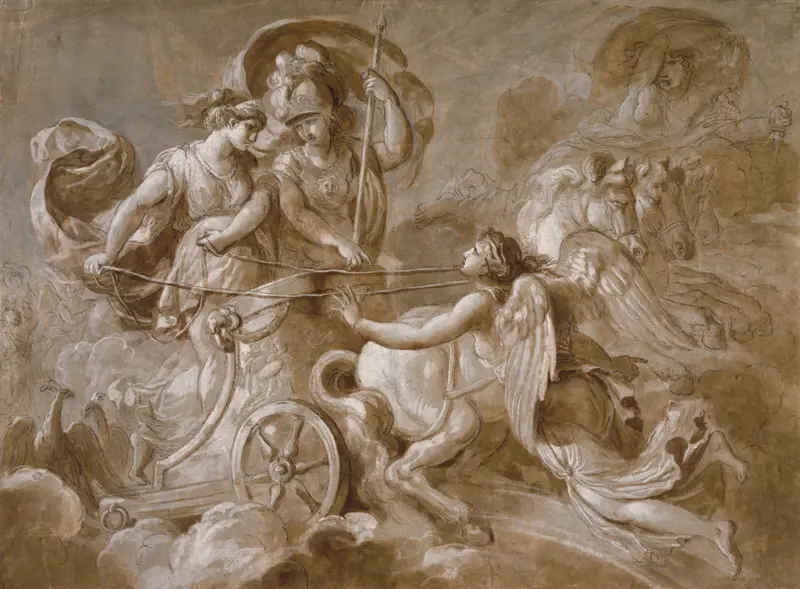
Iris Approaching Athena and Hera
Louis-Jean-François Lagrenée
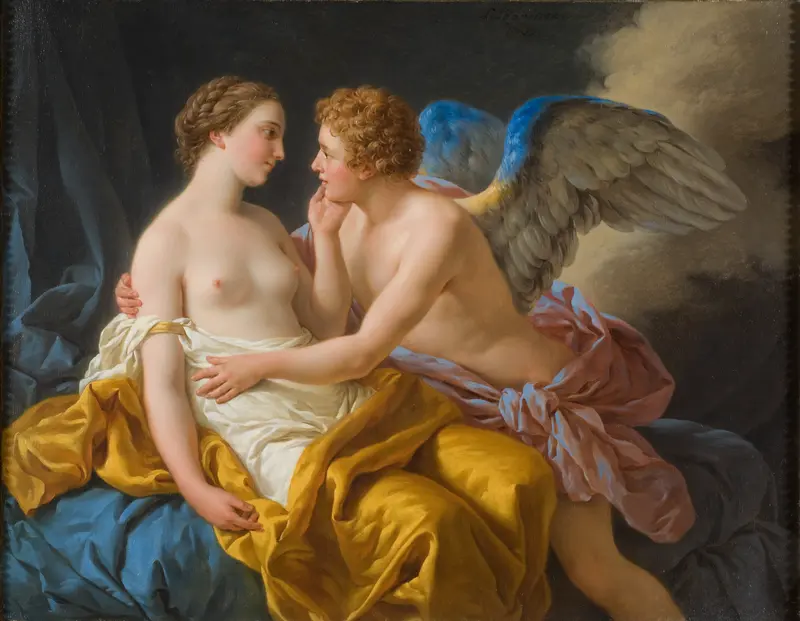
Cupid and Psyche
Louis-Jean-François Lagrenée
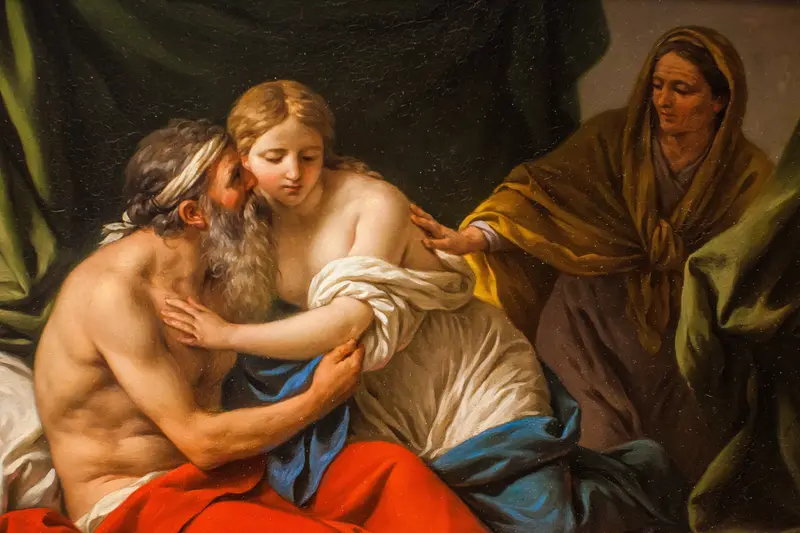
Sarah Presenting Hagar to Abraham
Louis-Jean-François Lagrenée
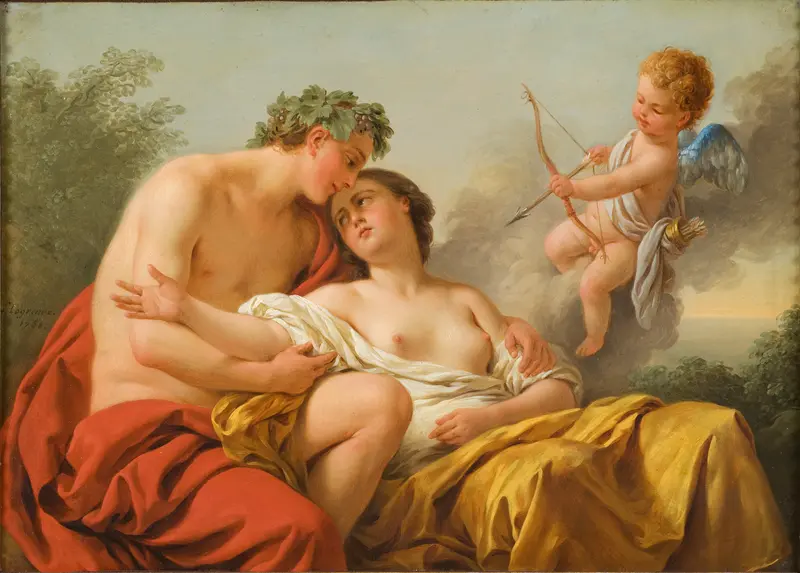
Bacchus and Ariadne
Louis-Jean-François Lagrenée
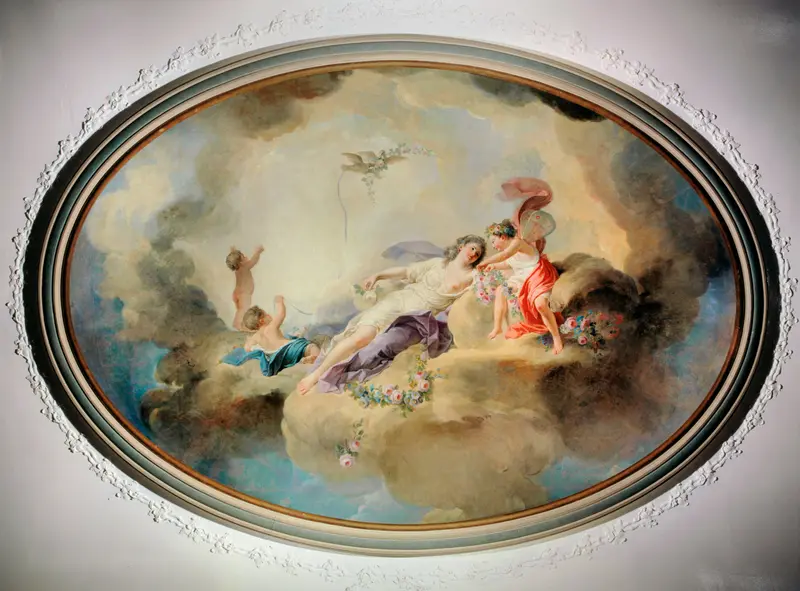
Louis Jean François Lagrenée Le triomphe de Flore P787 Musée Carnavalet
Louis-Jean-François Lagrenée
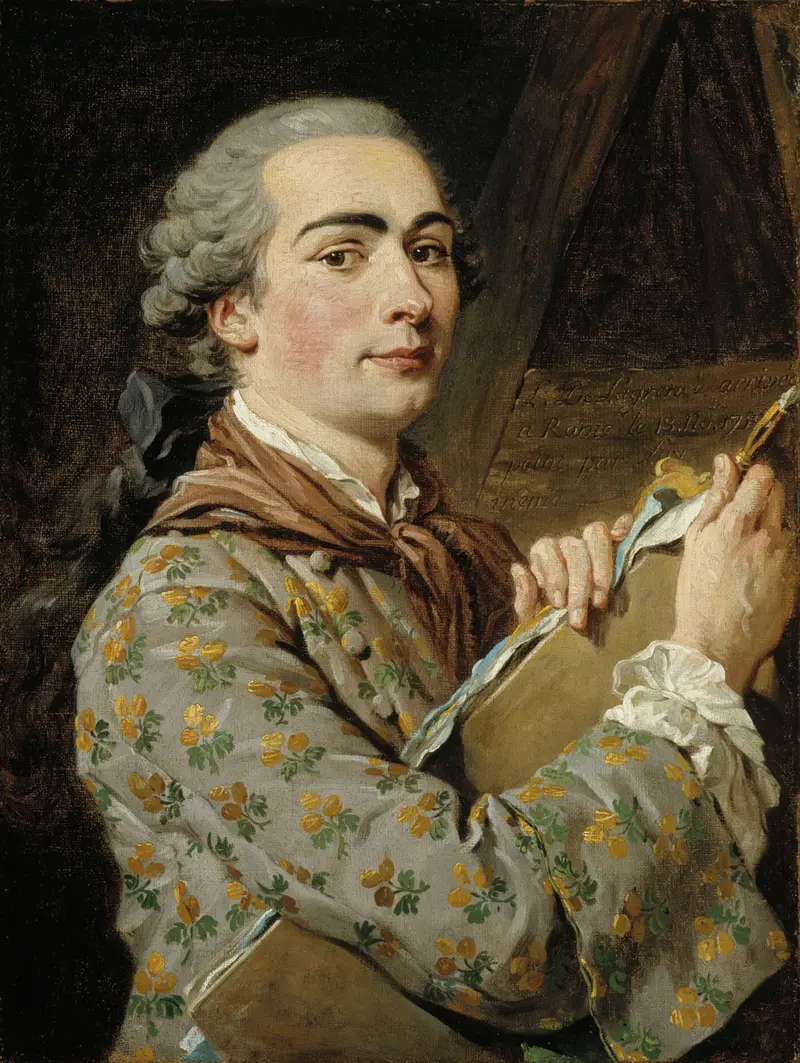
Self-Portrait
Louis-Jean-François Lagrenée
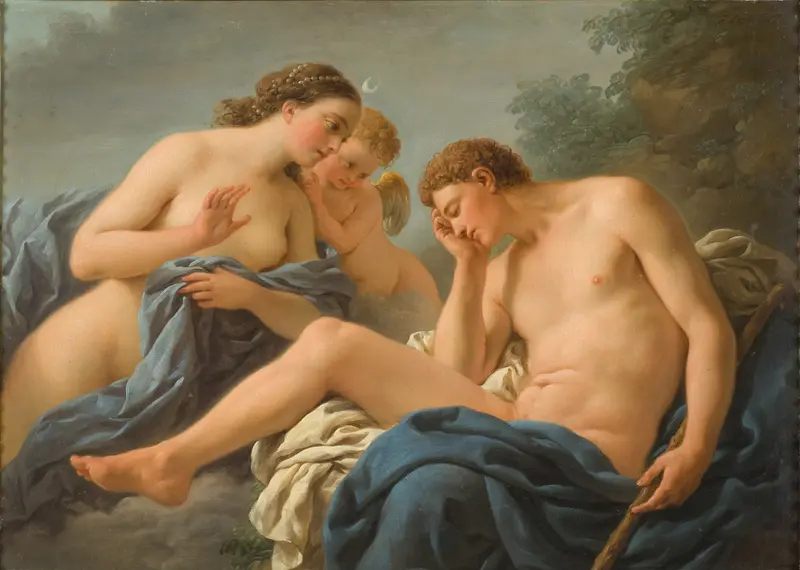
Diana and Endymion
Louis-Jean-François Lagrenée
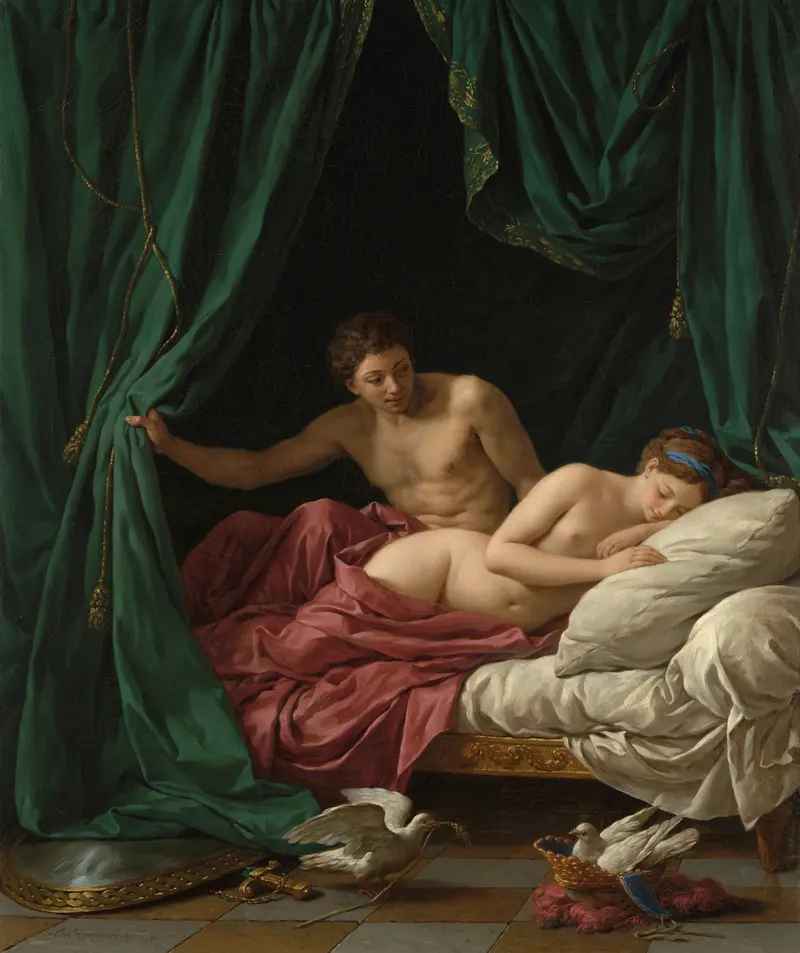
Mars and Venus, Allegory of Peace
Louis-Jean-François Lagrenée
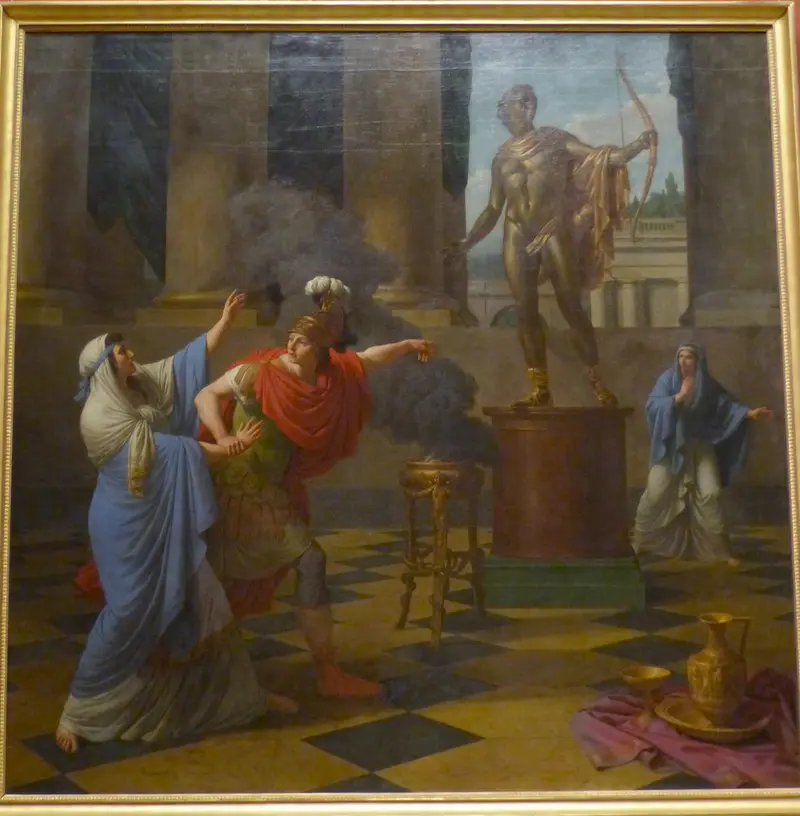
Alexander consulting the Oracle of Apollo
Louis-Jean-François Lagrenée





