
Self-Portrait — History & Facts
What first catches the eye in this Self-Portrait by Louis-Jean-François Lagrenée is the painter’s unwavering gaze, as if he has paused mid-brushstroke to meet the viewer’s curiosity head-on. His right hand, poised with a brush, hovers above a palette and sketchbook, inviting us to imagine the very moment of creation. The patterned silk of his robe, dotted with golden blossoms, signals both a pride in his craft and a certain self-awareness—this is a man who knows the value of his image.
Light falls across his face and chest, drawing attention to the intelligence in his eyes and the delicate precision of his hands, while the shadowed background throws his figure into sharper relief. Every detail, from the crisp ruffles at his wrist to the inscription behind him, is a deliberate act of self-presentation: the artist as both craftsman and gentleman. Painted sometime between 1750 and 1759, this work belongs to a period when self-portraiture was a declaration of professional identity and ambition, especially for artists seeking recognition in the competitive world of eighteenth-century France. Such portraits were often created as calling cards or tokens for academies and patrons, asserting both skill and social standing.
Lagrenée’s self-assured pose and elegant attire reflect the aspirations of his era, when artists were beginning to claim a place among the intellectual elite. Although history has kept few traces of this particular canvas beyond its presence in a documented collection, it stands as a vivid testament to the ambitions and self-fashioning of its time. Look again at the painter’s direct gaze: it is an invitation to see not only the artist, but the world he sought to shape.
More Artworks by Louis-Jean-François Lagrenée
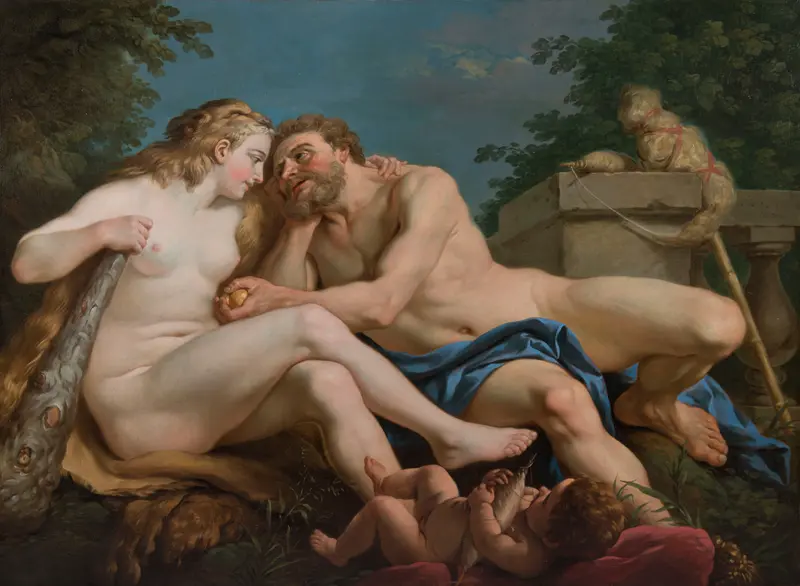
Herkules and Omphale
Louis-Jean-François Lagrenée
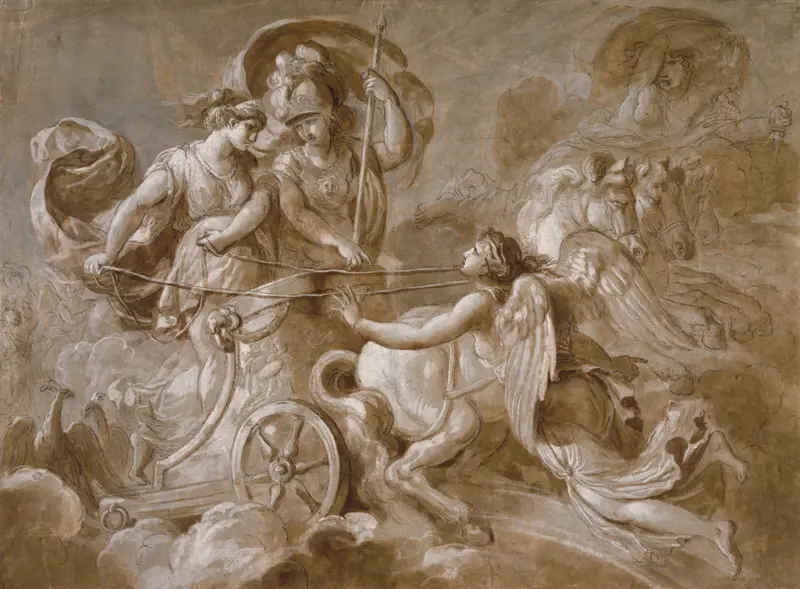
Iris Approaching Athena and Hera
Louis-Jean-François Lagrenée
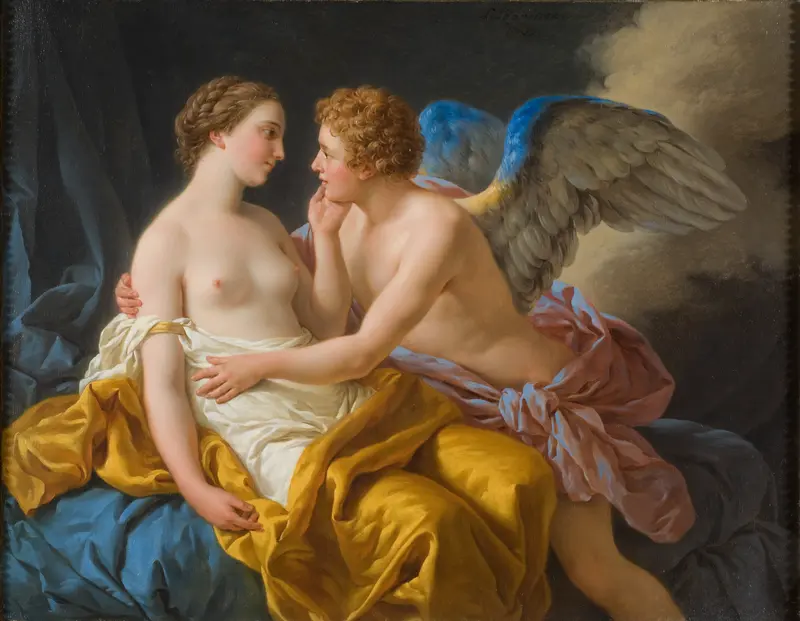
Cupid and Psyche
Louis-Jean-François Lagrenée
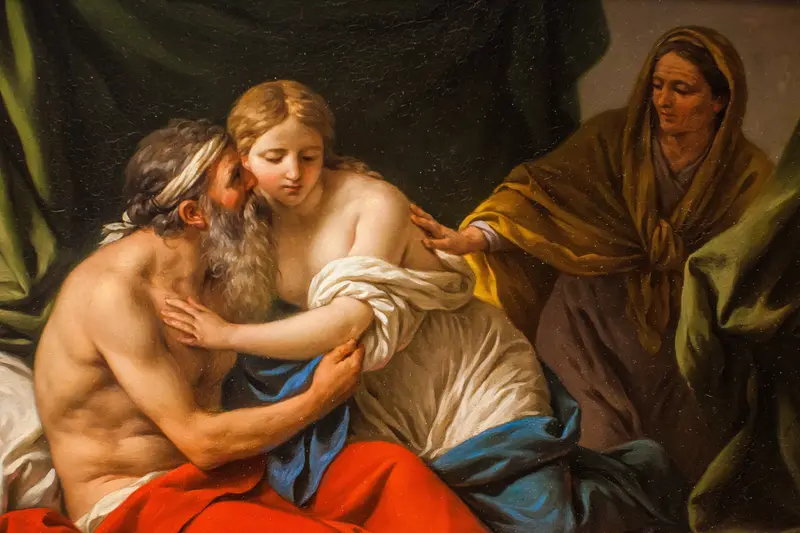
Sarah Presenting Hagar to Abraham
Louis-Jean-François Lagrenée
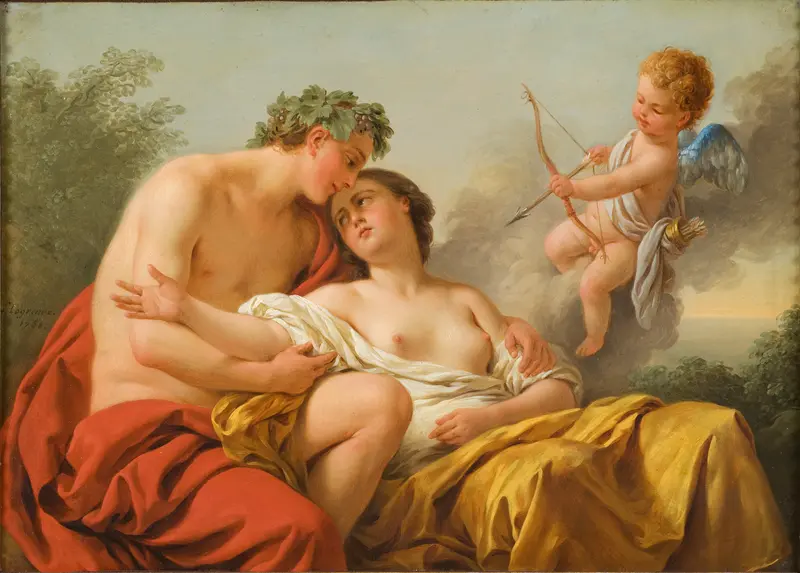
Bacchus and Ariadne
Louis-Jean-François Lagrenée
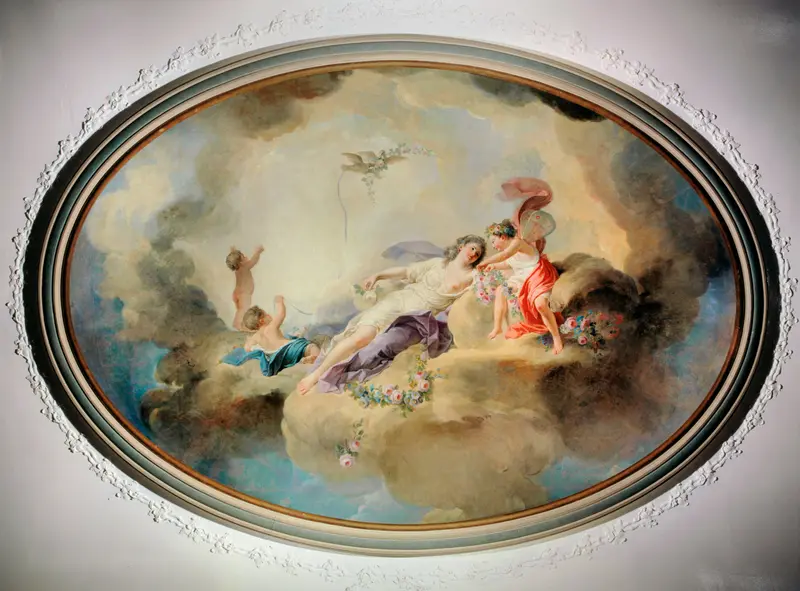
Louis Jean François Lagrenée Le triomphe de Flore P787 Musée Carnavalet
Louis-Jean-François Lagrenée
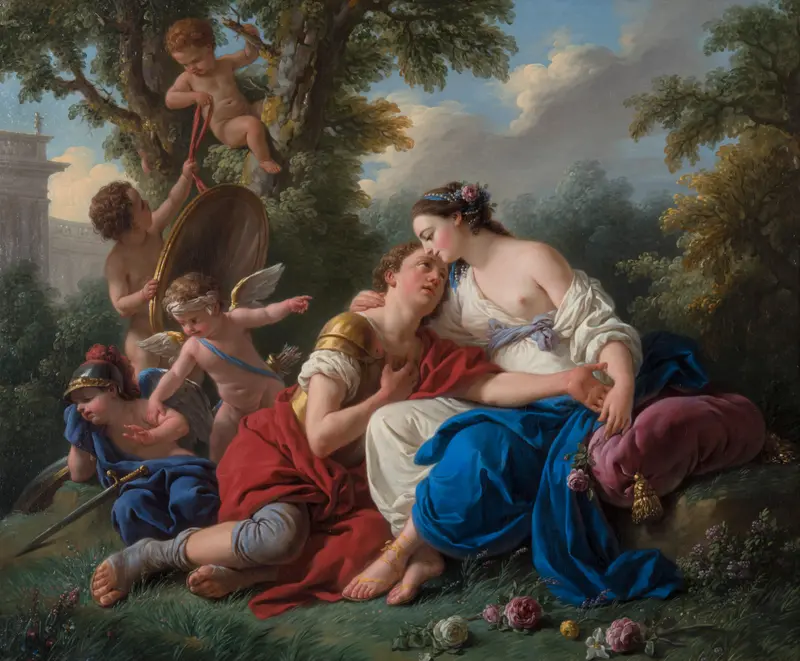
Rinaldo and Armida
Louis-Jean-François Lagrenée
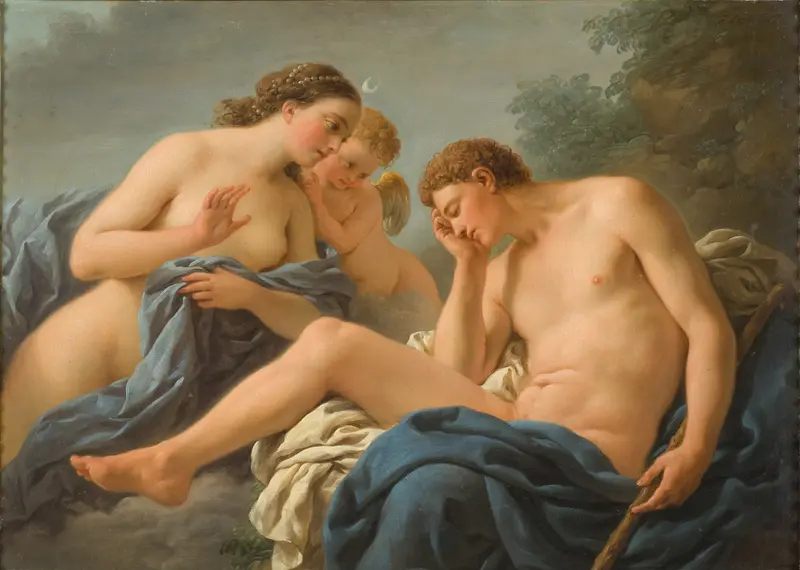
Diana and Endymion
Louis-Jean-François Lagrenée
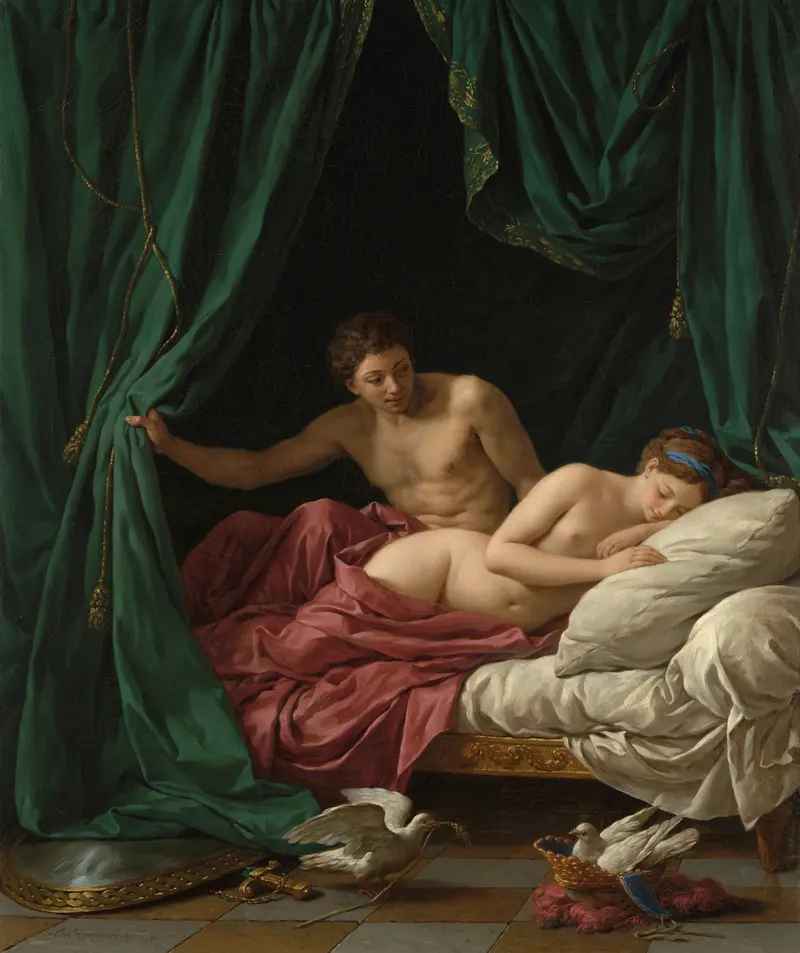
Mars and Venus, Allegory of Peace
Louis-Jean-François Lagrenée
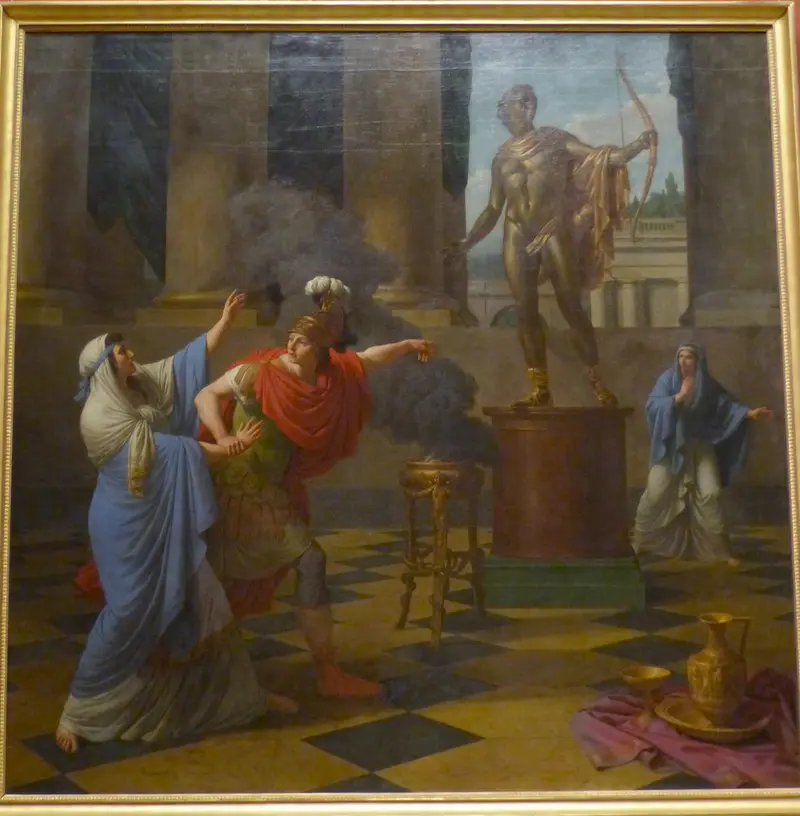
Alexander consulting the Oracle of Apollo
Louis-Jean-François Lagrenée





