
Mass of Father Cabañuelas — History & Facts
In 1638, the city of Seville was shaken by the death of Father Cabañuelas, a local priest whose funeral mass would become the subject of one of Francisco de Zurbarán’s most enigmatic works. The painting, Mass of Father Cabañuelas, stands out as the only known depiction of this specific event, and its commission remains something of a mystery—no archival record has been found to confirm who requested it or for which church it was intended. What is certain is that by the late seventeenth century, the work was already being discussed in Seville as a remarkable example of Zurbarán’s ability to capture the gravity of religious ritual. The scene unfolds at the altar, where the deceased priest lies in state, surrounded by clerics and altar boys frozen in silent prayer.
At the heart of the composition, the celebrant raises the host, bathed in a shaft of light that seems to pierce the gloom of the chapel—Zurbarán’s signature use of chiaroscuro heightens the sense of solemnity and the supernatural. The white surplices glow against the darkness, while the faces of the mourners are rendered with a quiet dignity, each absorbed in the mystery of the Mass. The silver censer, suspended mid-swing, and the flickering candles reinforce the sense of a sacred moment suspended in time.
Unlike El Greco’s more ecstatic Burial of the Count of Orgaz, Zurbarán’s approach is restrained, focusing on communal devotion rather than individual emotion. The painting’s later history is as shadowy as its subject. No definitive record traces its journey through the centuries, though it is believed to have remained in Seville for much of its existence, possibly in a monastic collection. Scholars have debated its attribution in the past, but stylistic analysis and comparison with other works from Zurbarán’s mature period have confirmed his authorship.
Today, Mass of Father Cabañuelas is recognized as a key example of Zurbarán’s religious painting, embodying the austere spirituality of the Spanish Counter-Reformation and the artist’s deep connection to his native Andalusia. Its current location is in a private collection, rarely exhibited, making it a hidden treasure of seventeenth-century Spanish art.
More Artworks by Francisco de Zurbarán
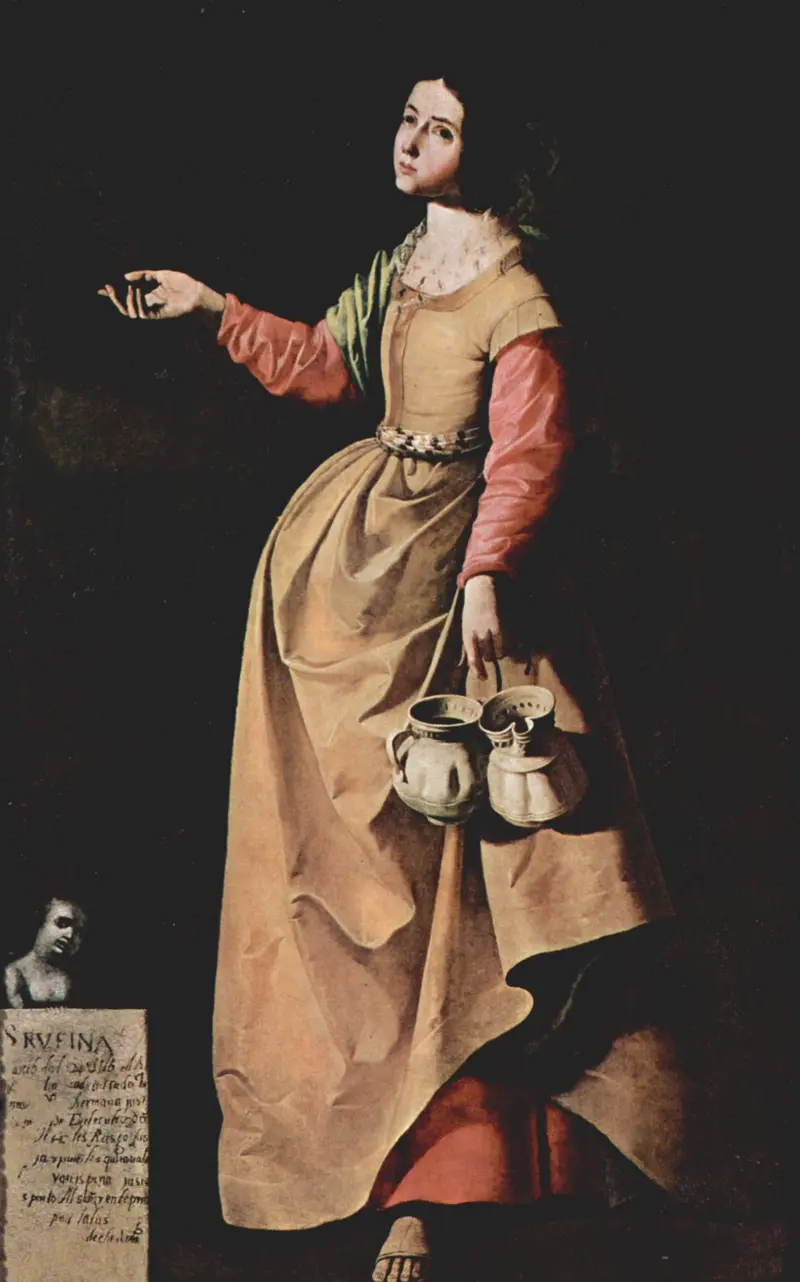
Saint Rufina
Francisco de Zurbarán
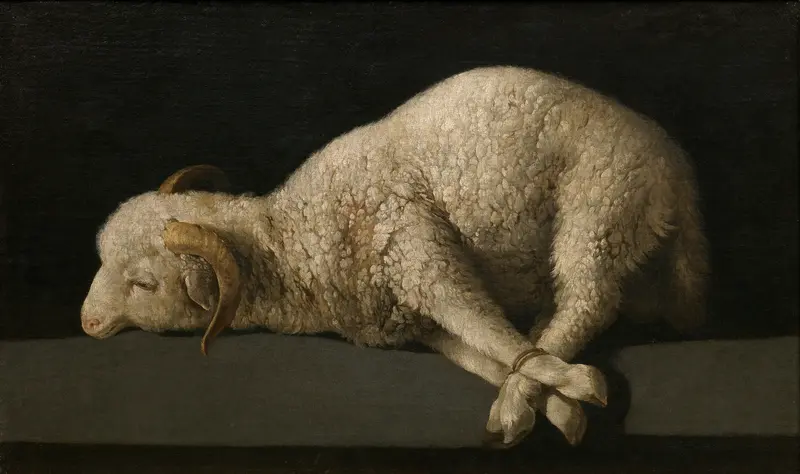
Agnus Dei
Francisco de Zurbarán
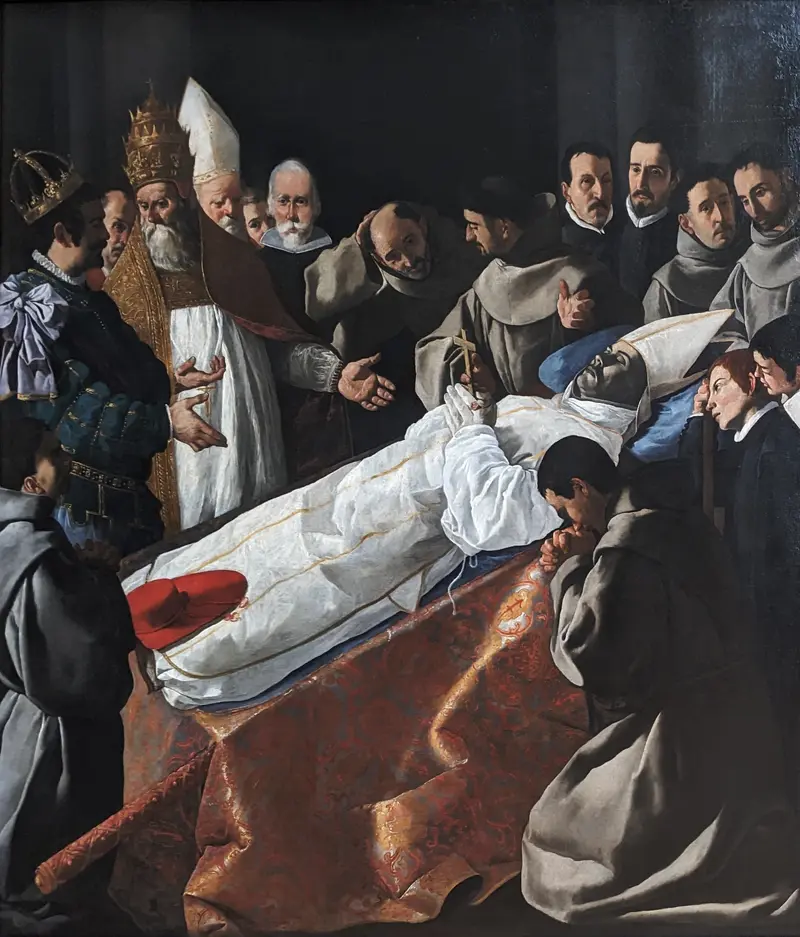
Saint Bonaventure's Body Lying in State
Francisco de Zurbarán
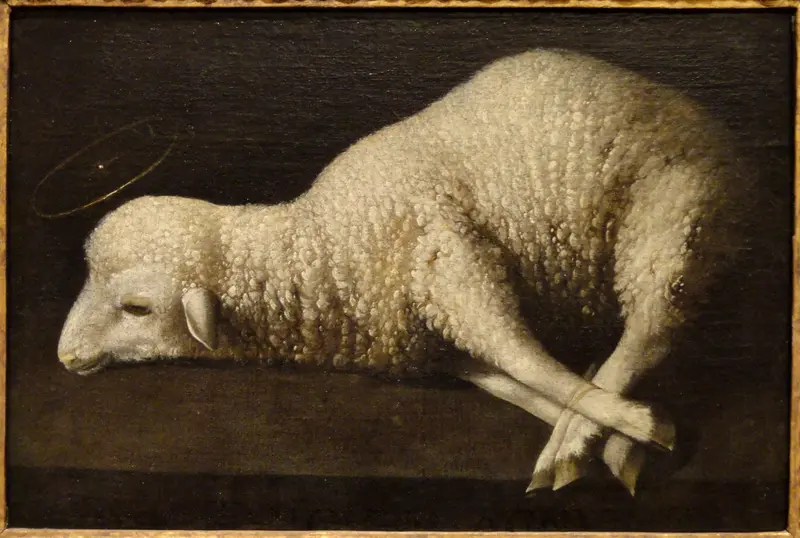
The Lamb of God
Francisco de Zurbarán

Adoration of the Magi
Francisco de Zurbarán
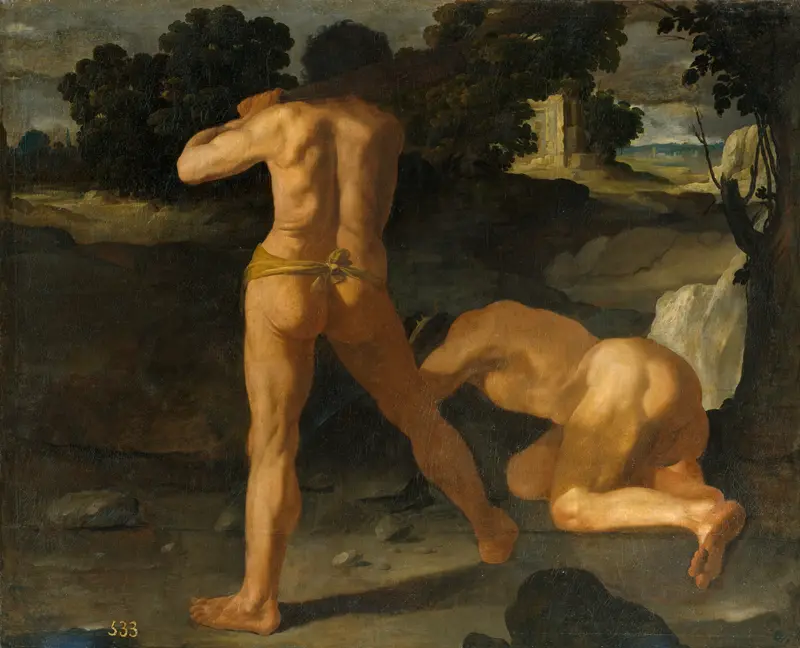
Hercules defeats King Geryon
Francisco de Zurbarán
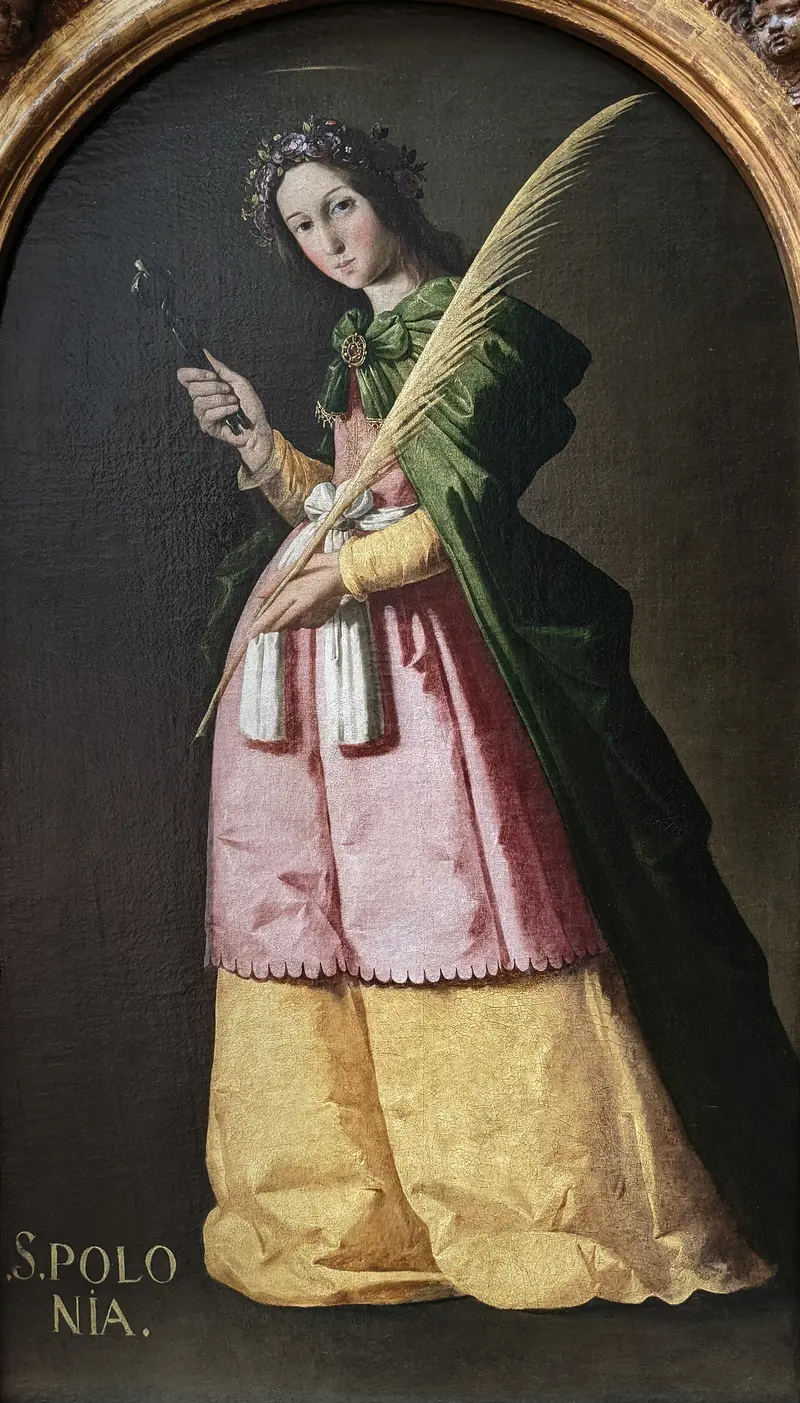
Saint Apollonia
Francisco de Zurbarán
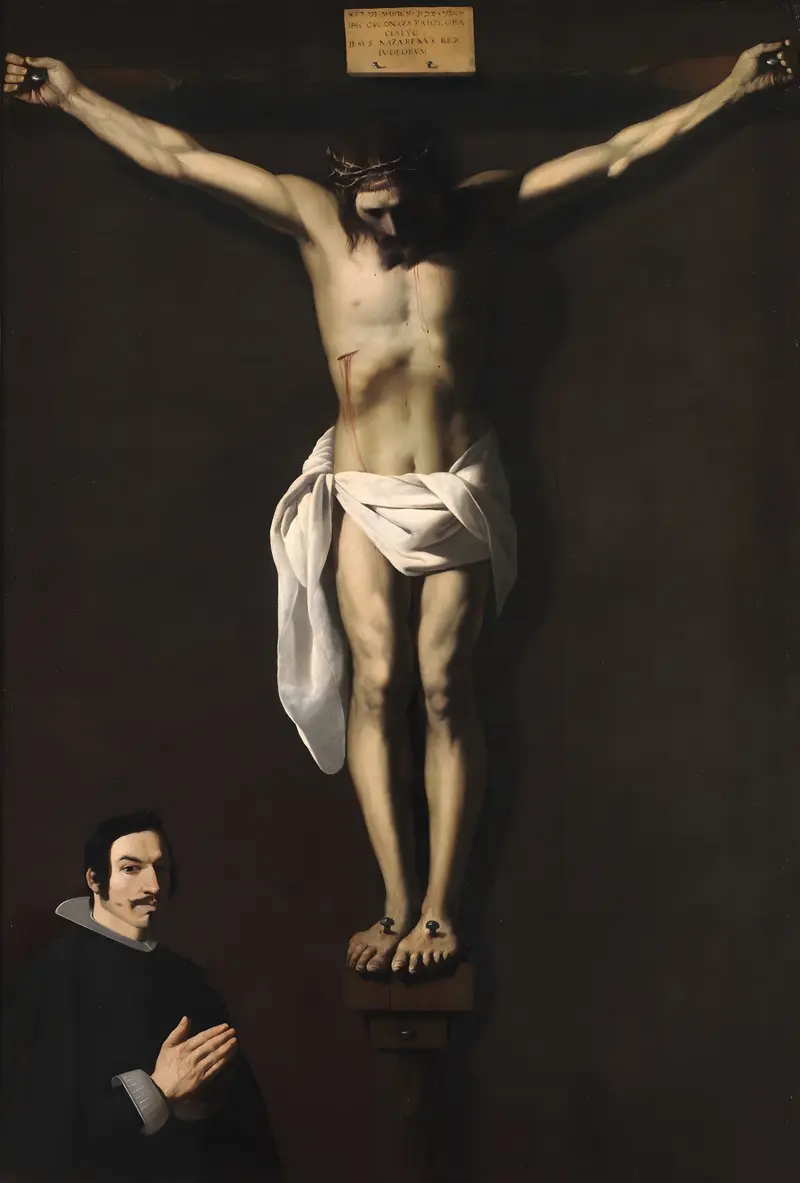
The Crucified Christ with a Donor
Francisco de Zurbarán
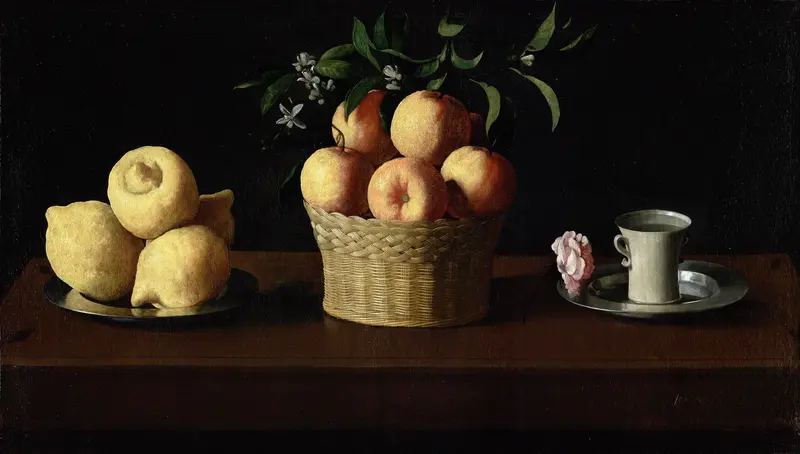
Still Life with Lemons, Oranges and a Rose
Francisco de Zurbarán
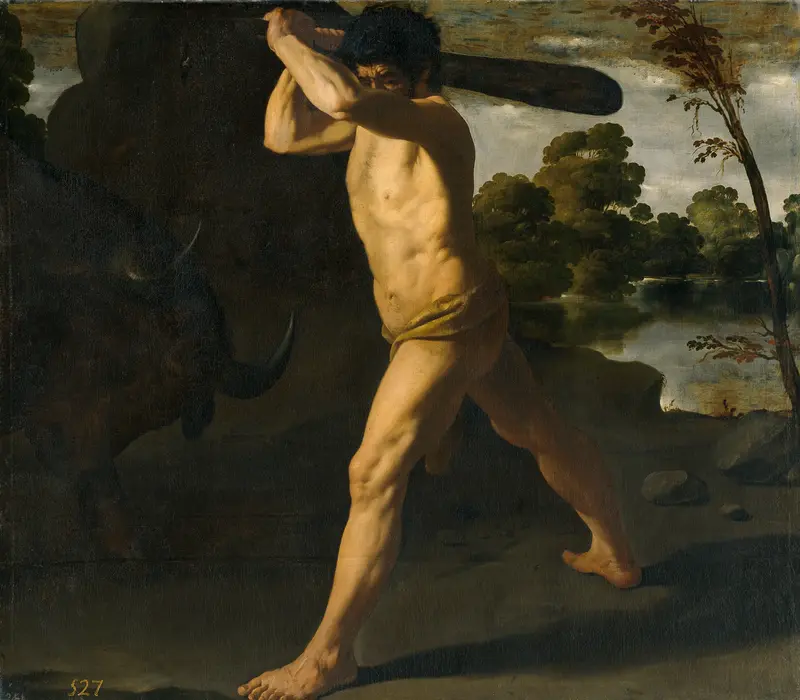
Hercules and the Cretan Bull
Francisco de Zurbarán





