
May in the Mountains — History & Facts
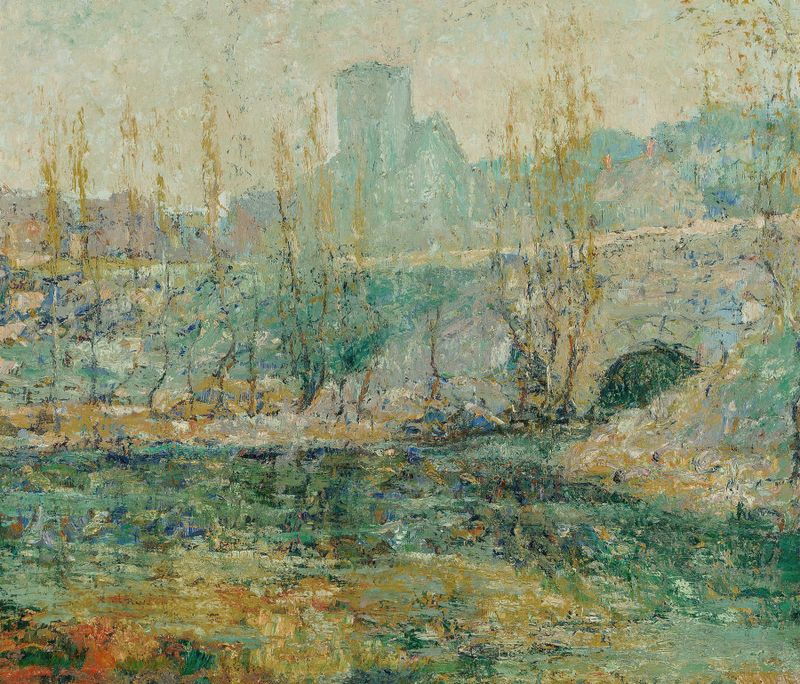
Could beauty survive in a century of chaos? Focus on the vibrant hues of green and blue that saturate the canvas, drawing your attention to the rolling hills and majestic peaks that rise like guardians over the serene landscape. Notice how the artist skillfully blends warm sunlight with cool shadows, creating a dance of light that breathes life into the scenery. Each brushstroke evokes a sense of tranquility, inviting the viewer to pause and immerse themselves in nature’s embrace. Beneath the surface, there lies an emotional tension between the idyllic beauty of the landscape and the tumultuous era in which it was painted.
The lush greenery symbolizes hope and resurgence, while the distant mountains serve as a reminder of both permanence and the relentless passage of time. Small details, like the gentle sway of the trees and the distant shimmer of a winding river, reflect a world both untouched and ever-changing, hinting at the fragility of such serene moments. Ernest Lawson created this artwork during a period characterized by rapid urbanization and the impending shadows of global conflict. Working around the early 20th century in the United States, he was deeply influenced by the American Impressionist movement, seeking to capture the beauty of natural landscapes amid the encroaching chaos of modern life.
This period not only shaped his artistic vision but also echoed the sentiments of a society grappling with change, making his work profoundly relevant.
More Artworks by Ernest Lawson
Browse all →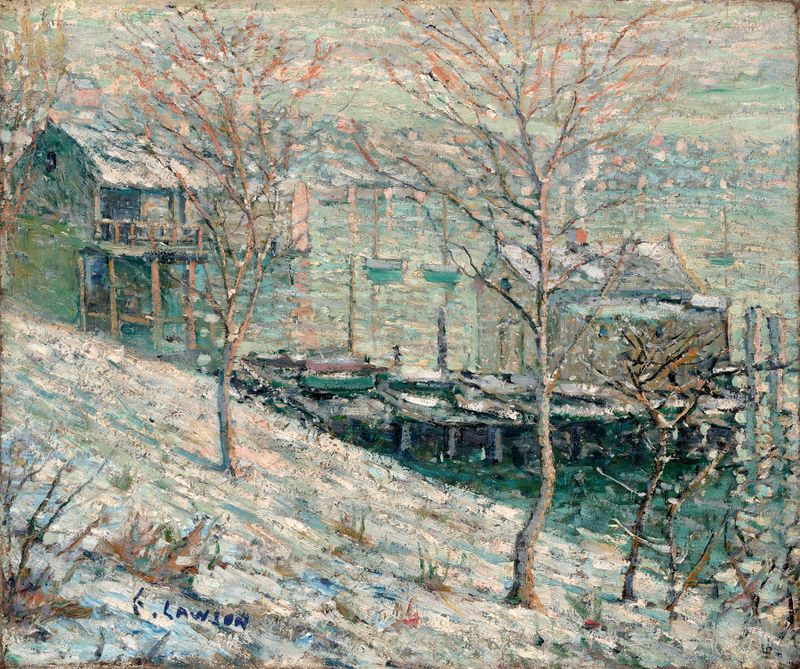
Harlem River Winter Scene
Ernest Lawson

Spring Night, Harlem River
Ernest Lawson

Upper Harlem River—Winter
Ernest Lawson
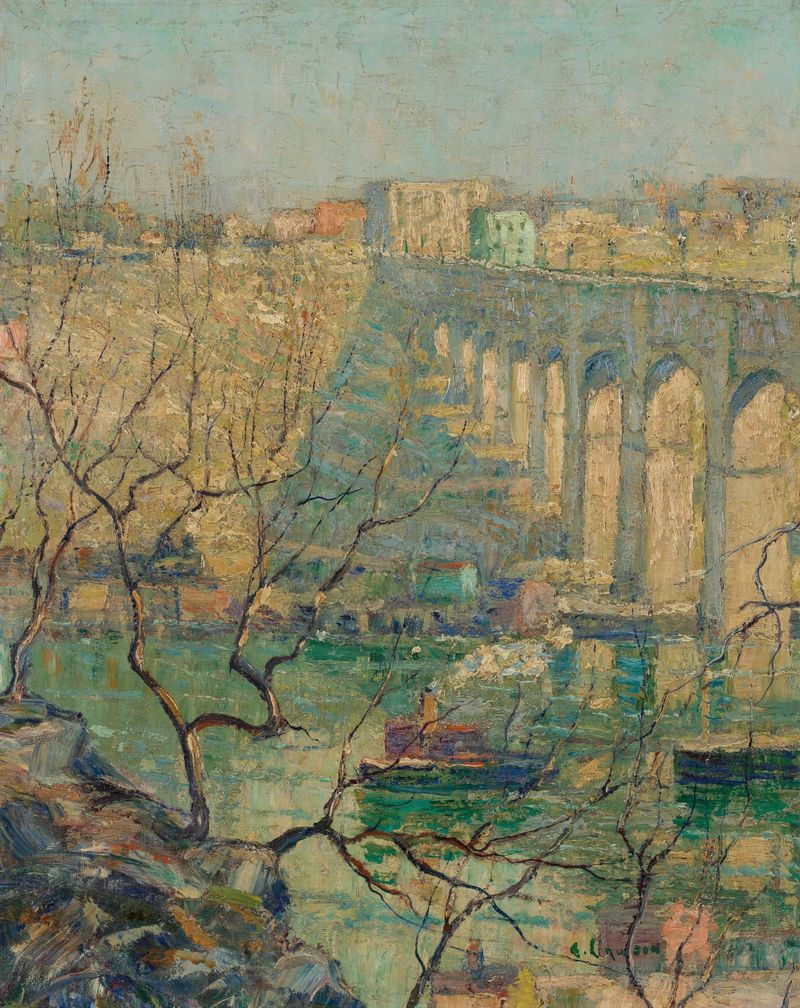
View of the Bridge
Ernest Lawson

A Bright Day, Spain (Segovia)
Ernest Lawson
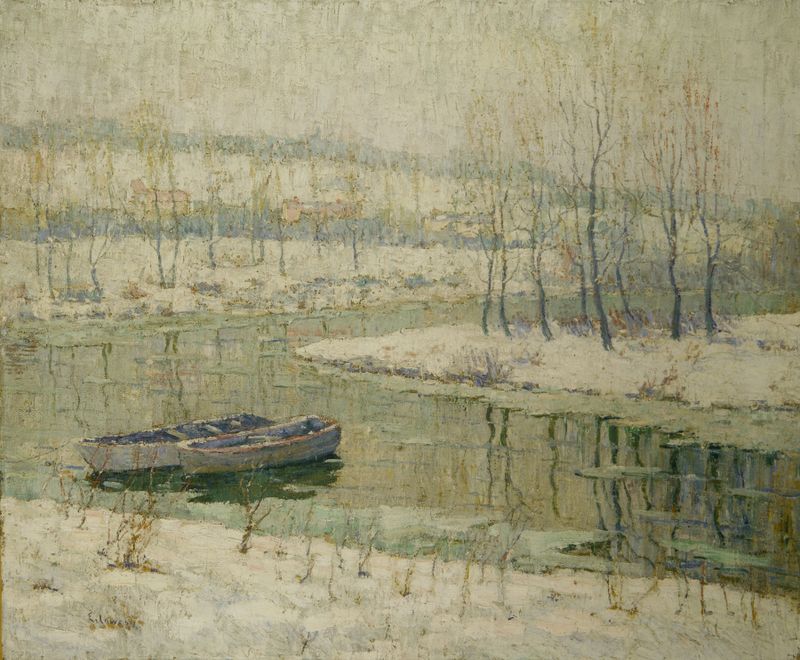
Spring thaw
Ernest Lawson

Road Down the Palisades
Ernest Lawson
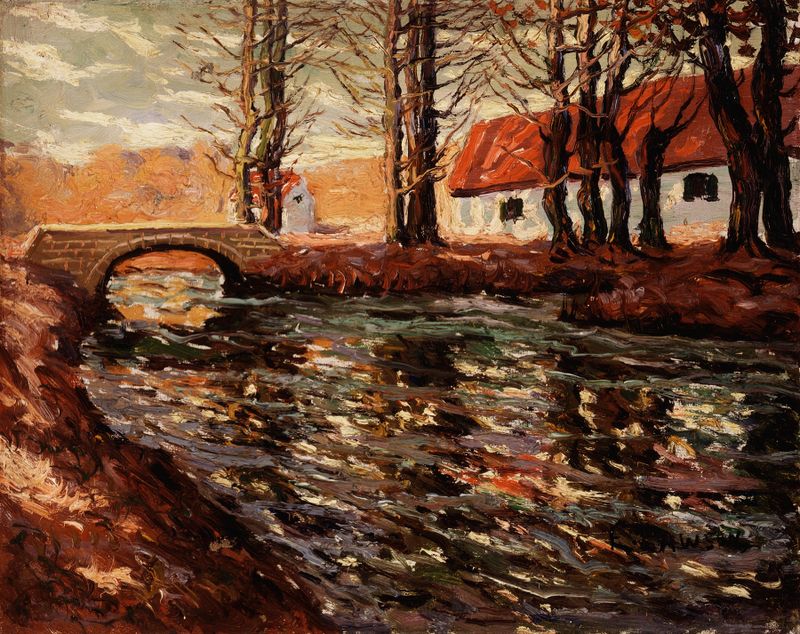
River Landscape
Ernest Lawson

The Mill
Ernest Lawson
The Pond and Gapstow Bridge, New York City
Ernest Lawson





