
Members of the Maynard Family in the Park at Waltons — History & Facts
The eye is drawn first to the sweep of green, a parkland so spacious and serene it nearly dwarfs the figures gathered in the foreground. Yet it is here, under the shelter of a great tree, that the real drama unfolds: a mother in a brilliant blue gown tunes her lute, her gaze attentive, while another woman in vivid red steadies a small child. At their feet, a young girl approaches, clutching wildflowers and pausing as if uncertain whether to join the music or simply observe.
The light is gentle, casting soft shadows that anchor the family to their land, while the distant brick house—almost a stage set—reminds us of the wealth and order behind this seemingly spontaneous moment. Every gesture is deliberate: the careful arrangement of hands, the crisp folds of silk, the way the bench and tray of fruit signal both leisure and abundance. Painted sometime between 1755 and 1762, Members of the Maynard Family in the Park at Waltons by Arthur Devis belongs to a world where portraiture was as much about property and lineage as about likeness. In mid-eighteenth-century England, families of means commissioned such scenes to celebrate their estates and project their refinement.
The genre—conversation piece—thrived on these orchestrated glimpses of domestic harmony, set against the measured grandeur of nature and architecture. While history has kept few traces of the Maynards themselves, the painting now resides in the collection of the National Gallery of Art, a quiet witness to a vanished age. Look again at the interplay of glances and the careful choreography of the figures: this is a world in which every detail is a statement, and every gesture a claim to belonging.
More Artworks by Arthur Devis
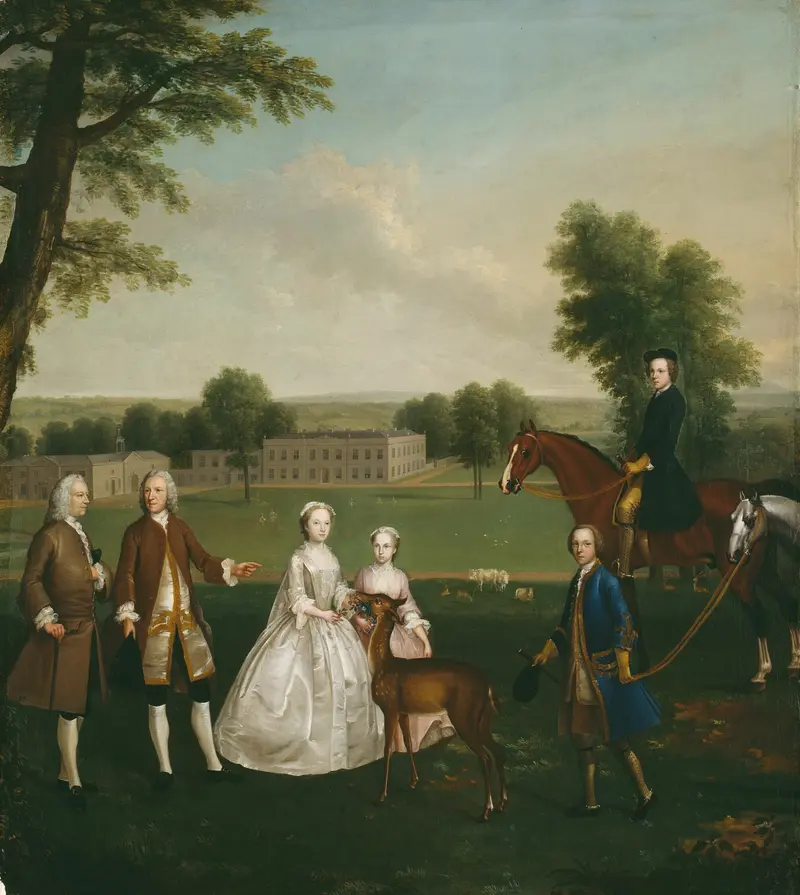
Thomas Lister and Family at Gisburne Park
Arthur Devis

Sir John Shaw and his Family in the Park at Eltham Lodge, Kent
Arthur Devis
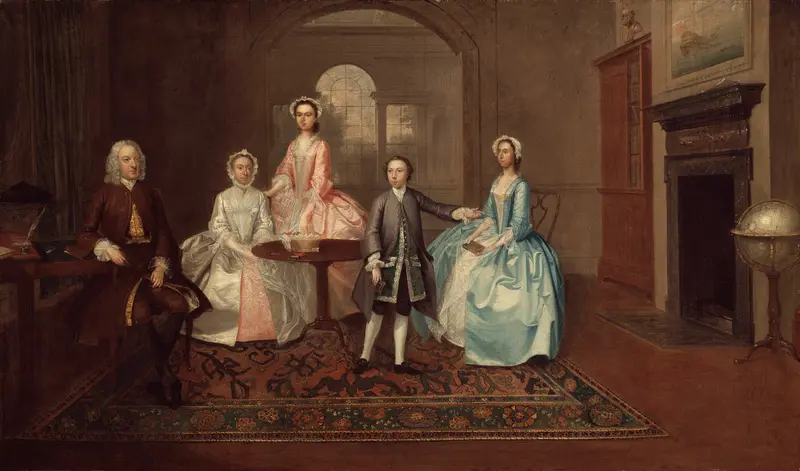
John Thomlinson and His Family
Arthur Devis
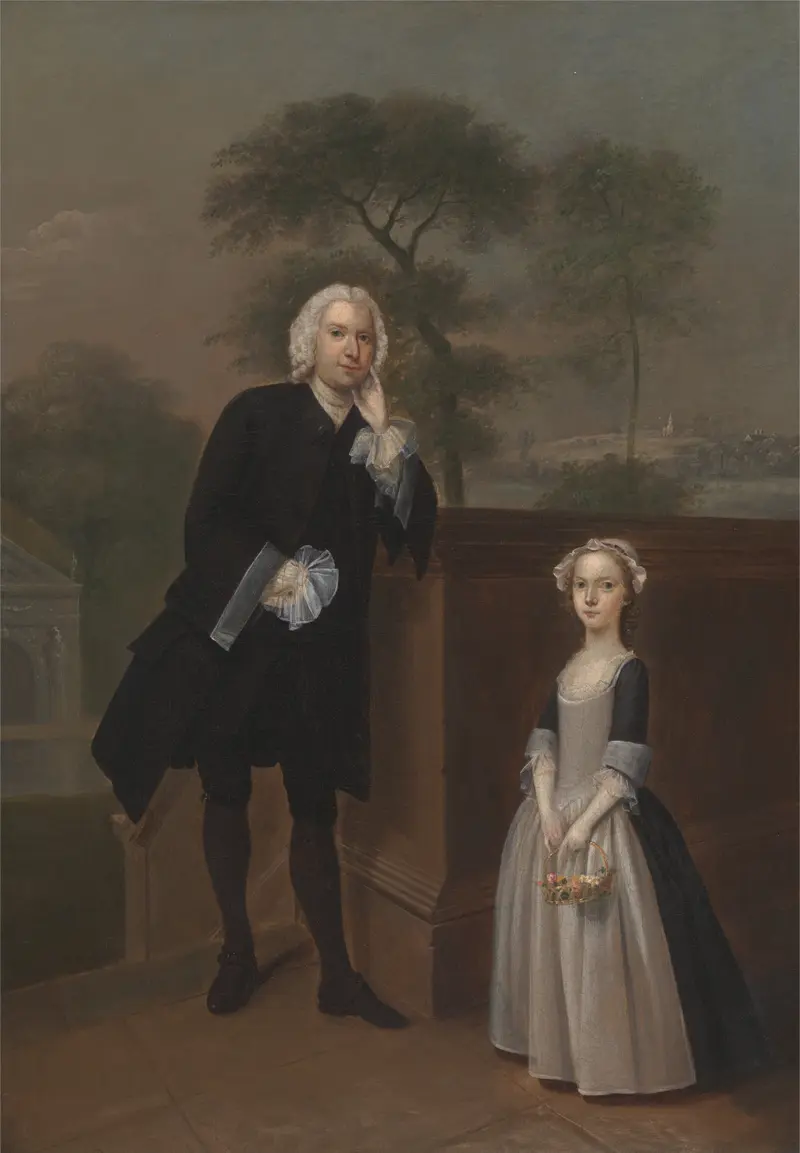
An Unknown Man with His Daughter
Arthur Devis
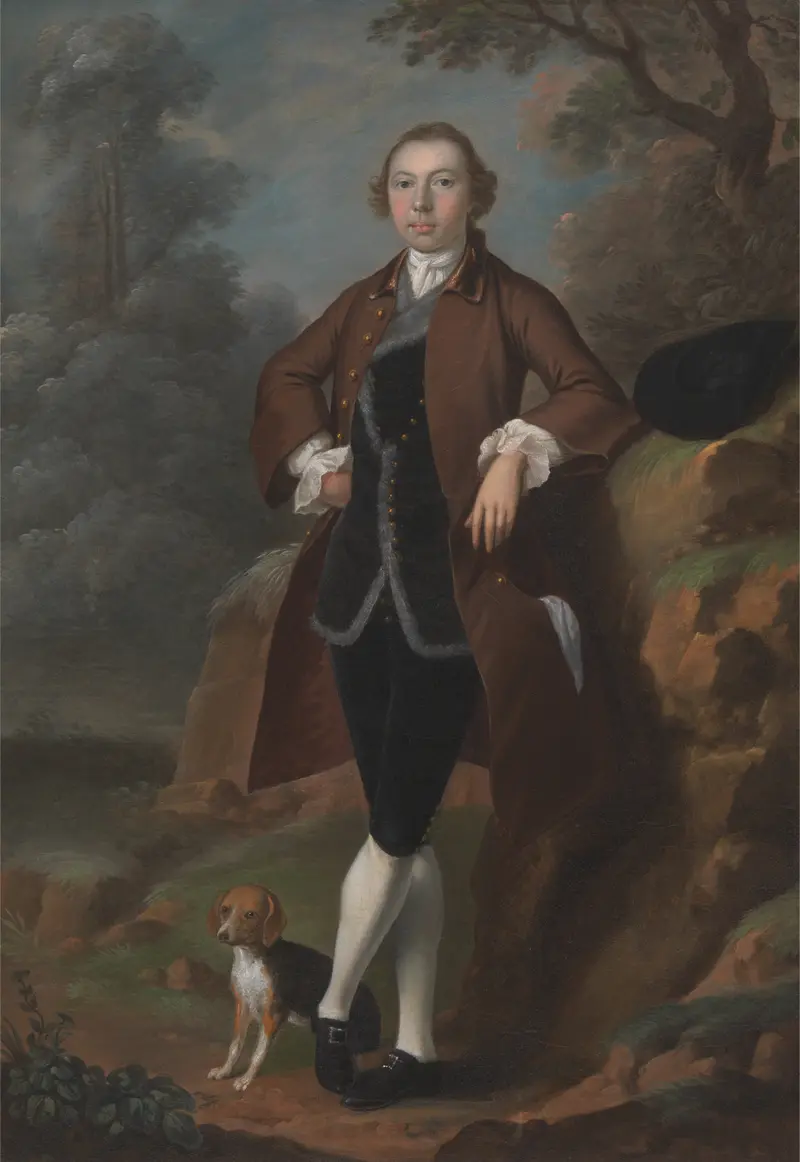
William Farington of Shawe Hall, Lancashire
Arthur Devis
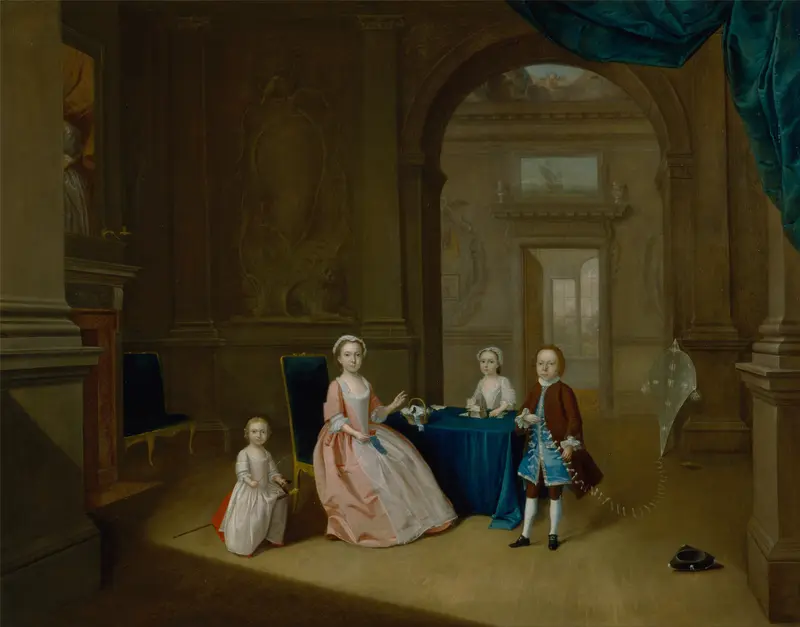
Children in an Interior
Arthur Devis
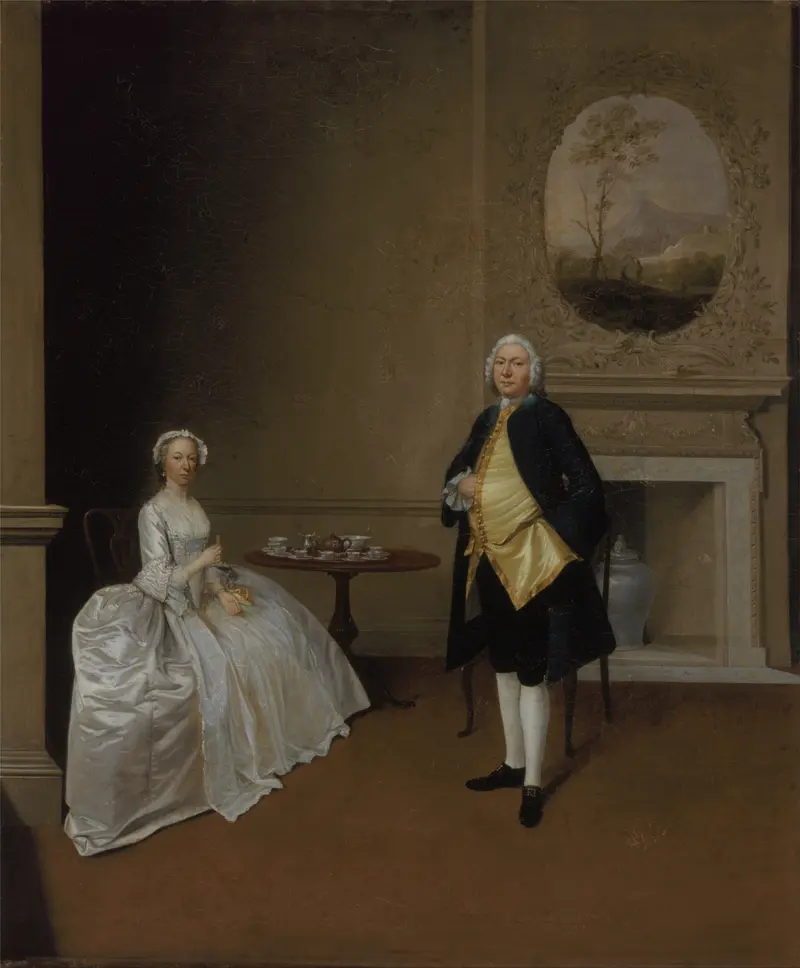
A Couple, Traditionally Identified as Mr. and Mrs. Hill
Arthur Devis
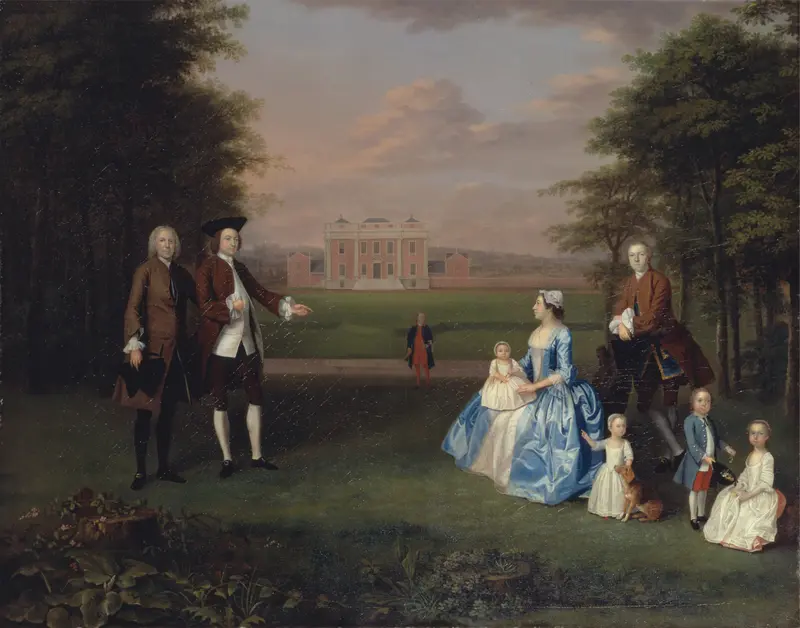
Robert Gwillym, Elizabeth Gwillym (née Atherton), and Their Family
Arthur Devis
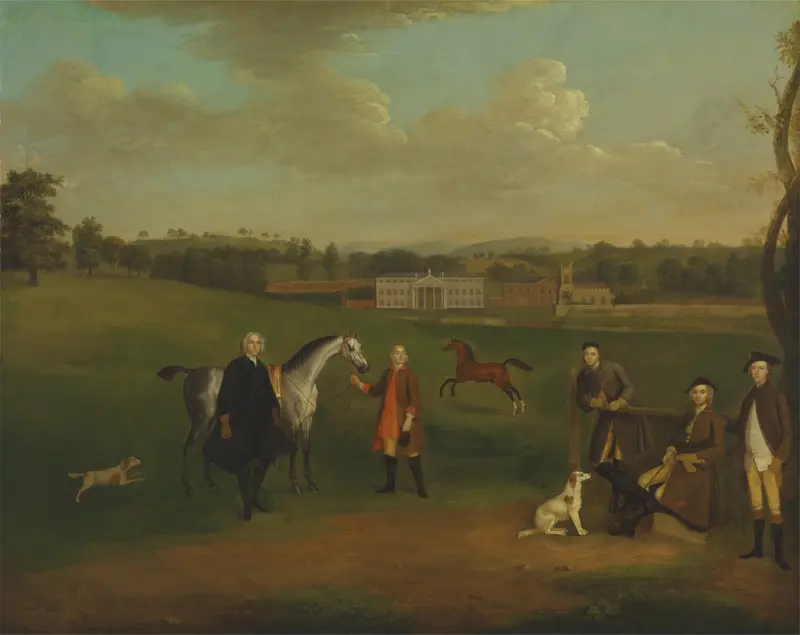
Leak Okeover, Rev. John Allen and Captain Chester at Okeover Hall, Staffordshire
Arthur Devis
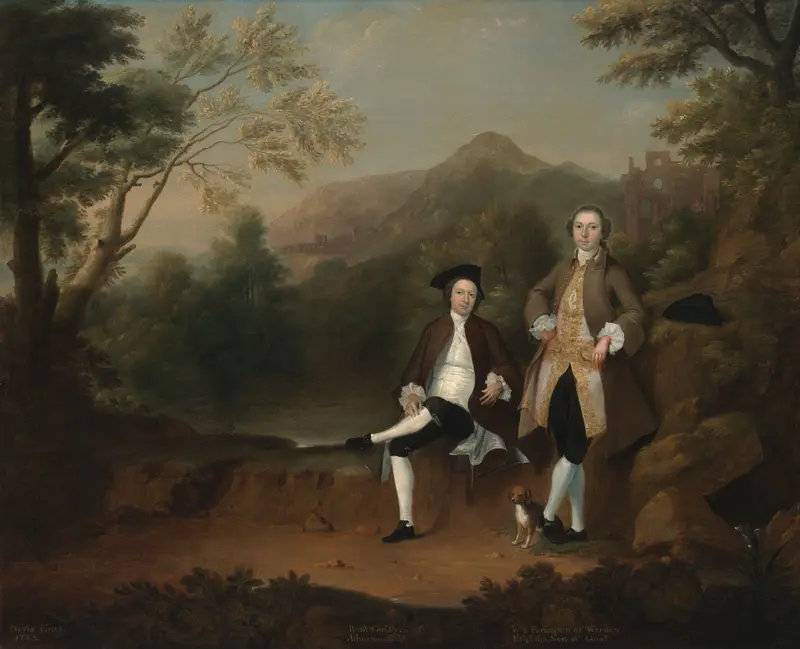
Robert Gwillym of Atherton and William Farington of Werden
Arthur Devis
More Genre Scene Art

Banquet of the Officers of the St George Civic Guard
Frans Hals

Rembrandt and Saskia in the Scene of the Prodigal Son
Rembrandt van Rijn

Bal du moulin de la Galette
Pierre-Auguste Renoir

Quadrille at the Moulin Rouge
Henri de Toulouse-Lautrec

A Burial at Ornans
Gustave Courbet

When Will You Marry?
Paul Gauguin