Model in a Green Chair — History & Facts
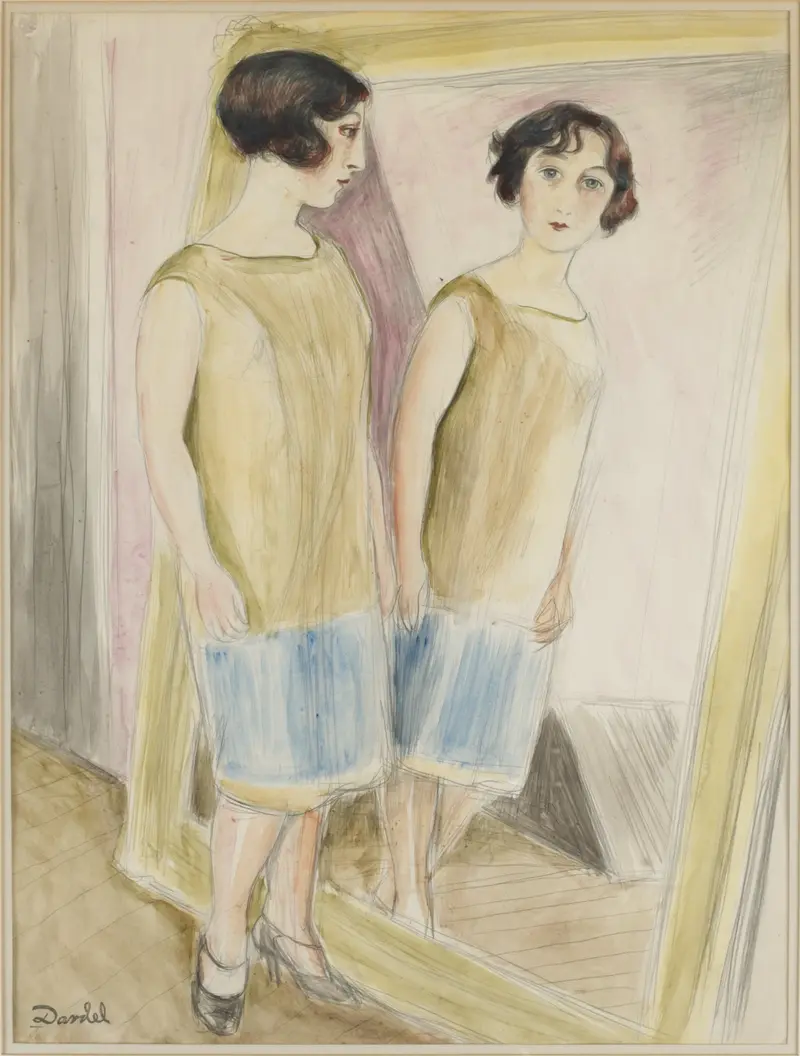
When Model in a Green Chair first appeared in a Swedish exhibition, viewers were struck by its arresting palette and the unmistakable hand of Nils Dardel, an artist known for his idiosyncratic portraits and vibrant, modernist compositions. The identity of the sitter remains a matter of speculation, fueling ongoing debate among art historians: was she a muse, a lover, or simply a professional model? The painting’s date and commission are also uncertain, adding to its air of mystery and inviting comparisons with Dardel’s more documented works. What is certain is that this piece has become one of the most discussed examples of Dardel’s fascination with the inner lives of his subjects. The scene captures a woman poised in a distinctive green chair, her posture both relaxed and alert, as if caught between moments of introspection and performance.
The green chair itself dominates the composition, its bold color echoing the sitter’s enigmatic presence and perhaps hinting at the psychological complexity beneath the surface. Dardel’s use of sharp outlines and flattened perspective recalls the influence of Post-Impressionism, particularly the stylized portraits of Henri Matisse, yet the emotional reserve of the sitter is uniquely Dardel’s own. The model’s gaze, directed slightly away from the viewer, suggests a private world withheld, inviting us to wonder about her thoughts and the nature of her relationship with the artist. As with many works by Nils Dardel, the precise provenance of Model in a Green Chair is unclear; its early history is not well documented, and it has surfaced at various times in private collections.
The painting has occasionally been included in retrospectives of Dardel’s career, where it stands as a testament to his ongoing exploration of portraiture and psychological nuance. Today, it is recognized as a significant example of early 20th-century Swedish modernism, reflecting the restless experimentation and personal vision that defined Dardel’s work. Its current location is not widely publicized, adding to the painting’s mystique and the ongoing fascination it holds for admirers of his art.