
Moeder en kind bij een huis — History & Facts
In Moeder en kind bij een huis, the essence of loss is painted in strokes that whisper rather than shout. Focus on the tender embrace between mother and child, their forms gently illuminated by a soft, muted light that drapes over the canvas like a fragile veil. Look closely at the intricately rendered details of the modest house behind them, with its warm hues creating a stark contrast to the cool blues and grays surrounding the figures. The careful composition invites the viewer's eye to travel from the intimate bond in the foreground to the expansive silence of the backdrop, emphasizing both closeness and isolation. As you explore, note the subtle expressions on their faces—a mixture of love and an unspeakable sorrow, hinting at the fragility of their relationship.
The interplay of light and shadow creates a sense of depth, suggesting that their moment is both precious and transient. Moreover, the juxtaposition of the lively figures against the stillness of the landscape evokes the tension between joy and heartache, a poignant reminder of the passage of time and the inevitable loss that often accompanies love. Johan Barthold Jongkind created this work in 1862 while living in France, where he mingled with leading artists of the Impressionist movement. Despite facing personal struggles and financial instability, he remained committed to capturing the nuances of everyday life, forging a path that would influence future generations.
In a world rapidly changing, this painting stands as a testament to the enduring power of maternal love against the backdrop of inevitable loss.
More Artworks by Johan Barthold Jongkind
Browse all →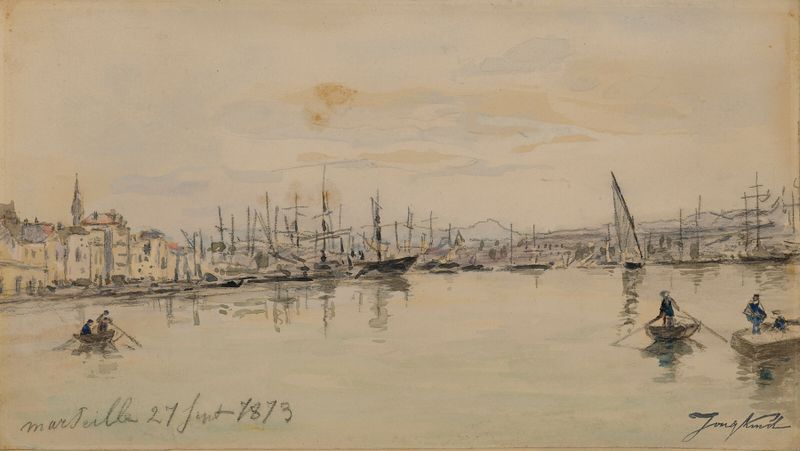
Le Port de Marseille
Johan Barthold Jongkind

Canal Saint-Martin
Johan Barthold Jongkind

Countryside near Brezins, between Grenoble and Vienne
Johan Barthold Jongkind

Notre-Dame vue du quai de la Tournelle
Johan Barthold Jongkind

Environs de Grenoble
Johan Barthold Jongkind

Clair de lune à Overschie (environs de Rotterdam)
Johan Barthold Jongkind

Port de Honfleur
Johan Barthold Jongkind
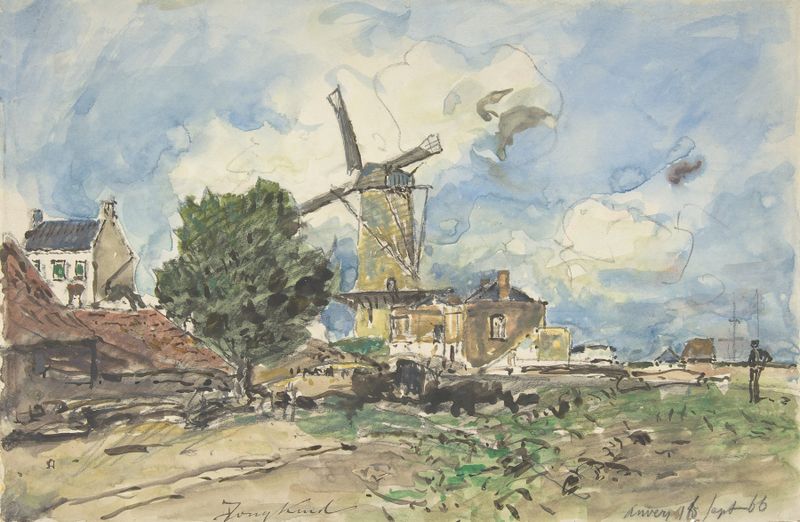
Wind Mill at Antwerp
Johan Barthold Jongkind

Le Havre
Johan Barthold Jongkind

The Church of Overschie
Johan Barthold Jongkind





