
Mosterdmolentje De Veldbloem met twee meisjes ervoor — History & Facts
In a world teeming with revolution, art captures the essence of change, whispering stories of resilience and hope. Focus your gaze on the vibrant colors that thrum with life in Mosterdmolentje De Veldbloem met twee meisjes ervoor. Notice how the warm yellows of the mustard mill blend seamlessly with the cool greens of the field, creating a harmonious backdrop for the two girls who stand before it. Their attire, slightly worn yet joyful, draws attention to their youthful exuberance amidst the serenity of rural existence.
The gentle brushwork evokes a sense of movement, as if the scene might shift at any moment, inviting the viewer to linger in this moment of idyllic beauty. Beneath the surface, the painting conveys a deeper narrative of change. The mustard mill, a symbol of industriousness, contrasts with the innocence of childhood, suggesting the inevitable passage from youth to responsibility. The girls, perhaps unaware of the shifting tides of their time, embody the tension between tradition and modernity.
Additionally, the pastoral setting hints at a longing for simplicity during a period of upheaval; it’s a reminder of what is at stake when revolution stirs. In 1930, Johannes Nicolaas Eijman painted this piece during a time of significant social and political change in Europe. The post-World War I landscape was marked by economic struggles and the rise of new ideologies. Eijman, influenced by the desire to capture the spirit of his homeland, created this work as part of a push toward representing Dutch identity amidst a changing world, highlighting the beauty of everyday life during tumultuous times.
More Artworks by Johannes Nicolaas Eijman
Browse all →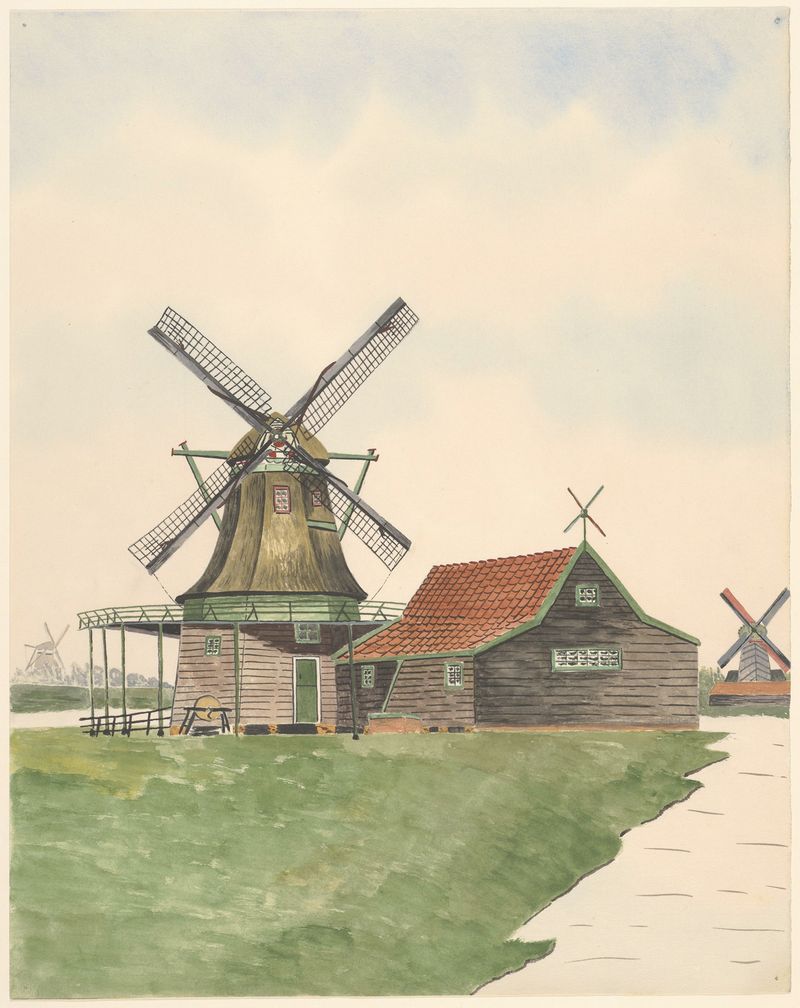
molens; oliemolen De Olievos, aan de Papenpadsloot, gesloopt 1878
Johannes Nicolaas Eijman
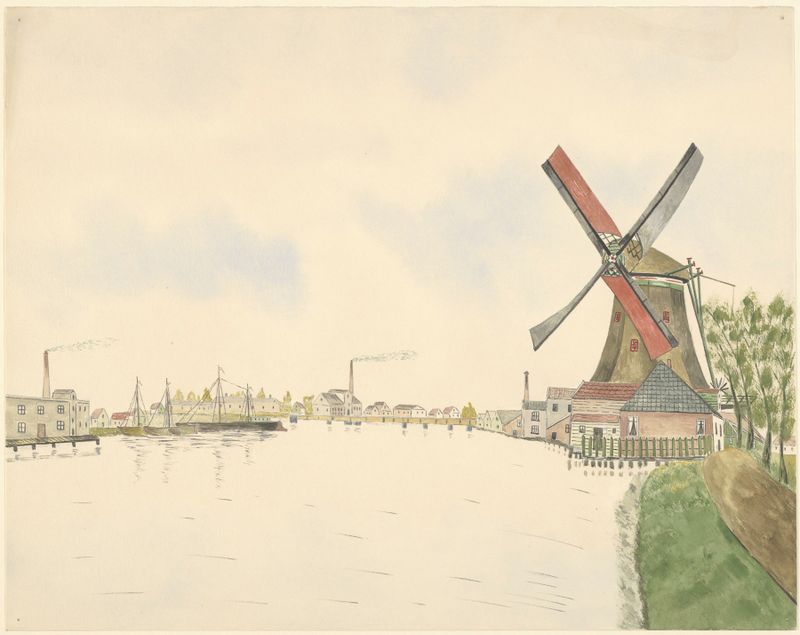
molens; meelmolen De Koker
Johannes Nicolaas Eijman

Papiermolen de Eendracht aan de westzijde van het Zaandammerpad, Wormer
Johannes Nicolaas Eijman
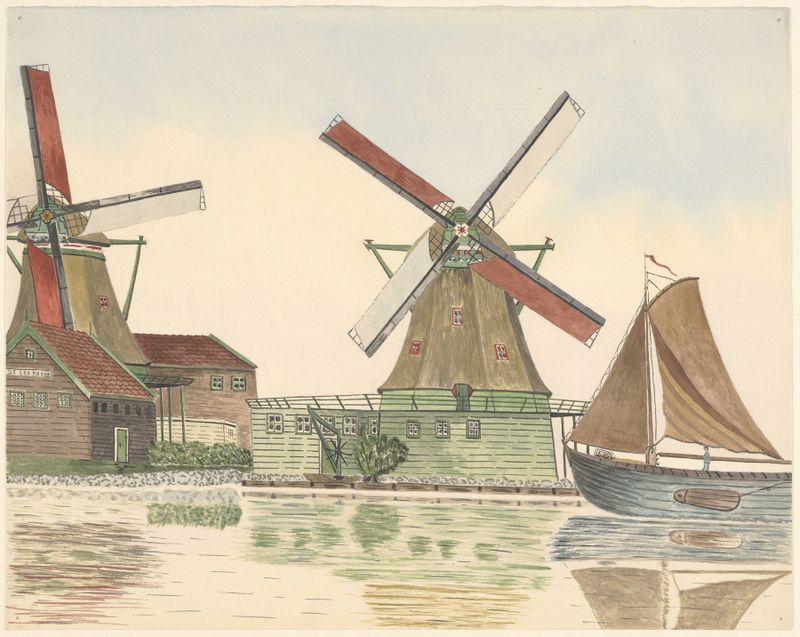
molens; oliemolen De Oude-Zwan, aan de Kalverpoel
Johannes Nicolaas Eijman
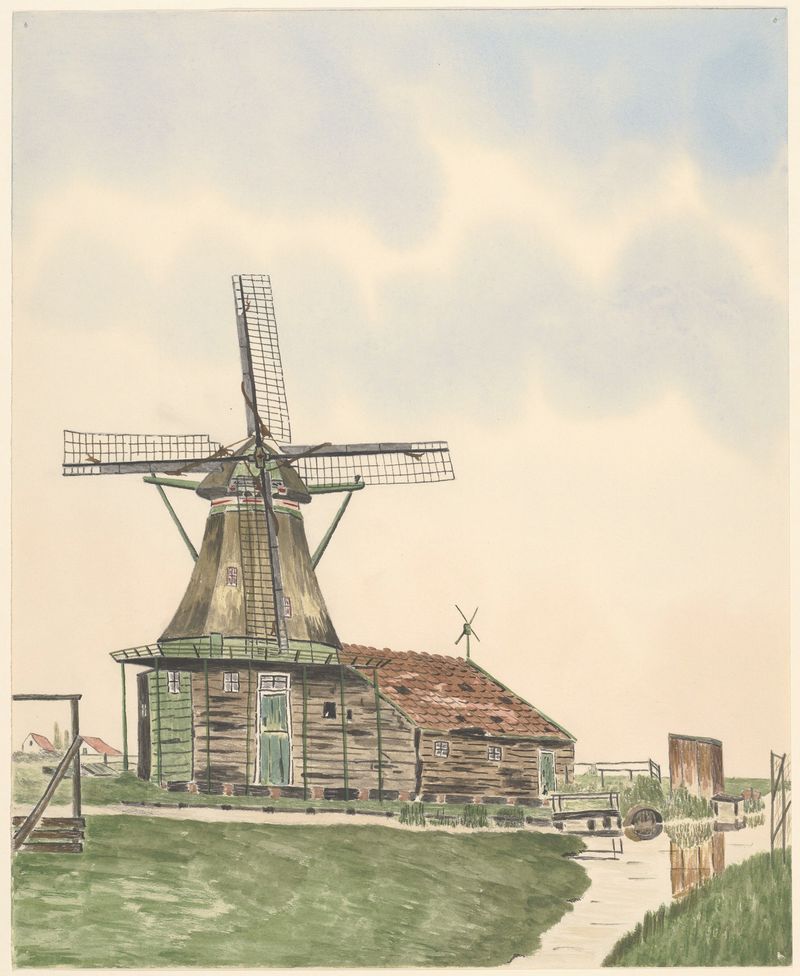
molens; oliemolen Het Oude-Honingvat, Oostzijderveld
Johannes Nicolaas Eijman
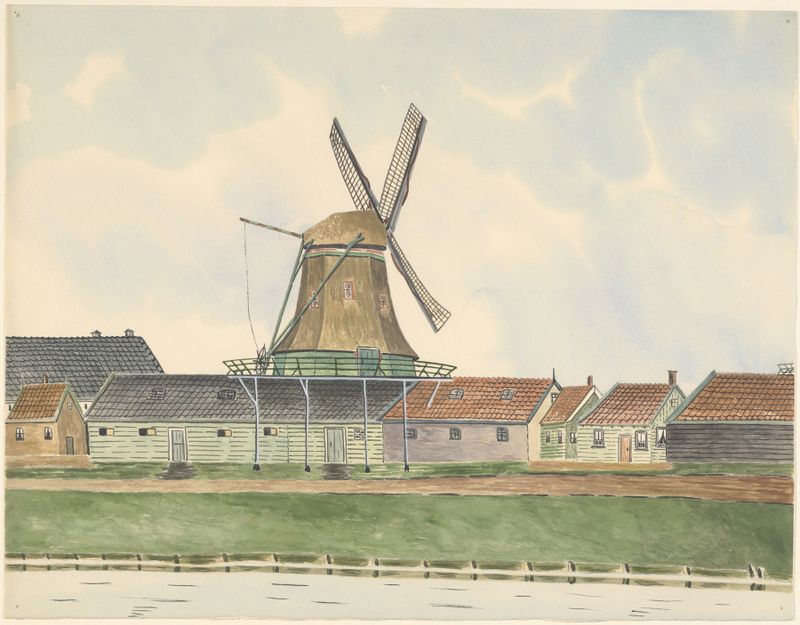
molen; oliemolen Het Witte-Paard aan het Zaandijkerwegje, 1893 gesloopt
Johannes Nicolaas Eijman

Op de voorgrond rechts doppenmolen De Prolpot aan de Hemmes, op de achtergrond links twee andere molens
Johannes Nicolaas Eijman
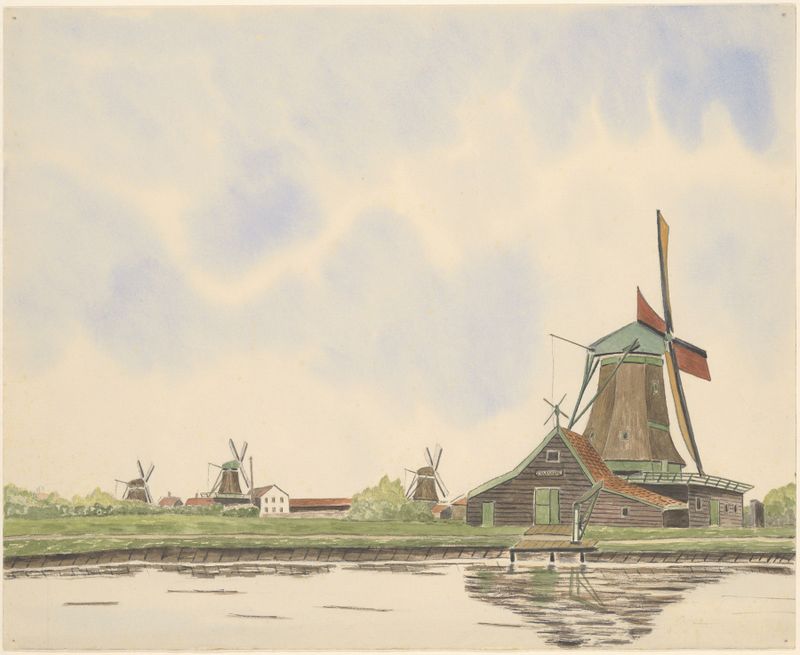
Oliemolen De Kerkuil aan de Zaan, met drie molens op de achtergrond. De Kerkuil stond binnendijks, tegenover de Wormerveerderkerk; afgebroken ca. 1892
Johannes Nicolaas Eijman
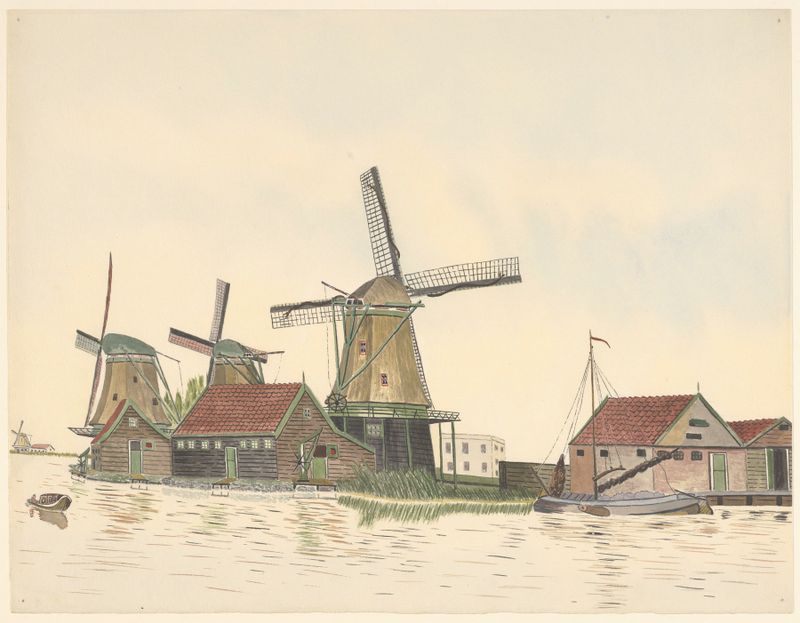
molens; De Ooievaar; De Windhond; De Gans, Kalverringdijk
Johannes Nicolaas Eijman
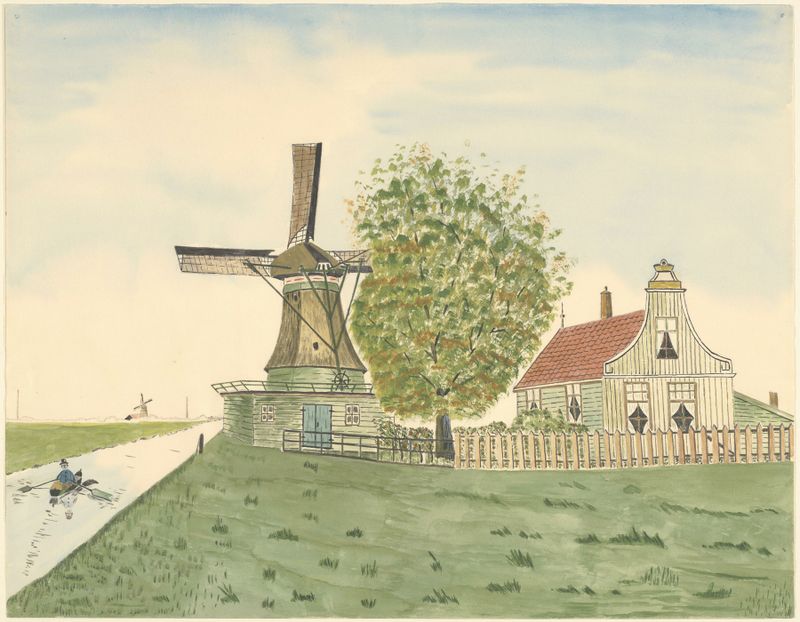
molens; houtzaagmolen De Haan
Johannes Nicolaas Eijman





