
Moulin à Villennes — History & Facts
A single bridge, painted with a few brisk strokes, slices across the canvas and draws the eye to a sunlit building with a terracotta roof—its reflection trembling in the water below. The brushwork is loose, almost casual, but every patch of color is chosen for its effect: the sharp green of the trees, the milky blue of the sky, the creamy yellow of the bridge itself. Light is not just an element here; it is the subject, pooling on the surfaces, flattening forms, and turning the river into a mirror that doubles the world above.
The scene is quiet, yet the quick, confident marks suggest the artist’s urgency to capture a fleeting hour. This is a landscape that asks you to slow down and notice how much can be said with so little. Painted in 1910, Moulin à Villennes belongs to the early twentieth-century moment when artists like Albert Marquet were redefining what a landscape could be. The Fauves, with whom Marquet is often associated, favored bold color and direct observation, seeking not just to record a place but to distill its atmosphere onto the canvas.
Works like this were rarely grand commissions; instead, they were often painted for the artist’s own exploration or for a growing market of private collectors who wanted scenes of modern France. Today, this painting is documented in the Richard Green Fine Paintings collection, a reminder that history has kept few traces of its journey—but the immediacy of Marquet’s vision remains, inviting you to look again at the dance of light and color.
More Artworks by Albert Marquet
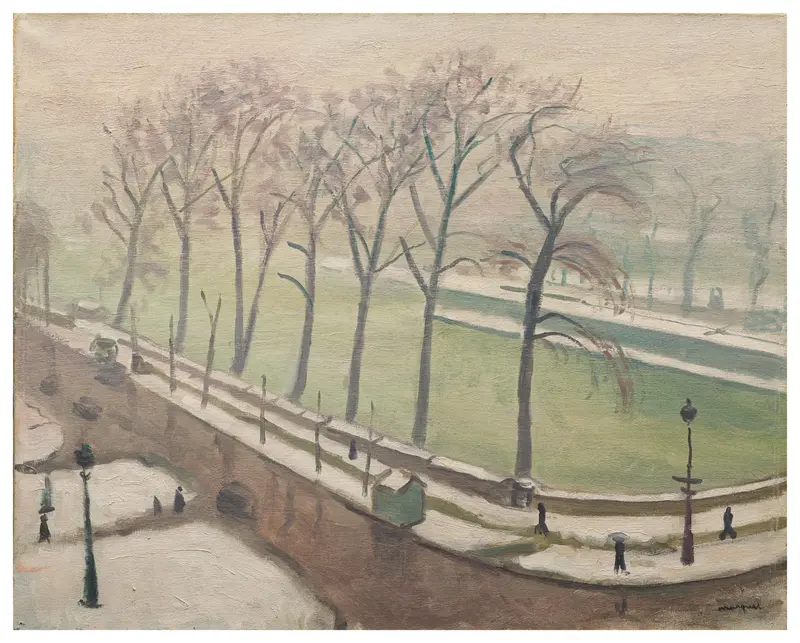
Pont-Neuf sous la neige
Albert Marquet

Le Port d’Alger
Albert Marquet
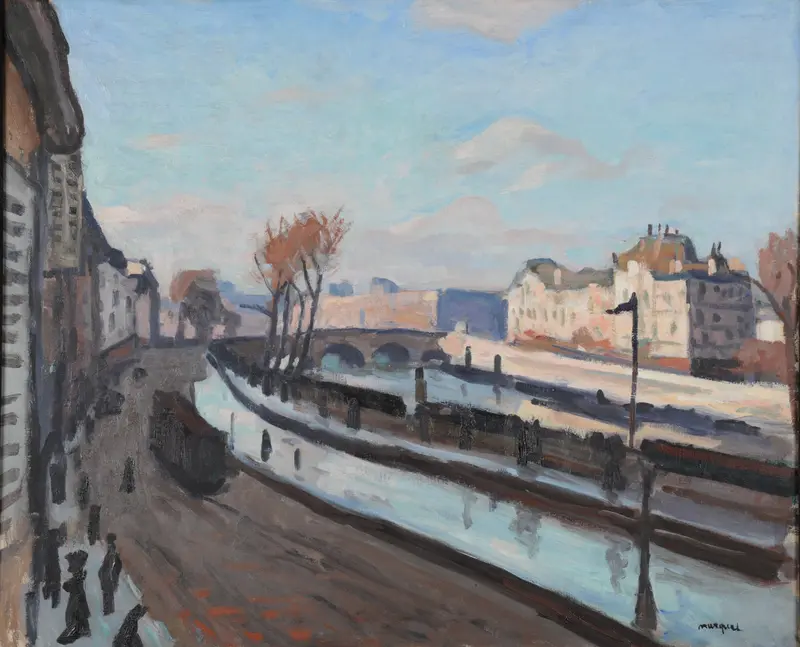
Le quai des Grands Augustins
Albert Marquet

Le jardin à l’Estaque
Albert Marquet
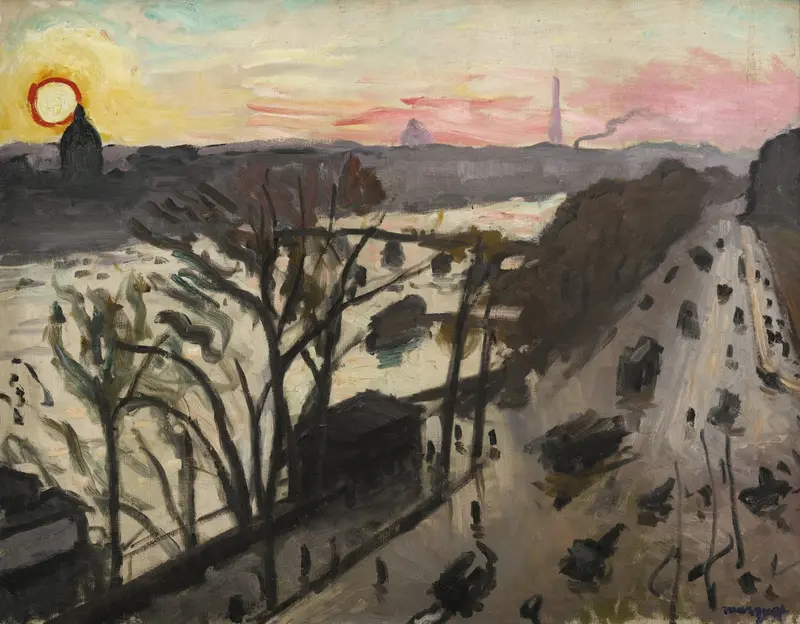
Paris, quai du Louvre, soleil d’hiver
Albert Marquet
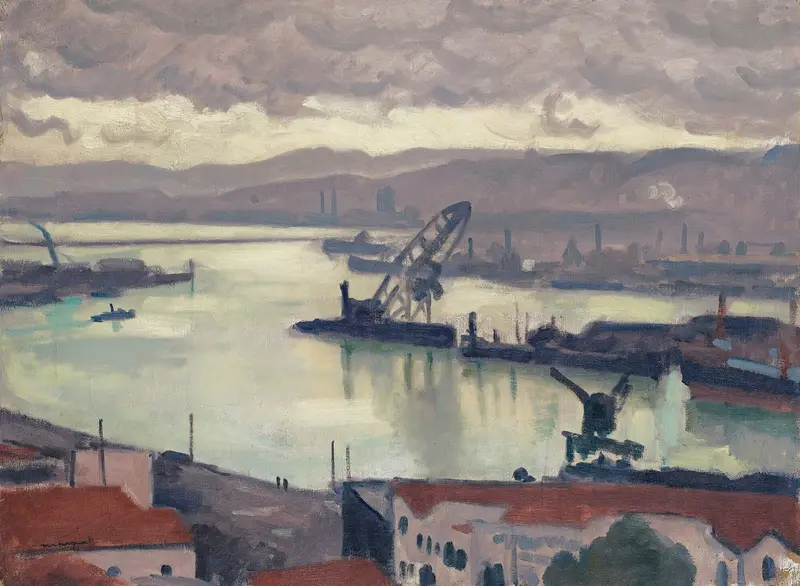
Alger, Temps Gris
Albert Marquet

Berge de la Seine à Méricourt
Albert Marquet
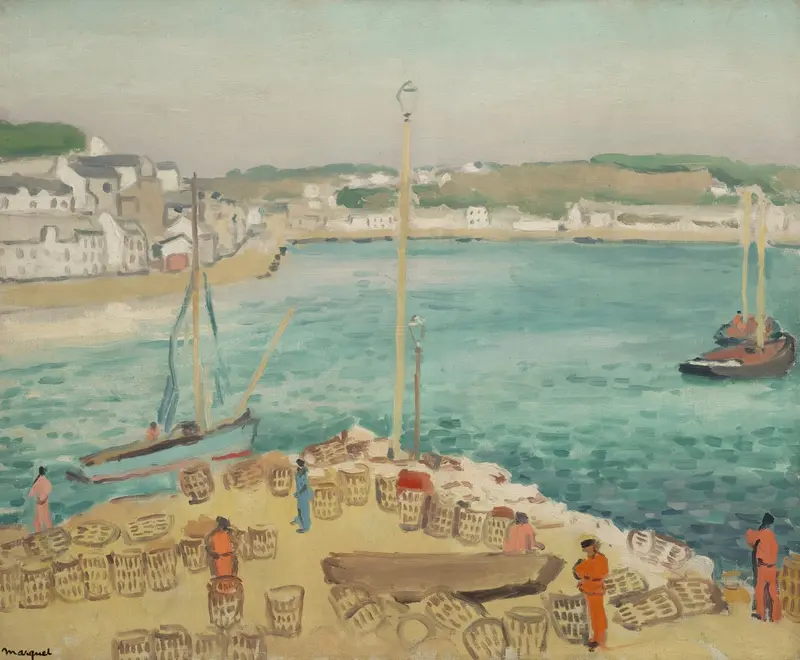
Audierne, les tonneaux
Albert Marquet
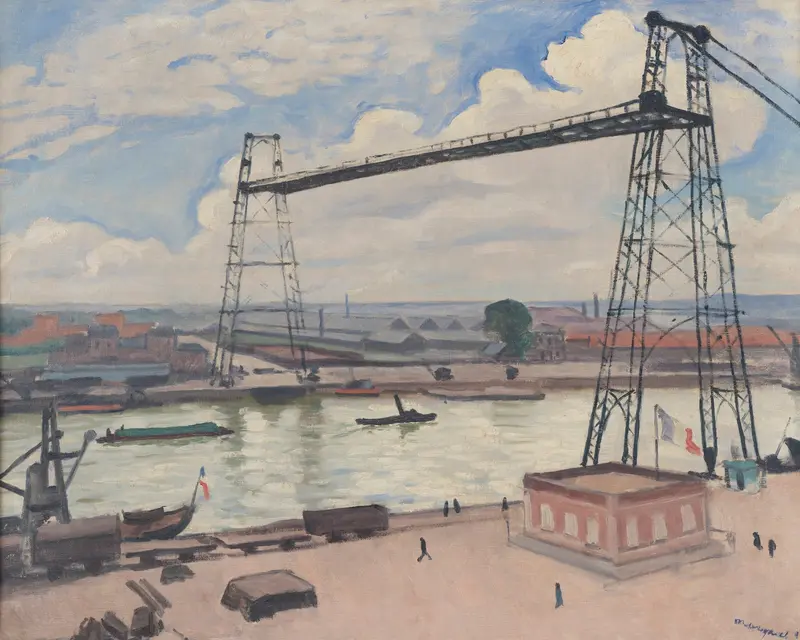
Rouen, le pont transbordeur
Albert Marquet
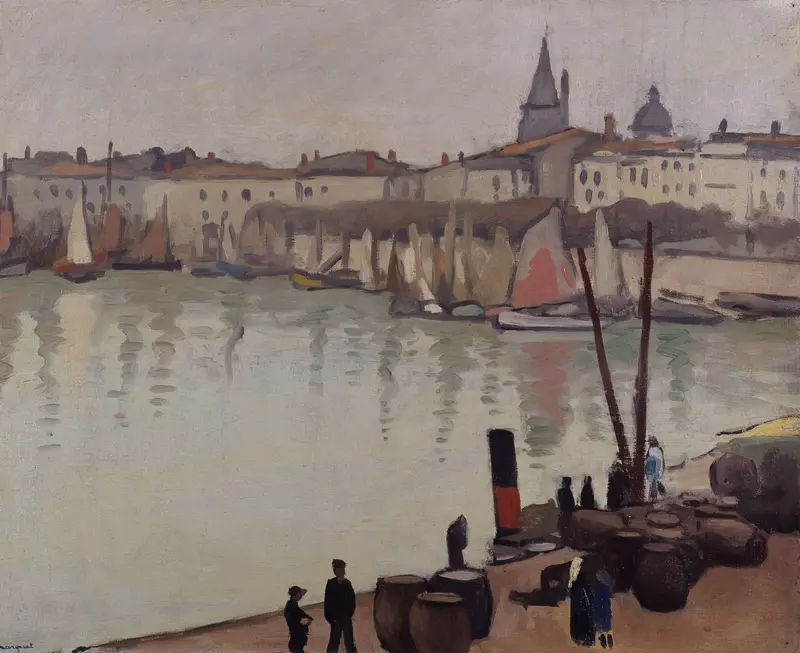
Port of La Rochelle
Albert Marquet
More Landscape Art

The Starry Night
Vincent van Gogh

View of Delft
Johannes Vermeer

Water Lilies
Claude Monet

The Grand Canal, Venice, looking north-west from the Ca' Corner to the Ca' Contarini degli Scrigni, with the campanile of Santa Maria della Carità
Canaletto

Windsor Castle
Canaletto

The Grand Canal looking North-East from the Palazzo Dolfin-Manin to the Rialto Bridge
Canaletto