
Mount Rochfort from the Buller — History & Facts
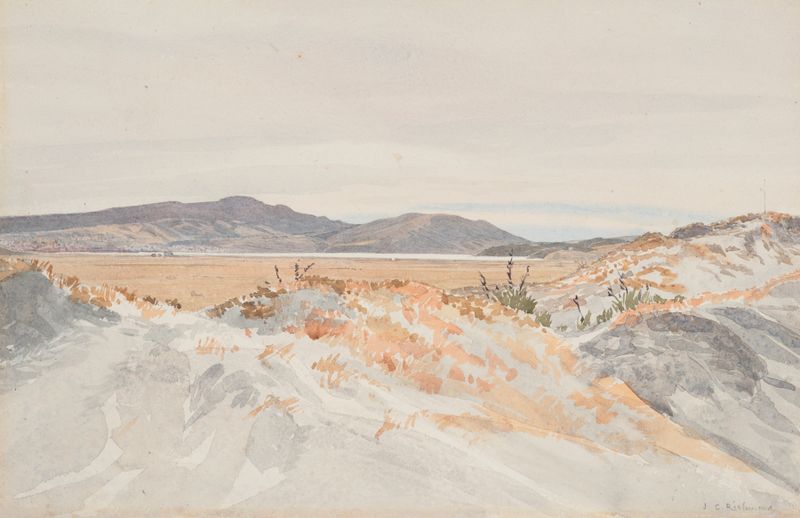
Can paint confess what words never could? In Mount Rochfort from the Buller, light becomes a silent witness to the majesty of nature, revealing the profound dialogue between earth and sky. Look to the center where the majestic peak rises, its rugged silhouette framed by a tapestry of softer valleys below. The artist employs a mix of rich greens and cool blues, contrasted by the warm golden hues of sunlight that wash over the landscape. This interplay of color and light guides your gaze upward, inviting you to explore the mountain's textured surfaces and the clouds that envelop it in a delicate embrace. Beneath the serene facade lies a deeper tension — the struggle between permanence and ephemerality.
The mountain stands resolute, a reminder of nature's grandeur, while the fleeting clouds hint at the ever-changing skies. Each brushstroke carries the weight of emotion, as the soft light casts shadows that dance upon the earth, suggesting both tranquility and the relentless passage of time. In 1862, James Crowe Richmond painted this piece while immersed in the Tasmanian wilderness, a period marked by exploration and reflection. As Romanticism began to wane, he sought to capture the sublime beauty of the natural world, aligning himself with a movement that emphasized emotion and the scenic.
This artwork reflects not only his personal journey but also the broader artistic shift of the era, as artists turned their eyes to the unspoiled wilderness for inspiration.
More Artworks by James Crowe Richmond
Browse all →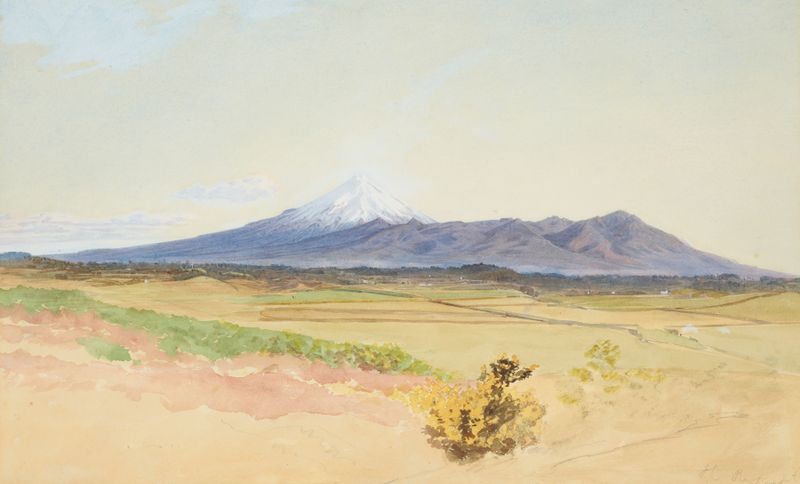
Mount Egmont and Pouakai, from New Plymouth
James Crowe Richmond
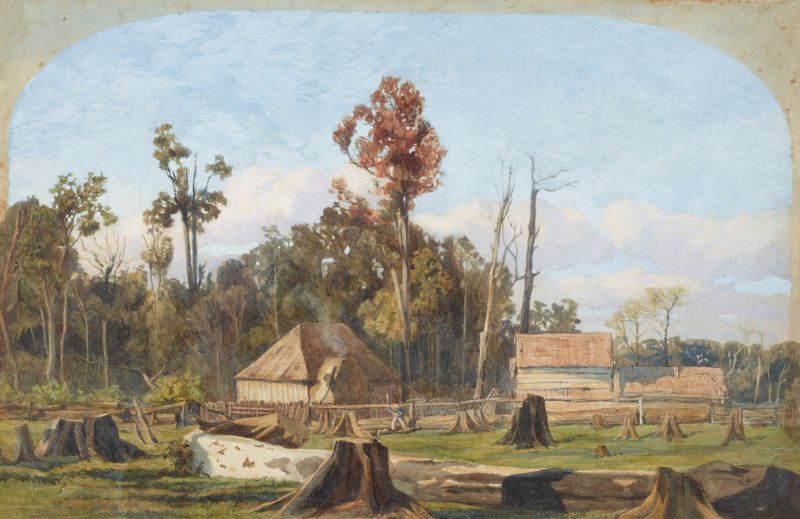
Settler’s home, Merton, near New Plymouth
James Crowe Richmond
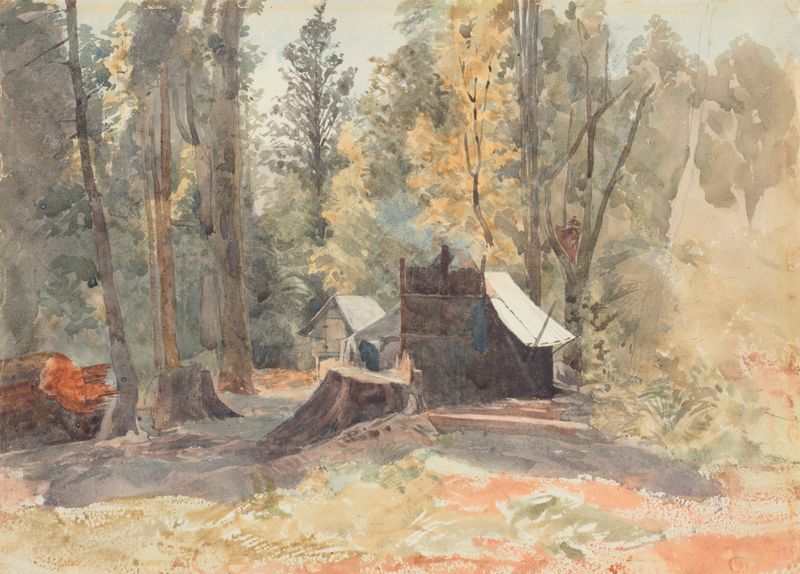
Hut of the ‘Italian party’, old diggings on Buller
James Crowe Richmond

Mosque at Tlemcen
James Crowe Richmond

Ngatapa, Te Kooti’s Pa
James Crowe Richmond

Dividing Range, Riwaka and Takaka
James Crowe Richmond
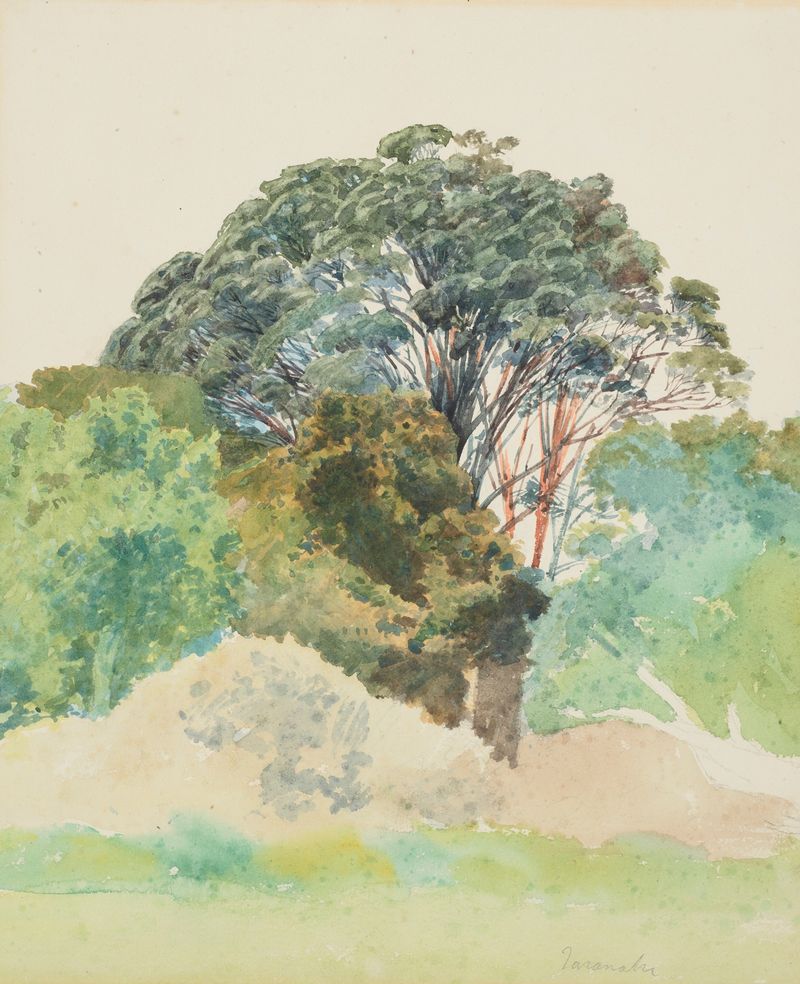
Rata, Taranaki
James Crowe Richmond

Grey River, on the beach
James Crowe Richmond
Dunedin from the Ocean Beach
James Crowe Richmond

On Collingwood Goldfields
James Crowe Richmond





