
Mountainous landscape with cattle — History & Facts
The gaze of a single cow, caught mid-step and meeting the viewer directly, anchors Mountainous landscape with cattle in a moment of quiet alertness. The animal’s pale, mottled face glows in the soft, late-day light, drawing the eye immediately before it wanders to the gentle slope of the hills and the loose cluster of goats and cattle. Two herders, half-shadowed beneath the trees, seem almost incidental to the scene, their presence suggested more by posture and gesture than by detail.
The composition guides you from the luminous foreground to the cool, distant sky, where clouds drift above a horizon that promises more land just out of sight. The palette—earthy browns, greens, and the warm ochre of the cow’s hide—sets a mood of calm, but with a subtle tension: these animals are watched, and so are we. Painted in 1663, this work belongs to the world of the Dutch Golden Age, when landscapes like this one were prized for their blend of realism and quiet poetry. Artists such as Adriaen van de Velde found patrons among the prosperous urban middle class, who sought scenes that balanced the idealized countryside with the realities of rural labor.
The presence of cattle and goats, and the careful attention to their anatomy and movement, reflect a broader fascination with the land’s bounty and the rhythms of agricultural life. While history has kept few traces of this painting’s early journey, it now resides in the collection of the Rijksmuseum, a quiet testament to a time when the everyday was worthy of close, loving observation. Let your eyes linger on the cow’s steady gaze, and imagine the world beyond the frame.
More Artworks by Adriaen van de Velde

Staande stier
Adriaen van de Velde
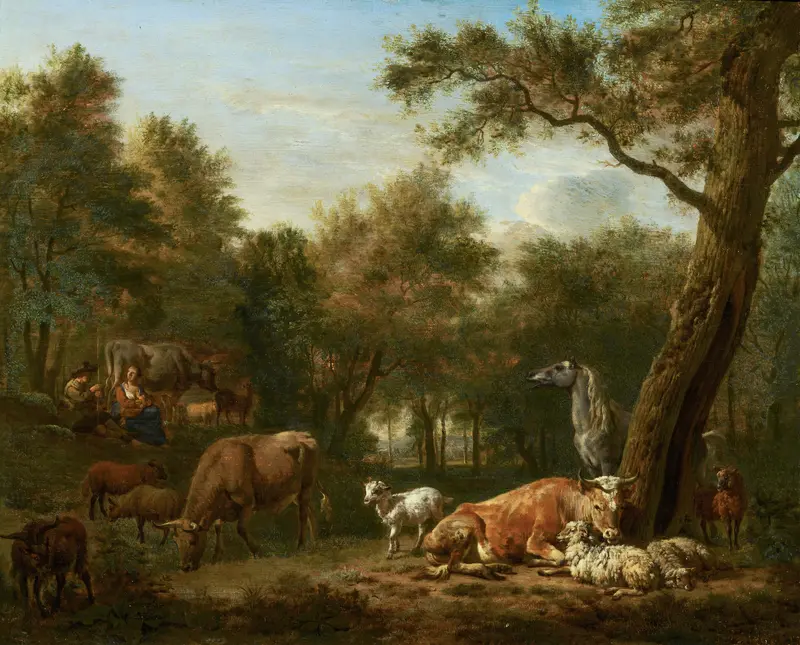
Wooded Landscape with Cattle
Adriaen van de Velde
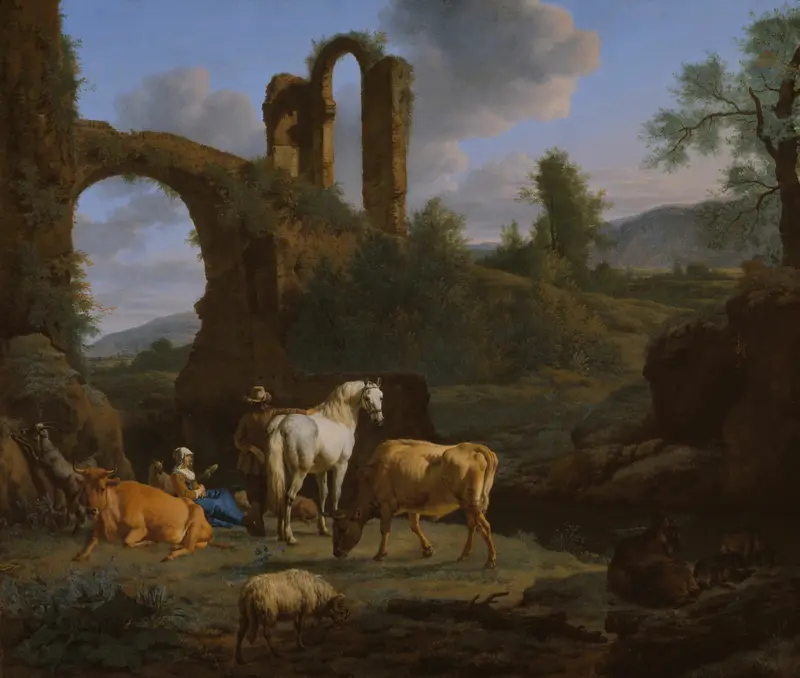
Pastoral Landscape with Ruins
Adriaen van de Velde
Pastoral Landscape with Ruins
Adriaen van de Velde
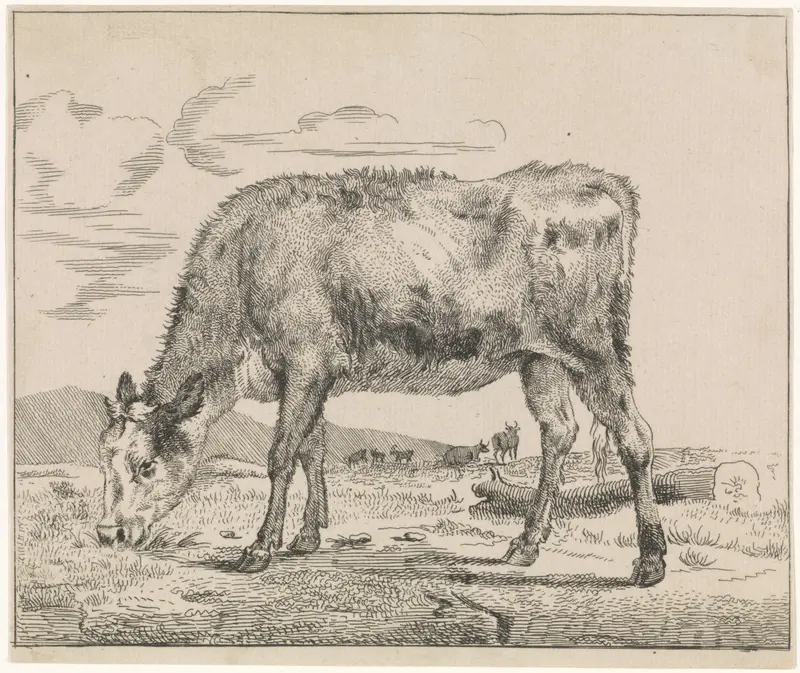
Grazend kalf
Adriaen van de Velde
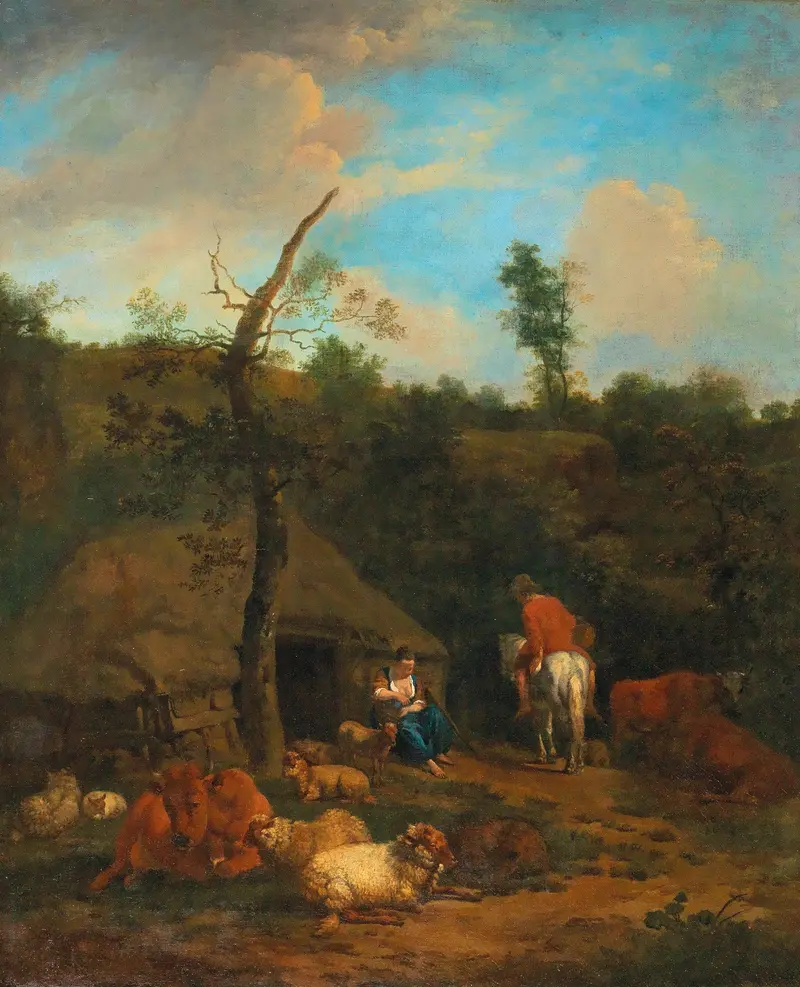
A herdsman and a shepherdess in front of a wooden farmhouse
Adriaen van de Velde
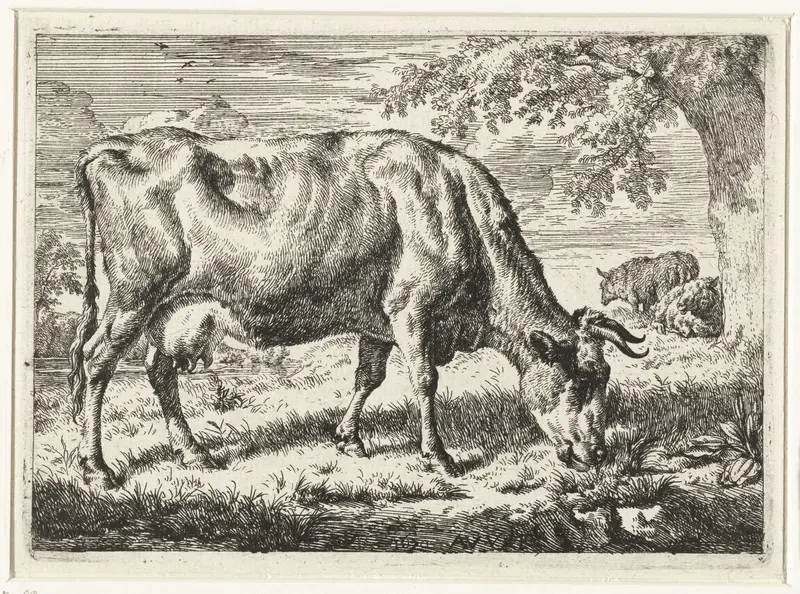
Grazende koe en twee schapen
Adriaen van de Velde
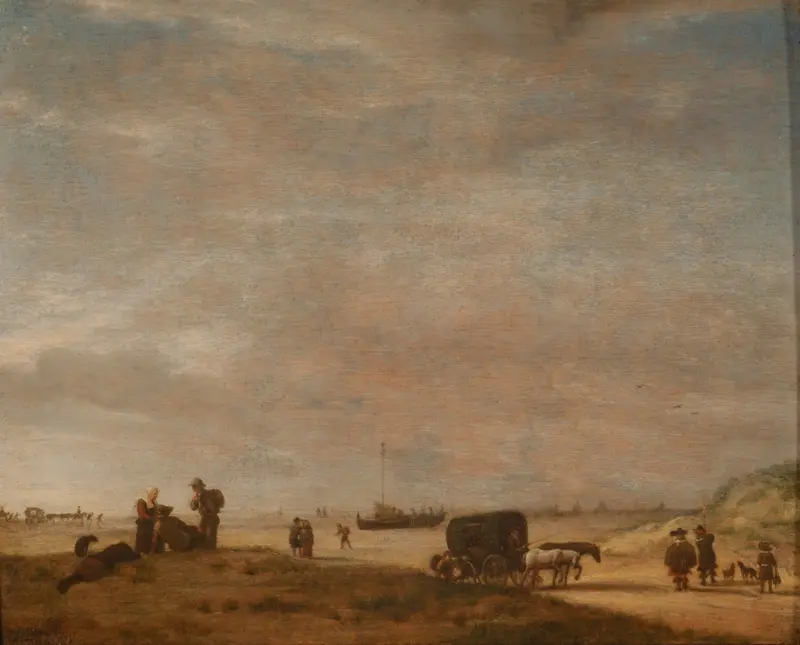
Scheveningen Beach
Adriaen van de Velde
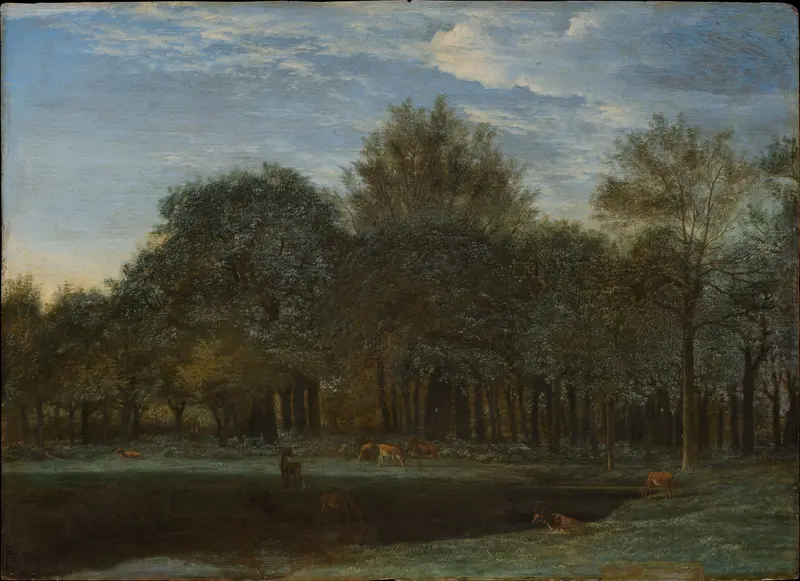
Forest Clearing with Grazing Deer
Adriaen van de Velde
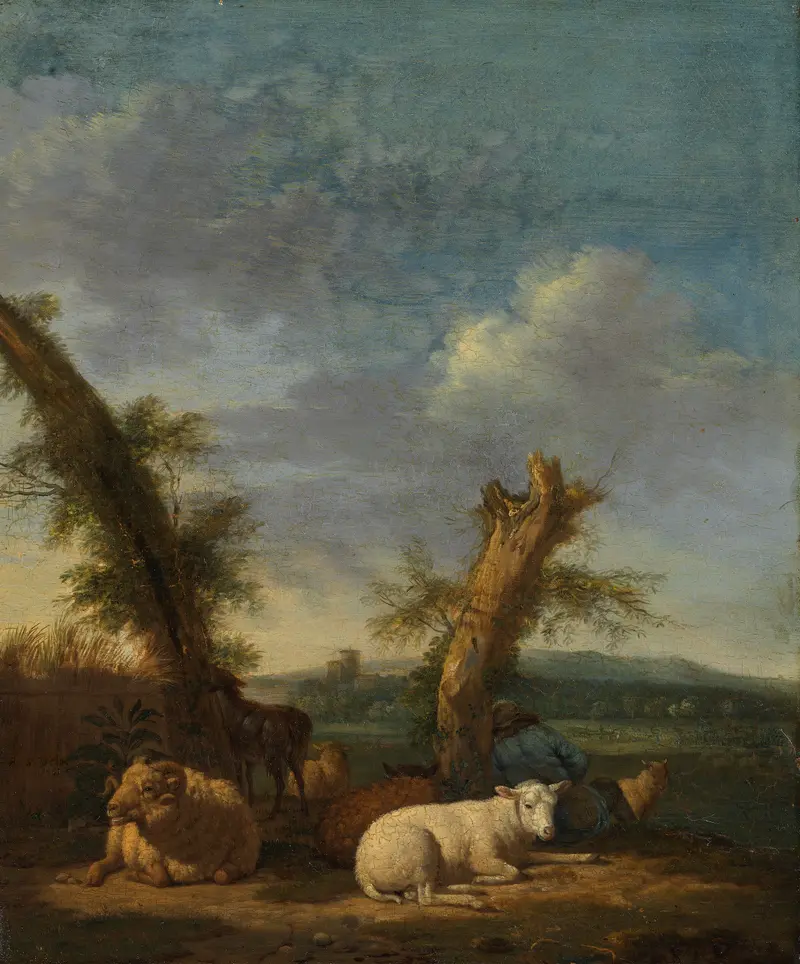
Landscape with Sheep and a Sleeping Shepherd
Adriaen van de Velde
More Landscape Art

The Starry Night
Vincent van Gogh

View of Delft
Johannes Vermeer

Water Lilies
Claude Monet

The Grand Canal, Venice, looking north-west from the Ca' Corner to the Ca' Contarini degli Scrigni, with the campanile of Santa Maria della Carità
Canaletto

Windsor Castle
Canaletto

The Grand Canal looking North-East from the Palazzo Dolfin-Manin to the Rialto Bridge
Canaletto