
Mowers in the Field in Porchester Terrace, Bayswater, June 9 — History & Facts
On June 9th, in the heart of Victorian London, a small field on Porchester Terrace in Bayswater became the unlikely stage for a scene that would captivate John Linnell. While the date is carefully recorded in the painting’s title, the precise year and circumstances remain elusive, adding a layer of mystery. What is certain is that Linnell, best known for his landscapes and his friendships with artists like William Blake, was deeply invested in capturing rural labor within the rapidly changing city.
The painting stands as a rare document of a moment when the green spaces of Bayswater were giving way to the city's relentless expansion. At the center of Mowers in the Field in Porchester Terrace, Bayswater, June 9, a group of laborers bend to their work, scythes flashing in the early summer light. Linnell chooses the instant when the mowers, backs arched and arms swinging, are caught mid-motion against the backdrop of encroaching townhouses. The contrast between the lush field and the neat facades hints at the tension between tradition and progress.
The artist’s careful attention to the play of sunlight on grass and linen recalls the rural scenes of John Constable, yet Linnell’s focus is more intimate—his mowers are individuals, not just elements in a pastoral view. The scythes, gleaming and precise, serve as both tools and symbols of a vanishing way of life. The exact provenance of this work is uncertain, as is often the case with Linnell’s lesser-known paintings. It is not clear whether the painting was a private commission or a personal project, but it fits within a period when Linnell was increasingly interested in the effects of urban development on the English landscape.
Over time, the painting has been recognized as a valuable record of London’s lost fields, though it has rarely appeared in major exhibitions. Today, Mowers in the Field in Porchester Terrace, Bayswater, June 9 stands as a testament to Linnell’s commitment to documenting the everyday drama of his changing world, and to the quiet dignity of labor in the shadow of modernity.
More Artworks by John Linnell

A View Near Hampstead
John Linnell

William Collins, R.A.
John Linnell
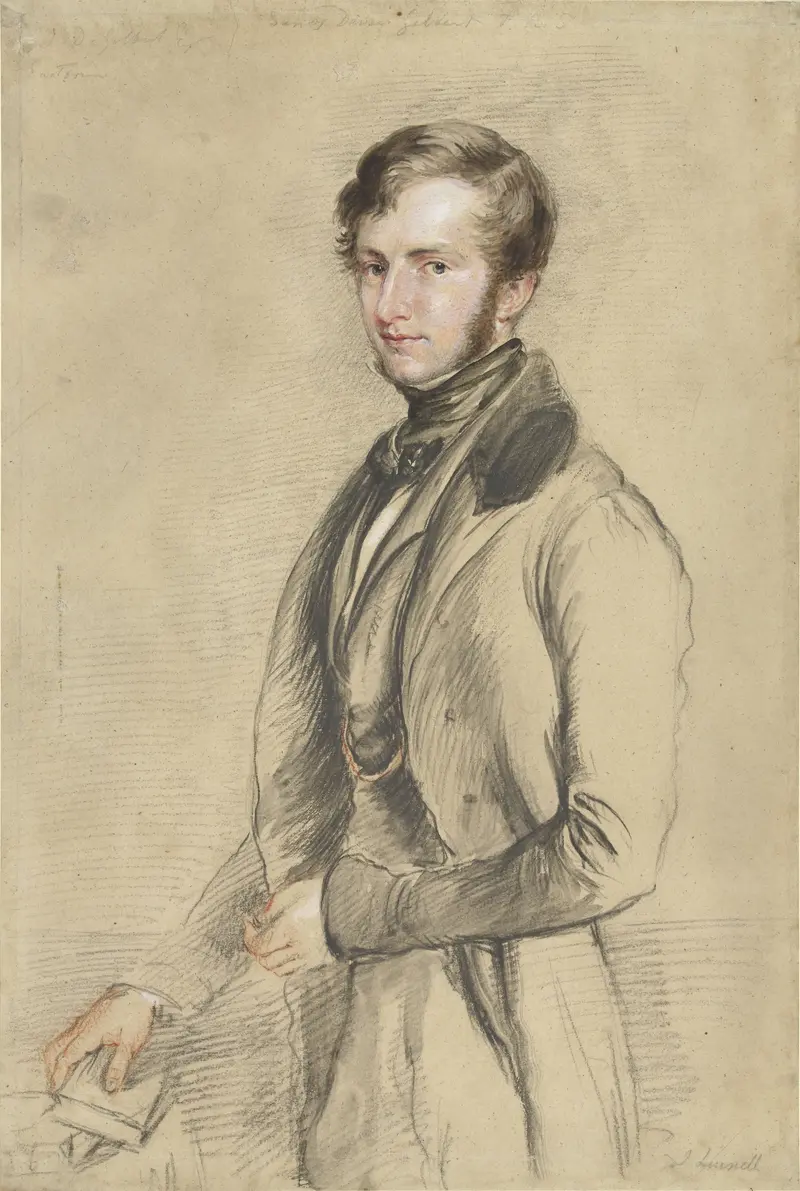
Portrait of John Davies Gilbert
John Linnell
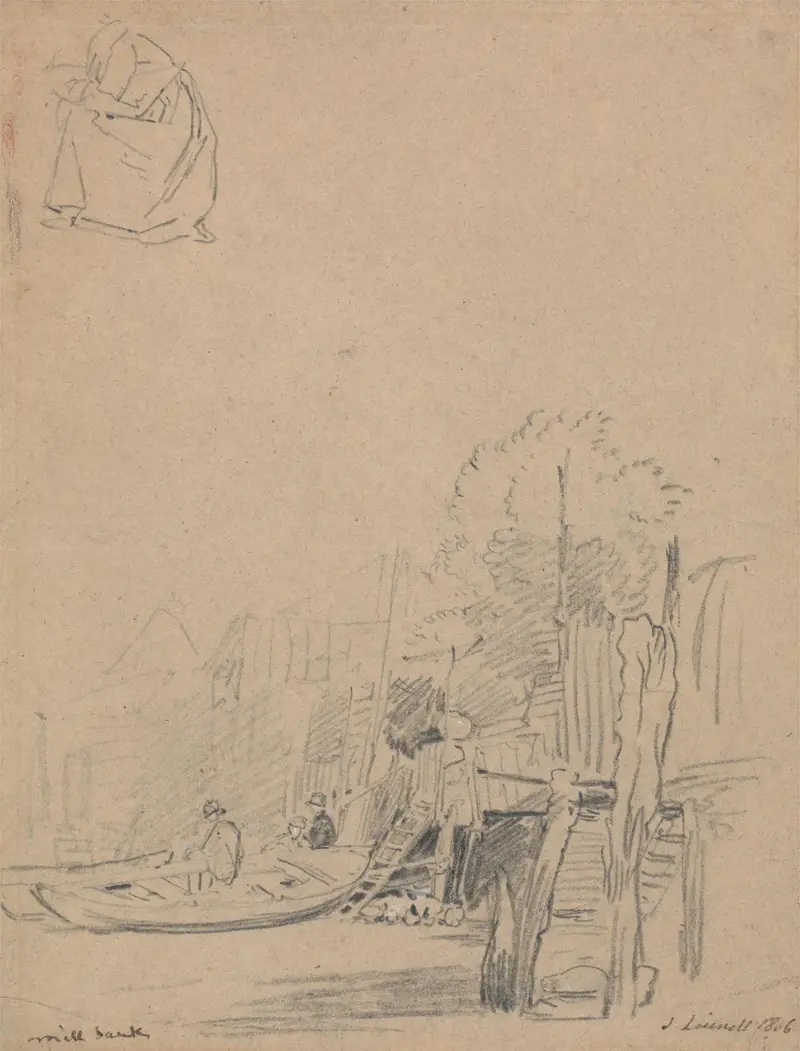
Millbank
John Linnell
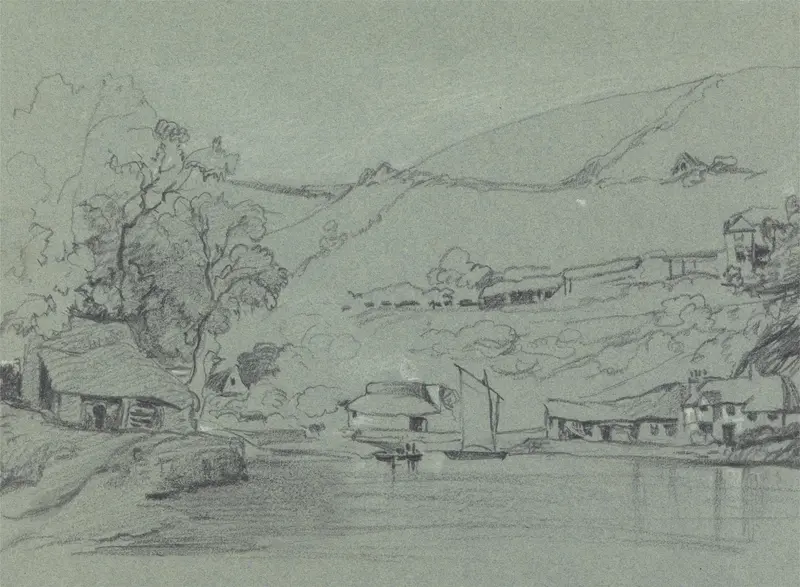
Scene in Kent
John Linnell
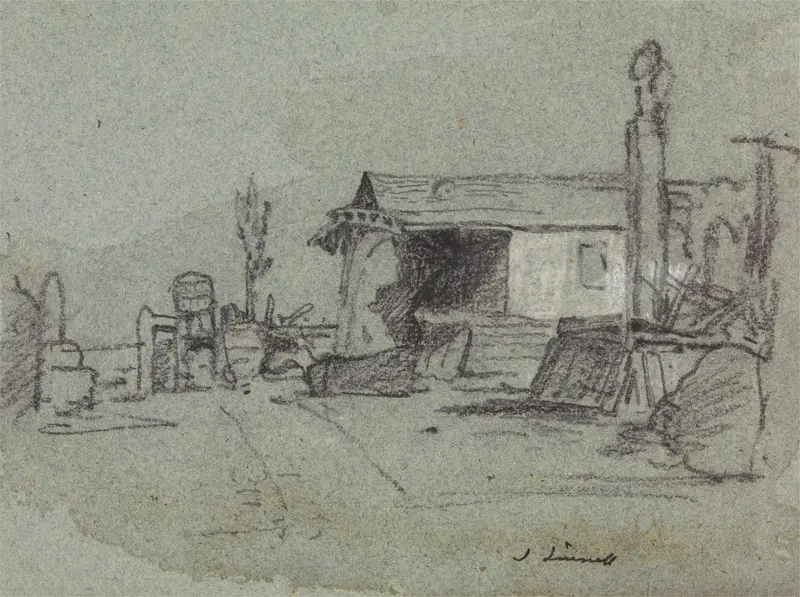
A Scene in the Edgware Road, London
John Linnell
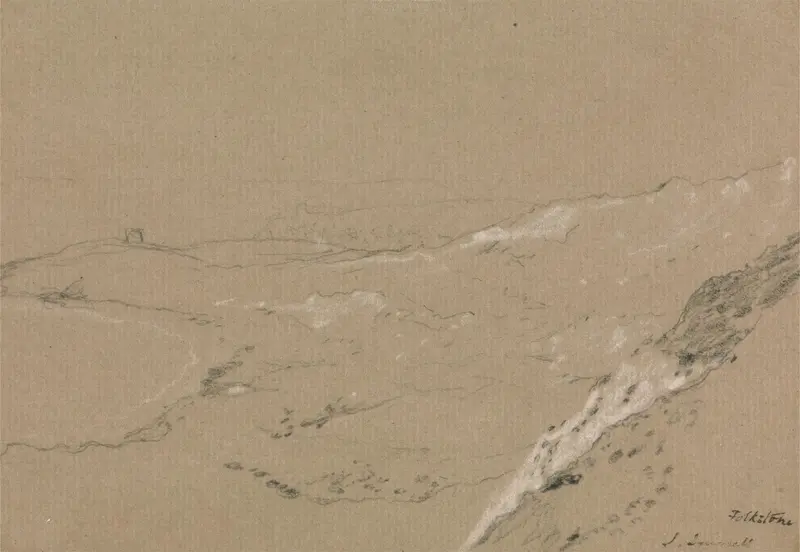
Folkestone
John Linnell
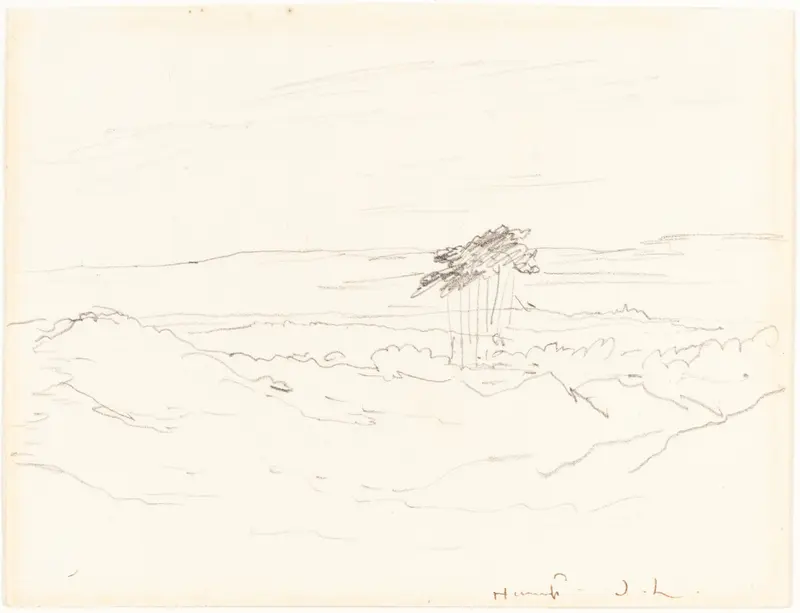
Hampstead Heath
John Linnell
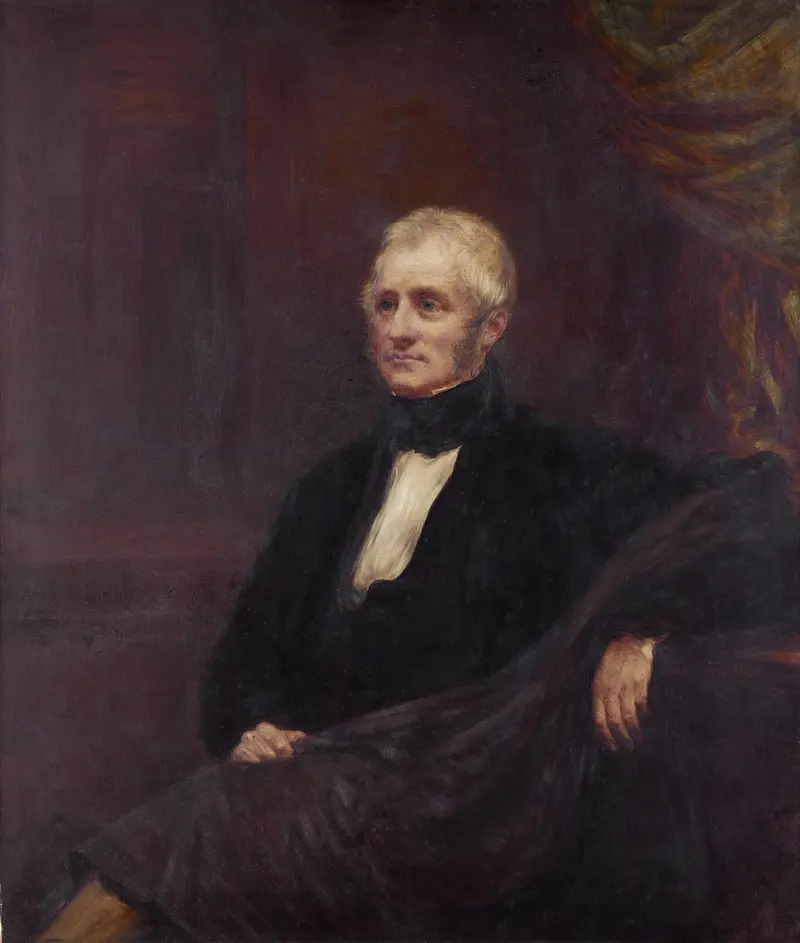
Henry Stephen Fox-Strangways, 3rd Earl Of Ilchester
John Linnell
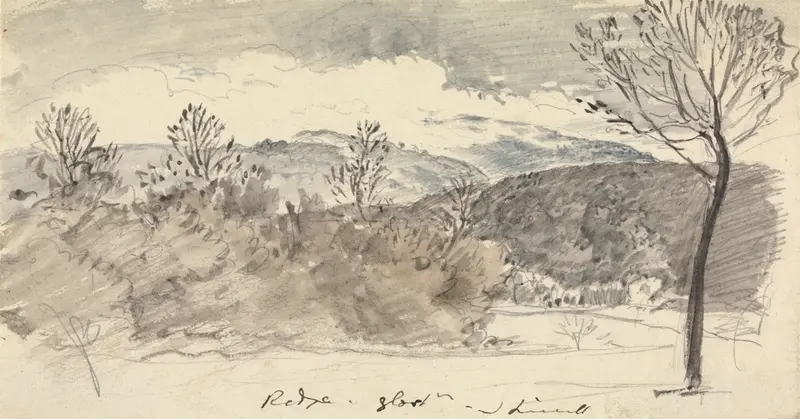
View at Mr. Sheppard’s, The Ridge, Gloucestershire
John Linnell
More Genre Scene Art

Banquet of the Officers of the St George Civic Guard
Frans Hals

Rembrandt and Saskia in the Scene of the Prodigal Son
Rembrandt van Rijn

Bal du moulin de la Galette
Pierre-Auguste Renoir

Quadrille at the Moulin Rouge
Henri de Toulouse-Lautrec

A Burial at Ornans
Gustave Courbet

When Will You Marry?
Paul Gauguin