Mt. Changchao — History & Facts
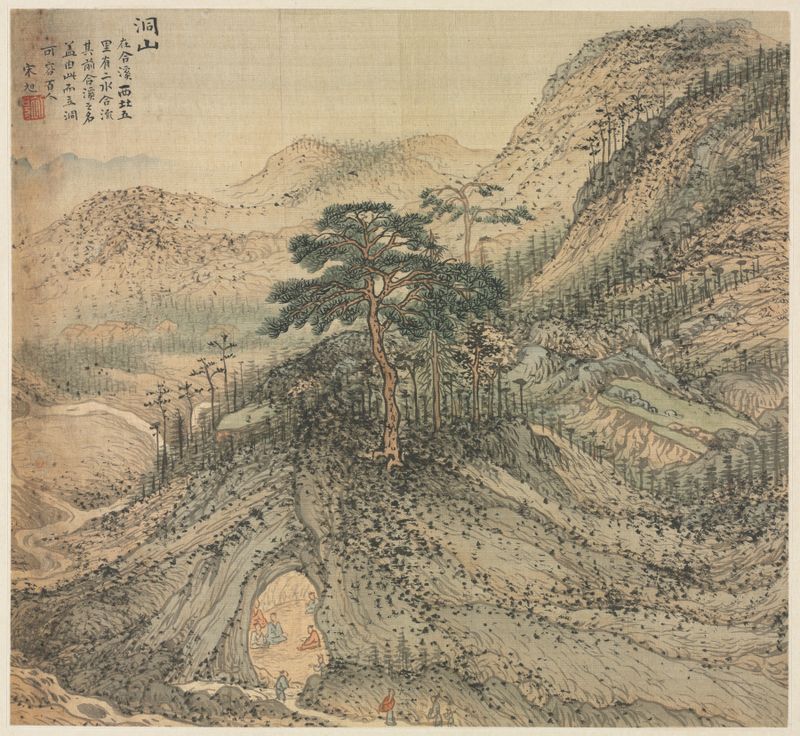
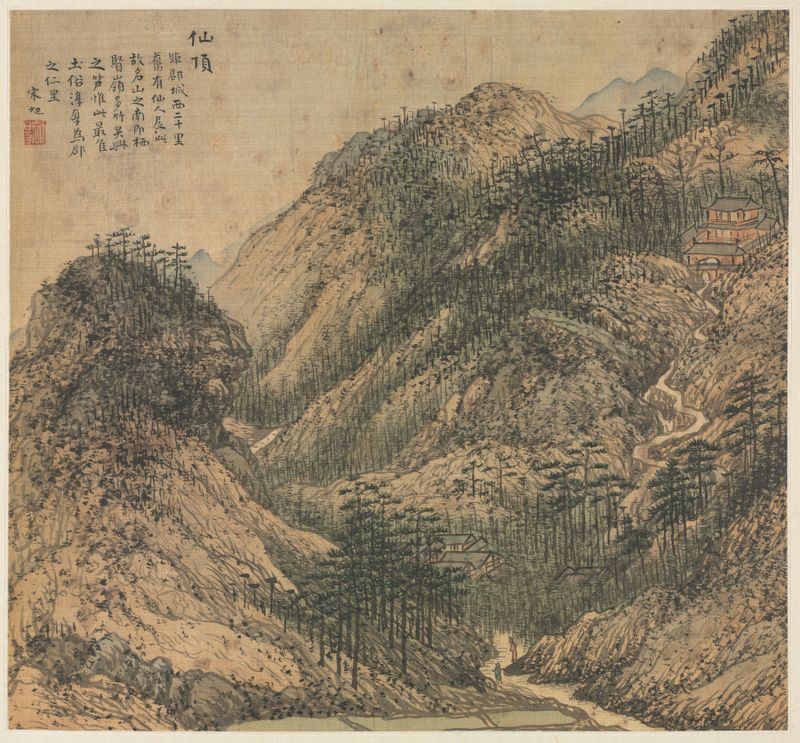
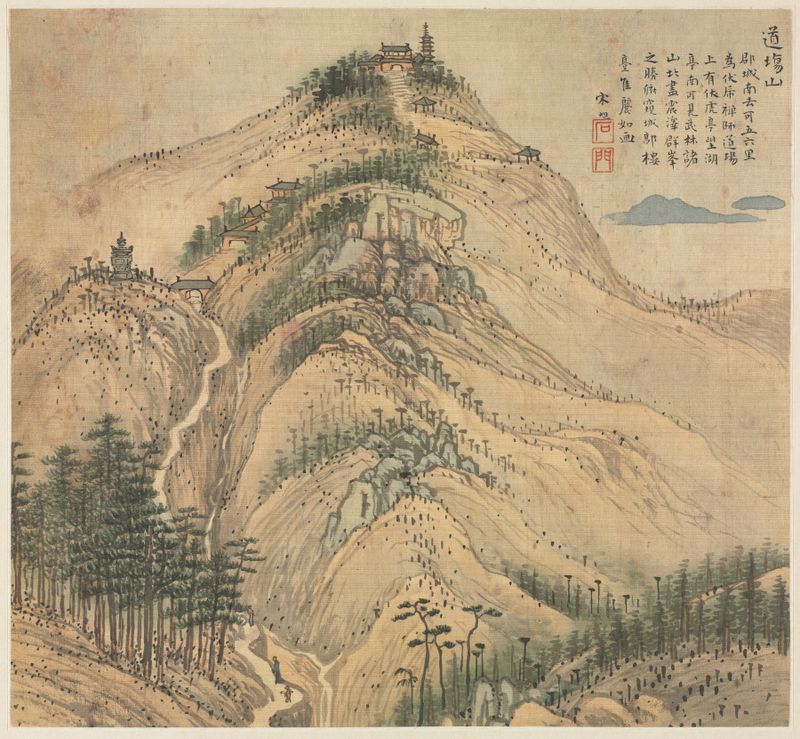
In the quietude of contemplation, one often feels the profound weight of solitude, a theme that resonates deeply in this artwork. Look closely at the mountainscape, where gentle strokes shape the undulating peaks against a whispering sky. The greyish-blue hues blend seamlessly with soft whites, creating a misty atmosphere that envelops each ridge in a shroud of mystery. Notice the solitary tree standing resolutely in the foreground, its twisted branches stretching toward the heavens, embodying a yearning that contrasts starkly with the vast emptiness surrounding it.
The delicate brushwork invites the viewer to linger, evoking a sense of reverence for both nature and the human spirit. As you immerse yourself in this landscape, explore the emotional tension between the grandeur of the mountains and the solitary figure of the tree. This juxtaposition highlights the loneliness inherent in existence, suggesting that even in nature's vastness, one can feel profoundly isolated. The interplay of light and shadow further underscores this contrast, illuminating the tree while the mountains remain shrouded in a blanket of clouds, hinting at the unseen struggles and aspirations that often lurk behind solitude. Created around 1588 during the Ming Dynasty, the artist painted this scene amidst a time of rich cultural and philosophical advancement in China.
Known for his landscapes, he sought to capture the spirit of nature and its intimate connection to human emotions. This period marked both a flourishing of artistic expression and an enduring sense of introspection, reflecting a collective grappling with place in an ever-expanding world.