
My birthplace — History & Facts
A single black goat stands in the slushy, thawing street, its silhouette the anchor in a world of shifting color and crooked lines. The houses lean together, their wooden walls rendered in thick, urgent strokes, as if the memory of this place is still settling into shape. The palette is all earth and ice—violets, ochres, and whites—capturing the restless transition of winter to spring, and perhaps something of the artist’s own sense of belonging and distance.
The viewer’s gaze is drawn along the uneven row of cabins, past a solitary figure at a doorway, and out toward the pale, uncertain sky. Every brushstroke seems to pulse with the energy of recollection, as if the land itself is alive with stories. Painted in 1906, My birthplace by Abraham Manievich belongs to a moment when artists across Eastern Europe were turning their eyes back to the villages and landscapes of their childhoods, seeking identity in a rapidly changing world. Works like this, often created for personal reflection or for small circles of patrons, evoke the textures of rural life at a time when industrialization and urban migration were pulling people away from such scenes.
The painting’s presence in the Athenaeum collection today is a quiet testament to the persistence of these memories, even as history has kept few traces of the specific people and places captured here. Look again at the goat, the slant of the roofs, the melting snow: all the details that hold a world together, just for a moment.
More Artworks by Abraham Manievich
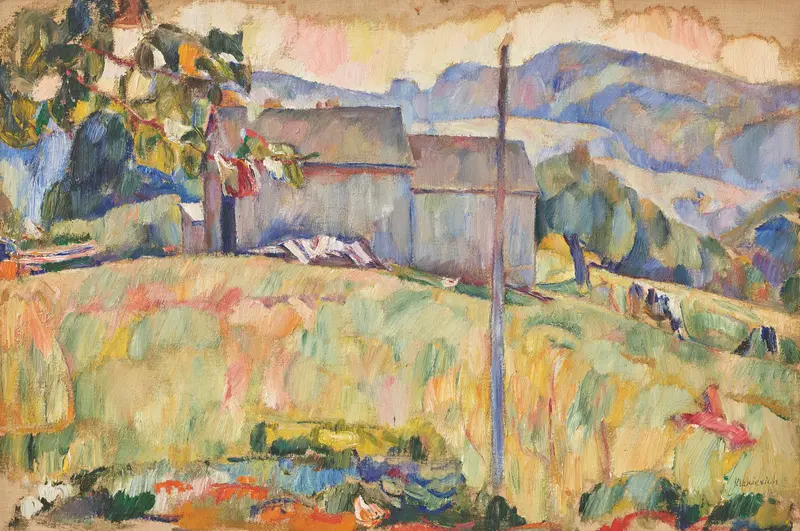
Summer landscape
Abraham Manievich

Early Spring
Abraham Manievich
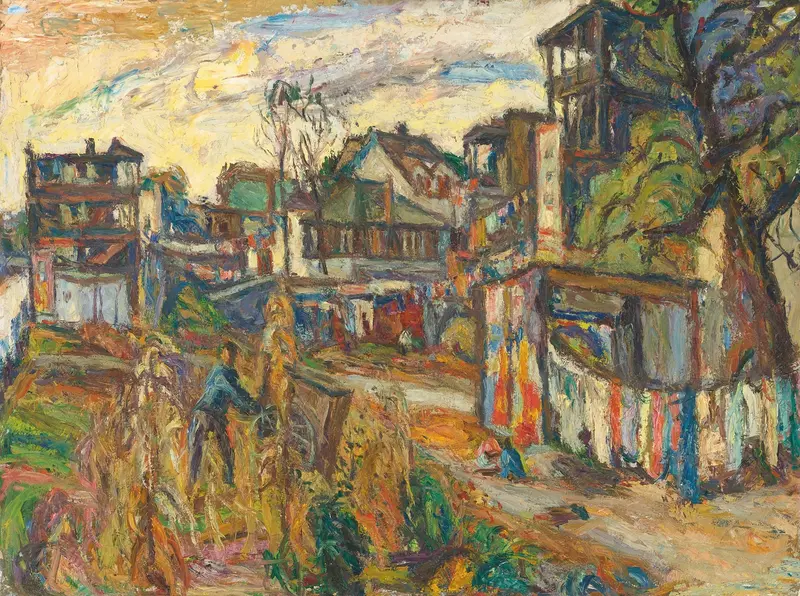
City Scene
Abraham Manievich
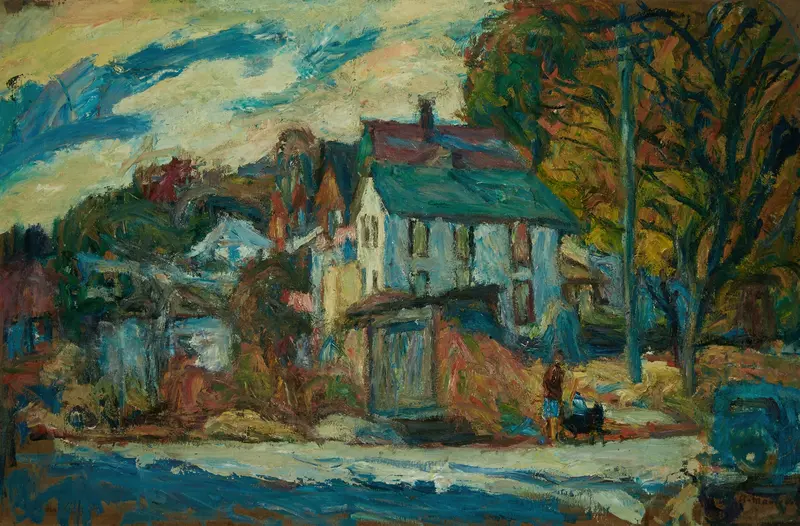
Autumn. White Plains
Abraham Manievich
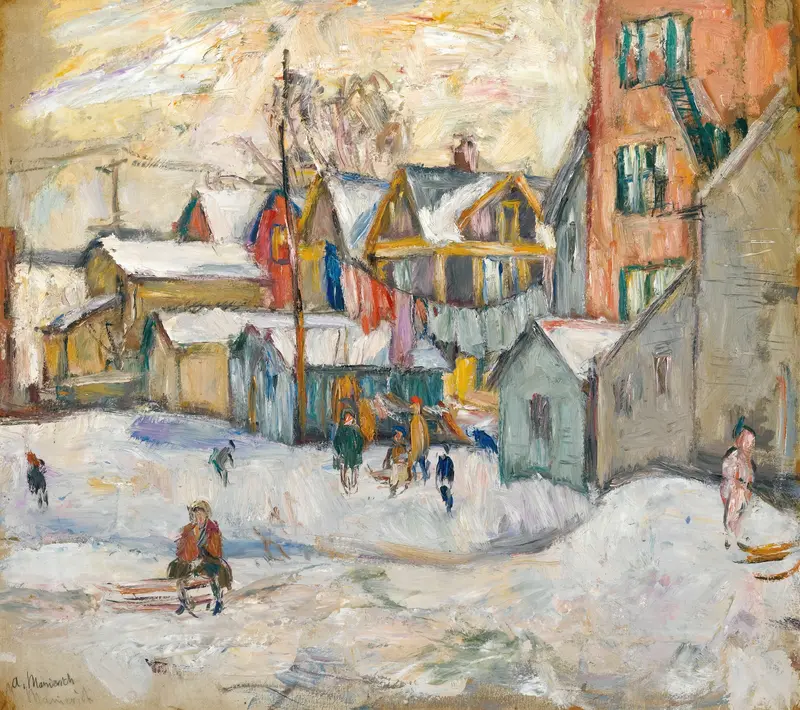
The Bronx
Abraham Manievich
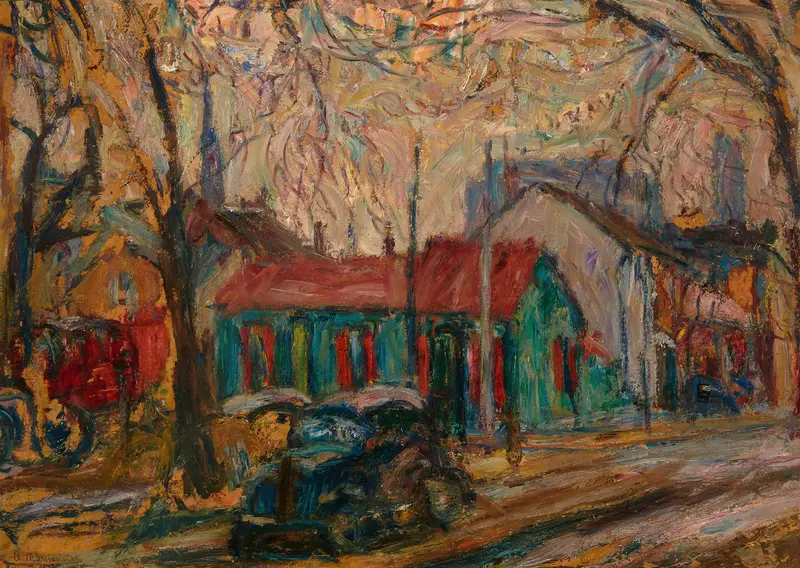
Quiet street
Abraham Manievich
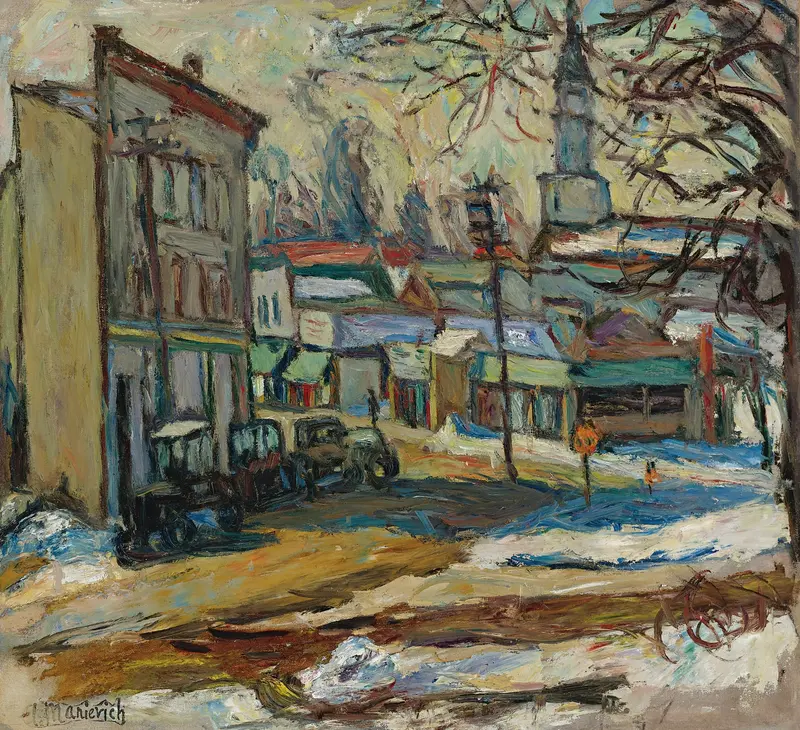
Bridgeport
Abraham Manievich
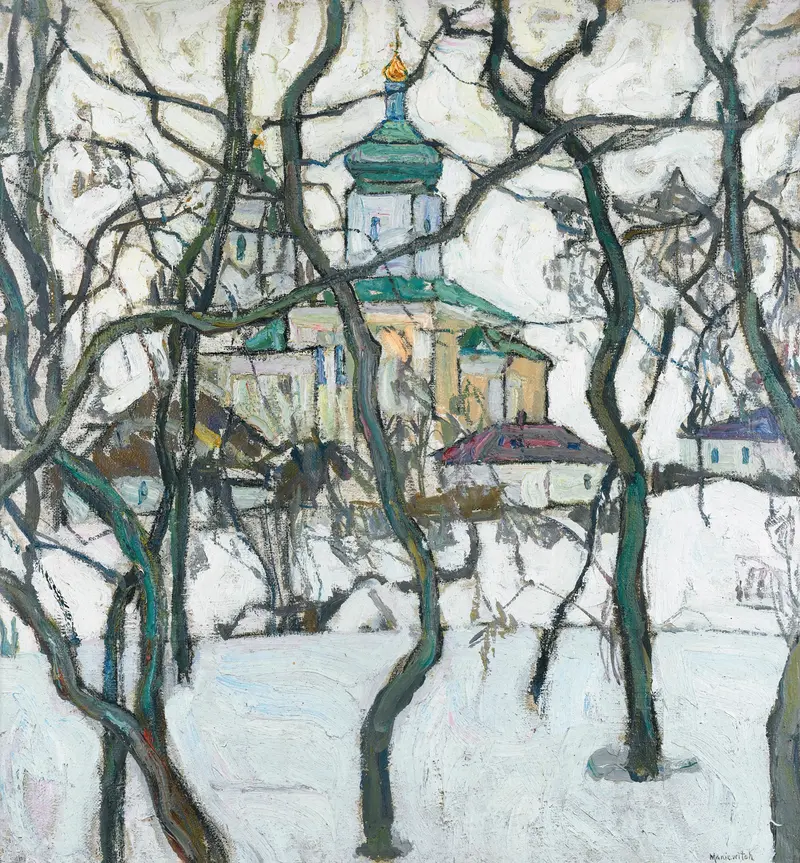
Winter Scene With Church
Abraham Manievich
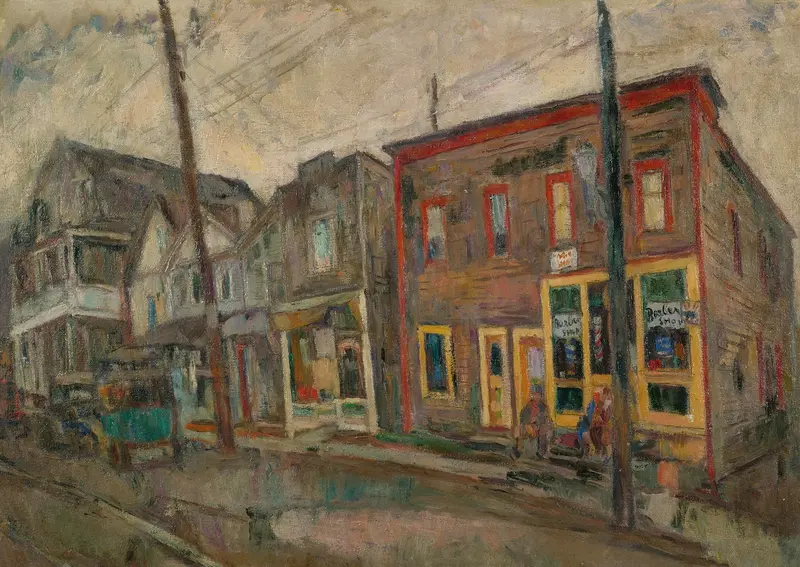
Street in the Bronx
Abraham Manievich
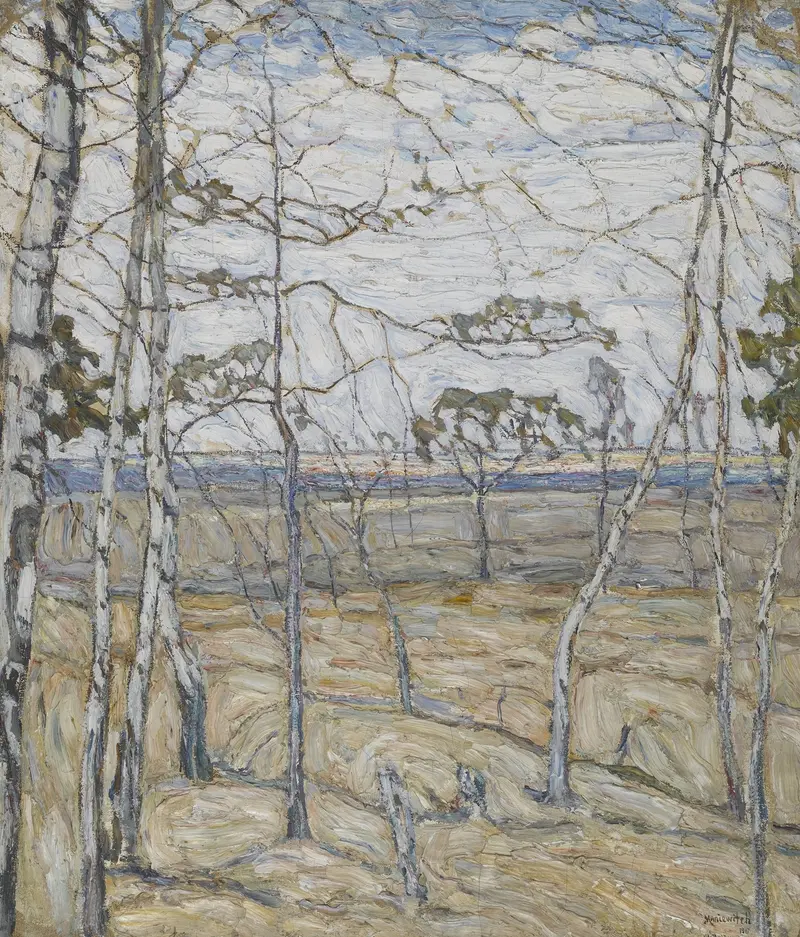
Birch Trees
Abraham Manievich
More Landscape Art

The Starry Night
Vincent van Gogh

View of Delft
Johannes Vermeer

Water Lilies
Claude Monet

The Grand Canal, Venice, looking north-west from the Ca' Corner to the Ca' Contarini degli Scrigni, with the campanile of Santa Maria della Carità
Canaletto

Windsor Castle
Canaletto

The Grand Canal looking North-East from the Palazzo Dolfin-Manin to the Rialto Bridge
Canaletto