
Mystic Crucifixion — History & Facts
No other painting by Sandro Botticelli has sparked as much scholarly debate as Mystic Crucifixion. Its date, meaning, and even the hand that painted it have all been questioned, but the greatest mystery lies in its purpose: unlike Botticelli’s grand Florentine altarpieces, this work is small, intimate, and shrouded in apocalyptic symbolism. Some believe it was painted around 1500 in response to the turmoil following the execution of the fiery preacher Savonarola, whose sermons had shaken Florence to its core.
The painting’s unusual imagery and scale suggest it was made for private devotion, not public display. At the center, Christ hangs on the cross, but the scene is anything but ordinary. Angels swoop down to comfort the suffering, while demons are violently driven from the city below—a vision of spiritual warfare on earth. Mary and John kneel in prayer, their gestures echoing the anguish and hope of the faithful.
The cityscape in the background is not Jerusalem, but a Florentine skyline under siege, connecting the biblical drama to contemporary events. The swirling, almost chaotic composition stands in stark contrast to the calm order of Fra Angelico’s crucifixions, emphasizing Botticelli’s concern with the fate of the soul in troubled times. The precise origins of Mystic Crucifixion remain uncertain, as no contemporary documents mention its commission or early history. Scholars generally agree it belongs to Botticelli’s late period, when his art grew more visionary and intense, possibly influenced by Savonarola’s call for spiritual renewal.
The painting’s small size and unusual technique—on wood panel, with tempera and perhaps oil—suggest it was intended for a private patron, though their identity is lost. Today, Mystic Crucifixion is housed in the Fogg Art Museum at Harvard, where it continues to fascinate viewers and provoke debate about Botticelli’s final years.
More Artworks by Sandro Botticelli

Virgin and Child
Sandro Botticelli

Madonna and Child and the Young St John the Baptist
Sandro Botticelli

Madonna and Child with six angels and Saint John the Baptist as Child
Sandro Botticelli

Adoration of the Magi
Sandro Botticelli

Virgin and Child with the Young Saint John the Baptist
Sandro Botticelli
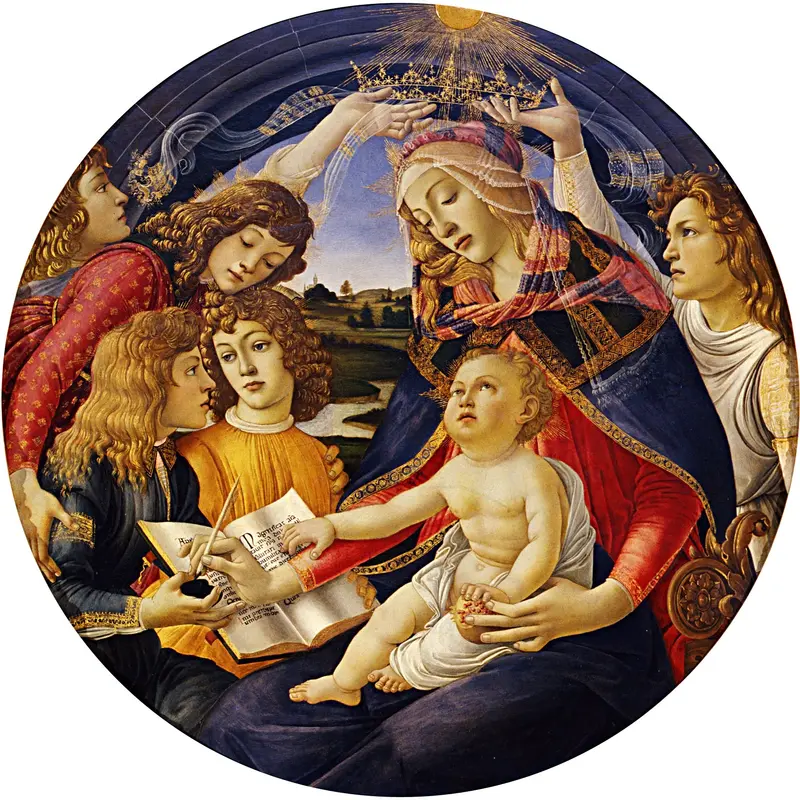
Madonna of the Magnificat
Sandro Botticelli
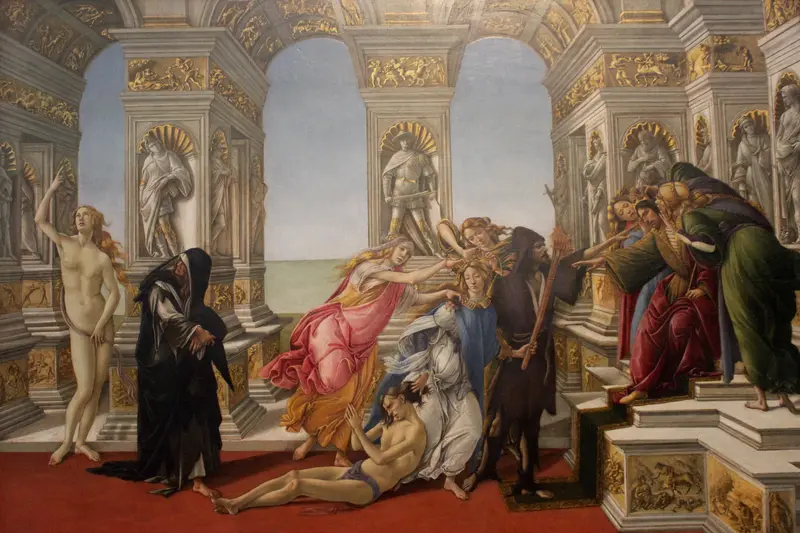
Calumny of Apelles
Sandro Botticelli

Portrait of a young man holding a roundel
Sandro Botticelli

The Trinity with Saint Mary Magdalene and Saint John the Baptist, the Archangel Raphael and Tobias
Sandro Botticelli

Idealized Portrait of a Lady (Portrait of Simonetta Vespucci as Nymph)
Sandro Botticelli





