
Nad dedinou O 1278 Orava Gallery — History & Facts
A lone figure stands with his back to us, hands clasped behind him, surveying a scatter of peaked rooftops nestled among the hills. The viewer’s gaze is drawn first to this solitary presence, then swept outward by the rhythmic lines and bursts of color that animate the landscape. The houses huddle together under steep, thatched roofs, while the trees—rendered in quick, almost trembling strokes—suggest the restless energy of early autumn.
The sky above is a clear, saturated blue, giving the entire scene a sense of crispness and immediacy. Every mark seems to vibrate with the artist’s attention, as if the world itself is caught in a moment of anticipation. Painted in 1925, Nad dedinou O 1278 Orava Gallery by Arnold Peter Weisz-Kubínčan belongs to a period when artists across Central Europe were seeking to capture the spirit of their native landscapes and rural life. This work, now in the Orava Gallery, reflects the era’s fascination with folk culture and the expressive possibilities of color and line.
While little is recorded about the specific history of this piece, its subject and style speak to a broader movement: artists turning away from grand academic scenes to focus on the poetry of everyday places. The figure’s stance—both rooted and contemplative—invites us to linger, to see the village not just as a setting, but as a living world unfolding beneath the watchful gaze of its people.
More Artworks by Arnold Peter Weisz-Kubínčan

Landscape with houses
Arnold Peter Weisz-Kubínčan
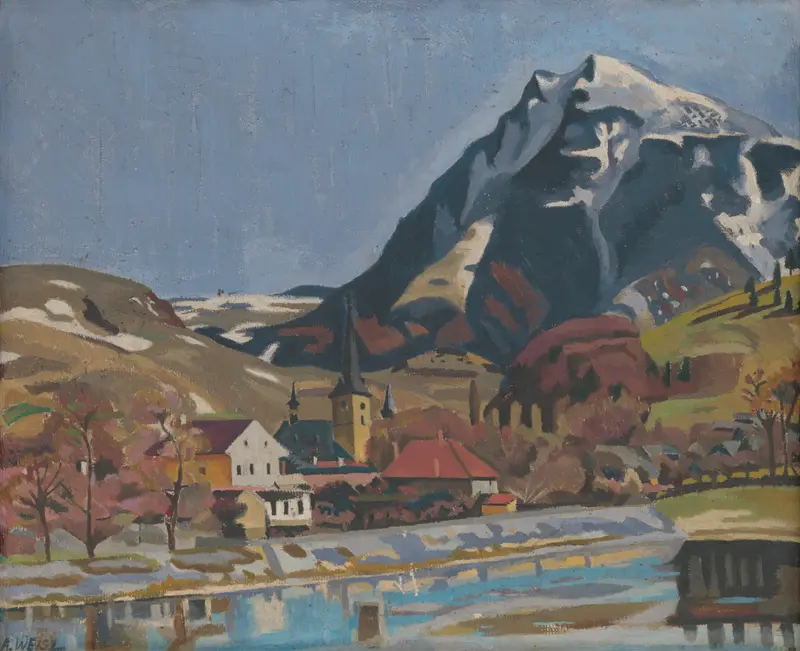
Pohľad na Dolný Kubín O 1923 Orava Gallery
Arnold Peter Weisz-Kubínčan
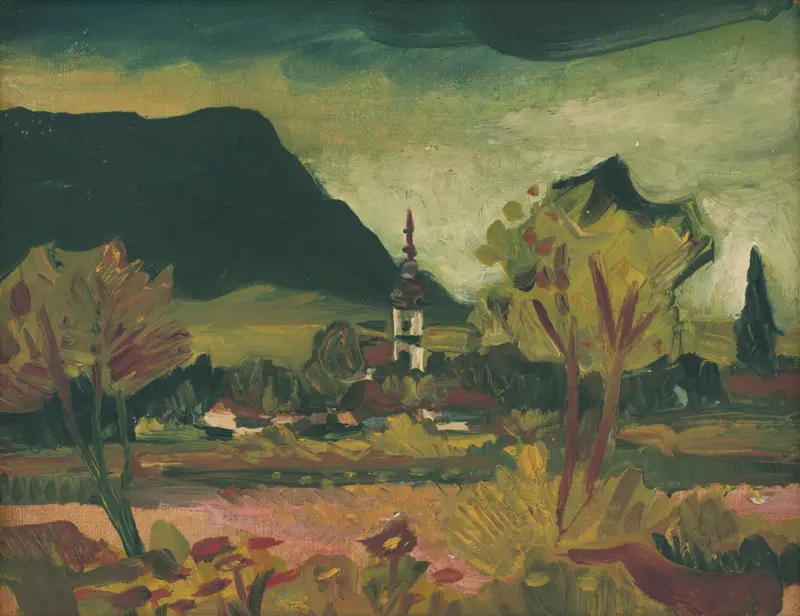
Veličná O 2014 Orava Gallery
Arnold Peter Weisz-Kubínčan
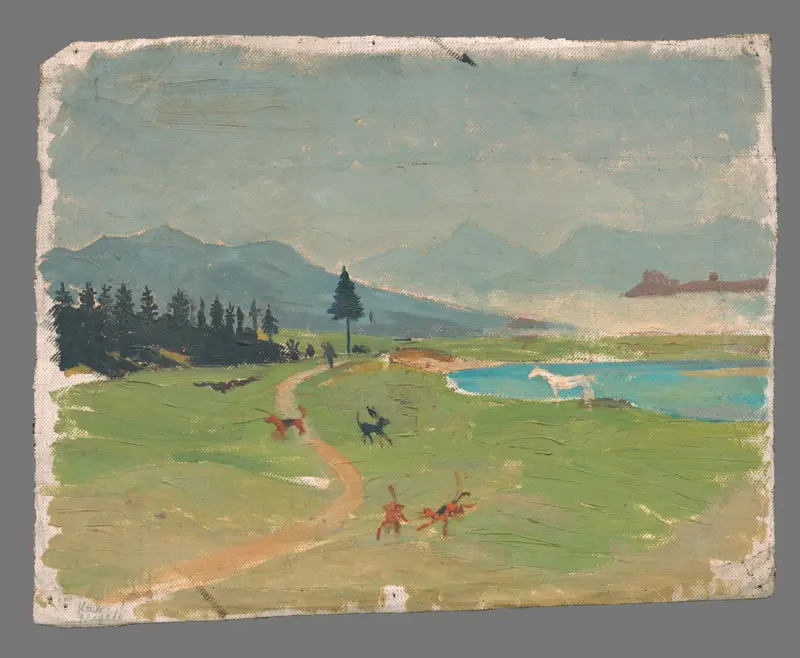
Blue Bay
Arnold Peter Weisz-Kubínčan
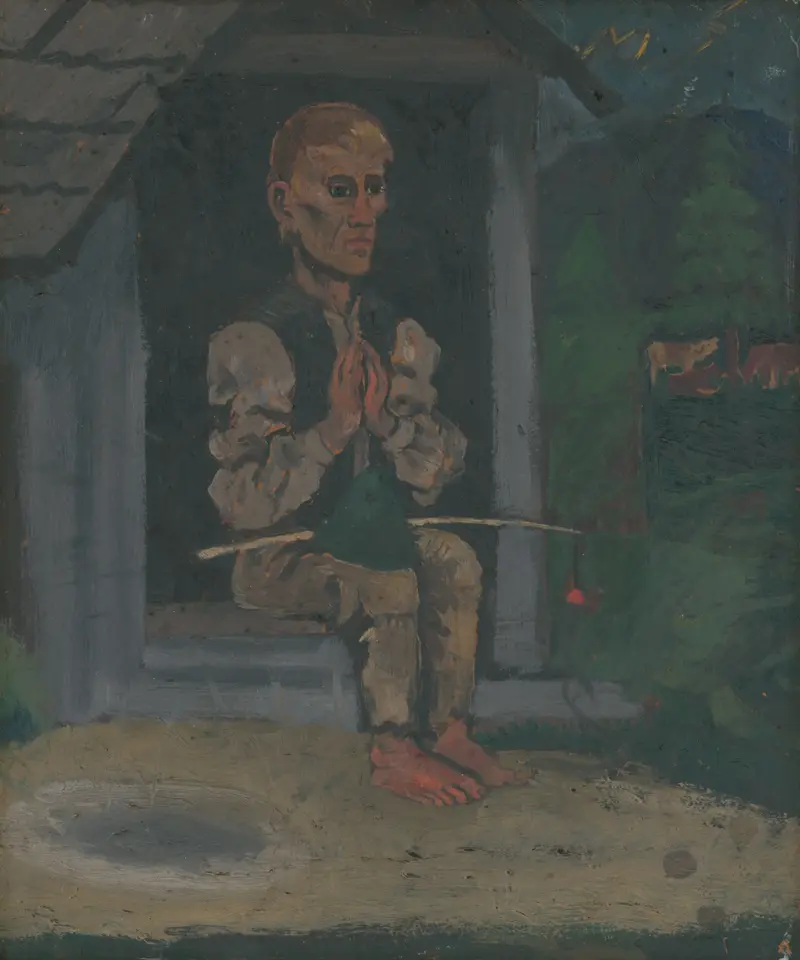
Pastieri O 197 Orava Gallery
Arnold Peter Weisz-Kubínčan
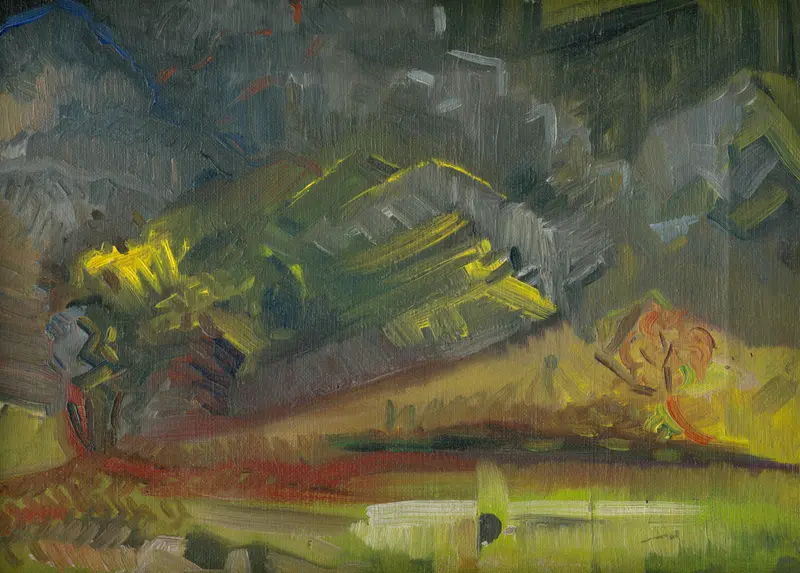
Večerná krajina O 4464 Slovak National Gallery
Arnold Peter Weisz-Kubínčan
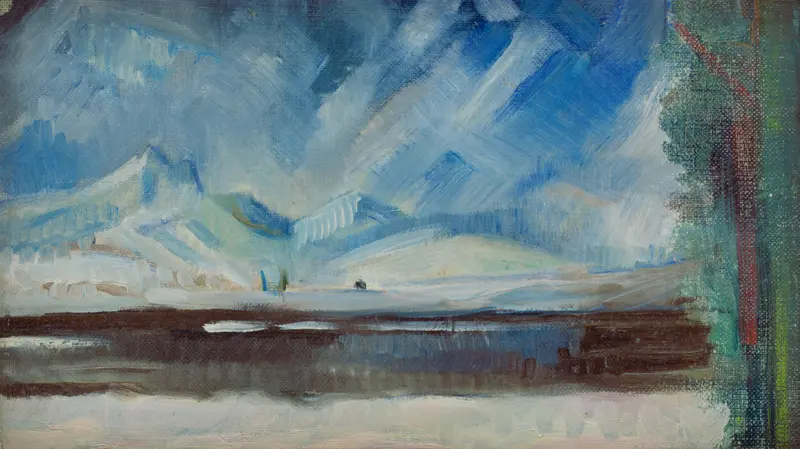
Winter Landscape
Arnold Peter Weisz-Kubínčan
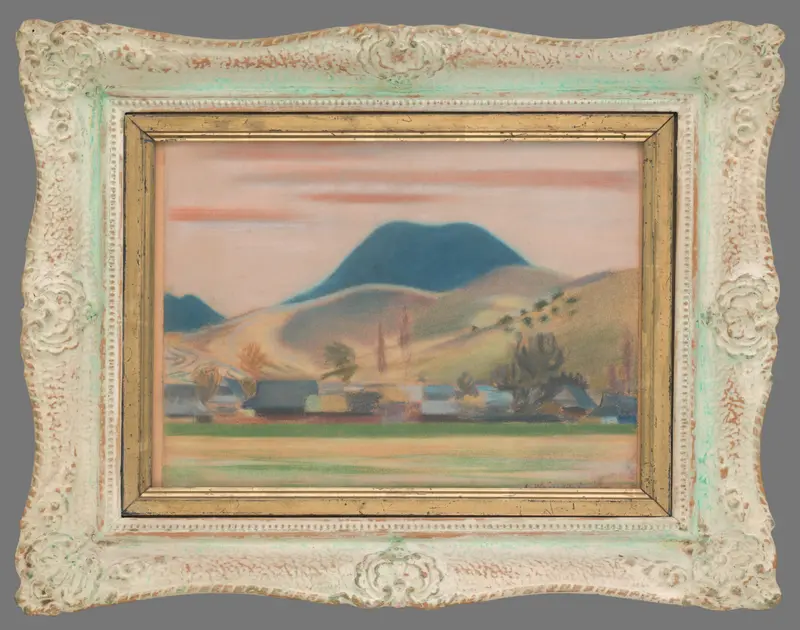
Oravský motív M 357 Ernest Zmeták Art Gallery
Arnold Peter Weisz-Kubínčan
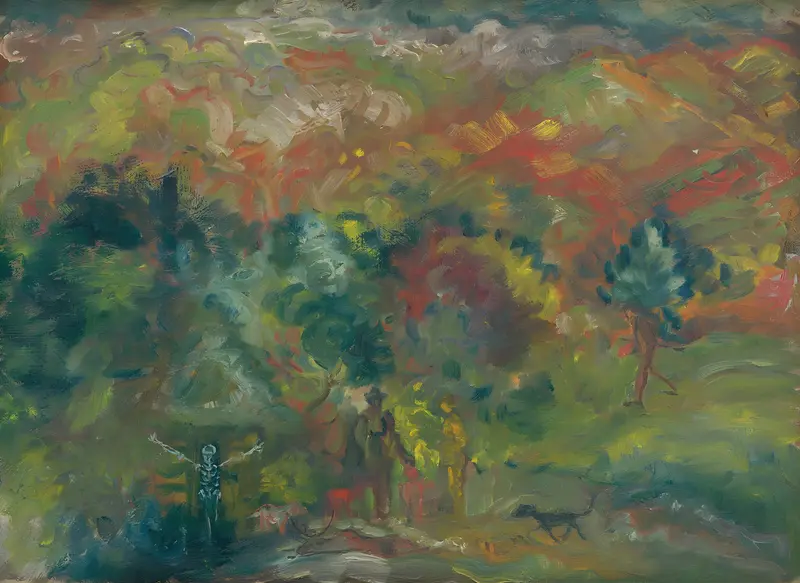
Hunters and Death
Arnold Peter Weisz-Kubínčan

On a Sleigh Arnold
Arnold Peter Weisz-Kubínčan
More Landscape Art

The Starry Night
Vincent van Gogh

View of Delft
Johannes Vermeer

Water Lilies
Claude Monet

The Grand Canal, Venice, looking north-west from the Ca' Corner to the Ca' Contarini degli Scrigni, with the campanile of Santa Maria della Carità
Canaletto

Windsor Castle
Canaletto

The Grand Canal looking North-East from the Palazzo Dolfin-Manin to the Rialto Bridge
Canaletto