
Pastieri O 197 Orava Gallery — History & Facts
A figure sits barefoot at the threshold, hands pressed together in a gesture that hovers between prayer and patience. The roughness of his clothes, the angularity of his face, and the muted palette all draw us into the quiet tension of waiting—his gaze fixed on something beyond the frame, his posture both expectant and resigned. The porch’s shadowed recess frames him like a stage, while the green of the trees and a distant, ruddy patch—perhaps livestock or a barn—anchor him in a rural world.
Every brushstroke feels deliberate: the hands are oversized, signaling their importance, while the light falling on his face and feet suggests the passage of time, the end of a day, or the start of a vigil. Painted in 1925 by Arnold Peter Weisz-Kubínčan, this work belongs to a period when Central European artists were searching for new ways to express the rhythms and hardships of rural life. The interwar years saw artists turning to scenes of everyday endurance, often portraying peasants not as picturesque types but as individuals marked by care and dignity. The painting now resides in the Orava Gallery, a fitting home in a region shaped by the very landscapes and traditions that inspired it.
History has kept few traces of the sitter’s identity or the exact circumstances, but the painting’s quiet gravity invites us to linger, to wonder what hopes or burdens this moment contains.
More Artworks by Arnold Peter Weisz-Kubínčan

Landscape with houses
Arnold Peter Weisz-Kubínčan
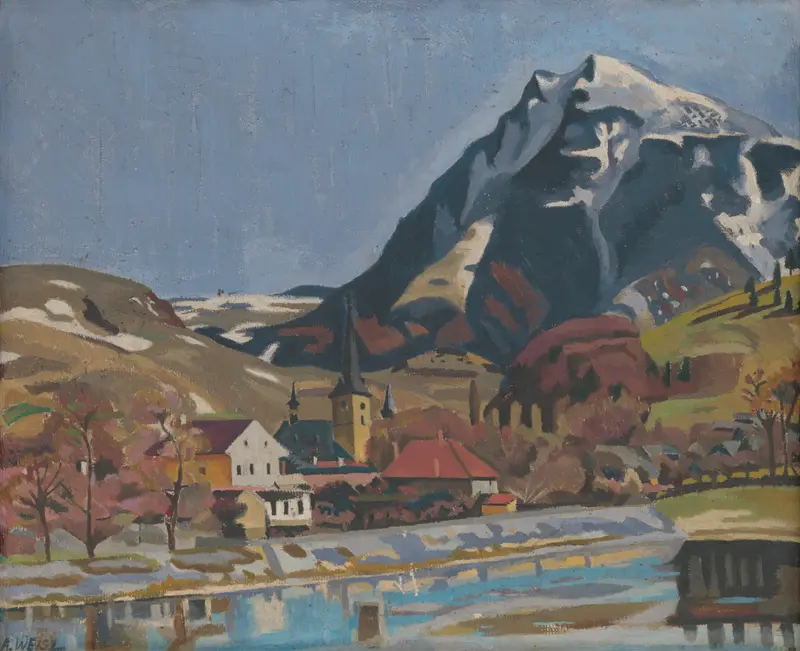
Pohľad na Dolný Kubín O 1923 Orava Gallery
Arnold Peter Weisz-Kubínčan
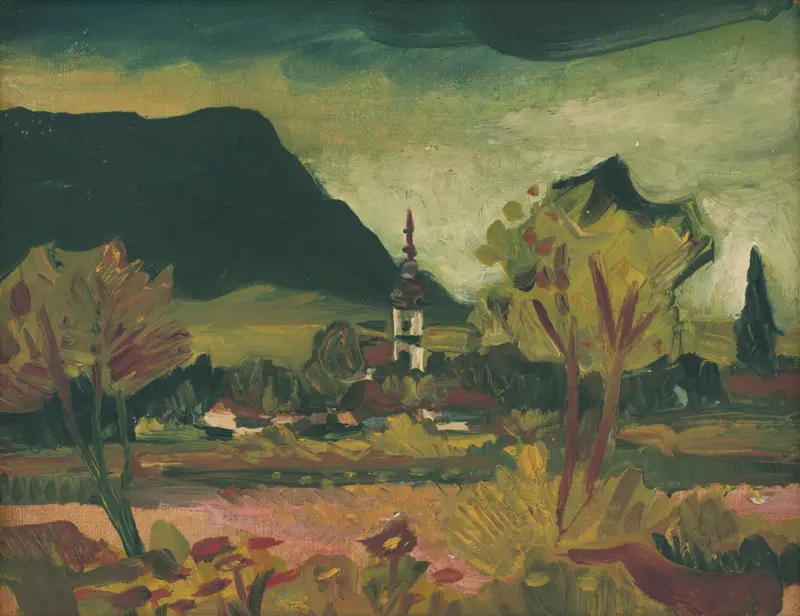
Veličná O 2014 Orava Gallery
Arnold Peter Weisz-Kubínčan
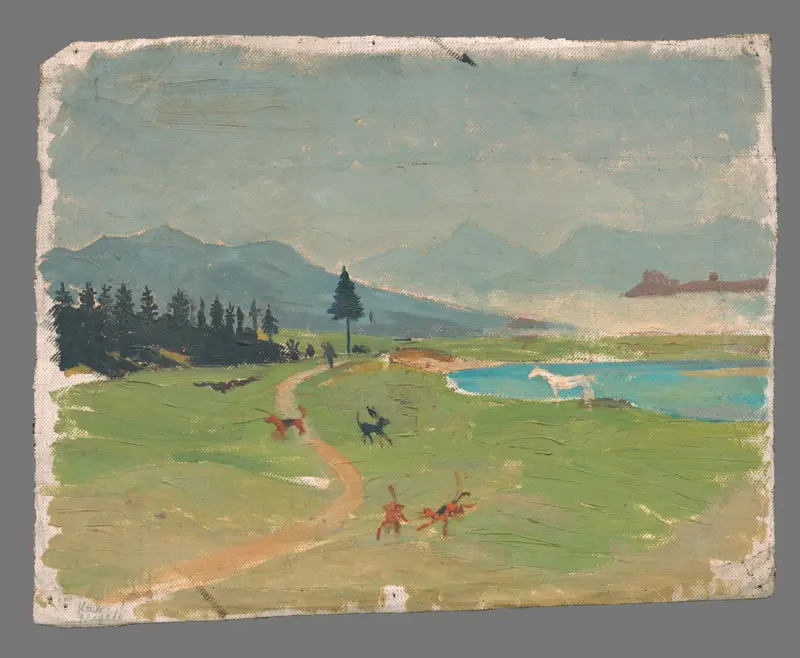
Blue Bay
Arnold Peter Weisz-Kubínčan
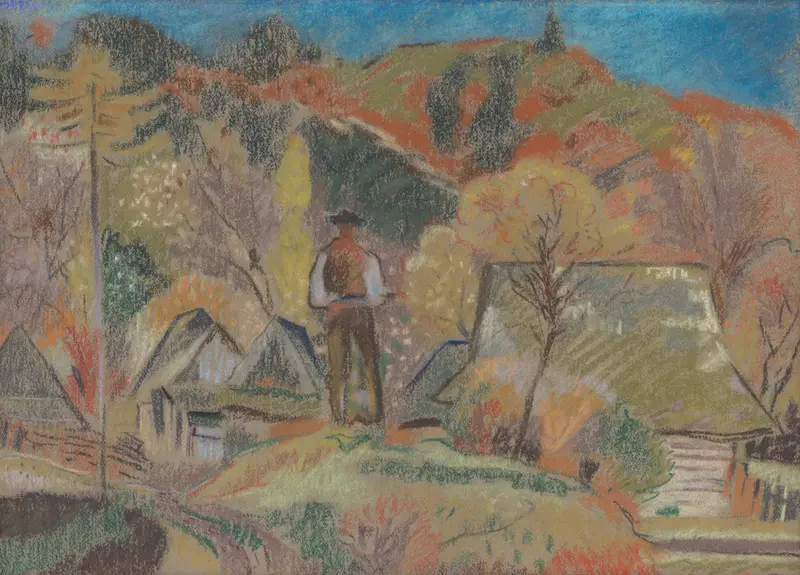
Nad dedinou O 1278 Orava Gallery
Arnold Peter Weisz-Kubínčan
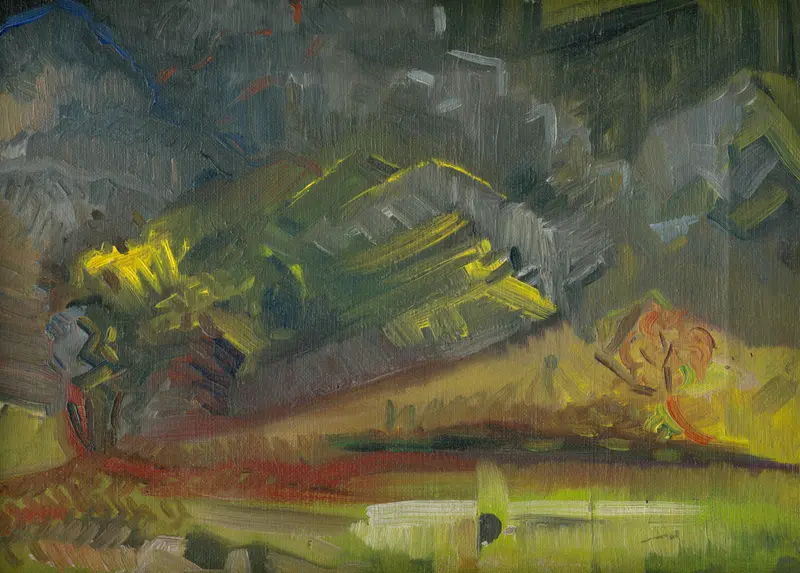
Večerná krajina O 4464 Slovak National Gallery
Arnold Peter Weisz-Kubínčan
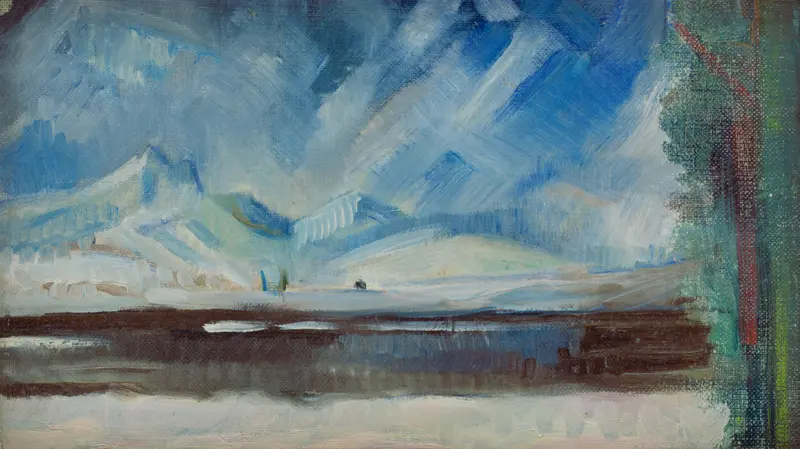
Winter Landscape
Arnold Peter Weisz-Kubínčan
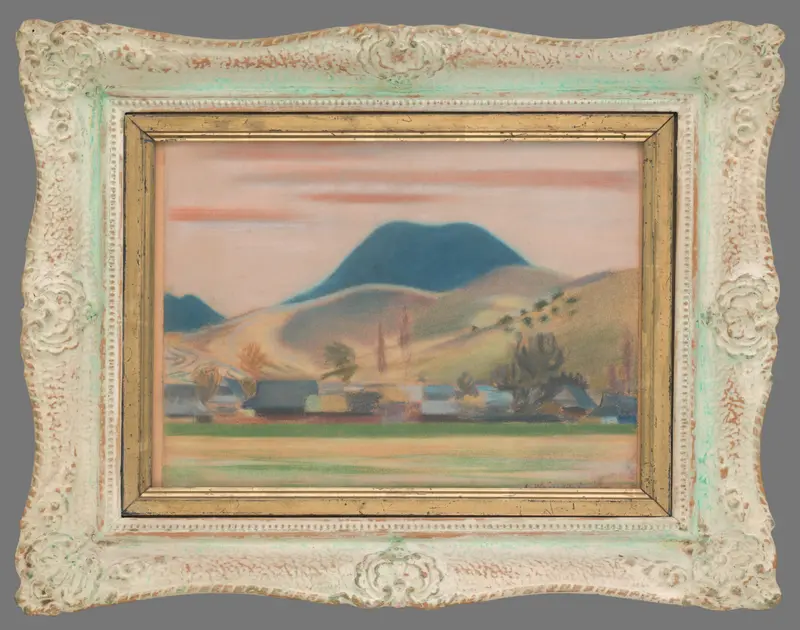
Oravský motív M 357 Ernest Zmeták Art Gallery
Arnold Peter Weisz-Kubínčan
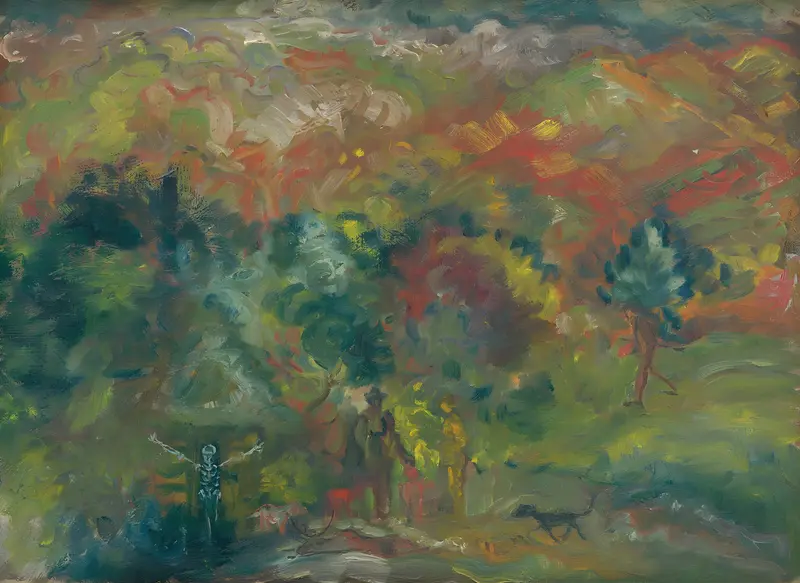
Hunters and Death
Arnold Peter Weisz-Kubínčan

On a Sleigh Arnold
Arnold Peter Weisz-Kubínčan
More Genre Scene Art

Banquet of the Officers of the St George Civic Guard
Frans Hals

Rembrandt and Saskia in the Scene of the Prodigal Son
Rembrandt van Rijn

Bal du moulin de la Galette
Pierre-Auguste Renoir

Quadrille at the Moulin Rouge
Henri de Toulouse-Lautrec

A Burial at Ornans
Gustave Courbet

When Will You Marry?
Paul Gauguin