
Nayad and Dolphin in the Wave — History & Facts
The first thing that seizes the eye in Nayad and Dolphin in the Wave is the sense of movement—an urgent, swirling energy that seems to lift the figure right out of the canvas. The naiad’s body twists in the grip of the wave, her arm flung back as if startled by the cold embrace of the sea or the sudden presence of her companion. Light glances off her skin, picking out the tension in her muscles and the wild tumble of her hair, while the dolphin’s dark, sinuous form coils beneath her, half-hidden in the foam.
The palette is all cool greens, stormy blues, and the warm blush of flesh, heightening the drama of the moment and drawing the viewer into the heart of the surf. Works like this, with their mythological subjects and sensuous treatment of the nude, belong to a long tradition in European painting that flourished from the academic salons of the nineteenth century well into the early twentieth. Artists like Adolphe Lalyre found inspiration in ancient stories, but their real subject was the human body in motion, caught between nature and fantasy. Little is recorded about this particular painting beyond its presence in a private collection as of January 2009, but its style recalls the academic taste for mythic escapism and technical bravura.
The world that produced such images was changing rapidly, yet the allure of the sea nymph and her dolphin remains, inviting us to linger in the spray and turbulence of an imagined ocean.
More Artworks by Adolphe Lalyre
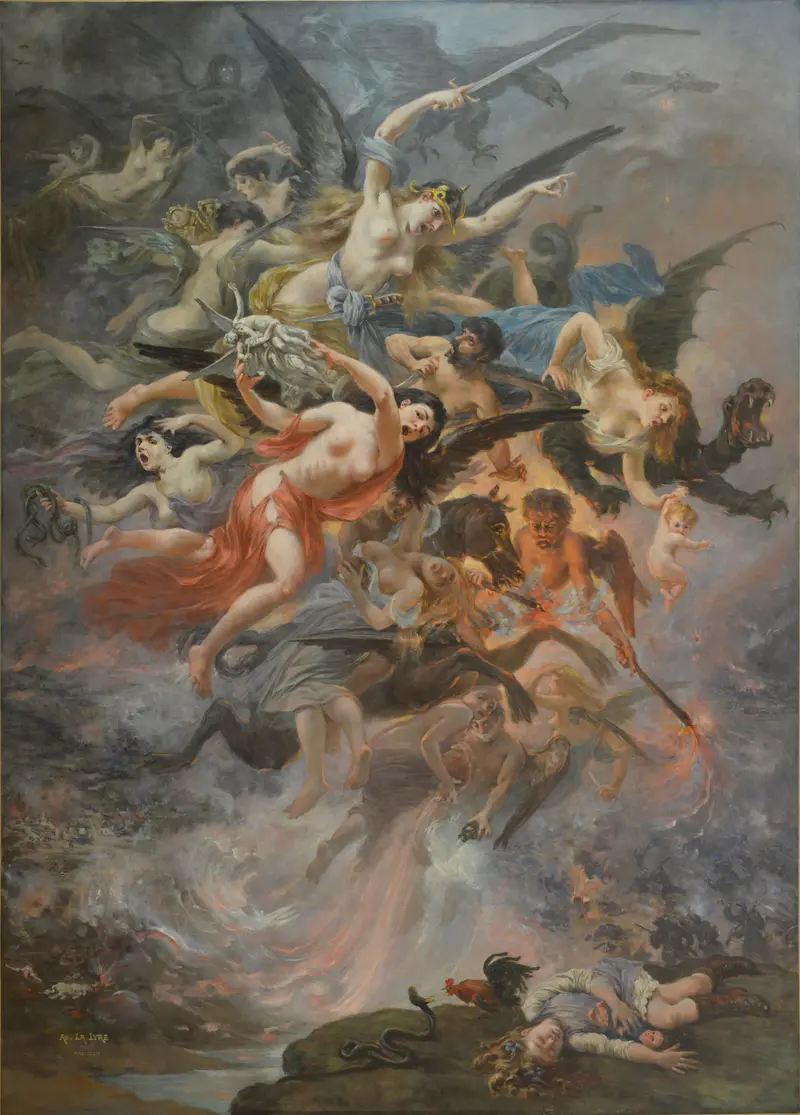
Adolphe La Lyre Les horreurs de la guerre
Adolphe Lalyre

Château des sirènes at Carteret
Adolphe Lalyre
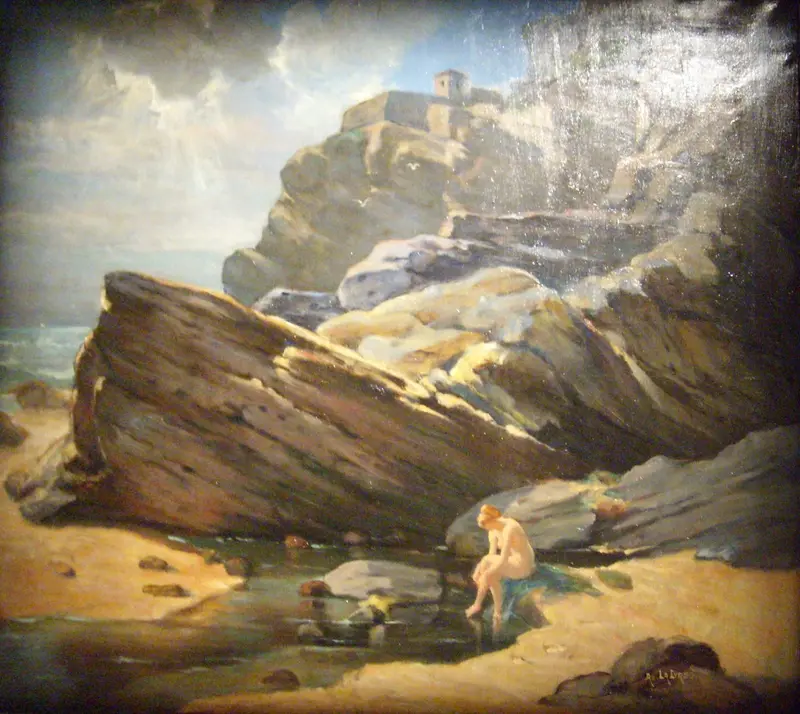
Bathing woman under the Grand Fort's rocks at Carteret
Adolphe Lalyre

Carteret viewed from the Castle of Sirènes
Adolphe Lalyre
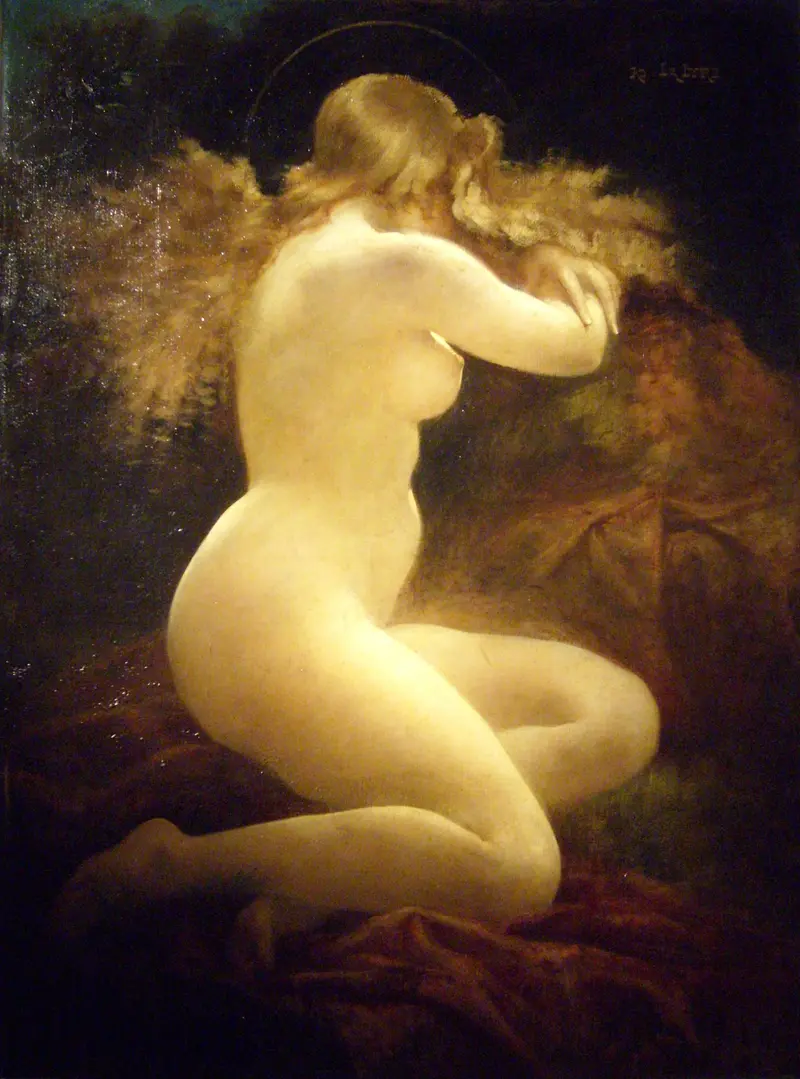
La Madeleine
Adolphe Lalyre
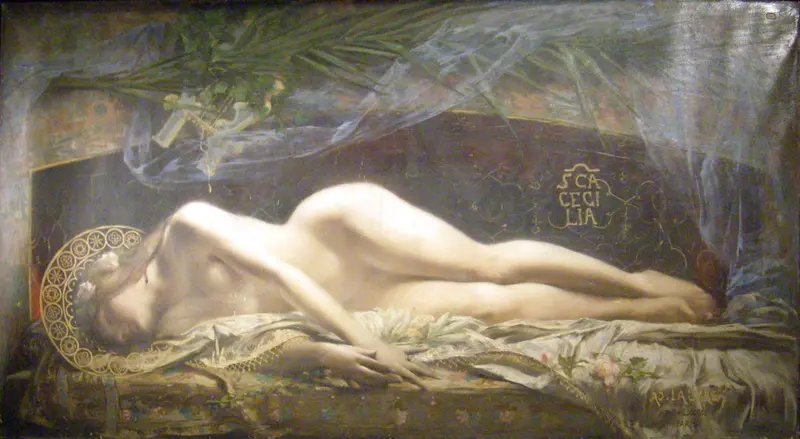
Ste cecile lalyre
Adolphe Lalyre
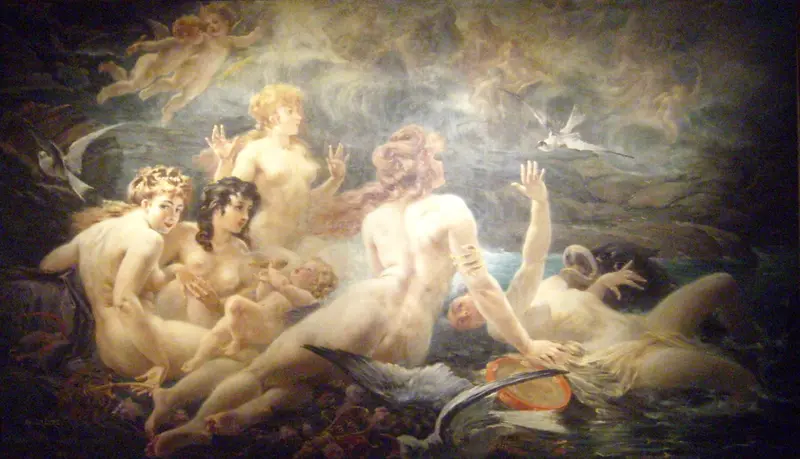
The Syrens Visited by the Muses
Adolphe Lalyre

Carteret, Young Women at the Old Saint-Germain Church
Adolphe Lalyre
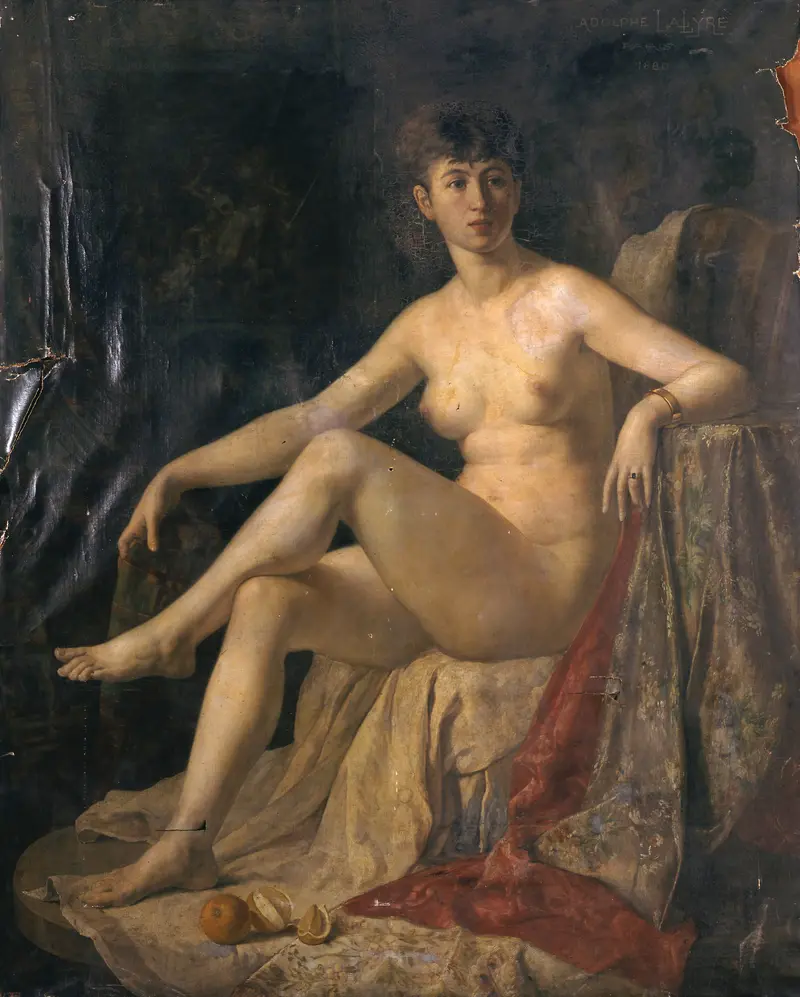
The Model
Adolphe Lalyre
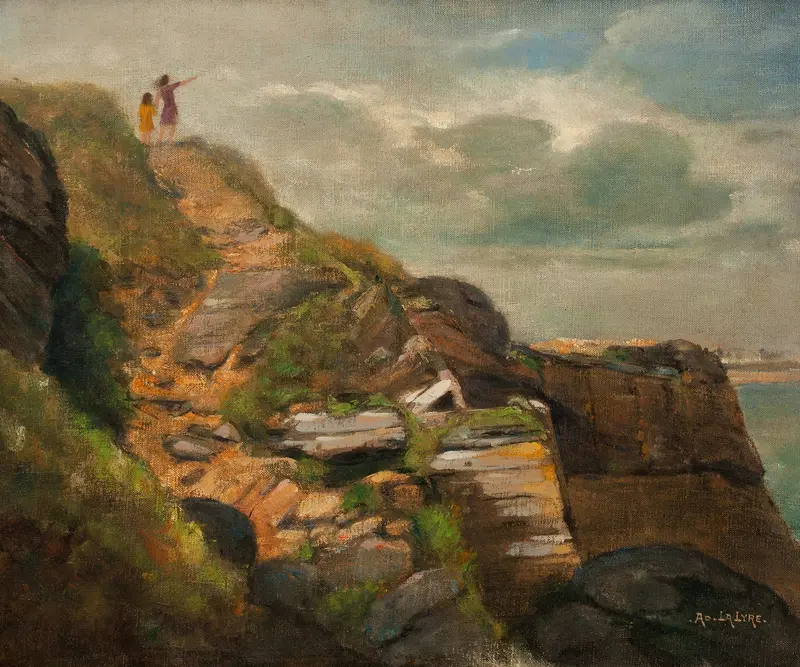
The View from the Top
Adolphe Lalyre





