Nepenthaceae (Pitcher Plants) — History & Facts
Pitchers in pink, red, cream and mottled purple-brown hang from a tangle of leafy, curling stems. Each has a ribbed, collar-like rim and a heart-shaped lid; on the young pitchers near the bottom the lid is still shut, while wiry dark tendrils spread across the white ground. Ernst Haeckel made the design for plate 62 of Kunstformen der Natur (Art Forms in Nature), and Adolf Giltsch of Jena turned it into a color lithograph. Haeckel's text says this climbing pitcher plant, Nepenthes melamphora, was found on January 4, 1901, at the Tjiburrum waterfalls in the Java rainforest and painted from life in the laboratory at nearby Tjibodas; the plate shows it reduced by one third.
The pitchers are not flowers but the upper parts of the leaf stalks, built to trap insects and other small animals. Haeckel compared the lid to the lid of a beer stein: once open, it arches over the mouth and keeps the rain out. He counted about fifty known kinds of Nepenthes, all from swampy ground in the eastern tropics. Kunstformen der Natur was first published in Leipzig and Vienna by the Bibliographisches Institut, in installments of ten plates, between 1899 and 1904.
More Artworks by Ernst Haeckel
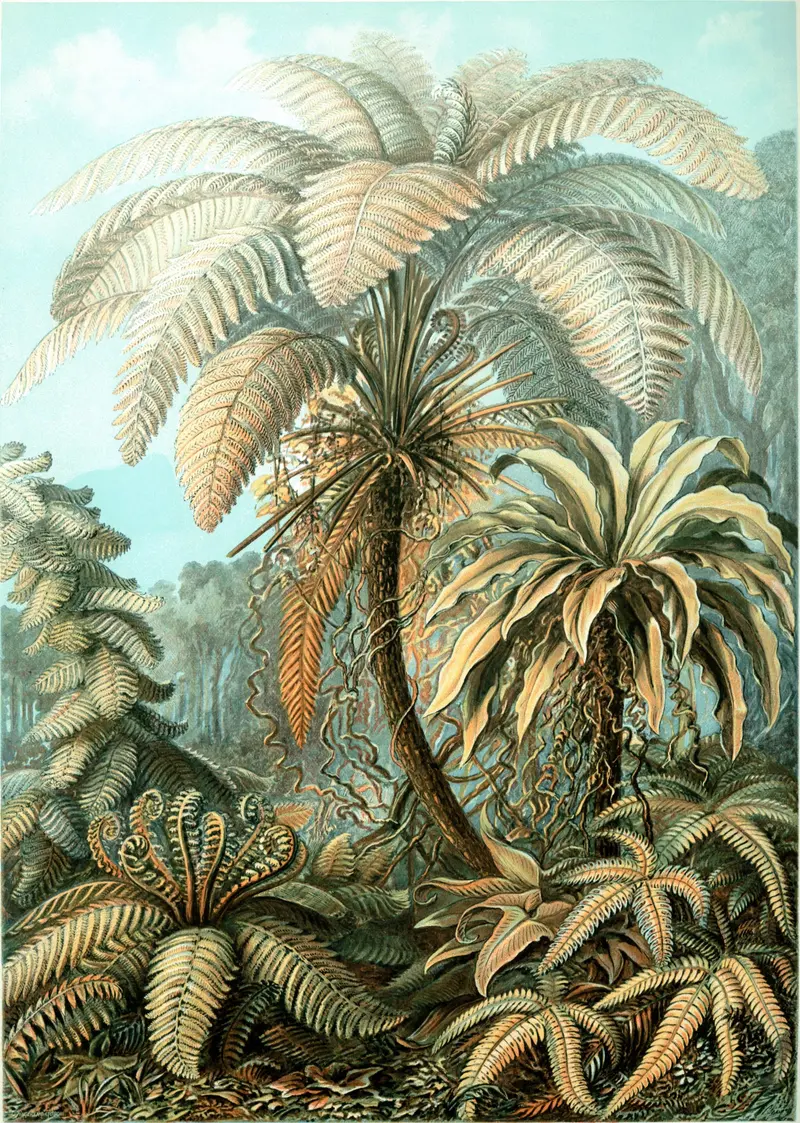
Filicinae (Ferns)
Ernst Haeckel
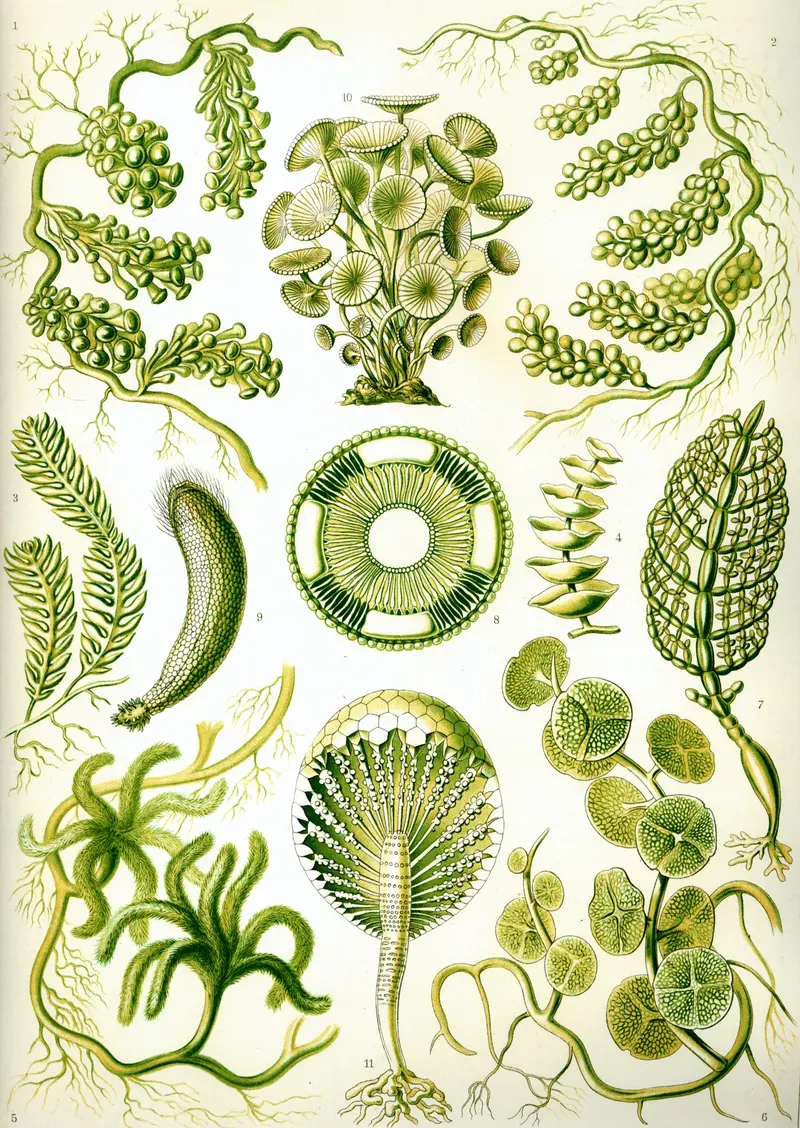
Siphoneae (Green Algae)
Ernst Haeckel

Cirripedia (Barnacles)
Ernst Haeckel

Actiniae (Sea Anemones)
Ernst Haeckel
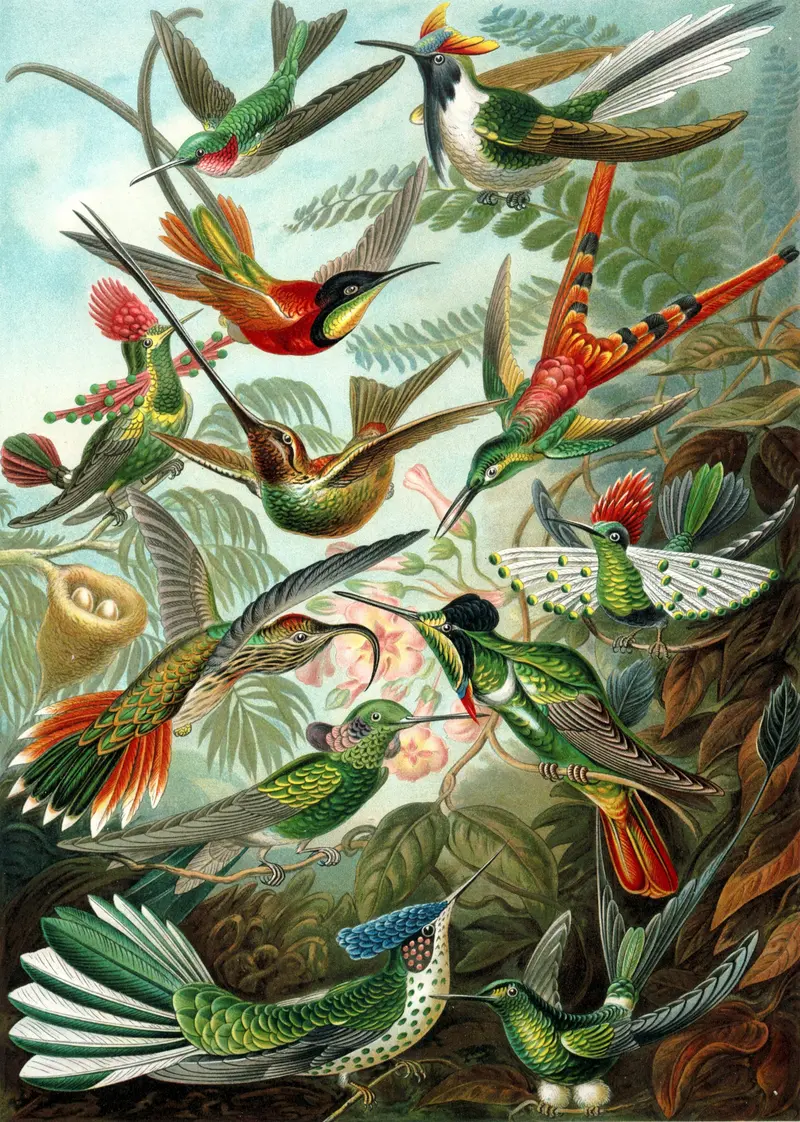
Trochilidae (Hummingbirds)
Ernst Haeckel
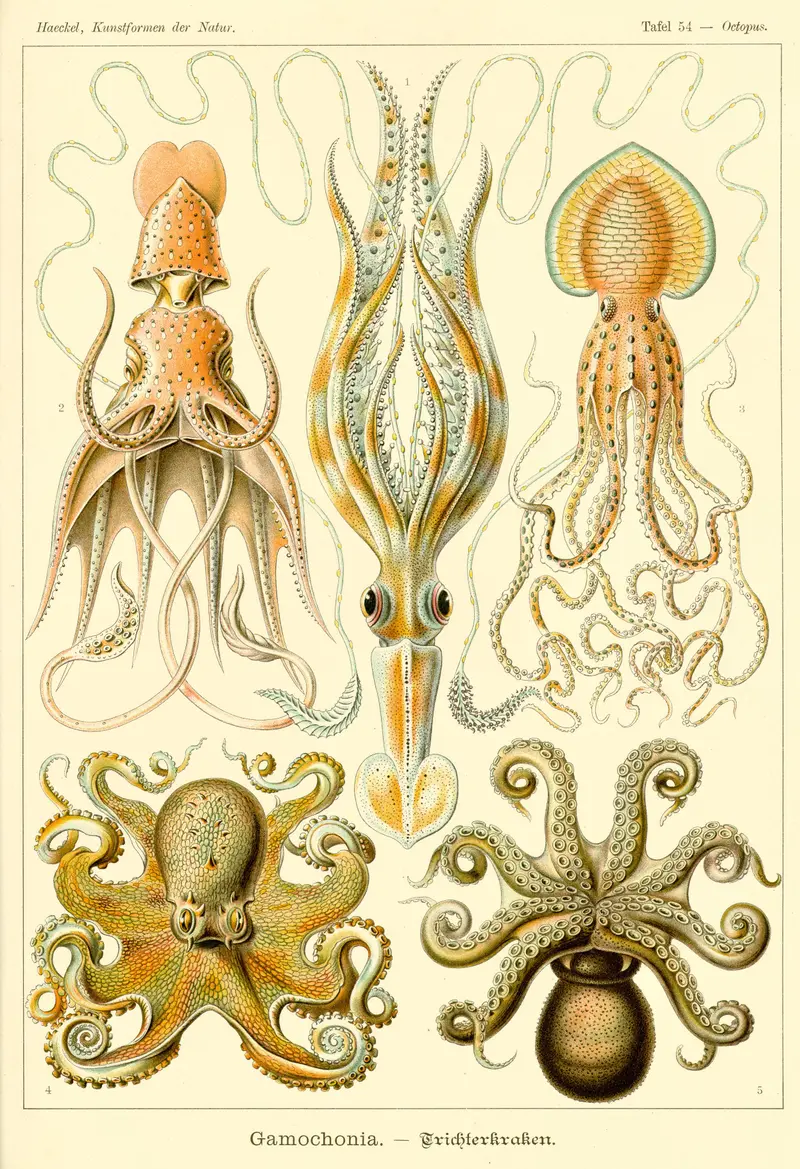
Gamochonia (Cephalopods)
Ernst Haeckel
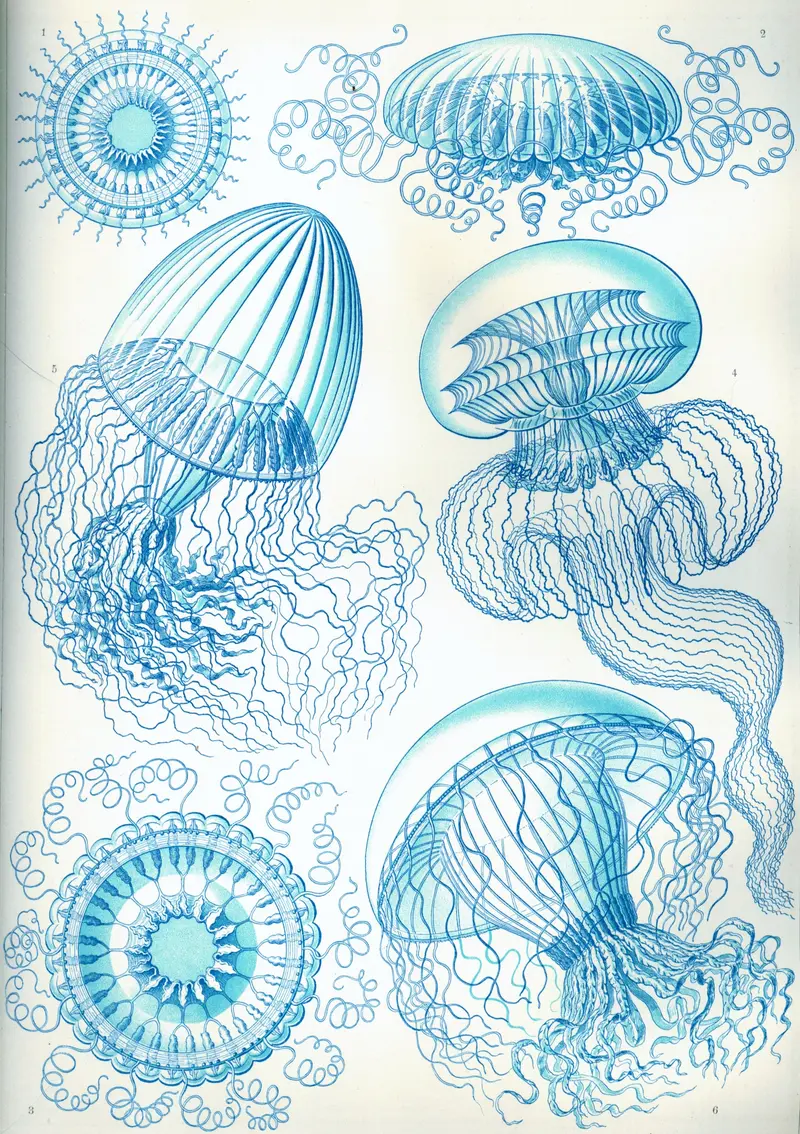
Leptomedusae (Jellyfish)
Ernst Haeckel
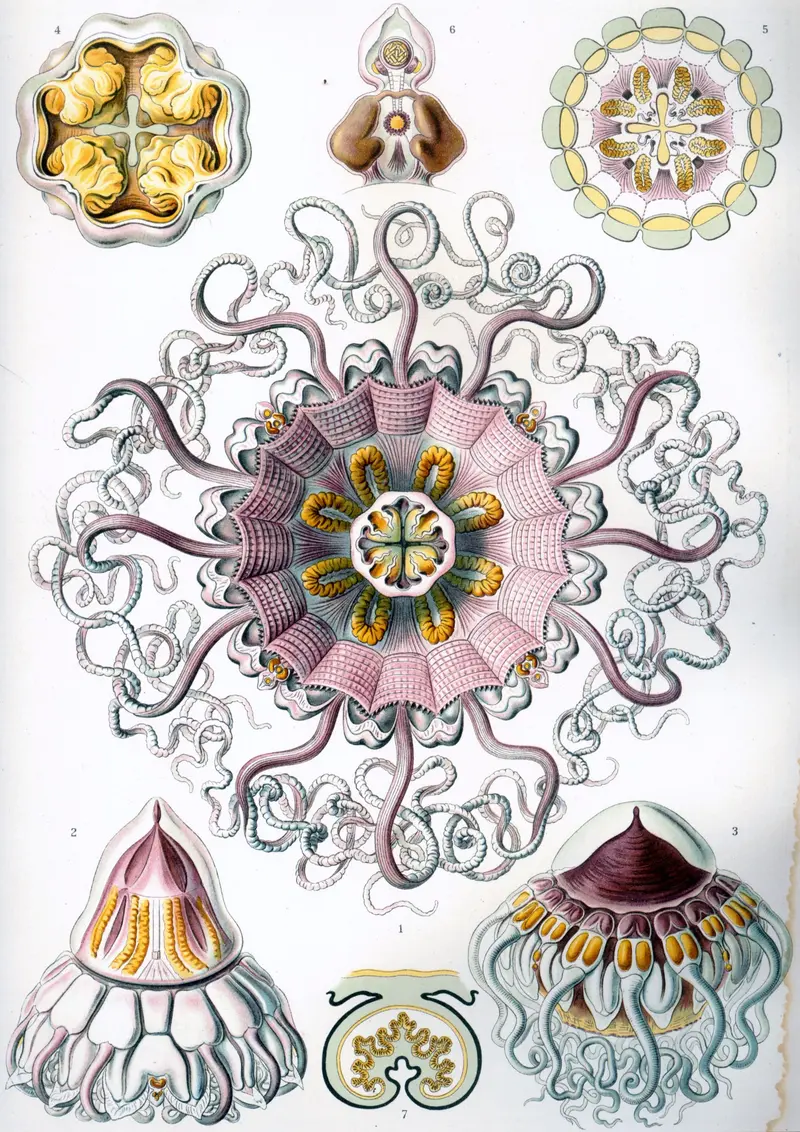
Peromedusae (Jellyfish)
Ernst Haeckel
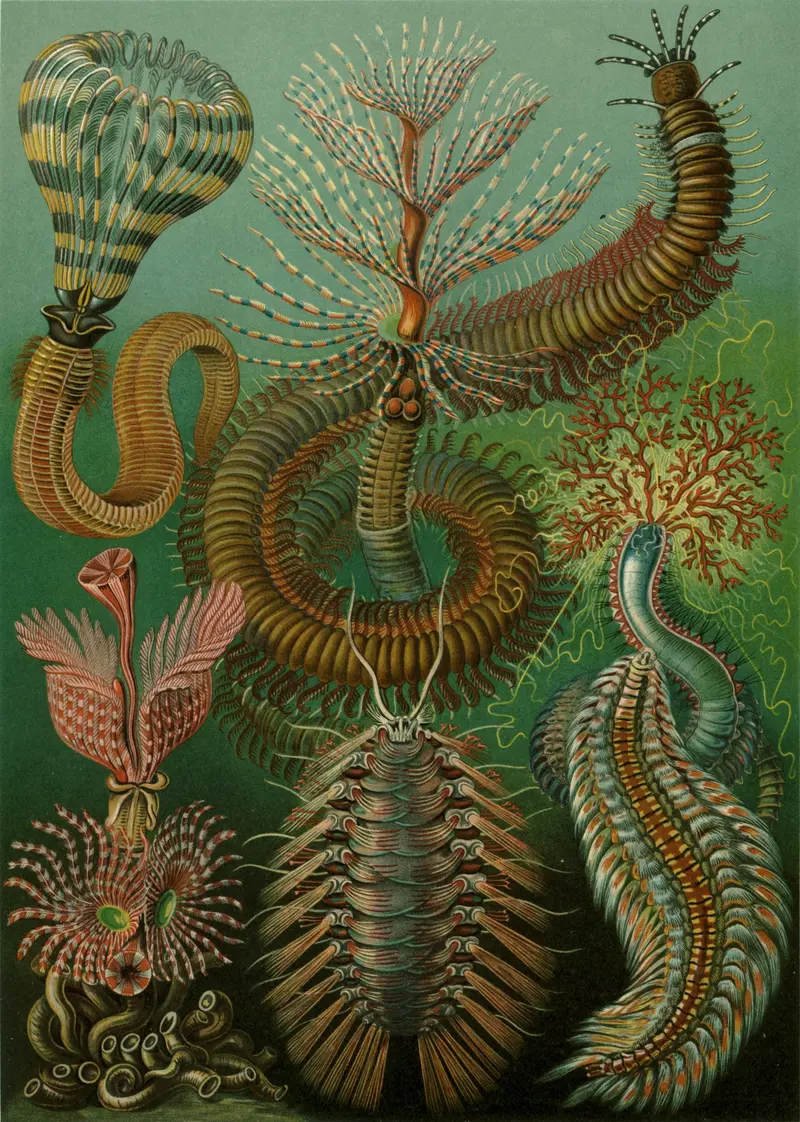
Chaetopoda (Bristle Worms)
Ernst Haeckel
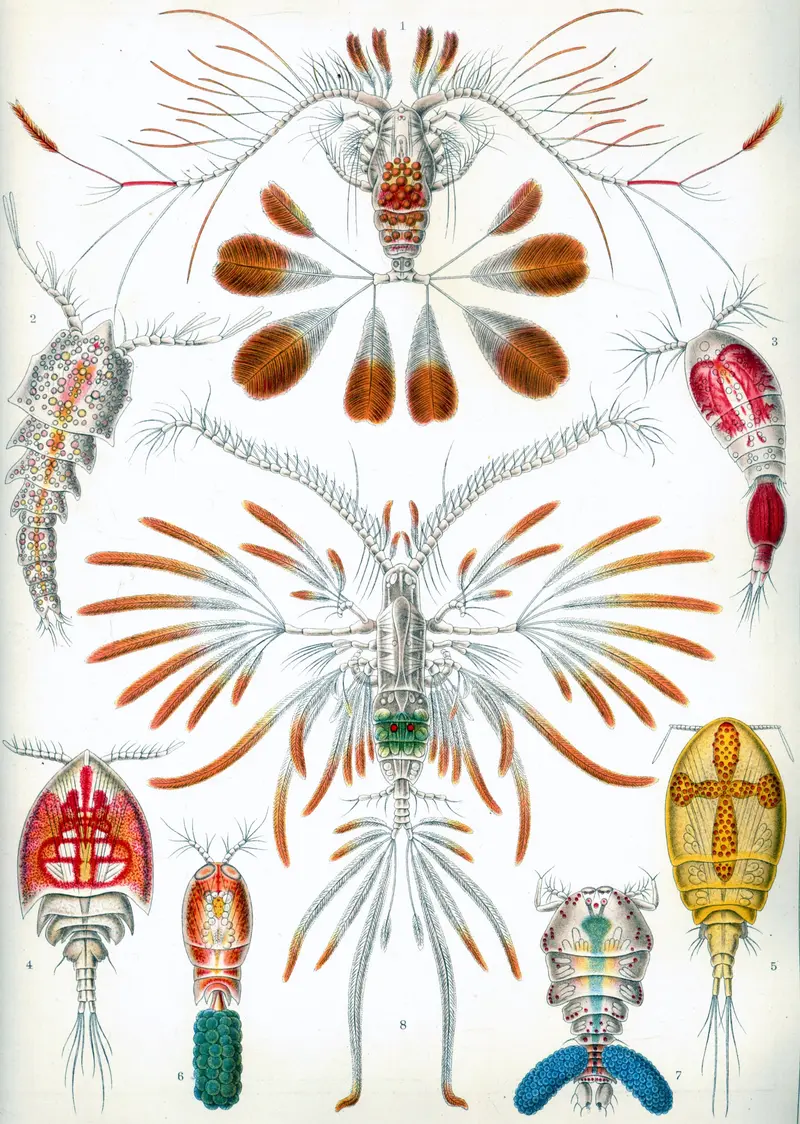
Copepoda (Copepods)
Ernst Haeckel