
Norwich — History & Facts
When did color learn to lie? This question echoes through the layers of light and shadow in a landscape where desire mingles with reality, shrouding the viewer in a veil of emotion. Look to the foreground where the lush greenery wades into a tranquil river, its surface barely disturbed, mirroring the sky's soft hues. Notice how Varley deftly employs a spectrum of greens, mingling with gentle blues and muted earth tones, creating a symphony of color that beckons the eye. The delicate brushstrokes suggest both vibrancy and yearning, as if the landscape itself is caught in a moment of introspection. As you delve deeper, observe the subtle interplay between light and shadow that defines the scene.
The distant hills, painted in shades of purple and gray, seem to loom with a tension that contrasts with the inviting beauty of the riverbank. This dichotomy reflects the artist’s inner conflicts—an unfulfilled longing for a world that teeters between harmony and discord. Every element, from the sweeping clouds to the gentle ripple of water, embodies the complex emotions tied to human desire and the fleeting nature of beauty. John Varley produced this evocative piece during the late 18th to early 19th century, a time when Romanticism was blooming across Europe.
Living in England, he found himself entwined in a transformative artistic environment, where the love for nature and emotion surged. His immersion in this fertile landscape fostered a unique vision, one that captured the essence of longing and beauty in a world fraught with change.
More Artworks by John Varley
Browse all →
Knaresborough on the River Nidd, Yorkshire
John Varley

Kirkstall Abbey near Leeds
John Varley

Bamborough Castle from the Northeast, with Holy Island in the Distance, Northumberland
John Varley
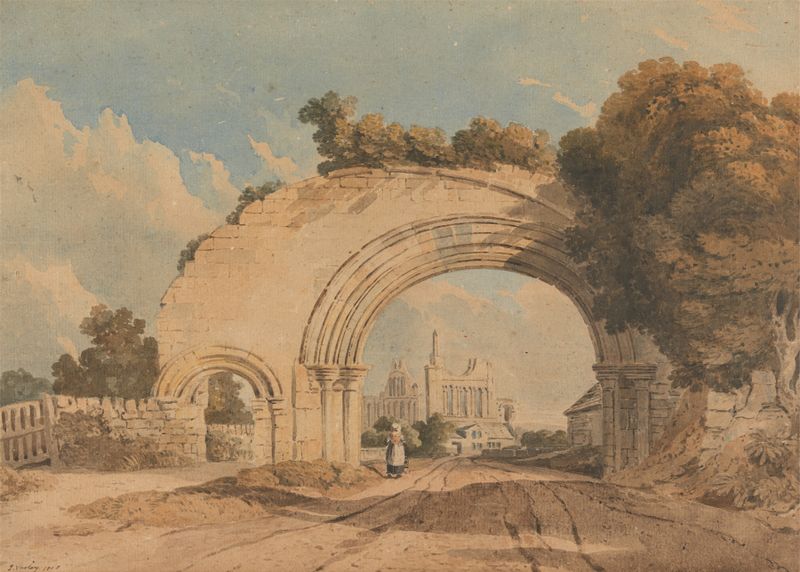
Byland Abbey, Yorkshire
John Varley

View of Conwy Castle, North Wales
John Varley
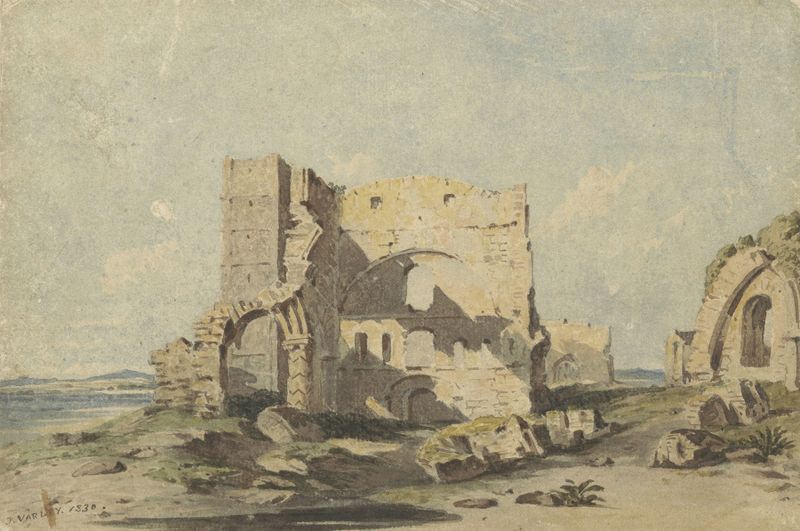
Lindisfarne Abbey op Holy Island, Northumberland
John Varley
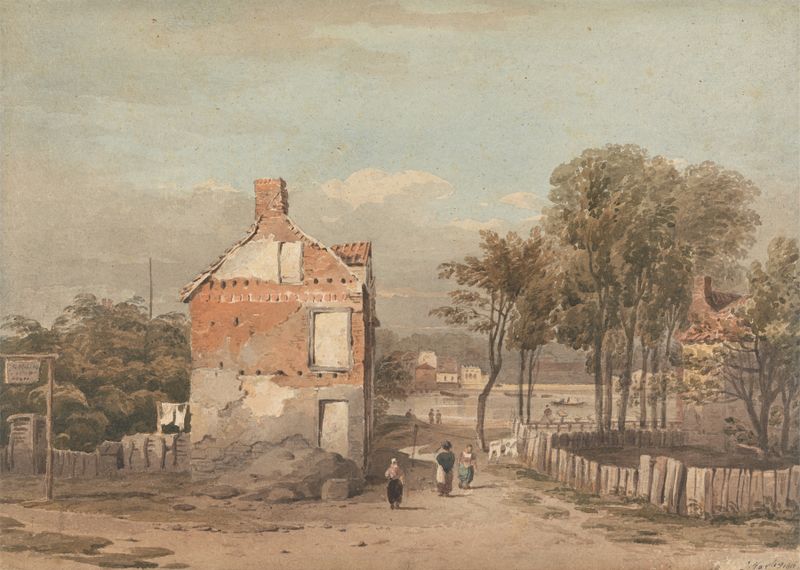
The Thames Near the Penitentiary, Millbank, London
John Varley

Vale of Clwyd, Wales
John Varley

A View along the Thames towards Chelsea Old Church
John Varley

The Thames at Windsor
John Varley





