
Not for the larder — History & Facts
The first thing to catch the eye in Not for the larder is not the drama of the hunt, but the uneasy truce that follows it. In the frozen hush of the snow, a fox pauses mid-step, muzzle lifted, ears alert, as if weighing the risk of a raven’s approach to the fallen stag. The stag’s antlers rake the air, lifeless yet still commanding, while the fox’s body is taut with hunger and caution.
The palette is all cold whites and muted browns, sharpening the sense of exposure and competition; the only warmth is in the fox’s fur and the faint trace of blood in the snow. Here, the painter’s eye lingers on the moment before conflict—each animal sizing up the other, the landscape holding its breath. Not for the larder was painted in 1904 by Archibald Thorburn, a name closely linked with the British impressionist movement’s fascination with wildlife and the raw theatre of nature. By the late nineteenth century, such works were prized by collectors eager to bring the drama of the wild into their parlors, a testament to both sporting culture and the era’s growing interest in natural history.
Thorburn was celebrated for his ability to capture animals in their element, not as trophies but as actors in a larger, indifferent world. This painting, now in the Bonhams gallery, stands as a quiet record of that age—when art and observation met on the snowy edge of survival, and every viewer is left to decide who will claim the prize.
More Artworks by Archibald Thorburn

The Watchful Hinds
Archibald Thorburn
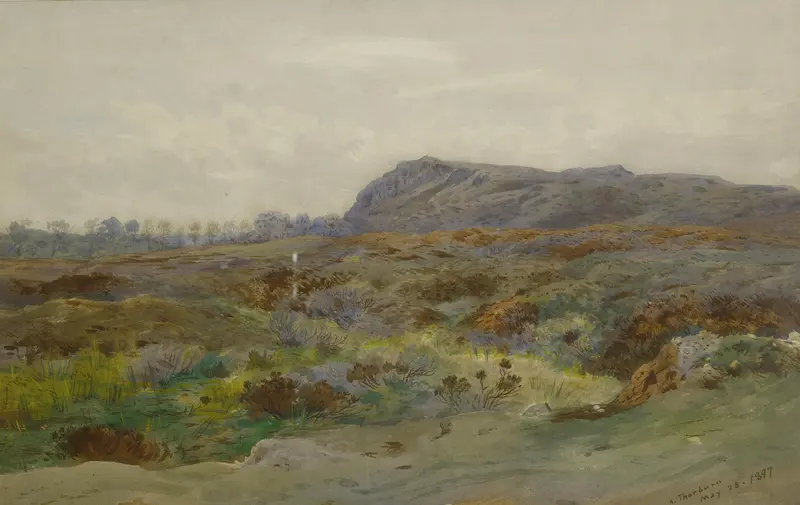
Moorland Landscape
Archibald Thorburn
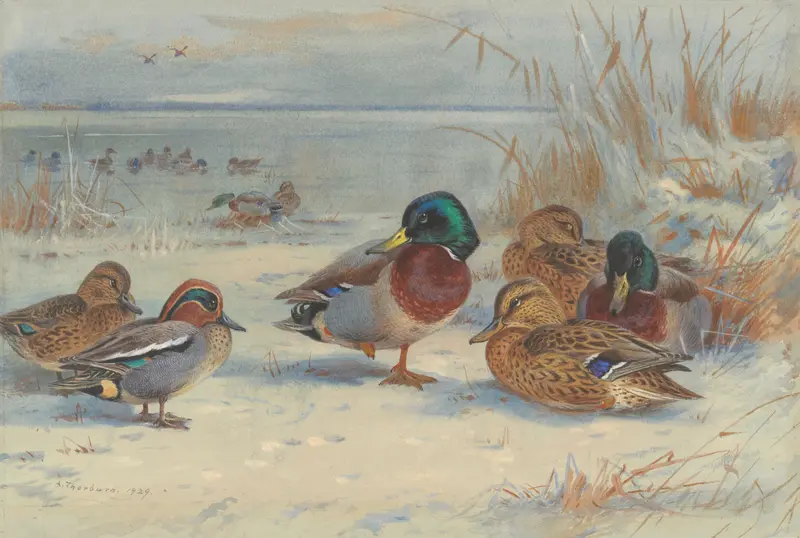
Mallard and teal in the snow
Archibald Thorburn
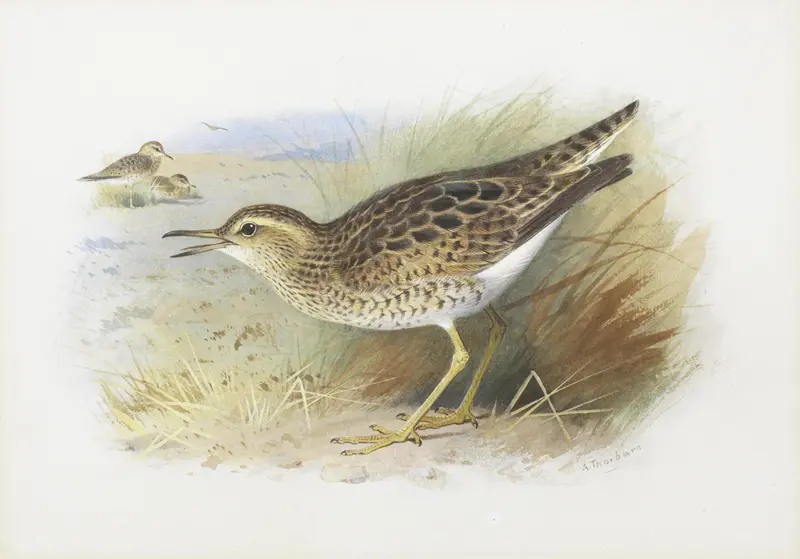
Bartram's Plover
Archibald Thorburn
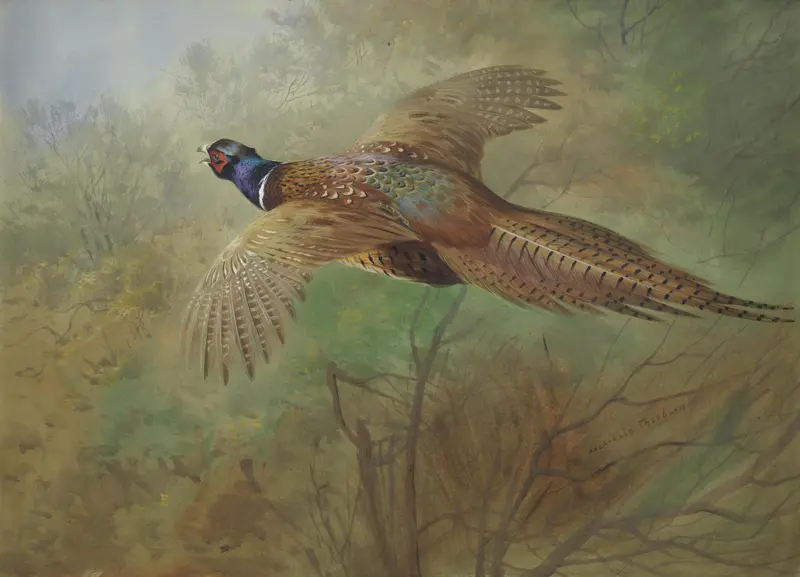
Pheasant in flight
Archibald Thorburn
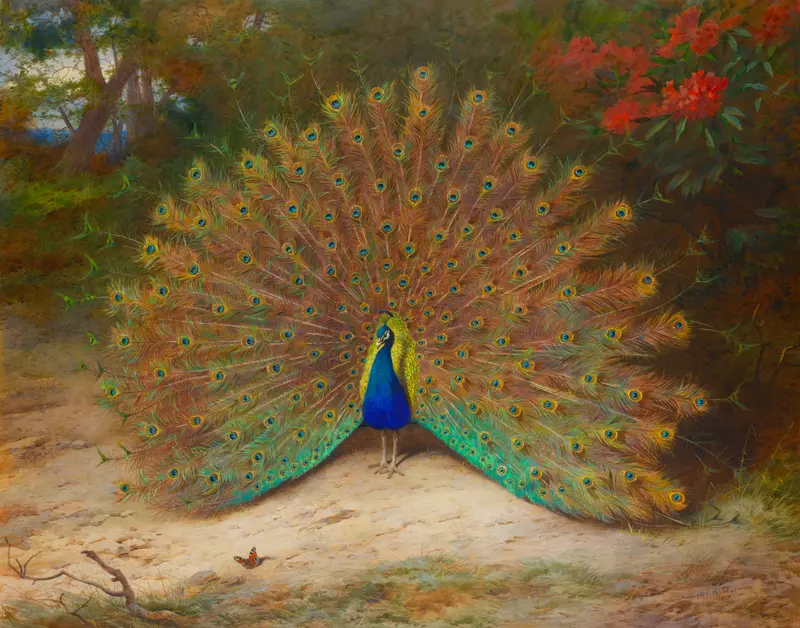
Peacock and Peacock Butterfly
Archibald Thorburn
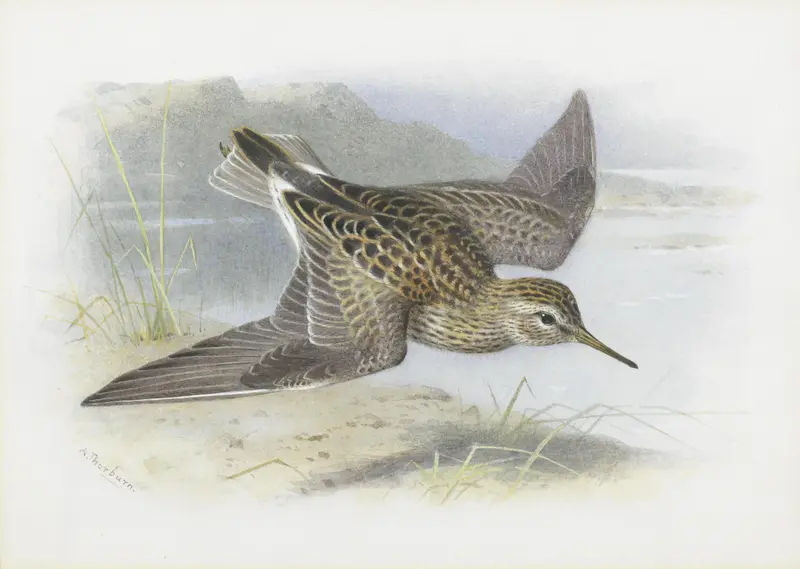
Pectoral Sandpiper
Archibald Thorburn
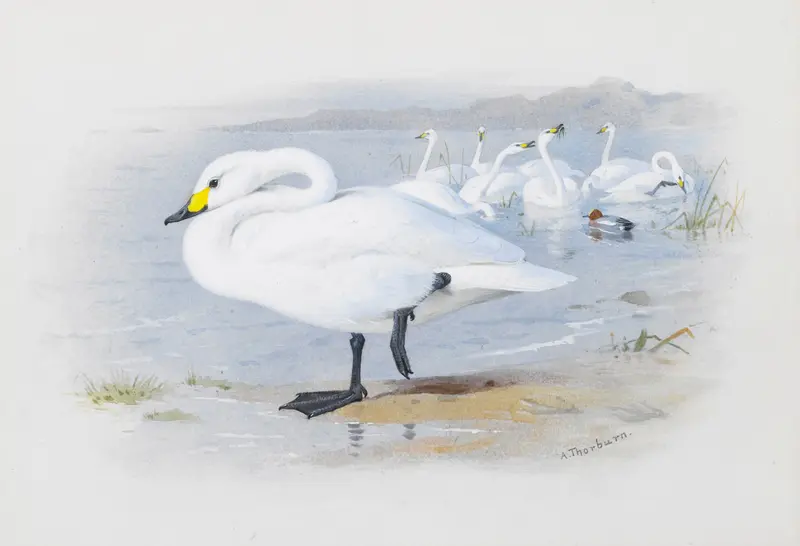
Bewick's swan.
Archibald Thorburn
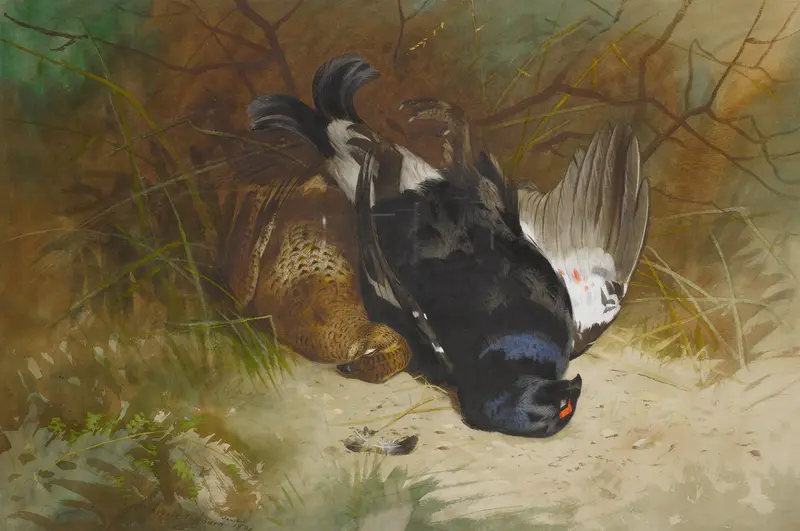
Still life of a pair of Blackgame.
Archibald Thorburn
Blackgame
Archibald Thorburn





