
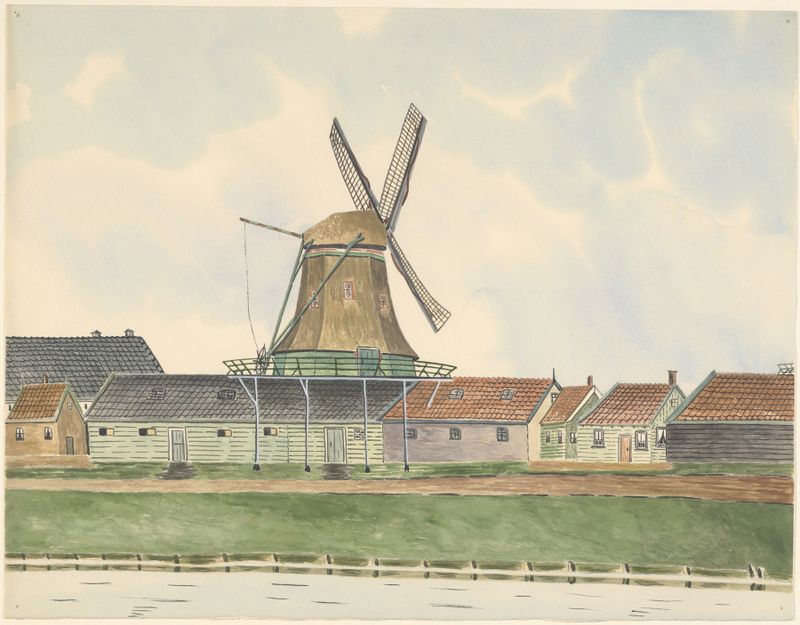
oliemolen De Kat aan de Kalverringdijk, gezien van de noordkant — History & Facts
In a world often defined by void, a solitary windmill stands resilient, its presence both stark and serene against the vast expanse of sky. Look to the left at the windmill’s towering silhouette, its sails poised as if they might catch the faintest breeze. The sharp lines of the structure contrast with the soft, flowing strokes of the surrounding landscape. Deep greens and muted browns swirl together, creating a sense of movement that belies the stillness of the scene.
Notice how light dances across the canvas, illuminating the windmill and casting long shadows that stretch toward the horizon, evoking a delicate tension between nature and human creation. As you delve deeper, consider the layers of meaning woven into the work. The windmill symbolizes industry and tradition, standing tall in a world that often succumbs to the void of modernity. The gentle waves of the water reflect the sky’s hues, reminding us of nature's cyclical beauty, while the muted color palette suggests a longing for a simpler time, a nostalgia for moments lost.
The interplay between light and shadow creates a sense of duality: hope and despair, creation and emptiness, all resonating within the viewer. In the late 1930s, Johannes Nicolaas Eijman found himself in the Netherlands, drawing inspiration from the rural landscapes that surrounded him. His work during this period reflects a shift in artistic focus, moving towards a more personal interpretation of the environment amid growing tensions in Europe. As the world stood on the brink of change, he captured the essence of his homeland, encapsulating a moment that invites reflection on both beauty and the impending chaos of history.
More Artworks by Johannes Nicolaas Eijman
Browse all →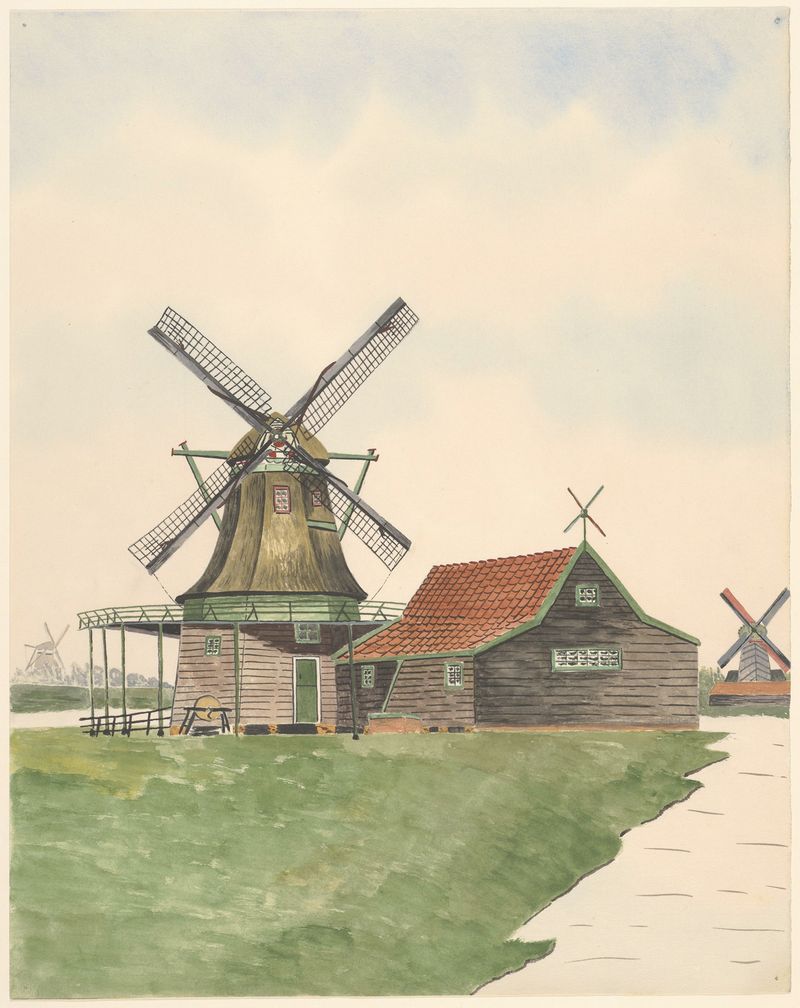
molens; oliemolen De Olievos, aan de Papenpadsloot, gesloopt 1878
Johannes Nicolaas Eijman
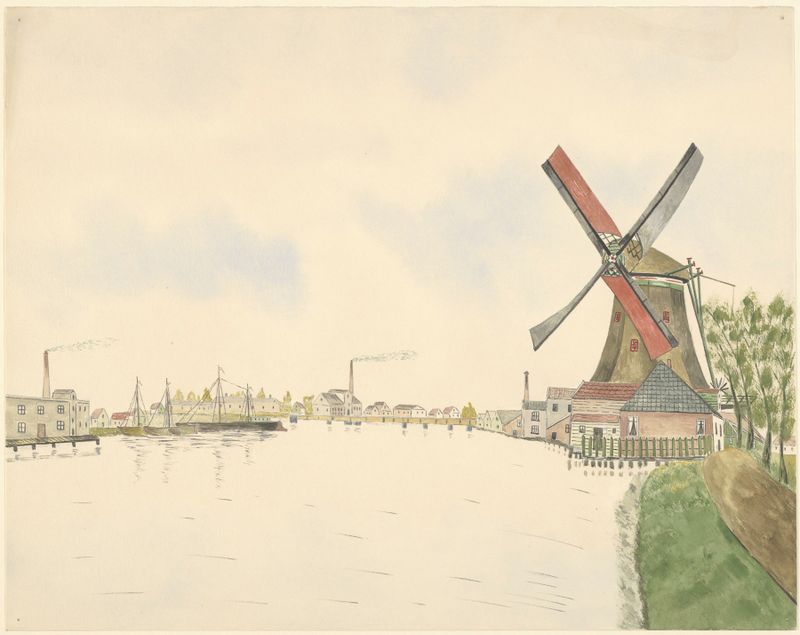
molens; meelmolen De Koker
Johannes Nicolaas Eijman

Papiermolen de Eendracht aan de westzijde van het Zaandammerpad, Wormer
Johannes Nicolaas Eijman
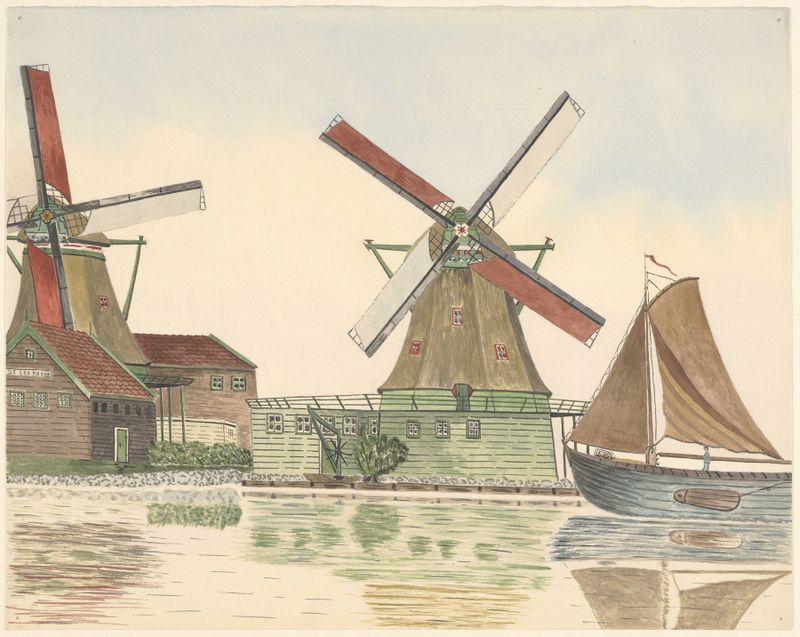
molens; oliemolen De Oude-Zwan, aan de Kalverpoel
Johannes Nicolaas Eijman
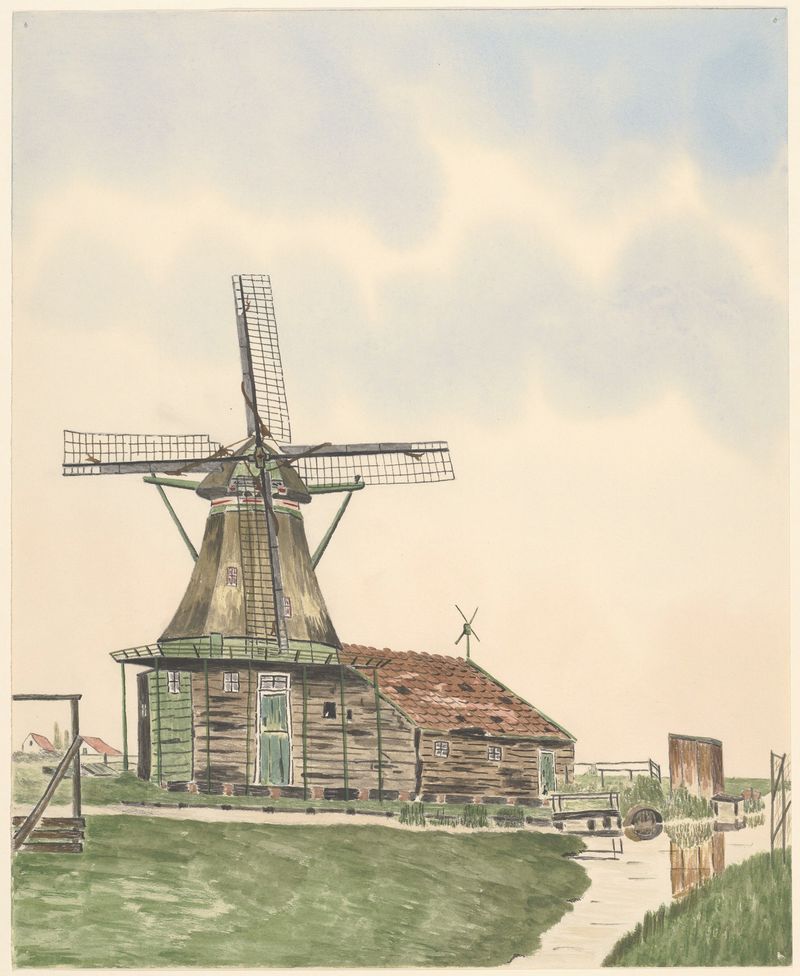
molens; oliemolen Het Oude-Honingvat, Oostzijderveld
Johannes Nicolaas Eijman
molen; oliemolen Het Witte-Paard aan het Zaandijkerwegje, 1893 gesloopt
Johannes Nicolaas Eijman

Op de voorgrond rechts doppenmolen De Prolpot aan de Hemmes, op de achtergrond links twee andere molens
Johannes Nicolaas Eijman
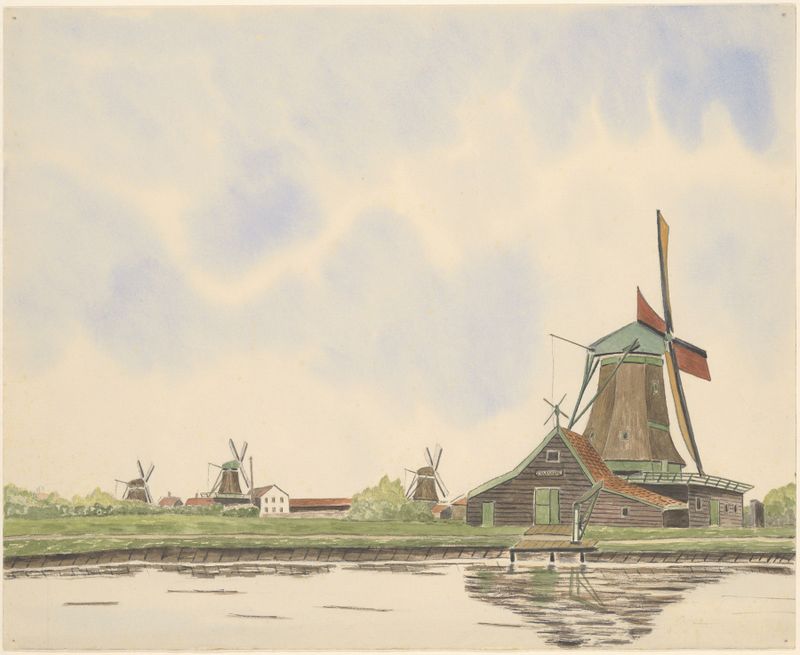
Oliemolen De Kerkuil aan de Zaan, met drie molens op de achtergrond. De Kerkuil stond binnendijks, tegenover de Wormerveerderkerk; afgebroken ca. 1892
Johannes Nicolaas Eijman
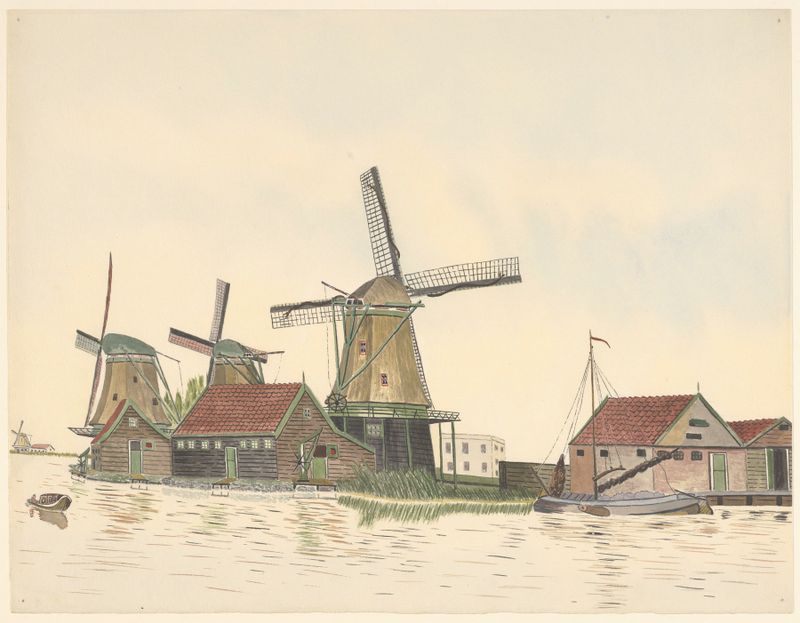
molens; De Ooievaar; De Windhond; De Gans, Kalverringdijk
Johannes Nicolaas Eijman
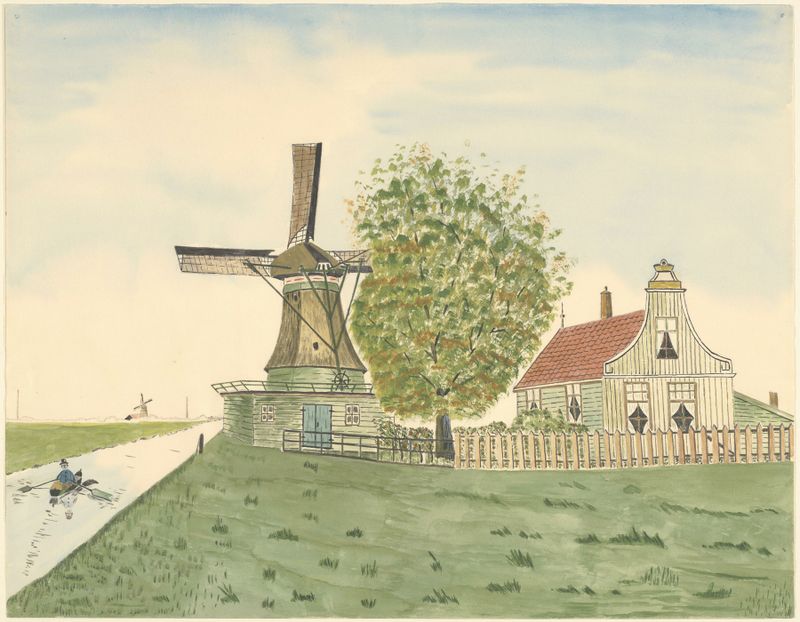
molens; houtzaagmolen De Haan
Johannes Nicolaas Eijman





