
Oliemolen De Koperslager aan de Zaandijkerweg — History & Facts
When did color learn to lie? In the hands of an artist, hues can transform the ordinary into the extraordinary, whispering truths that transcend mere representation. Look closely at the canvas. Notice how the vibrant greens of the grass dance beneath the towering windmill, a structure steeped in history and resilience. The chiaroscuro play of light accentuates the blades of the mill, casting elongated shadows that stretch across the foreground.
As your eyes meander, take in the tender brushstrokes that delineate the reflection of the mill in the rippling water, and how the sky, painted in varying shades of azure, conveys an evocative sense of peace. Yet beneath this serene landscape lies a more profound narrative. The juxtaposition of the calm surface of the water against the dynamic motion of the windmill’s sails hints at the duality of life—a tranquil façade masking industrious energy. The way the colors interact creates an emotional tension, inviting the viewer to contemplate the harmony of nature with human ingenuity.
Each element holds a story, urging us to consider what lies beneath the tranquility. During the years spanning from 1930 to 1945, the artist found himself in the Netherlands amidst a tumultuous period marked by both industrial change and the looming shadow of World War II. This era shaped his perspective, as he sought refuge in the beauty of his homeland's landscapes. The windmill depicted here stands not only as a representation of Dutch heritage but also as a symbol of resilience amidst the changing tides of history.
More Artworks by Johannes Nicolaas Eijman
Browse all →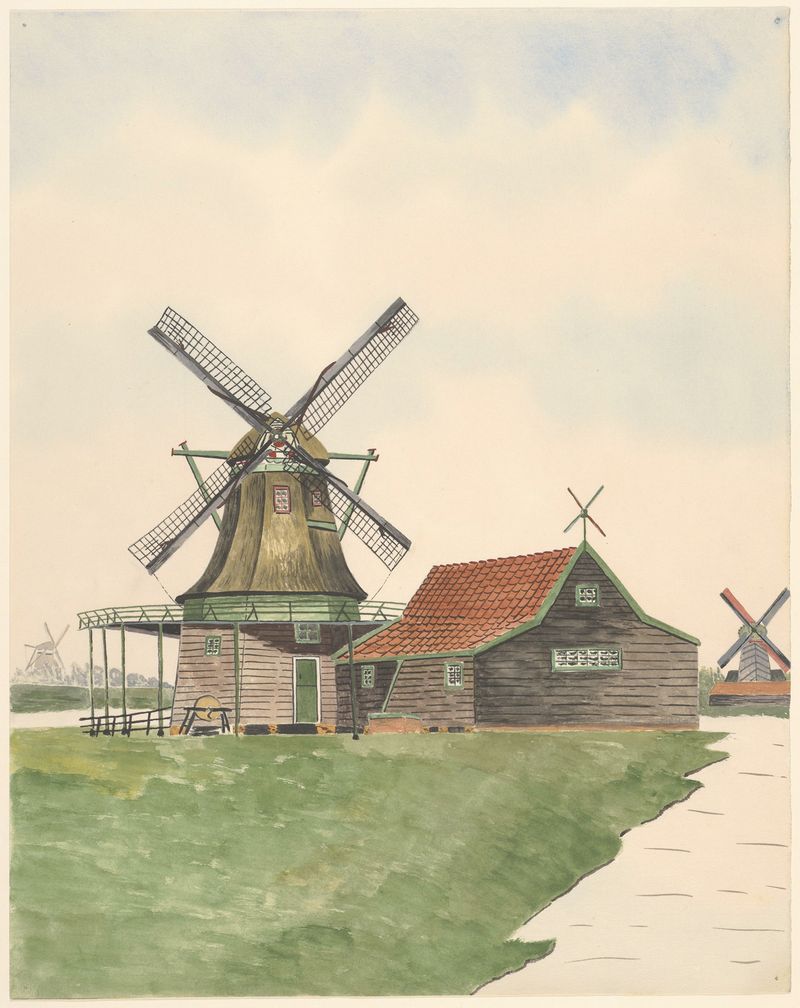
molens; oliemolen De Olievos, aan de Papenpadsloot, gesloopt 1878
Johannes Nicolaas Eijman
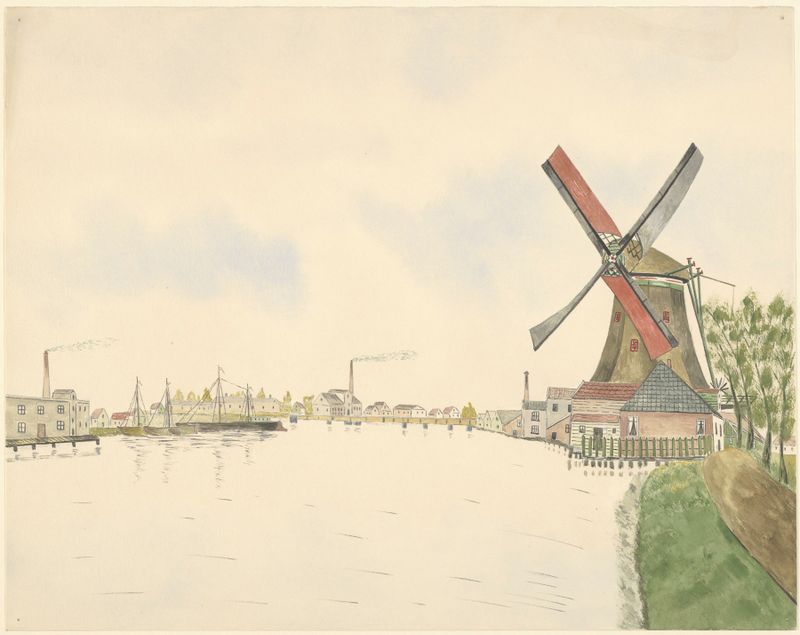
molens; meelmolen De Koker
Johannes Nicolaas Eijman

Papiermolen de Eendracht aan de westzijde van het Zaandammerpad, Wormer
Johannes Nicolaas Eijman
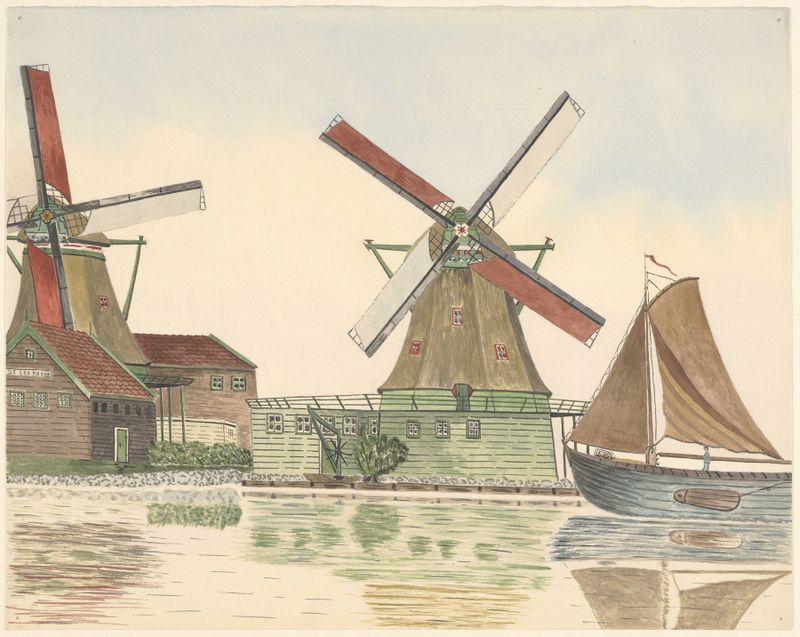
molens; oliemolen De Oude-Zwan, aan de Kalverpoel
Johannes Nicolaas Eijman
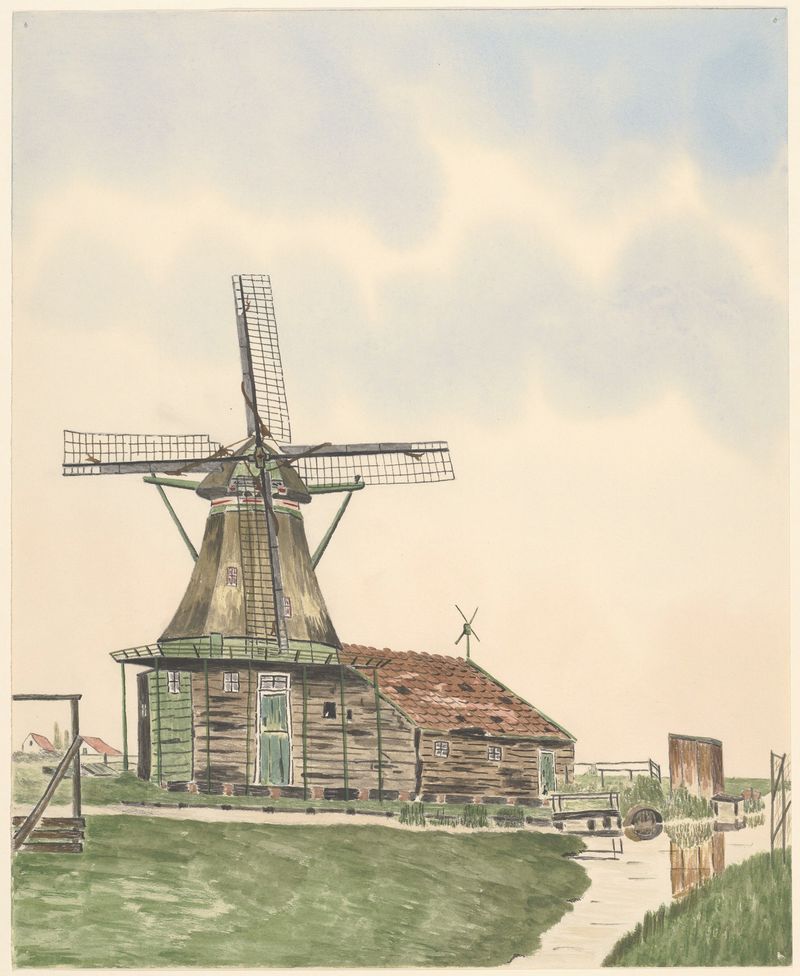
molens; oliemolen Het Oude-Honingvat, Oostzijderveld
Johannes Nicolaas Eijman
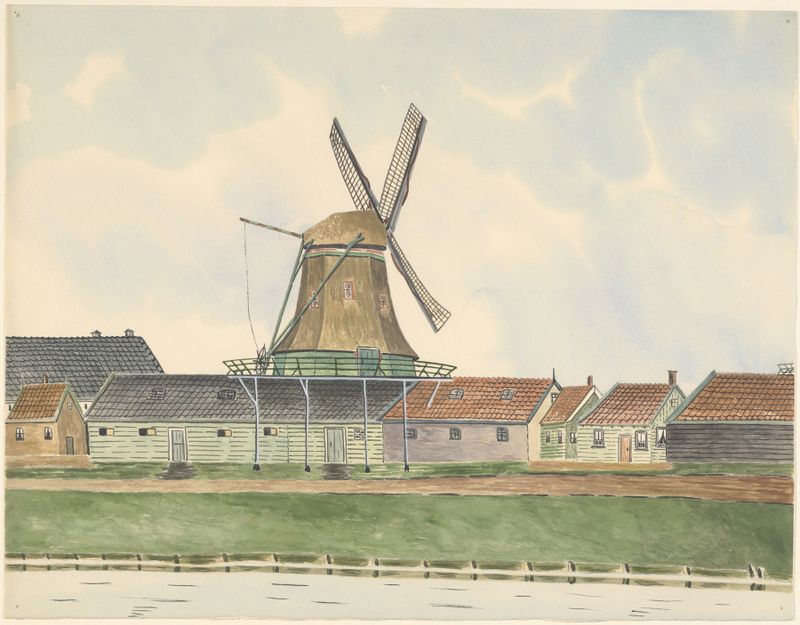
molen; oliemolen Het Witte-Paard aan het Zaandijkerwegje, 1893 gesloopt
Johannes Nicolaas Eijman

Op de voorgrond rechts doppenmolen De Prolpot aan de Hemmes, op de achtergrond links twee andere molens
Johannes Nicolaas Eijman
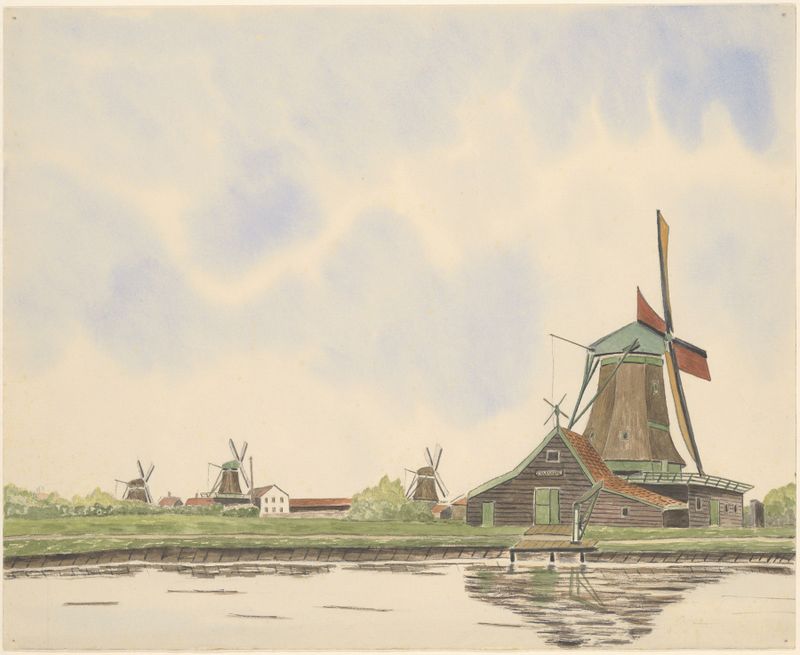
Oliemolen De Kerkuil aan de Zaan, met drie molens op de achtergrond. De Kerkuil stond binnendijks, tegenover de Wormerveerderkerk; afgebroken ca. 1892
Johannes Nicolaas Eijman
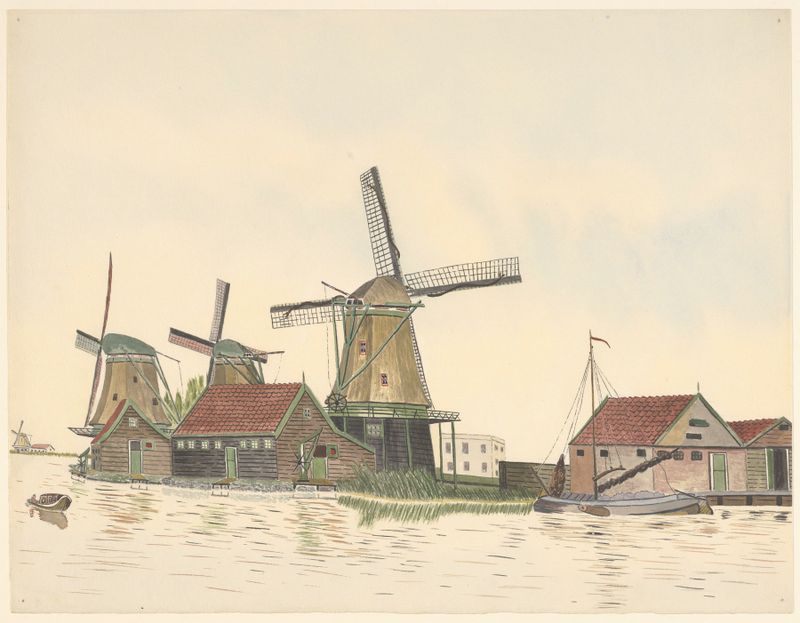
molens; De Ooievaar; De Windhond; De Gans, Kalverringdijk
Johannes Nicolaas Eijman
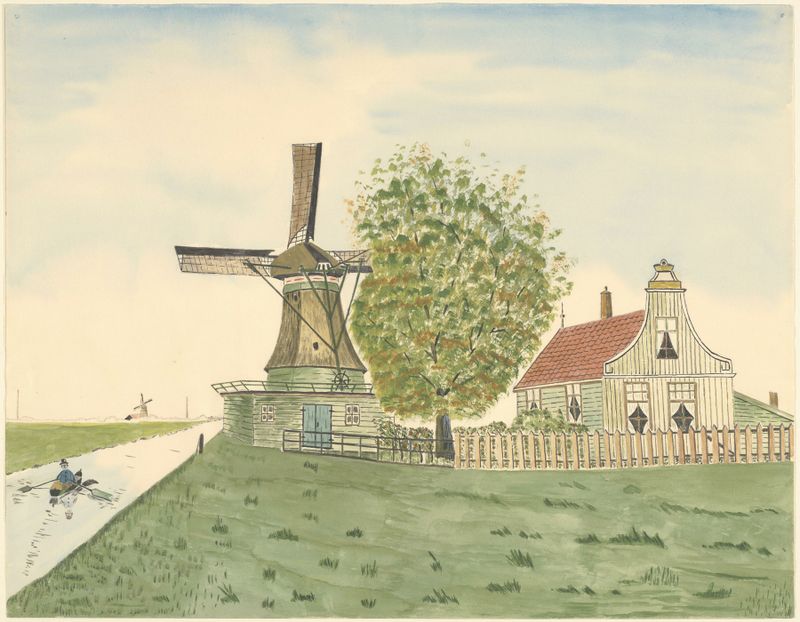
molens; houtzaagmolen De Haan
Johannes Nicolaas Eijman





