
On Shipboard — History & Facts
The first thing that draws the eye in On Shipboard by Theodoros Ralli is the way sunlight filters through the awning, casting warm, shifting shadows across a gathering of travelers. The scene is alive with quiet anticipation: figures in dark dresses and white headscarves sit in clusters, their faces turned toward some unseen point or lost in thought, while a few men in hats bend over books, isolated in their own worlds. The low horizon gives the sea and sky a spacious, airy presence, but it is the interplay of light and shade on the deck that animates the moment, suggesting both the comfort of shelter and the uncertainty of passage.
The painter’s loose, almost sketch-like brushwork hints at movement—the restless energy of a journey underway. Painted between 1870 and 1909, this work belongs to an era when steamship travel was transforming the Mediterranean, carrying pilgrims, merchants, and emigrants between continents. Artists like Ralli, trained in the academic tradition but drawn to the immediacy of daily life, often turned to such scenes to capture the mingling of classes and cultures aboard ship. These paintings were sometimes commissioned by shipping lines or private patrons eager to commemorate the new realities of travel, but many were simply studies for larger compositions or records of fleeting impressions.
History has kept few traces of this particular canvas, but its sense of transition—of lives paused between departure and arrival—invites us to linger and imagine the stories unfolding beneath that ochre canopy.
More Artworks by Theodoros Ralli

The Sleeping Concubine
Theodoros Ralli
Holy Relics
Theodoros Ralli
Flower Seller at the Parthenon
Theodoros Ralli
Resting by a Haystack
Theodoros Ralli
The Kiss (Ralli)
Theodoros Ralli
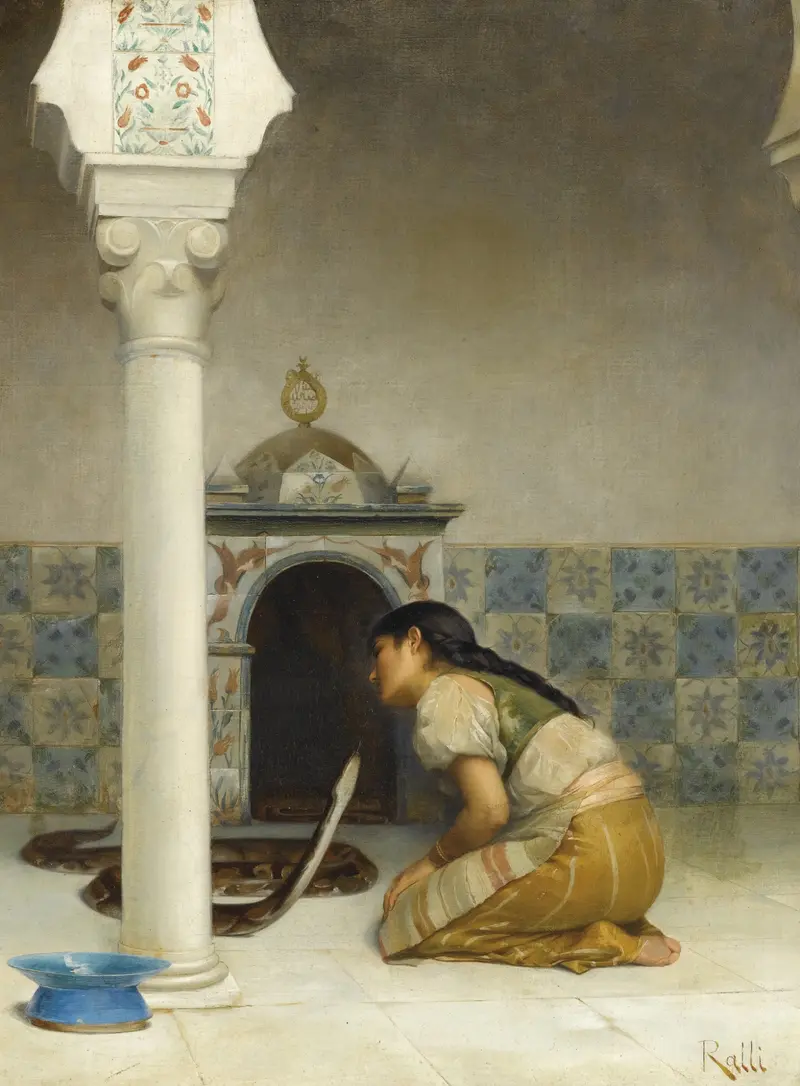
The Sacred Serpent
Theodoros Ralli
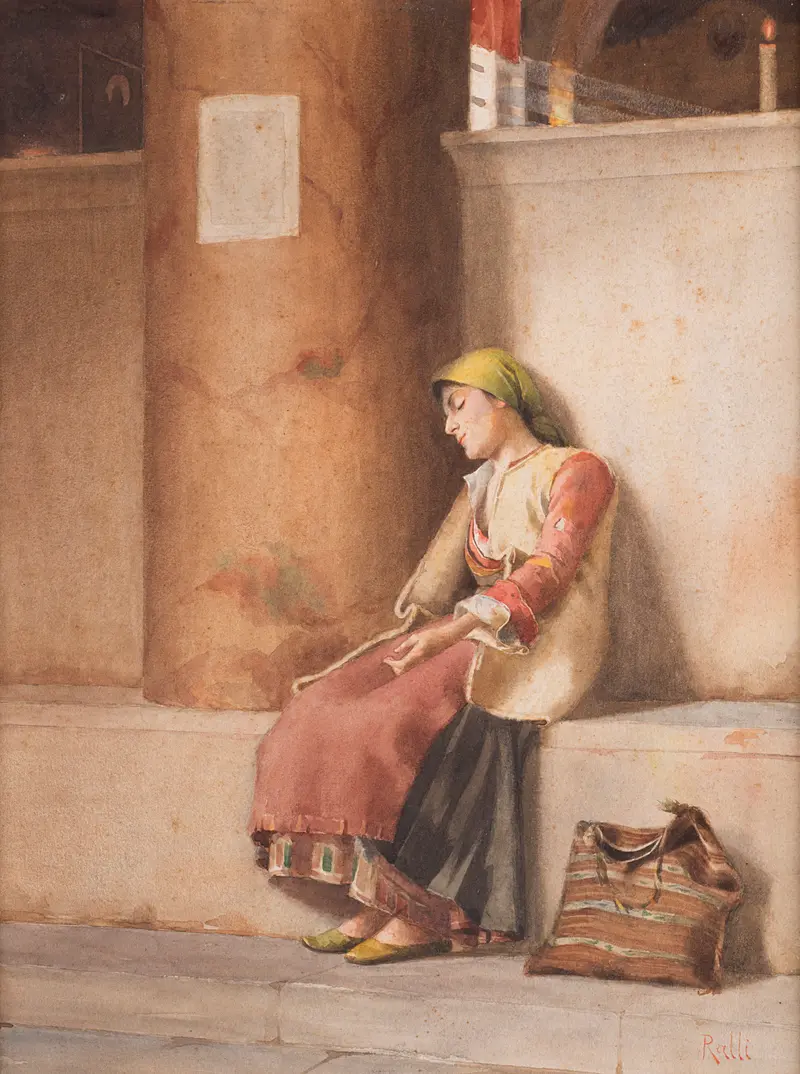
A Moment of Reflection
Theodoros Ralli
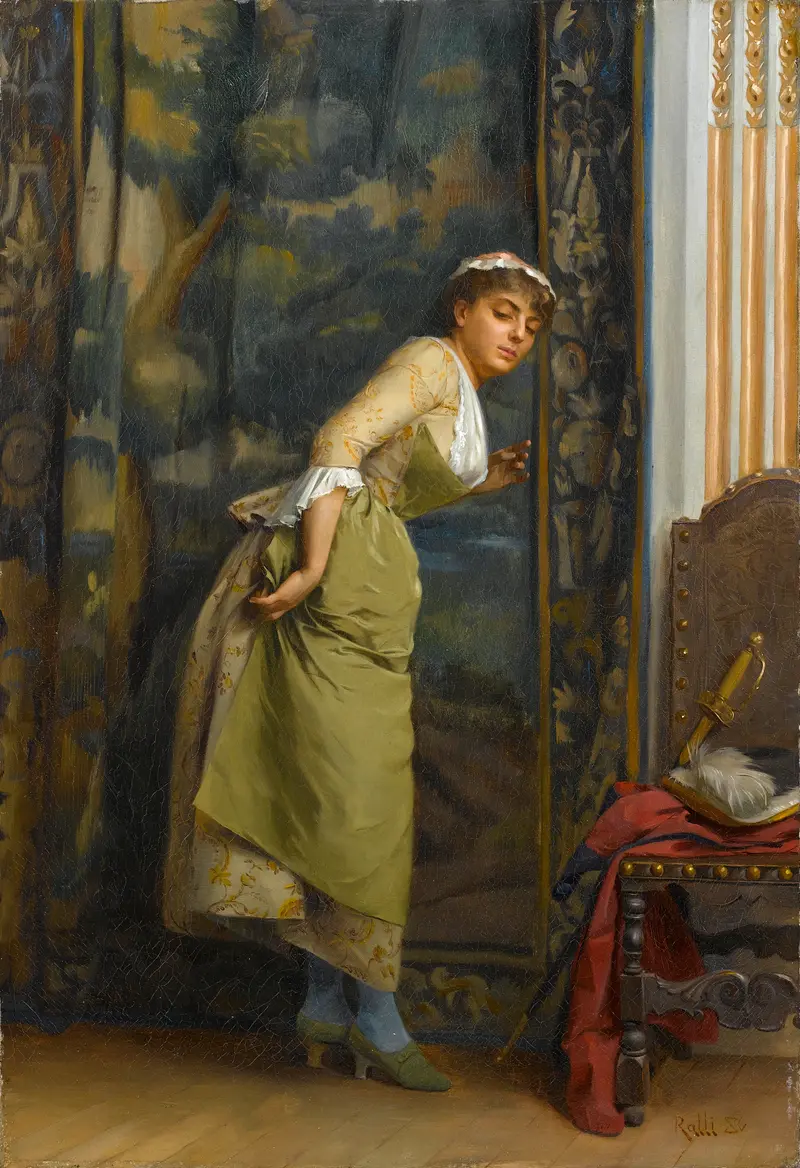
Eavesdropping (Ralli)
Theodoros Ralli
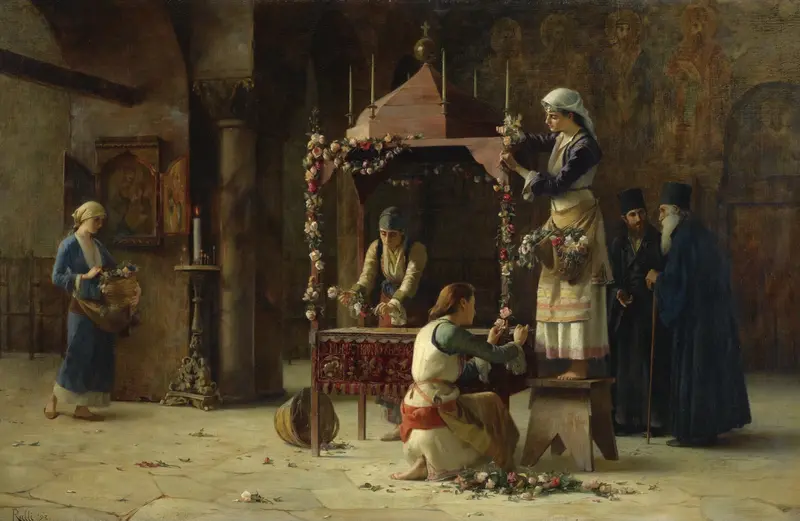
Holy Friday, Greece
Theodoros Ralli
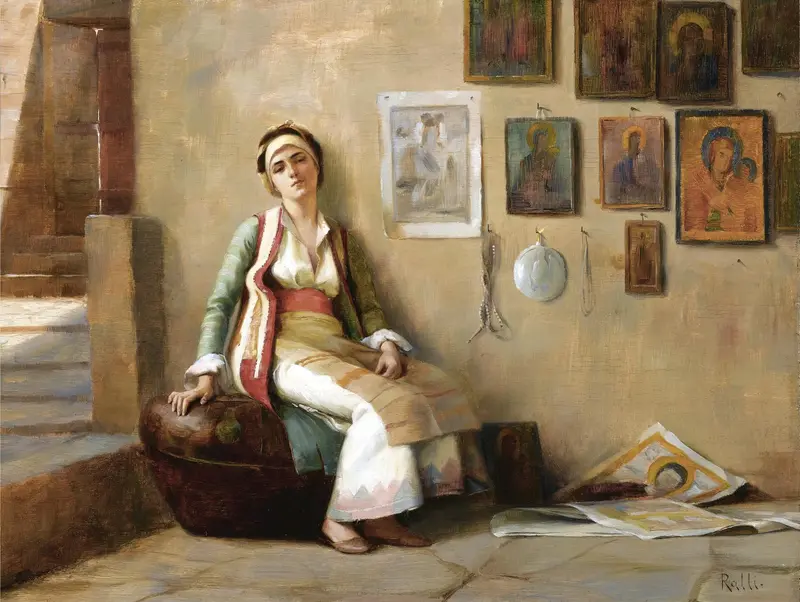
A Moment's Rest
Theodoros Ralli
More Genre Scene Art

Banquet of the Officers of the St George Civic Guard
Frans Hals

Rembrandt and Saskia in the Scene of the Prodigal Son
Rembrandt van Rijn

Bal du moulin de la Galette
Pierre-Auguste Renoir

Quadrille at the Moulin Rouge
Henri de Toulouse-Lautrec

A Burial at Ornans
Gustave Courbet

When Will You Marry?
Paul Gauguin