
On the Balcony, Cairo — History & Facts
A single figure leans out from the carved wooden balcony, her gaze cast over Cairo’s sunlit rooftops. The moment is suspended between private thought and public view: her hand shades her mouth, suggesting a whispered message or a secret observation, while her vibrant costume—layered in yellow, pink, and blue—draws the eye against the pale geometry of the city below. The latticework balustrade both frames and separates her from the vista, and the potted plants at her side hint at an inner life, a cultivated world behind the public face.
Light bathes her in clarity, but the city stretches away, hazy and endless, its minarets and domes receding into the sky. The palette is warm, the air still, and the composition invites us to wonder what she sees—or waits for—beyond the edge. Painted in 1880, On the Balcony, Cairo belongs to a world fascinated by the exoticism and spectacle of the East, a current that swept through European art in the nineteenth century. Artists like Theodoros Ralli responded to a growing appetite for scenes of daily life in Ottoman cities, often commissioned by collectors eager for glimpses of distant cultures.
Such works were shaped by travel, commerce, and the shifting balance of empires, and they reveal as much about European imagination as about the places they portray. Little is recorded about the journey of this particular painting, but its careful detail and vivid presence speak to the era’s hunger for both observation and fantasy. The cityscape behind the figure is not just a backdrop—it is an invitation to lose oneself in the labyrinth of another time.
More Artworks by Theodoros Ralli

The Sleeping Concubine
Theodoros Ralli
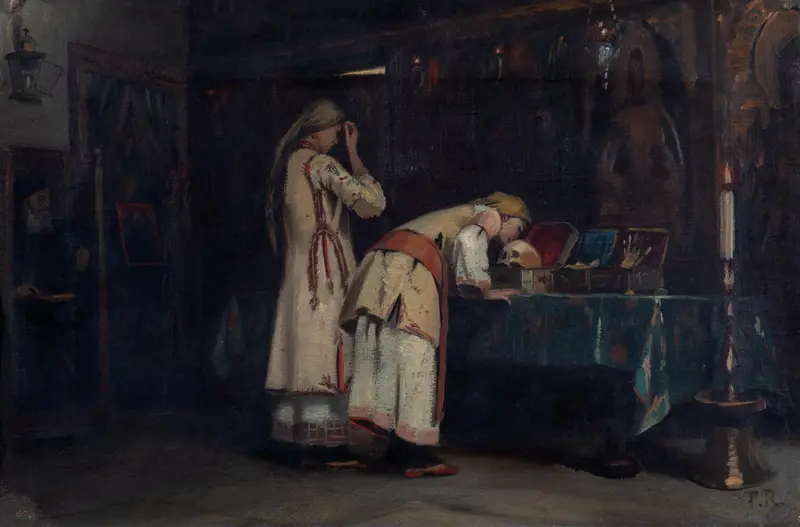
Holy Relics
Theodoros Ralli
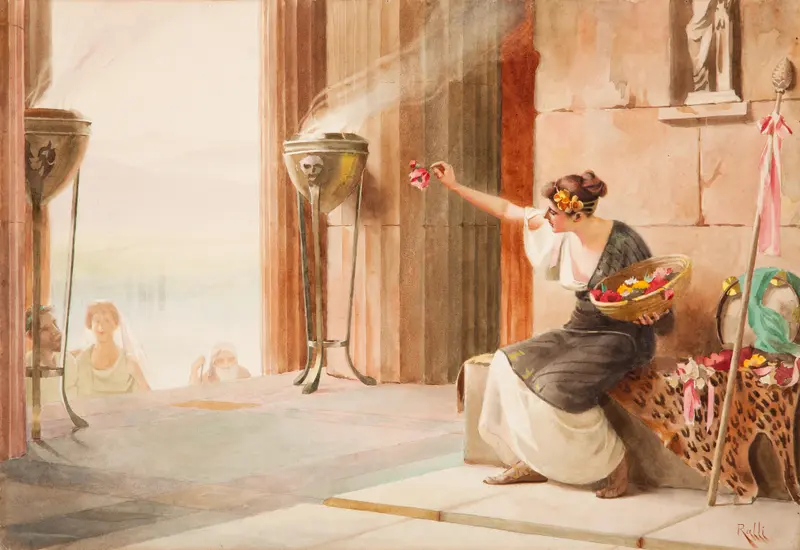
Flower Seller at the Parthenon
Theodoros Ralli
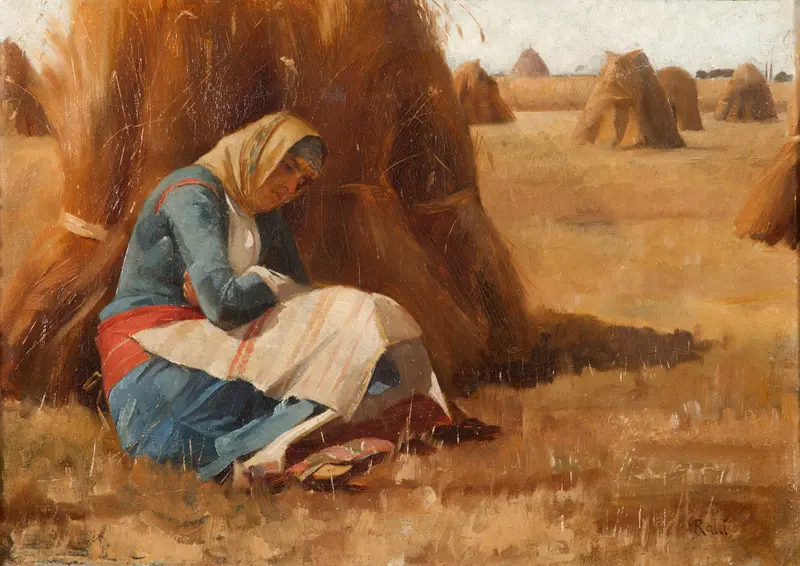
Resting by a Haystack
Theodoros Ralli
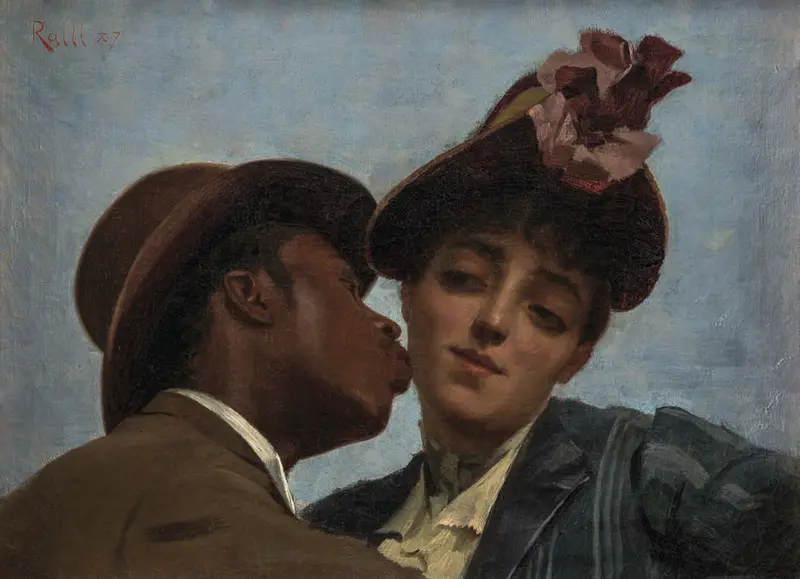
The Kiss (Ralli)
Theodoros Ralli
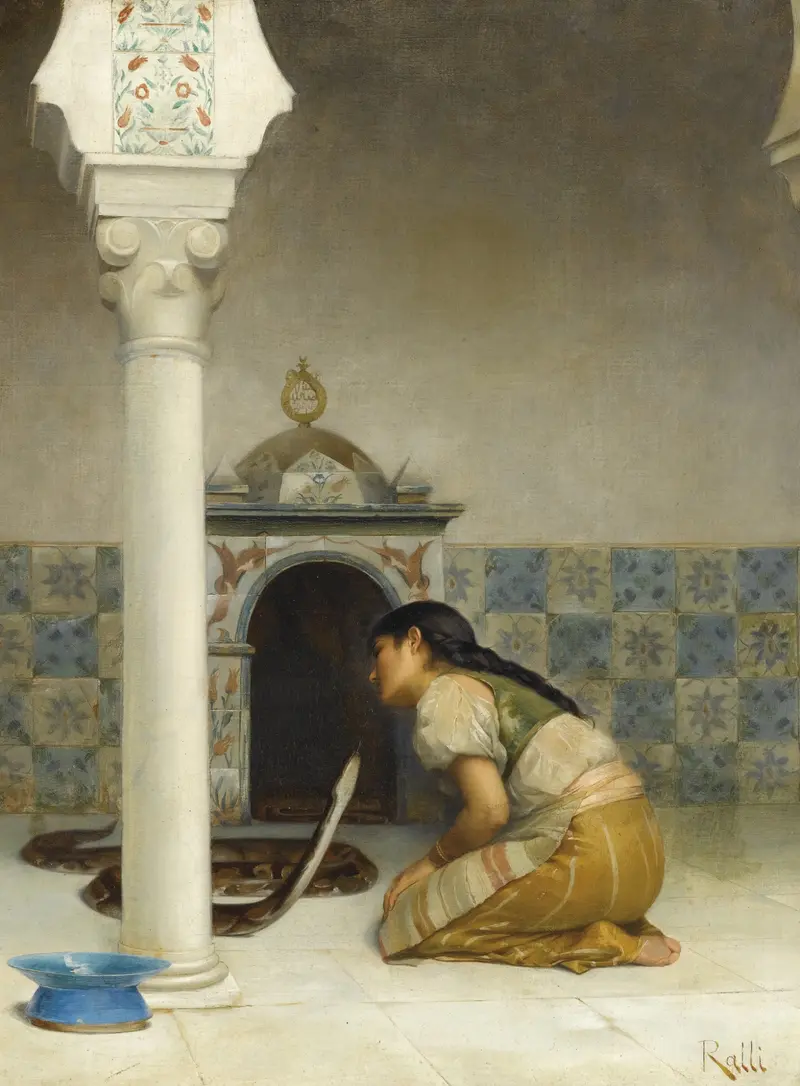
The Sacred Serpent
Theodoros Ralli
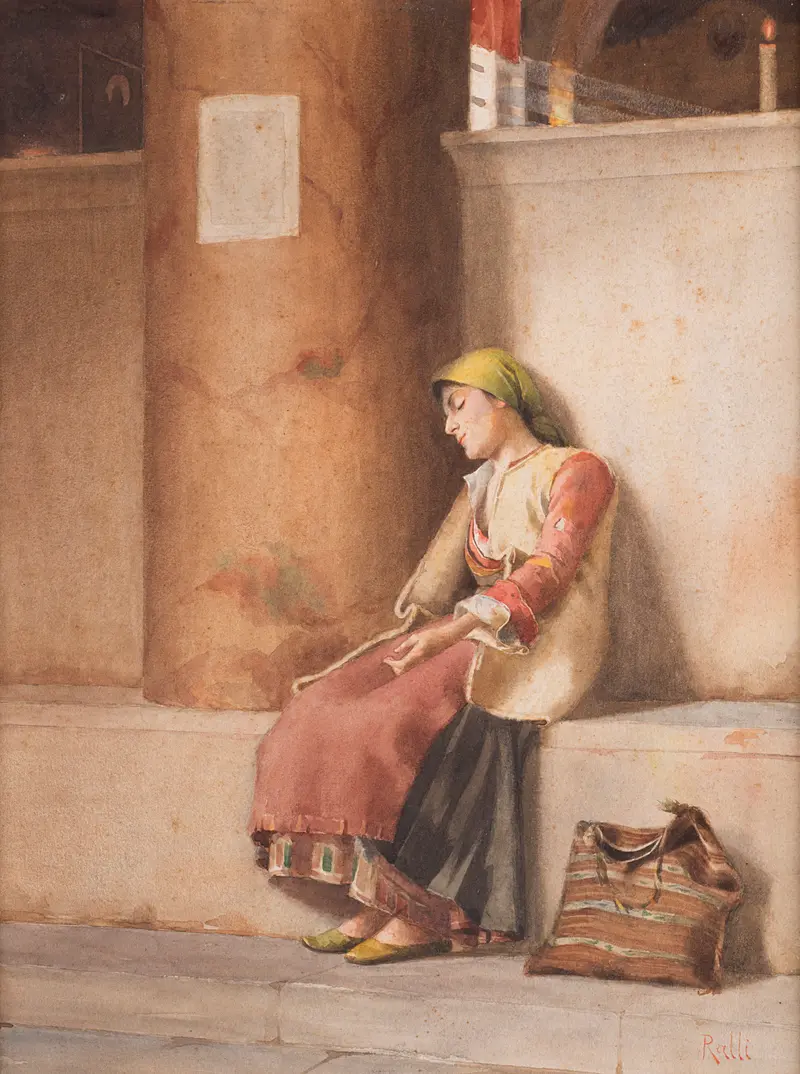
A Moment of Reflection
Theodoros Ralli
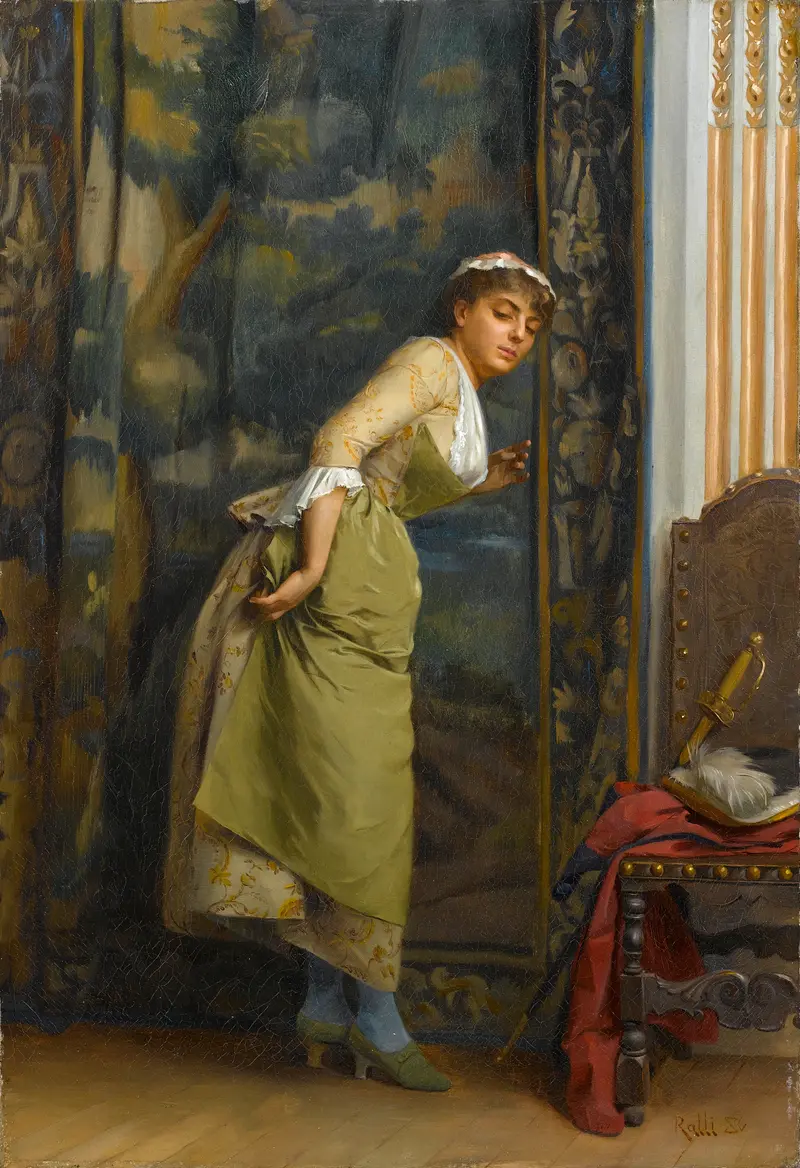
Eavesdropping (Ralli)
Theodoros Ralli
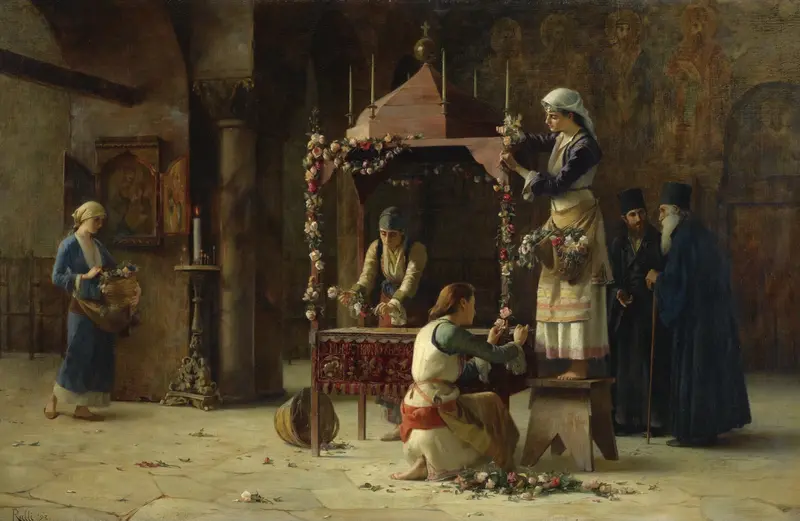
Holy Friday, Greece
Theodoros Ralli
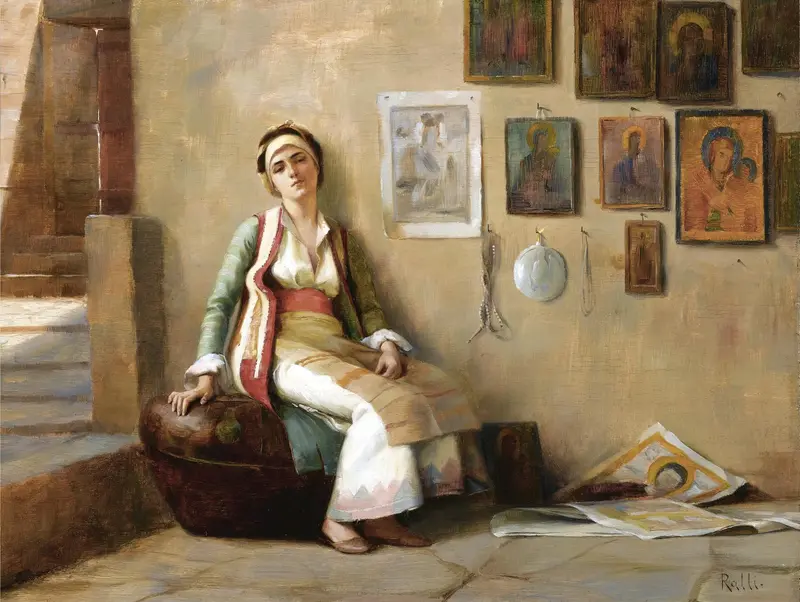
A Moment's Rest
Theodoros Ralli
More Genre Scene Art

Banquet of the Officers of the St George Civic Guard
Frans Hals

Rembrandt and Saskia in the Scene of the Prodigal Son
Rembrandt van Rijn

Bal du moulin de la Galette
Pierre-Auguste Renoir

Quadrille at the Moulin Rouge
Henri de Toulouse-Lautrec

A Burial at Ornans
Gustave Courbet

When Will You Marry?
Paul Gauguin