
On the Beach at Trouville — History & Facts
In the gentle sway of the ocean breeze, a moment lingers, teetering on the precipice of joy and fear—an invitation to embrace the vastness of existence and the fragility of life. Look to the foreground, where vibrant hues of blue and ochre dance together, capturing the essence of the beach at Trouville. The figures, small yet significant against the expansive backdrop, are absorbed in their leisure; a woman in a billowing dress gazes toward the horizon while children play at the water’s edge. Notice how the golden light of the setting sun bathes the scene, illuminating the brushwork with a soft, warm glow that hints at fleeting moments of happiness. Yet, beneath this surface tranquility lies an undercurrent of anxiety.
The horizon, although inviting, stretches far beyond their reach, evoking a sense of isolation amidst the crowd. The contrasts between the lively colors of the beach and the muted sky underscore a tension—between the joy of the present and the fears of what lies beyond. These small details—the figures’ hurried gestures and hesitant stances—whisper of life's fragile beauty and the uncertainties that haunt every blissful moment. In 1863, when the artist crafted this piece, he was exploring the interplay between light and atmosphere, shifting away from the confines of formal academic styles.
Working in Normandy, Boudin captured the burgeoning Impressionist scene, his work reflecting a burgeoning sense of modernity and change in both his life and the art world. It was a time of innovation, where artists began to express their innermost feelings and observations, revealing the complexities beneath seemingly simple scenes.
More Artworks by Eugène Boudin
Browse all →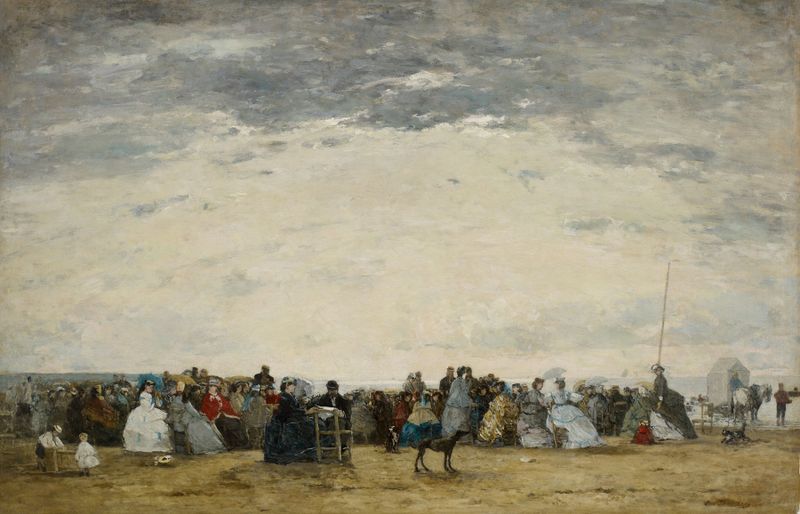
Vacationers on the Beach at Trouville
Eugène Boudin

Washerwoman near Trouville
Eugène Boudin
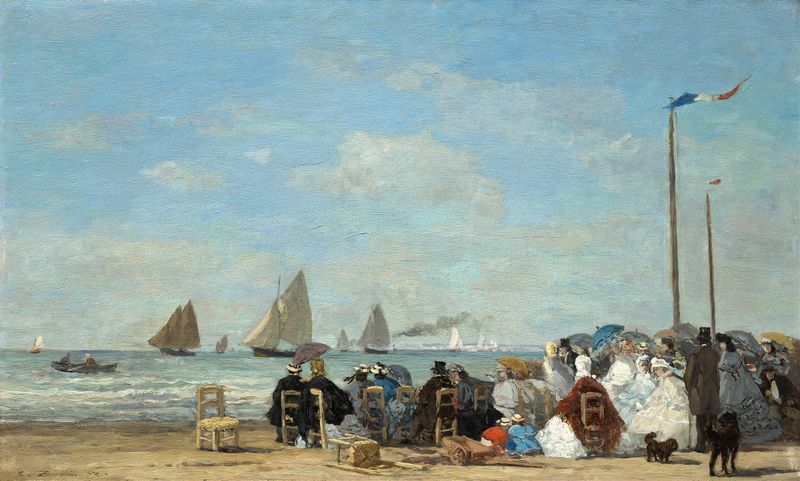
Beach Scene at Trouville
Eugène Boudin

Port aux environs d’Honfleur
Eugène Boudin

Le Faou, un coin du village
Eugène Boudin
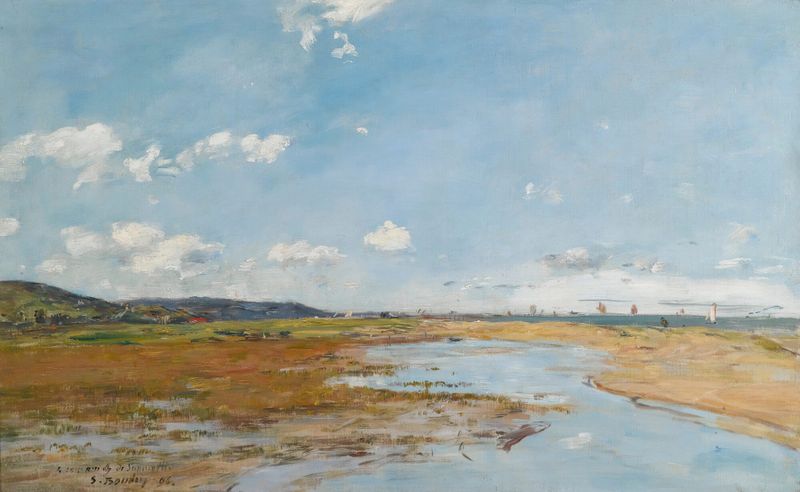
Deauville. Le Rivage
Eugène Boudin
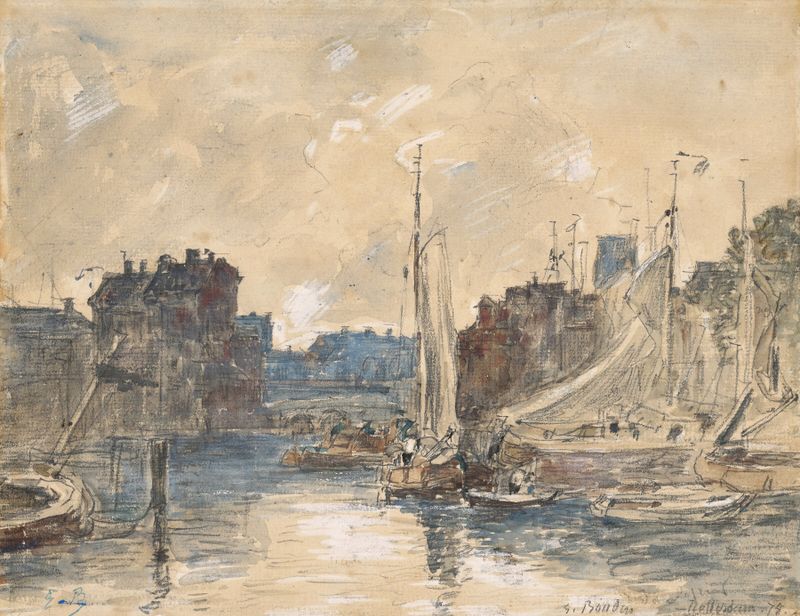
Port de Rotterdam
Eugène Boudin

View of Bordeaux, from the Quai des Chartrons
Eugène Boudin

Trouville, Scène De Plage
Eugène Boudin

Trouville, Le Port
Eugène Boudin





