
On the North East bank of the Buller — History & Facts
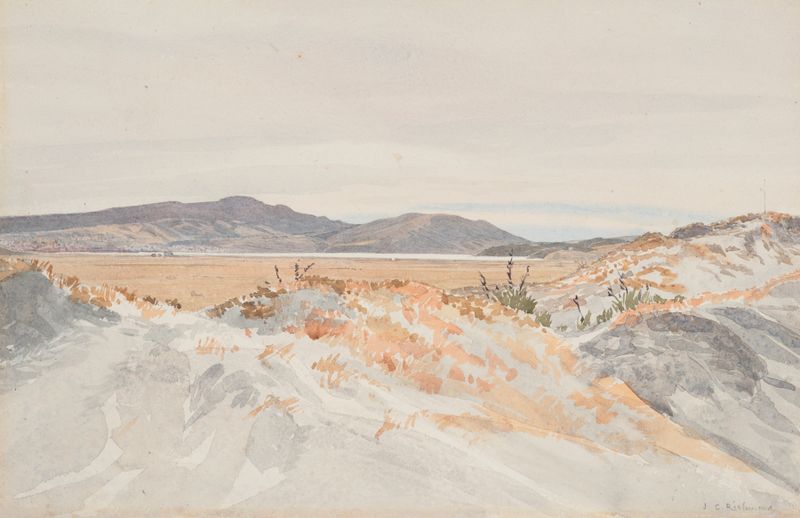
Can paint confess what words never could? In On the North East bank of the Buller, a breathtaking vista unfolds, capturing the raw beauty of nature with a language all its own. Focus on the vibrant greens and deep blues that dance across the canvas, drawing your eye first to the misty river that winds through the scene. Notice how the artist delicately layers brushstrokes, creating a sense of movement in the water, where reflections shimmer with the interplay of light. The distant mountains loom majestically, their peaks softened by clouds, while the foreground teems with lush foliage, inviting you to step into this serene landscape. Yet, amid the tranquility, there lies an undercurrent of tension.
The contrast between the calm water and the rugged mountains speaks to the duality of nature — its beauty and its wildness. The play of light on the surface of the river evokes a sense of fleeting moments, reminding us of how time flows just like the water before us. Small details, such as the play of shadows on the rocks, evoke a deeper sense of awe and contemplation, suggesting that nature, while magnificent, is also indifferent to human existence. In 1862, Richmond painted this work during a pivotal period in his life, residing in New Zealand, where he sought to capture the landscapes that surrounded him.
The burgeoning colonial art scene was exploring themes of nationalism and identity, and Richmond was at the forefront, blending European techniques with local subjects. This painting reflects both his personal journey and the broader artistic movement of his time, encapsulating the awe of the natural world in a moment that transcends words.
More Artworks by James Crowe Richmond
Browse all →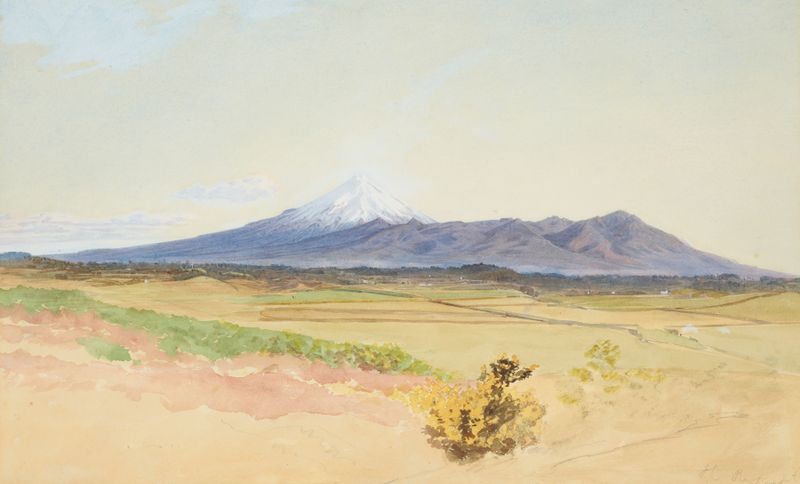
Mount Egmont and Pouakai, from New Plymouth
James Crowe Richmond
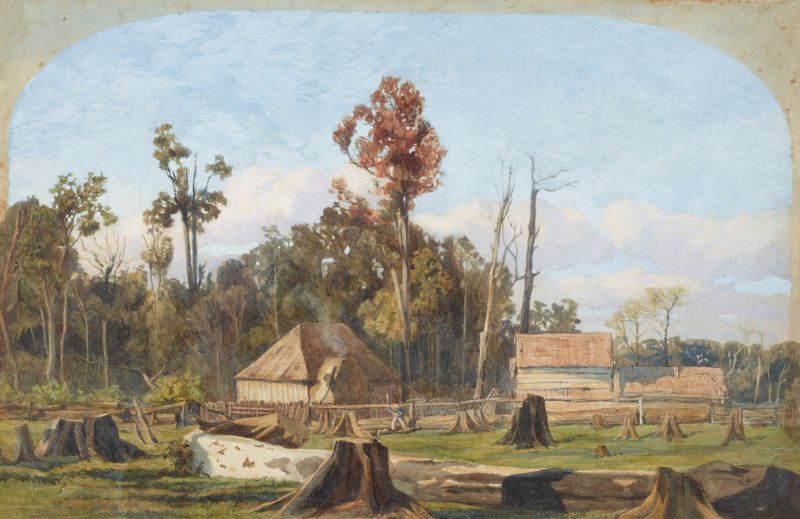
Settler’s home, Merton, near New Plymouth
James Crowe Richmond
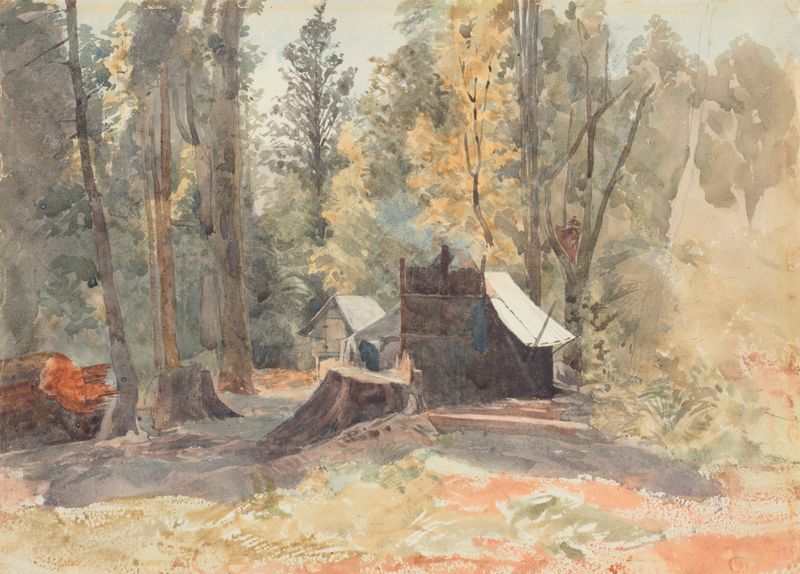
Hut of the ‘Italian party’, old diggings on Buller
James Crowe Richmond

Mosque at Tlemcen
James Crowe Richmond

Ngatapa, Te Kooti’s Pa
James Crowe Richmond

Dividing Range, Riwaka and Takaka
James Crowe Richmond
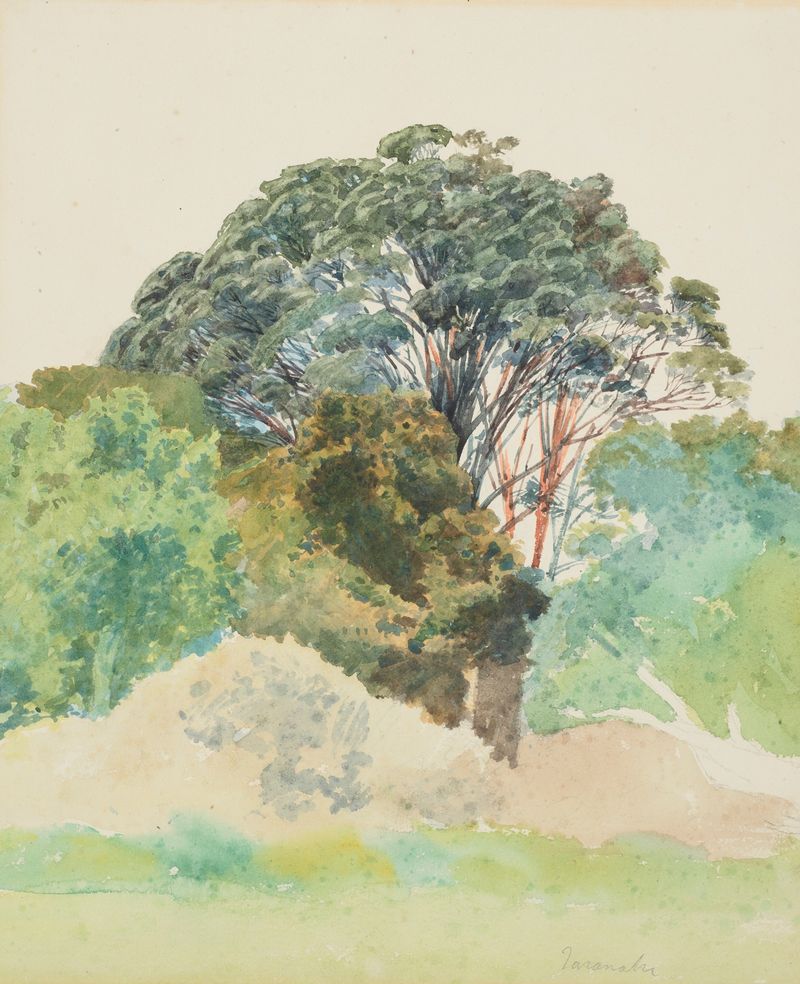
Rata, Taranaki
James Crowe Richmond

Grey River, on the beach
James Crowe Richmond
Dunedin from the Ocean Beach
James Crowe Richmond

On Collingwood Goldfields
James Crowe Richmond





