
On the stooks - Blackgame — History & Facts
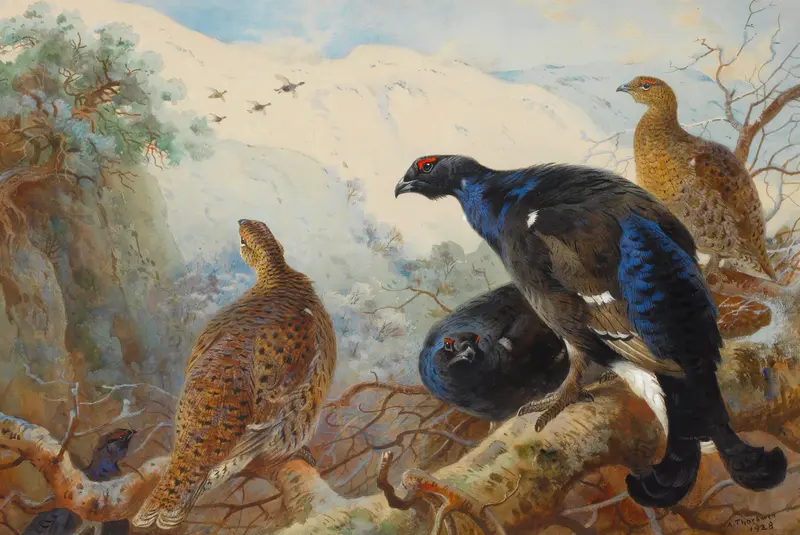
What first catches the eye in On the stooks - Blackgame is the sharp alertness of the birds, their bodies half-hidden in the golden spill of harvested grain, yet utterly alive to every movement around them. The painter draws you in close—so close that you can almost feel the bristle of feathers and the dry rustle of straw. The male black grouse, with his glossy blue-black plumage and scarlet eyebrow, leans into the stubble, his mate blending into the ochre haze beside him.
Behind, another hen stands sentinel, her gaze fixed on the horizon as a small flock wheels across the pale sky. The light, cool and steady, picks out every detail of wing and beak, but never distracts from the sense of watchfulness and quiet tension that runs through the scene. This work was painted in 1902, at the height of the British fascination with wildlife and sporting art. The late nineteenth century saw a surge of interest in the natural world, driven by both scientific curiosity and the rituals of country life.
Artists like Archibald Thorburn became celebrated for their ability to capture not just the appearance but the character of birds, often for patrons who prized these images as records of the hunt or as tributes to the landscapes they loved. While little is recorded about the journey of this particular painting, now in the Bonhams gallery, it stands as a vivid example of nineteenth-century British impressionist art—a genre that found beauty in the fleeting, everyday dramas of field and hedgerow. Look again at the way the birds are both part of and apart from their world, and you may sense why such scenes held—and still hold—the gaze of so many.
More Artworks by Archibald Thorburn

The Watchful Hinds
Archibald Thorburn
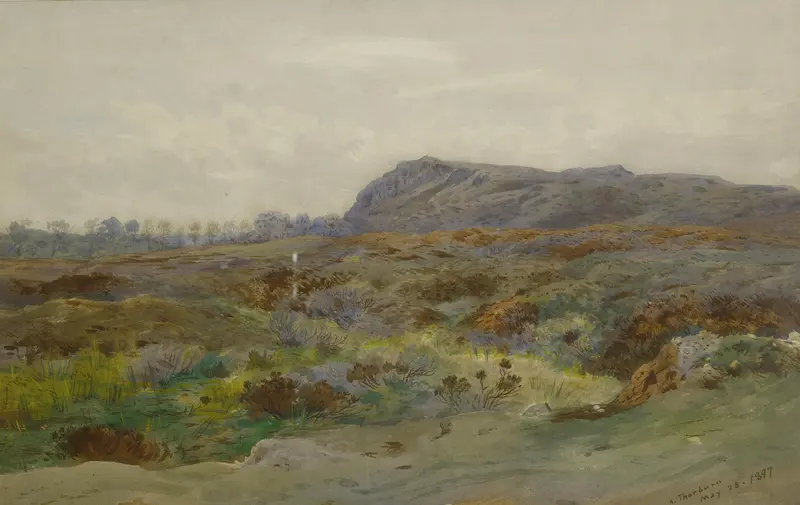
Moorland Landscape
Archibald Thorburn
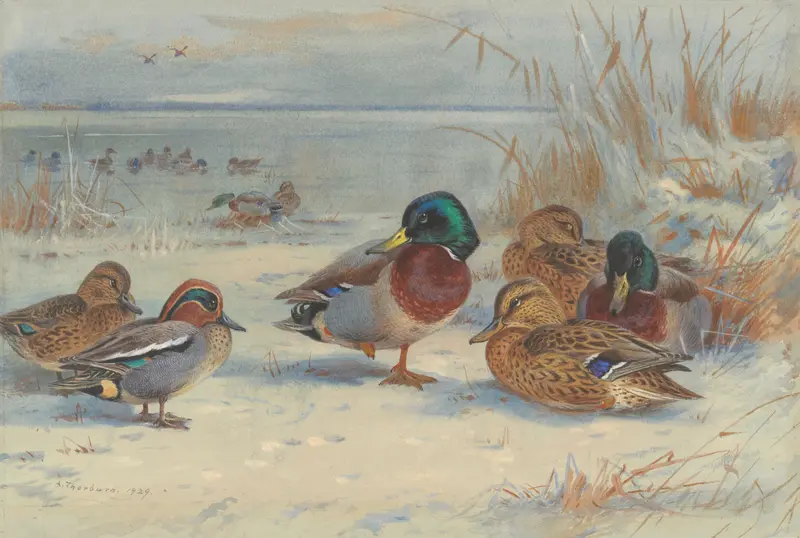
Mallard and teal in the snow
Archibald Thorburn
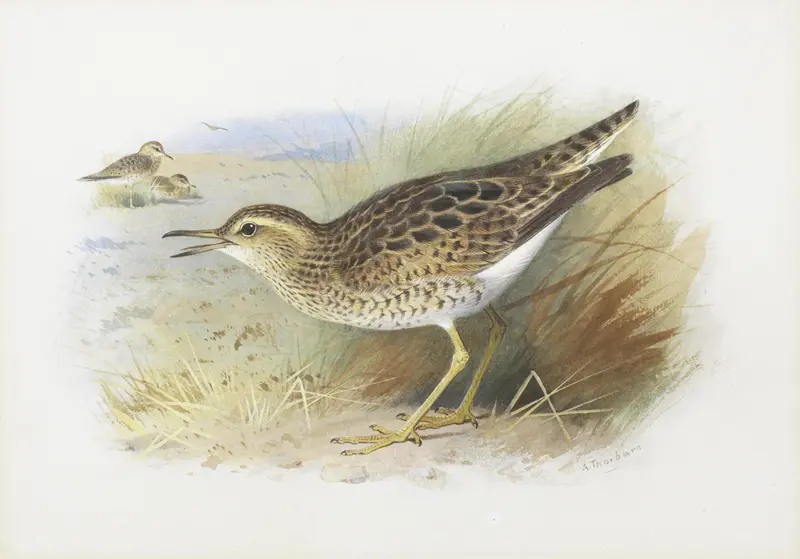
Bartram's Plover
Archibald Thorburn
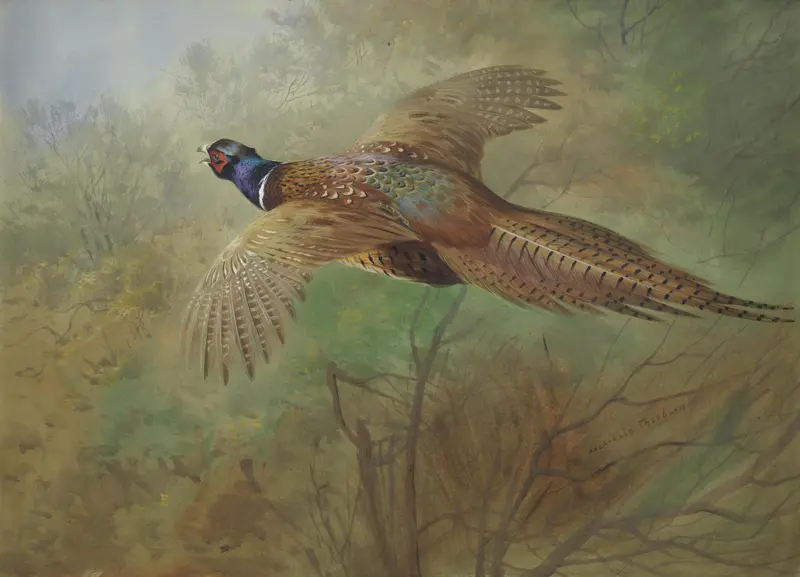
Pheasant in flight
Archibald Thorburn
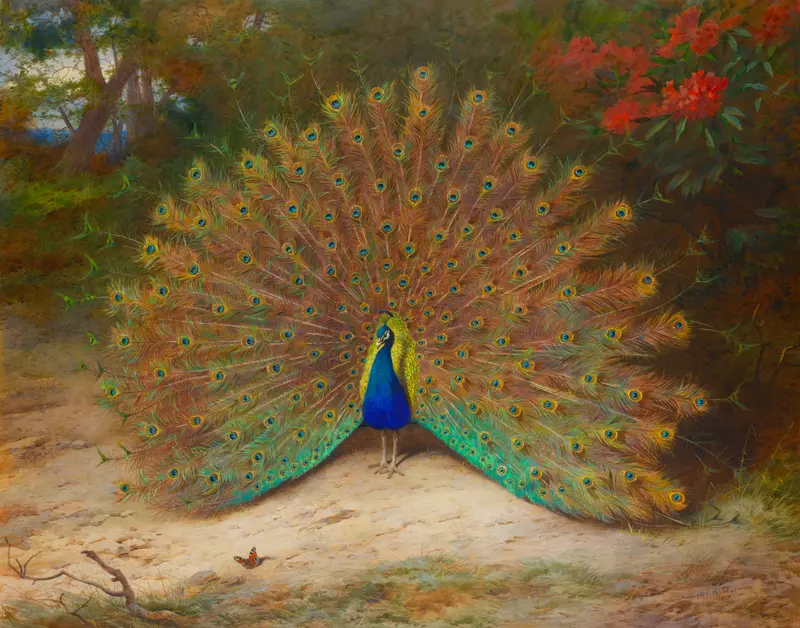
Peacock and Peacock Butterfly
Archibald Thorburn
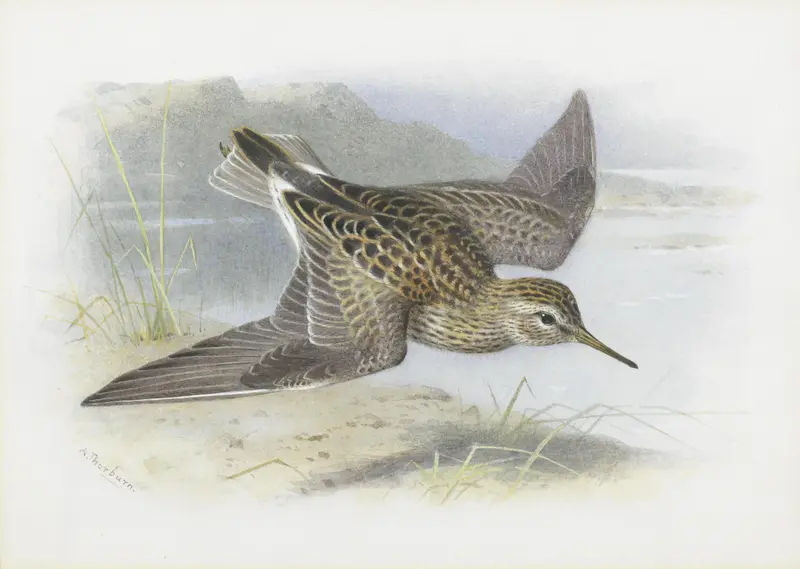
Pectoral Sandpiper
Archibald Thorburn
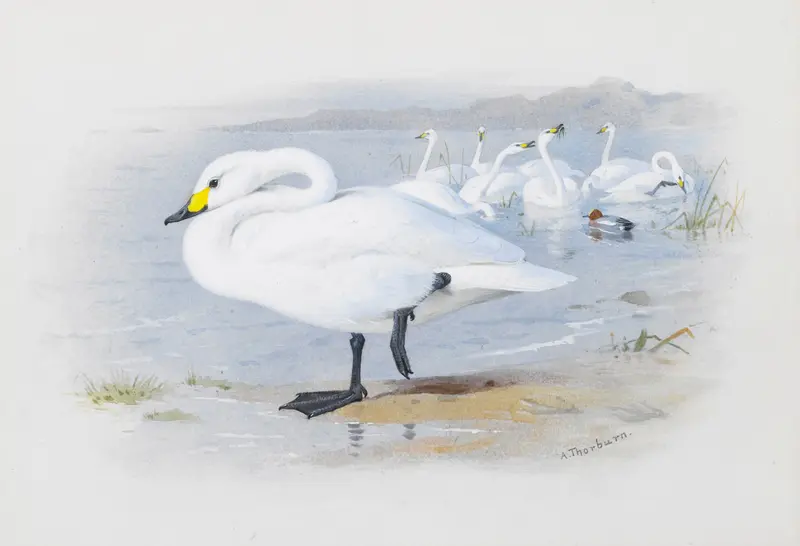
Bewick's swan.
Archibald Thorburn
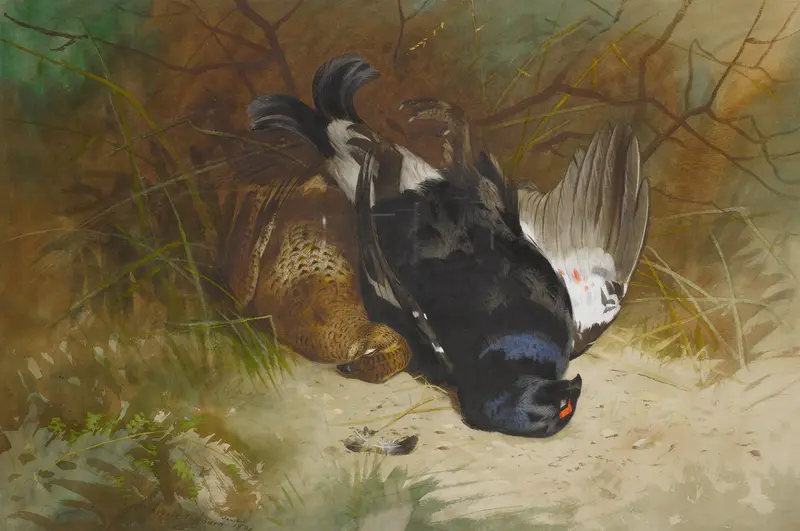
Still life of a pair of Blackgame.
Archibald Thorburn
Blackgame
Archibald Thorburn





