
On Their Way to Camp — History & Facts
In On Their Way to Camp, Eastman Johnson presents a lively scene filled with figures in motion. The painting is characterized by warm earth tones and a soft, natural light that bathes the figures. The group appears to be traveling, with some figures carrying supplies, suggesting a journey into nature.
The setting is likely a wooded area, enhancing the sense of adventure and exploration. The painting is executed in oil on canvas, a common medium for the time, allowing for rich color and texture. Johnson's brushwork is detailed yet fluid, capturing the movement of the figures effectively. The composition is balanced, with the figures arranged in a way that leads the viewer's eye through the scene.
The approximate dimensions of the work are 76 x 102 cm, making it a sizable piece that commands attention. Eastman Johnson was known for his depictions of American life in the 19th century, and this work is no exception. It reflects the Realism style, focusing on everyday subjects and experiences. An interesting fact about this painting is that it captures the spirit of outdoor leisure that was becoming popular in America during this period.
Johnson's ability to convey movement and activity in his works made him a notable figure in American art.
More Artworks by Eastman Johnson

Husking Bee, Island of Nantucket
Eastman Johnson

Corn Husking at Nantucket
Eastman Johnson
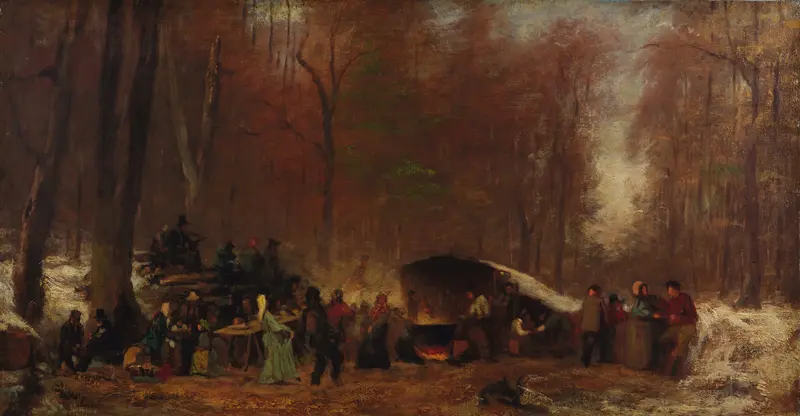
A Different Sugaring Off
Eastman Johnson
Husking Bee, Island of Nantucket
Eastman Johnson
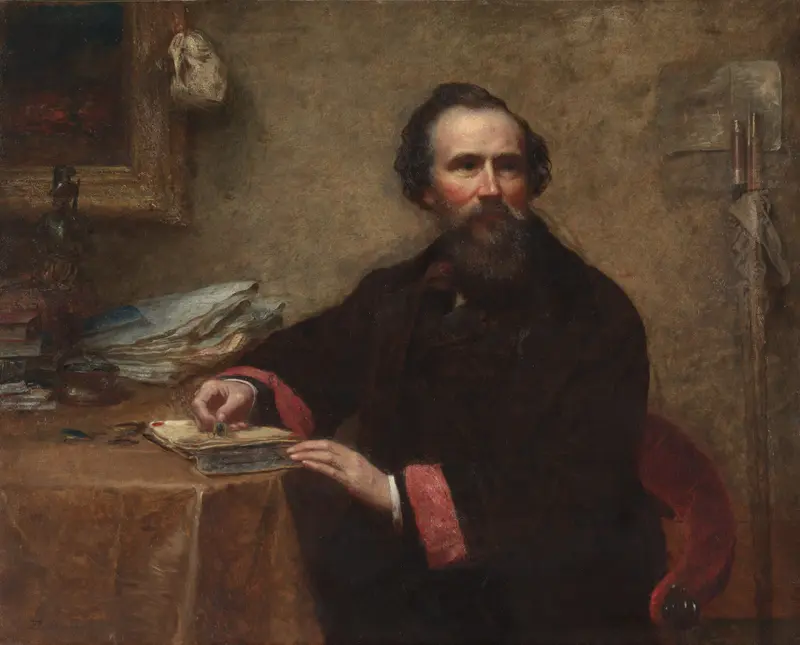
Portrait of Genio C. Scott
Eastman Johnson
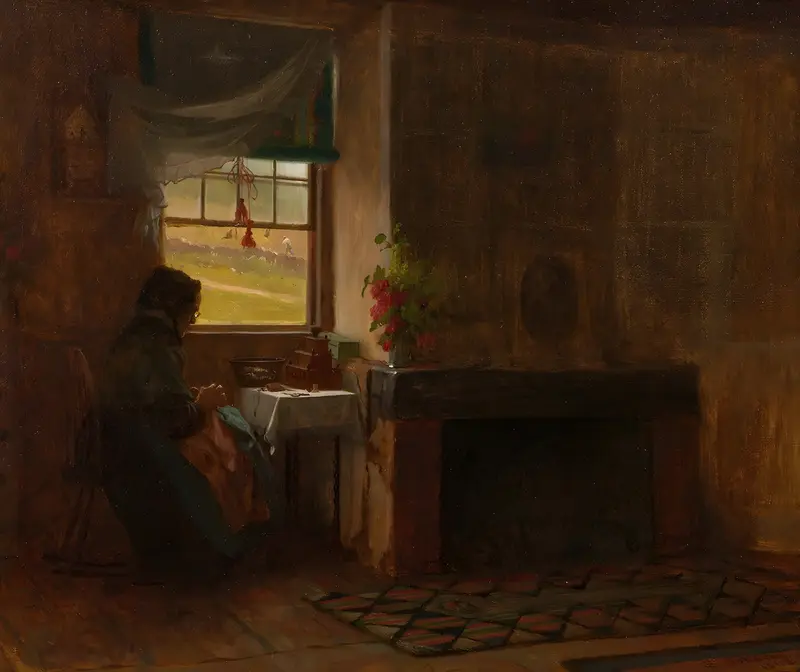
Interior of a Farmhouse in Maine
Eastman Johnson
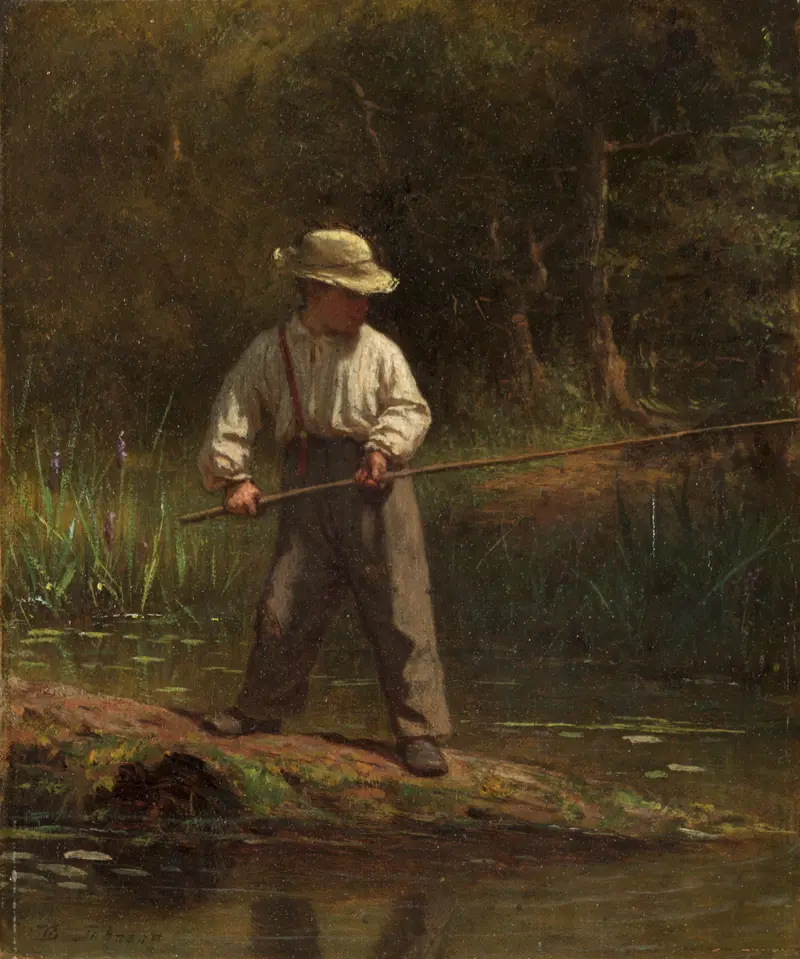
Boy Fishing
Eastman Johnson
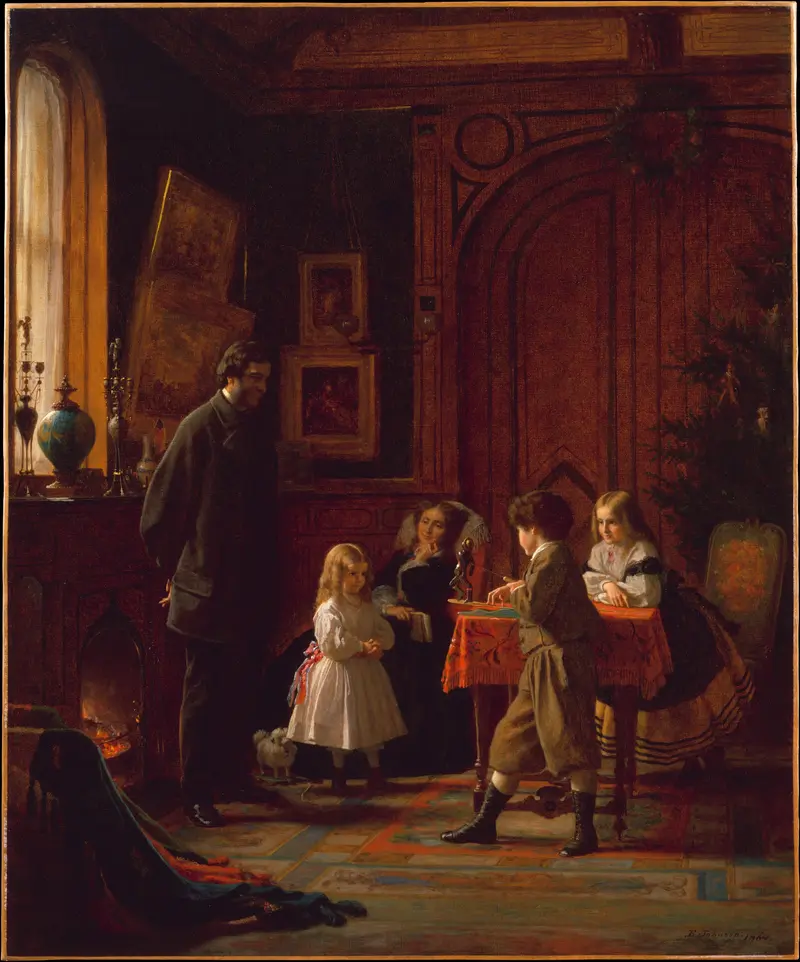
Christmas-Time, The Blodgett Family
Eastman Johnson
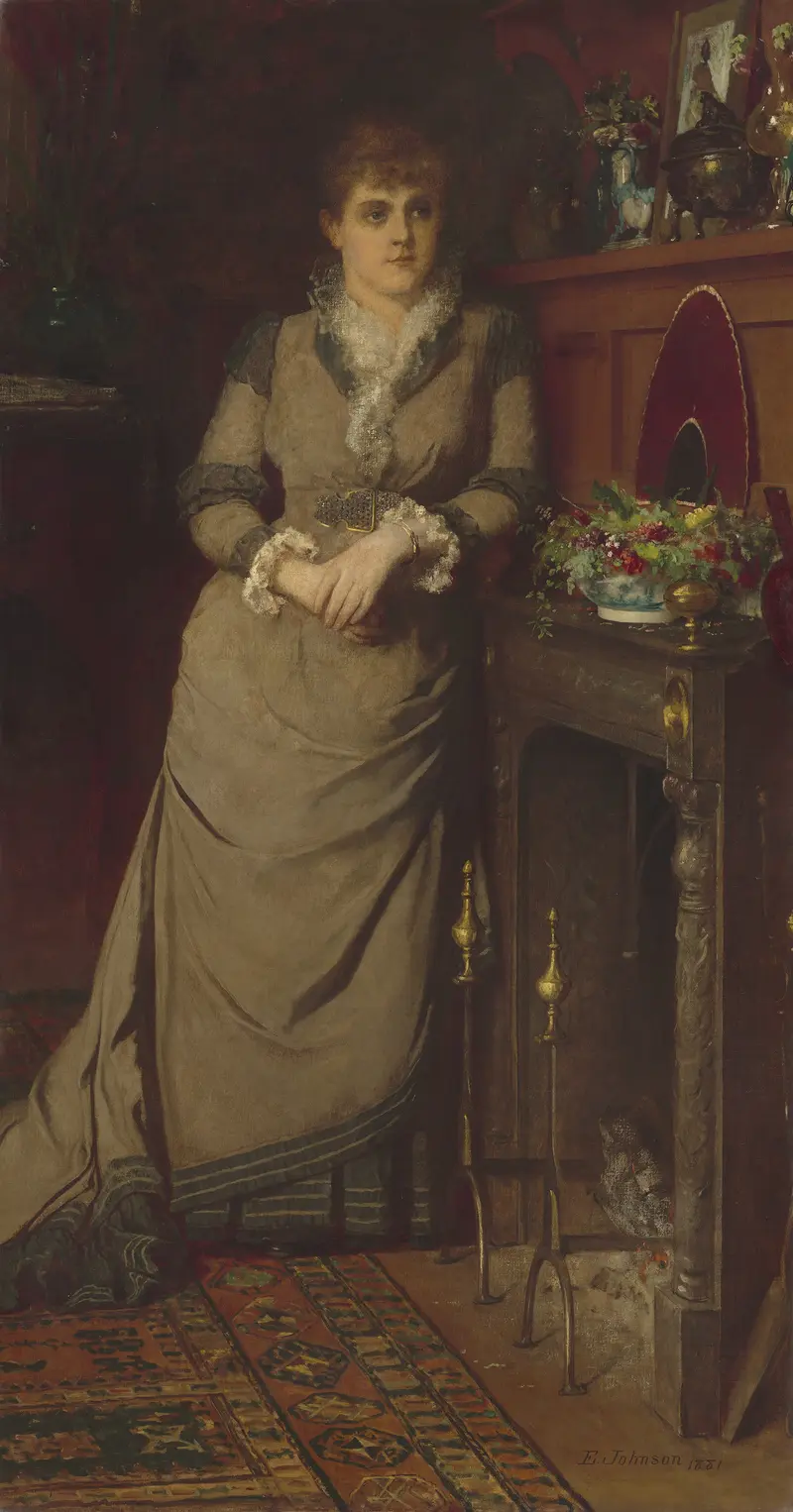
Harriet Hubbard Ayer
Eastman Johnson
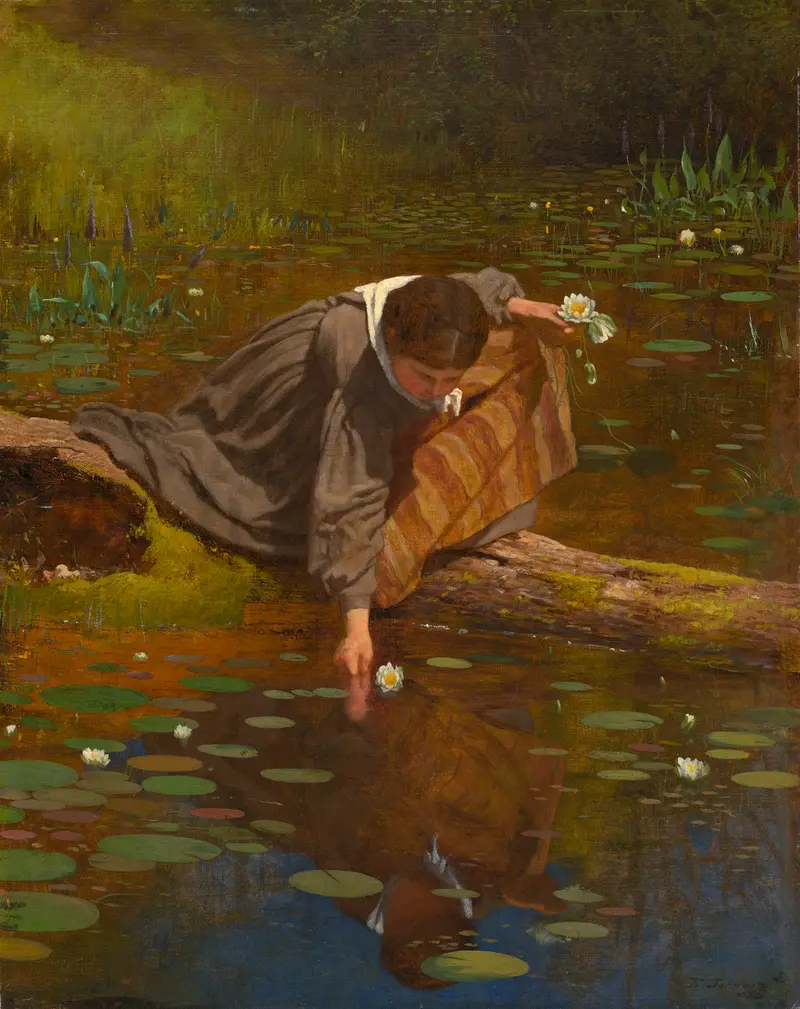
Gathering Lilies
Eastman Johnson
More Genre Scene Art

Banquet of the Officers of the St George Civic Guard
Frans Hals

Rembrandt and Saskia in the Scene of the Prodigal Son
Rembrandt van Rijn

Bal du moulin de la Galette
Pierre-Auguste Renoir

Quadrille at the Moulin Rouge
Henri de Toulouse-Lautrec

A Burial at Ornans
Gustave Courbet

When Will You Marry?
Paul Gauguin