Ornamenteel ontwerp voor een zwaardheft — History & Analysis
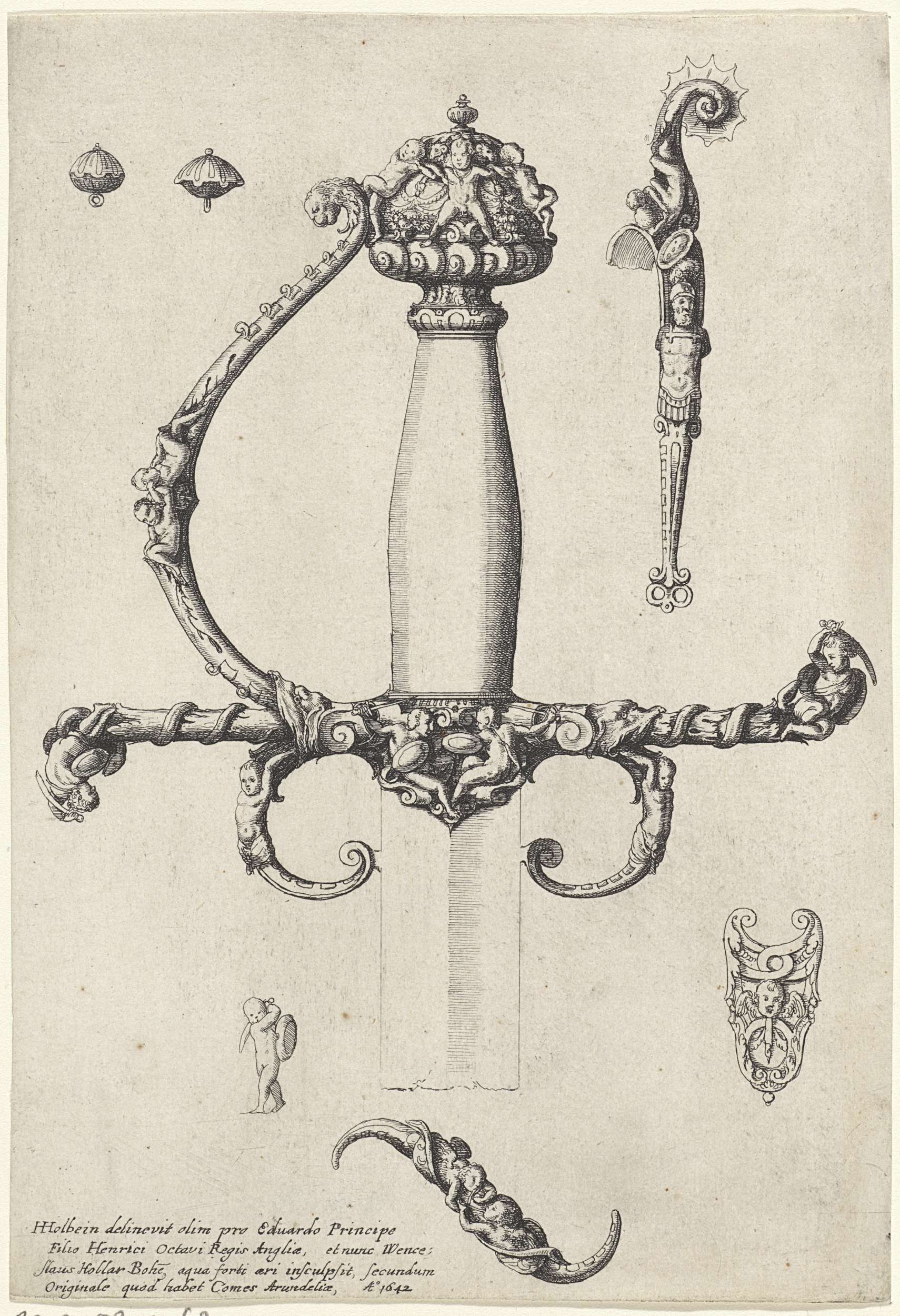
Is this a mirror — or a memory? The intricate design of the sword hilt invites us to ponder the intersection of art and identity, revealing the hidden stories embedded in every curve and flourish. Look closely at the delicate etchings that dance across the surface — the swirling motifs and ornamental details command your attention. Notice how the light catches the contours, enhancing the contrast between the shaded engravings and the bright, unmarked spaces.
The careful linework echoes a sense of precision and craftsmanship, illustrating not only the physical beauty of the sword but also the narrative richness woven into its very form. Beneath the surface, the ornamentation speaks to themes of valor and heritage. Each motif, from leaves to mythical creatures, holds cultural significance, symbolizing strength and the transcendence of time. The interplay of darkness and light within the design may suggest the dualities of life — the triumphs and tragedies that accompany every warrior's journey.
This ornate hilt serves as both a functional piece and a canvas for storytelling, bridging the gap between artistry and history. Wenceslaus Hollar created this work in 1642 while residing in London, having fled the turmoil of his native Bohemia. At that time, the art world was shifting, embracing the Baroque style's intricate details. Hollar, known for his engravings, was deeply influenced by the surrounding political and social landscapes, reflecting his experiences through his art as he captured the essence of an era marked by upheaval and transformation.