
Outdoor still life of kitchen utensils with a woman by a doorway — History & Facts
A battered copper pot lies on its side, a colander glints red against the earth, and a handful of onions and a cabbage tumble into the light—each object in this outdoor still life seems freshly used, as if the kitchen’s work has just paused for a moment. The woman, half-turned in the doorway, is caught mid-gesture, her body angled toward the shadows of the house while her hand lingers over the threshold. The play of light draws the eye from the practical chaos of the utensils up to her figure, then back again to the textures of metal, wood, and cloth.
In this quiet corner, the everyday becomes a stage: the worn barrel, the striped towel, the battered brush all speak to a life of labor, but also to a certain pride in order and readiness. The palette is earthy and muted, grounding the scene in the tangible world of the 1660s Dutch countryside. Works like this, painted by Adriaen van Ostade in the 1660s, belong to a tradition that celebrated the dignity and texture of ordinary life. In the Dutch Republic, such scenes were prized by a growing middle class who saw their own world reflected in these humble details.
Still lifes with kitchen utensils and genre scenes with peasants or townsfolk were not only decorative but also quietly moralizing—reminders of thrift, industry, and the rhythms of domestic work. This painting, now documented in the Netherlands Institute for Art History, stands as a window into that era’s values and visual pleasures. History has kept few traces of this particular canvas’s journey, but the objects and their arrangement invite us to imagine the hands that used them, and perhaps to look again at the overlooked poetry of daily routine.
More Artworks by Adriaen van Ostade

Dans in de herberg
Adriaen van Ostade
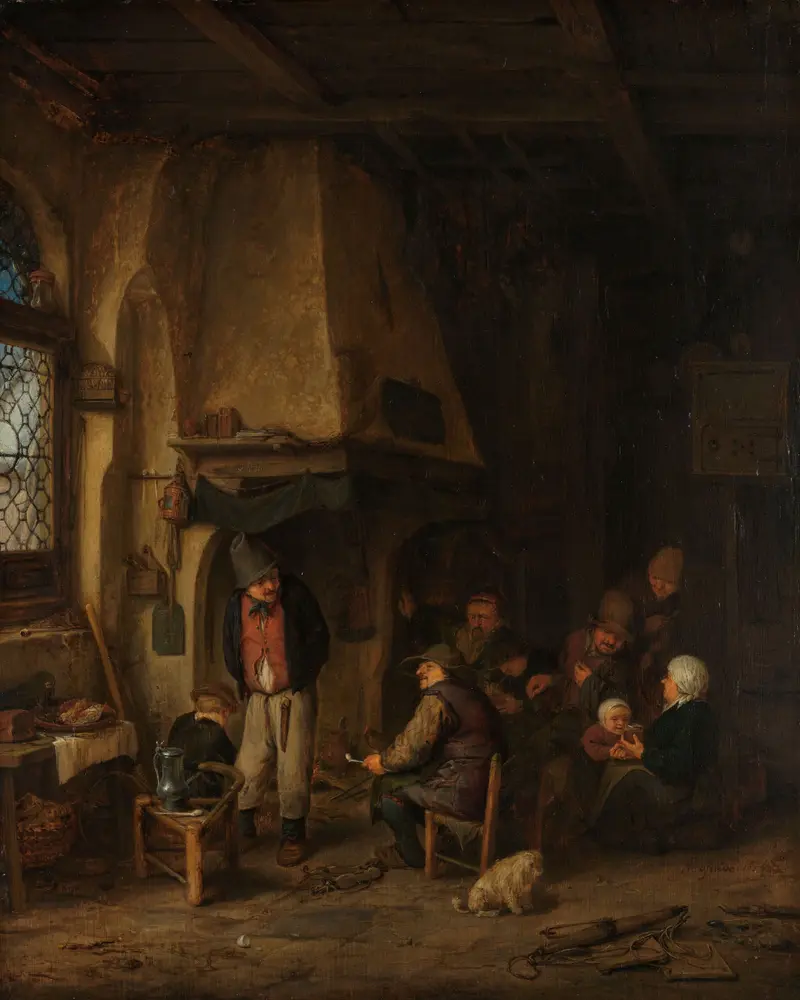
‘The Skaters’: Peasants in an Interior
Adriaen van Ostade
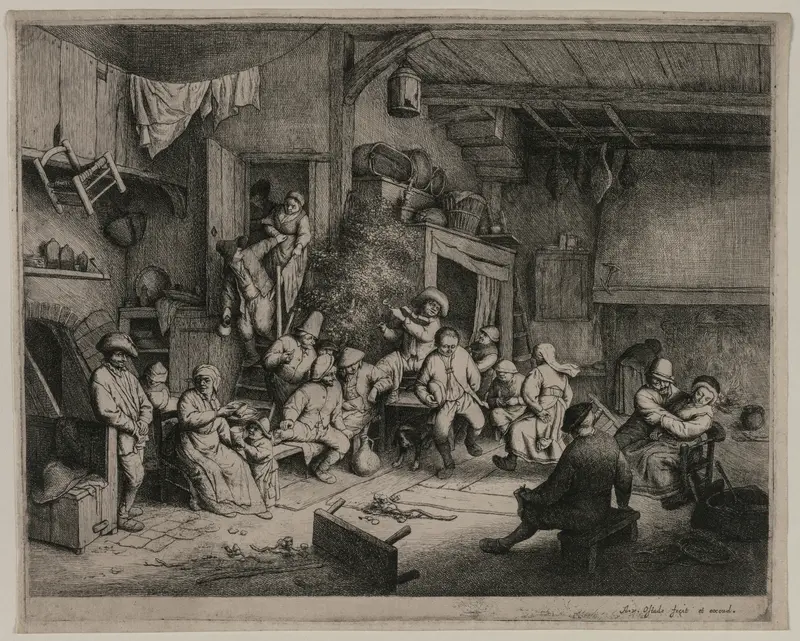
Dance at the Inn
Adriaen van Ostade
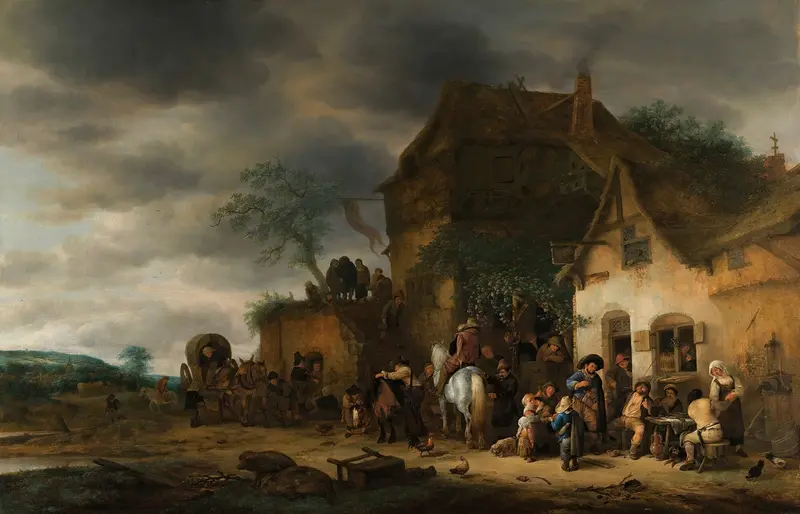
Travellers Halted At A Country Inn
Adriaen van Ostade
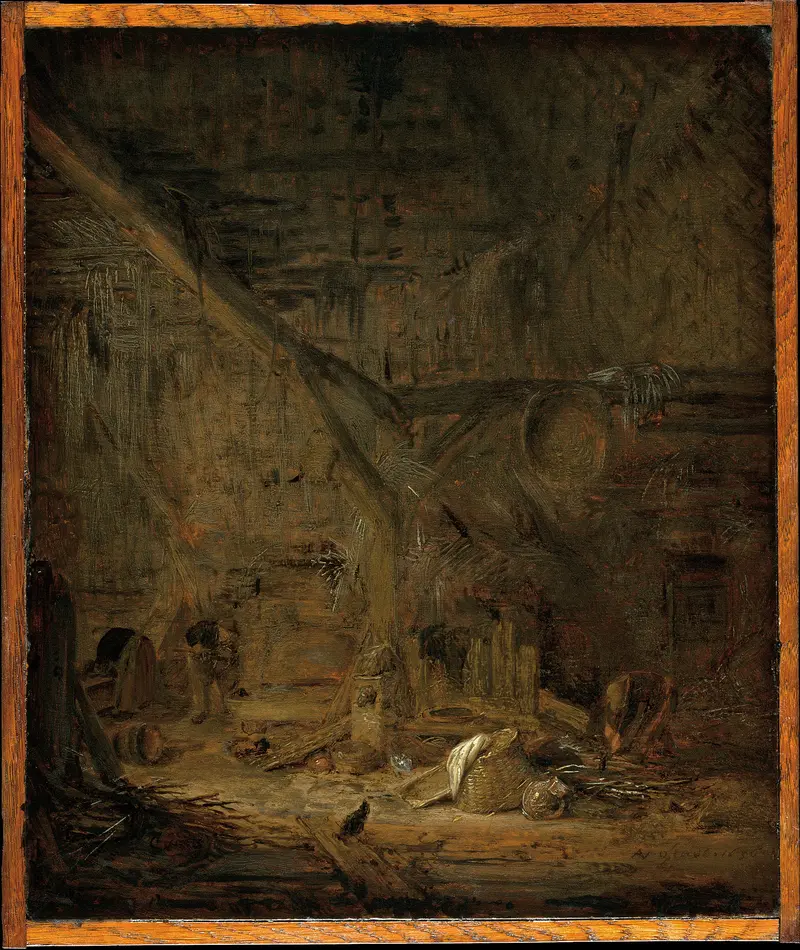
Interior of a Barn
Adriaen van Ostade
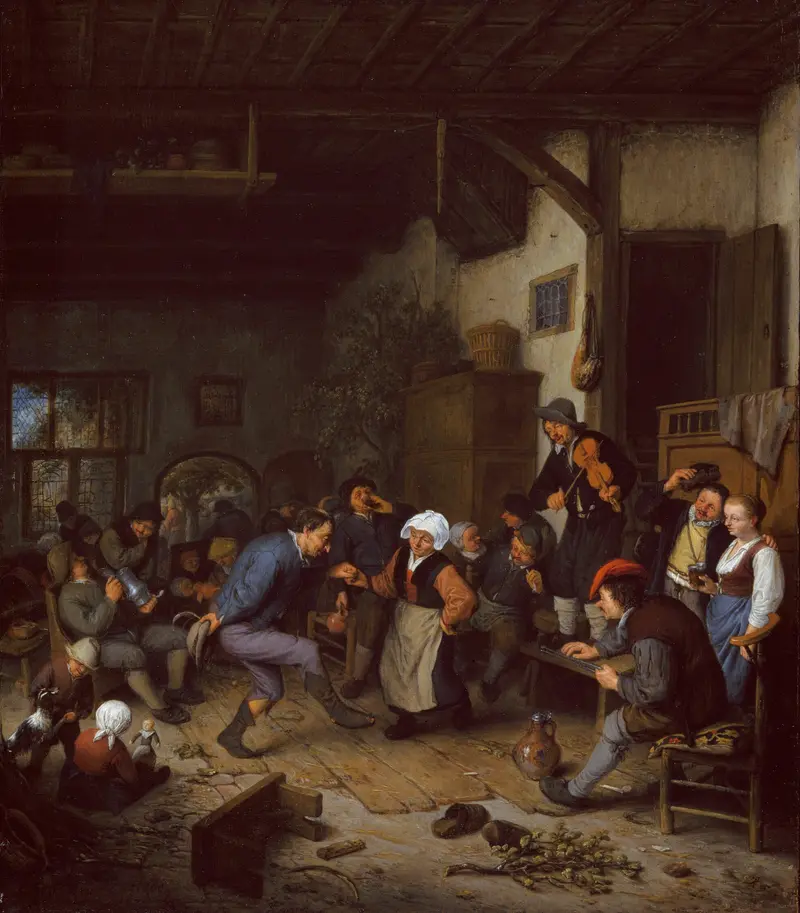
Merrymakers in an Inn
Adriaen van Ostade
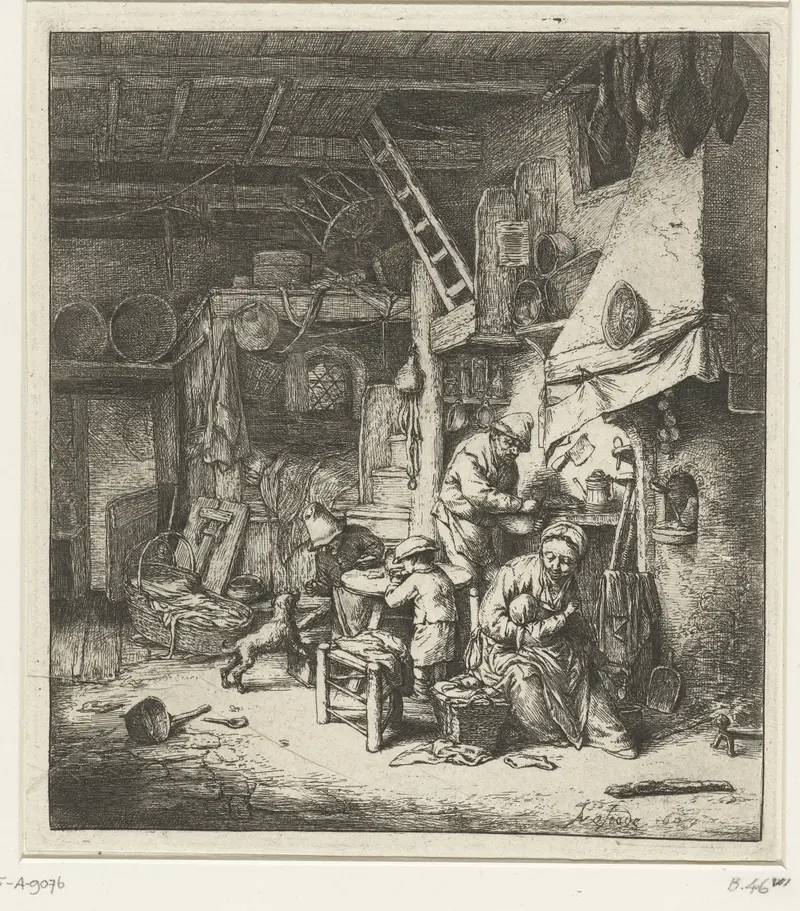
Boerengezin in interieur
Adriaen van Ostade
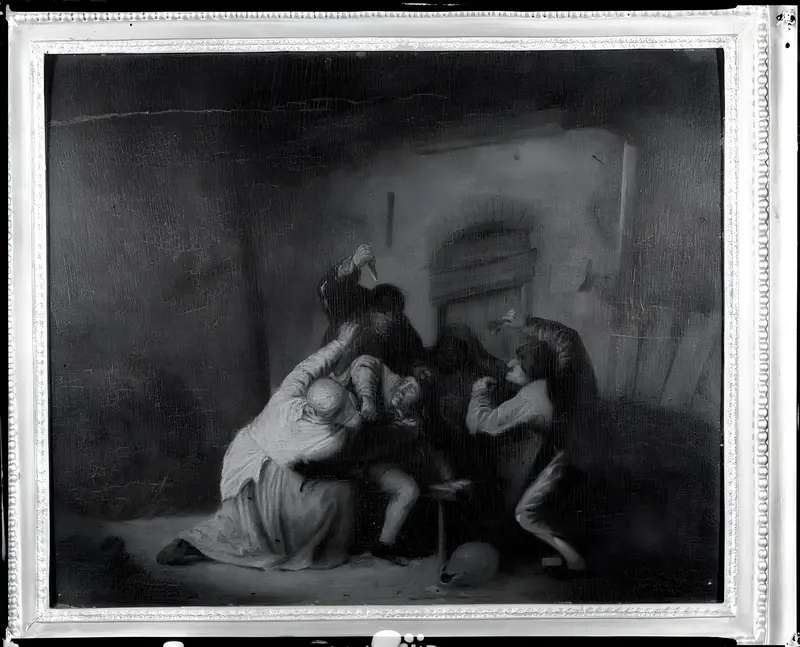
Peasants Brawling in a Tavern
Adriaen van Ostade
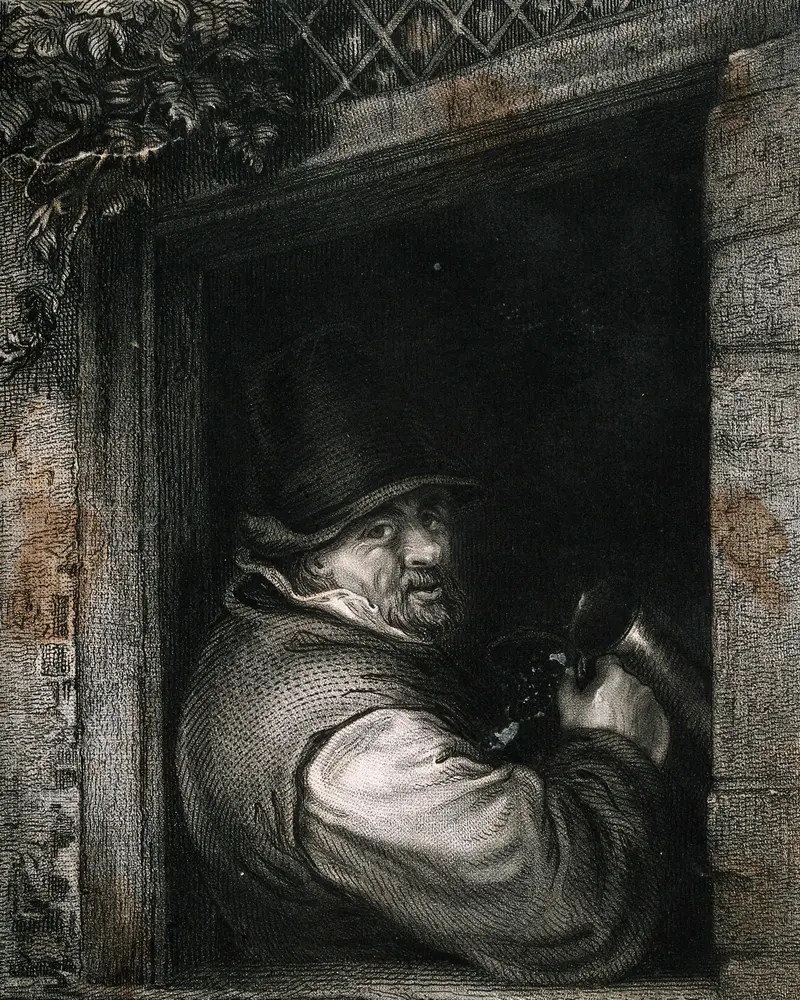
Man with a Tankard at a Window
Adriaen van Ostade
Dans in de herberg
Adriaen van Ostade
More Genre Scene Art

Banquet of the Officers of the St George Civic Guard
Frans Hals

Rembrandt and Saskia in the Scene of the Prodigal Son
Rembrandt van Rijn

Bal du moulin de la Galette
Pierre-Auguste Renoir

Quadrille at the Moulin Rouge
Henri de Toulouse-Lautrec

A Burial at Ornans
Gustave Courbet

When Will You Marry?
Paul Gauguin