
Outlet of Rotoiti — History & Facts
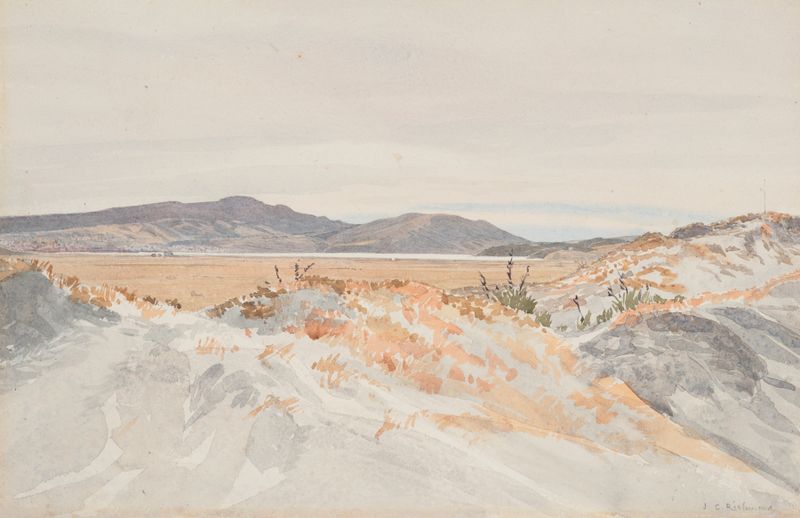
In a world that often buries its sorrows under the weight of progress, the act of capturing grief on canvas offers a unique lens through which we can confront our collective loss. Look to the foreground where the lake nestles tightly against the shadowed banks, a shimmering expanse of blue that hints at both tranquility and depth. Notice how the soft brushstrokes blend the colors of the water with the surrounding foliage, suggesting an intimate relationship between nature and emotion. The rolling hills in the background rise like solemn witnesses, their muted greens and browns echoing the somber tones woven throughout the piece. Delve deeper into the contrasts: the calm surface of the lake juxtaposed with the dark shadows that loom over it, hinting at unspoken stories beneath.
The gentle ripples capture fleeting moments, each wave a whisper of memories long gone, and the hazy sky seems to weep with muted hues that reflect a sense of mourning. Here, the artist invites the viewer to grapple with the weight of loss, revealing not merely the landscape but the melancholic echoes of what once was. In the 1860s, Richmond created this work during a period marked by personal and societal upheaval. Living in New Zealand, he encountered the raw beauty of its landscapes while navigating the artistic challenges of his time.
Emerging from the influences of English Romanticism, he sought to convey the emotional depths embedded in nature, allowing his own experiences of grief and longing to shape the very essence of his art.
More Artworks by James Crowe Richmond
Browse all →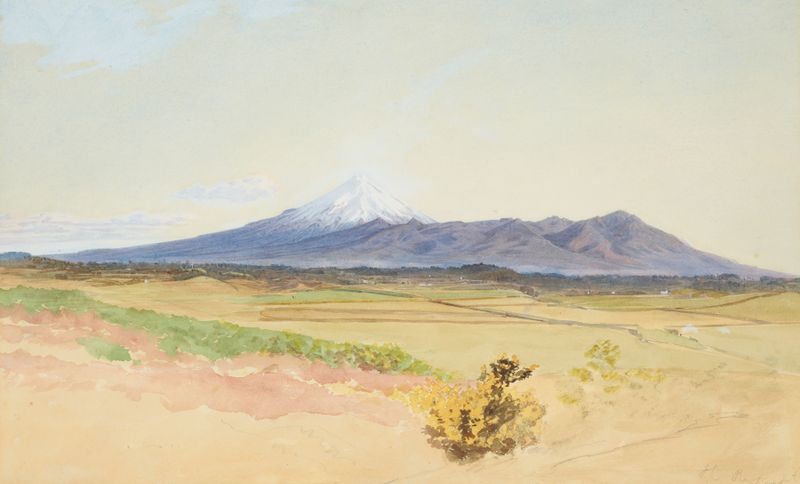
Mount Egmont and Pouakai, from New Plymouth
James Crowe Richmond
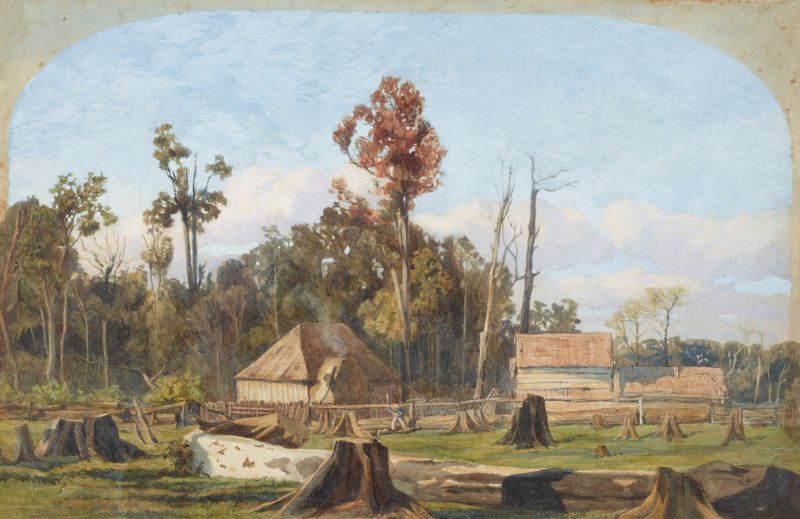
Settler’s home, Merton, near New Plymouth
James Crowe Richmond
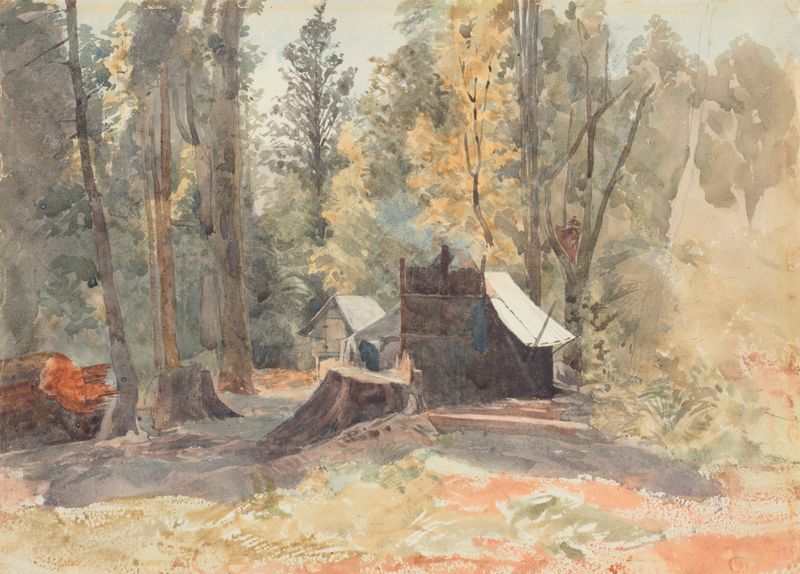
Hut of the ‘Italian party’, old diggings on Buller
James Crowe Richmond

Mosque at Tlemcen
James Crowe Richmond

Ngatapa, Te Kooti’s Pa
James Crowe Richmond

Dividing Range, Riwaka and Takaka
James Crowe Richmond
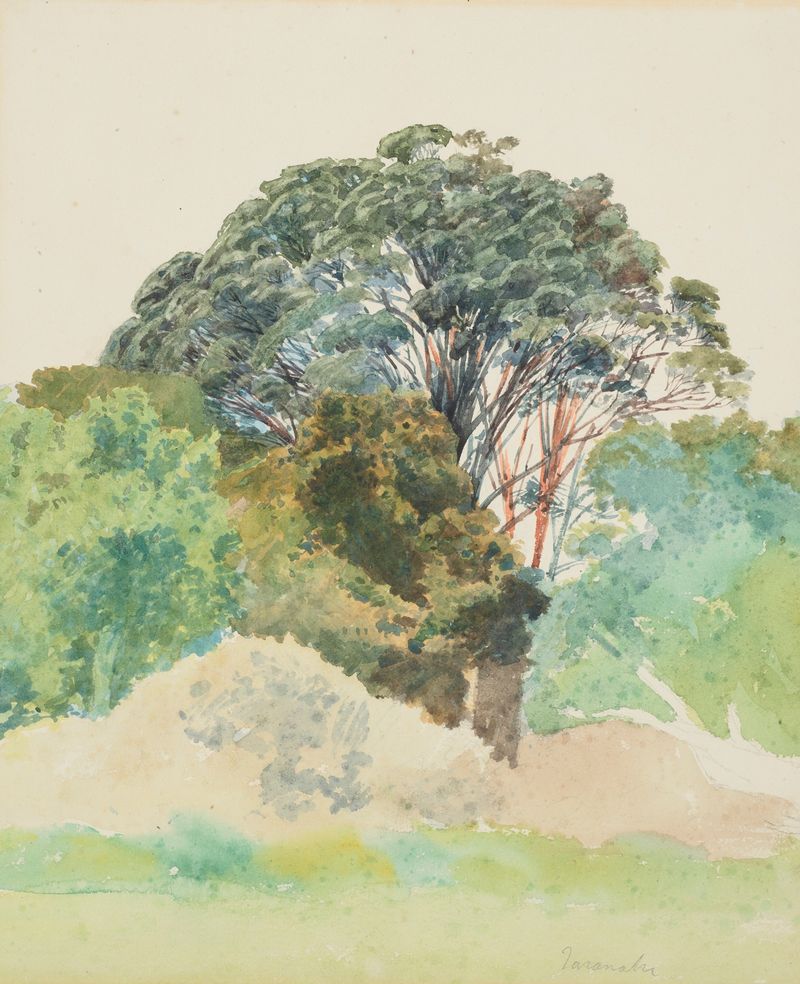
Rata, Taranaki
James Crowe Richmond

Grey River, on the beach
James Crowe Richmond
Dunedin from the Ocean Beach
James Crowe Richmond

On Collingwood Goldfields
James Crowe Richmond





