
Paimpol, port et ville — History & Facts
What if silence could speak through light? In Paimpol, port et ville, the subtle interplay between shadow and illumination invites the viewer to contemplate the essence of stillness and emptiness. Look to the left at the boats—delicate forms gliding through the water, their masts rising like fragile fingers pointing toward the sky. Notice how the light falls upon the scene, illuminating the soft hues of the harbor and the muted tones of the buildings surrounding it. Boudin masterfully employs a palette of blues and greys, creating a serene atmosphere that reflects both the tranquility and the isolation of this coastal town.
The brushwork is fluid yet deliberate, capturing the gentle undulations of the water and the atmospheric depth. The juxtaposition of the bustling harbor against the quietude of the town invites deeper contemplation. The boats, seemingly in motion, contrast with the stillness of the buildings, suggesting a fleeting life at sea against the permanence of land. This tension speaks to the void within the scene, where human presence feels both implied and absent, evoking a sense of melancholy.
Every brushstroke resonates with the idea of waiting—waiting for the next tide, for someone to return, or for time itself to stand still. Eugène Boudin painted this work in 1872 while residing in France, a time when Impressionism was gaining momentum. Influenced by his encounters with coastal life, he sought to capture the ephemeral beauty of nature. This period marked a significant shift in the art world, as artists began to embrace outdoor scenes and the play of light, reflecting both personal introspection and the changing landscapes of their environments.
More Artworks by Eugène Boudin
Browse all →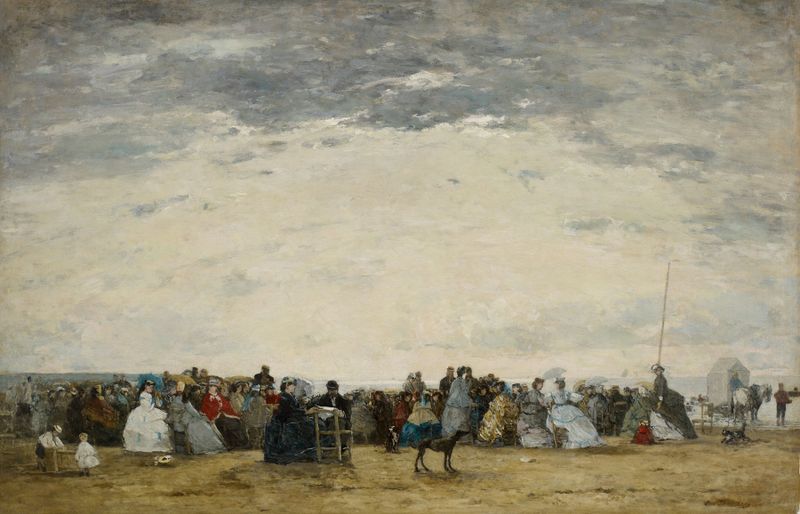
Vacationers on the Beach at Trouville
Eugène Boudin

Washerwoman near Trouville
Eugène Boudin
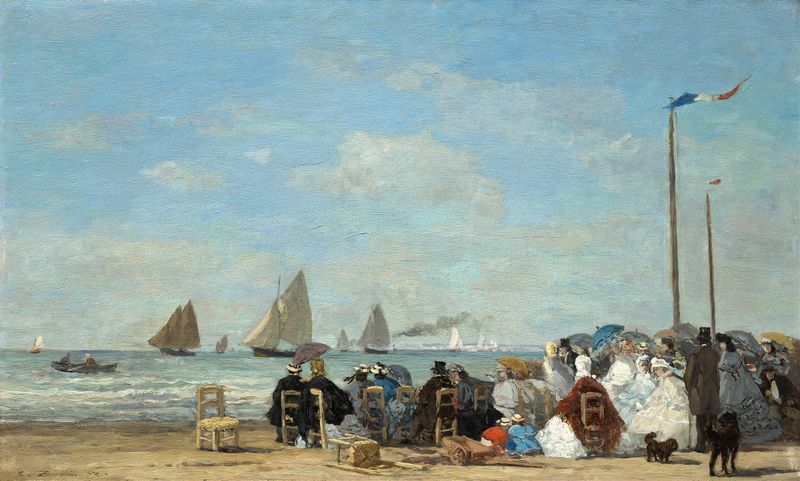
Beach Scene at Trouville
Eugène Boudin

Port aux environs d’Honfleur
Eugène Boudin

Le Faou, un coin du village
Eugène Boudin
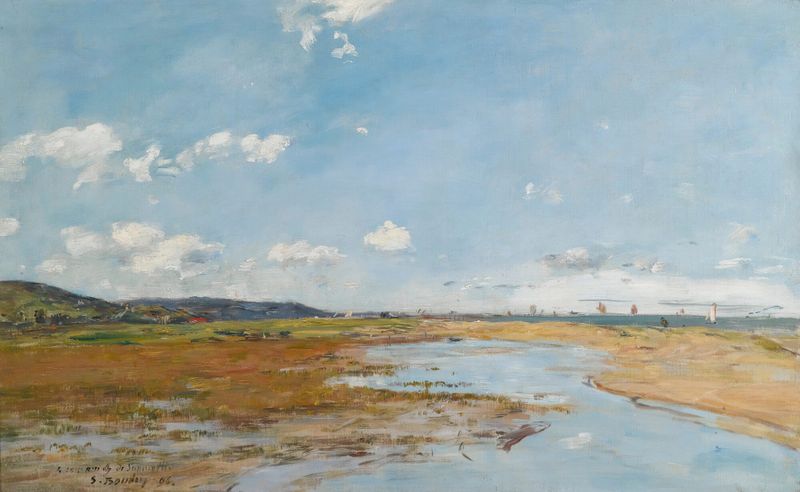
Deauville. Le Rivage
Eugène Boudin
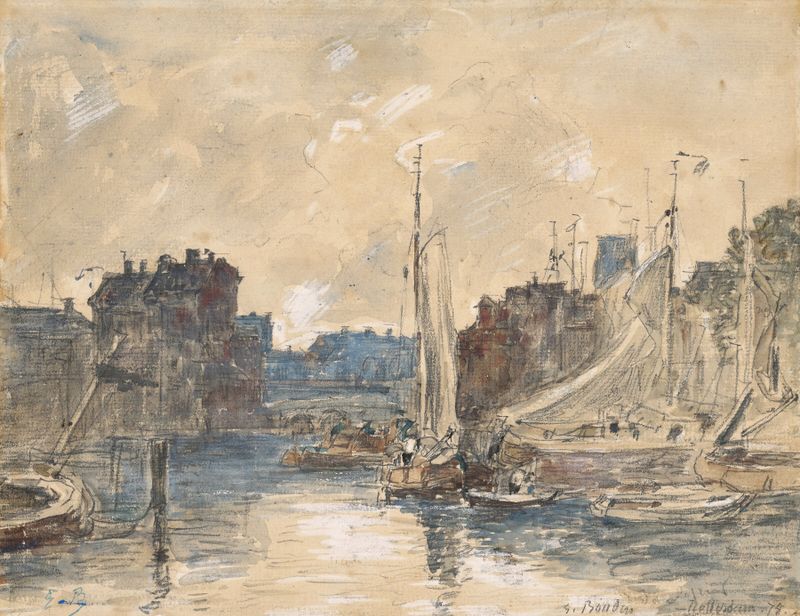
Port de Rotterdam
Eugène Boudin

View of Bordeaux, from the Quai des Chartrons
Eugène Boudin

Trouville, Scène De Plage
Eugène Boudin

Trouville, Le Port
Eugène Boudin





