
Parable from the Barren Fig Tree fig tree — History & Facts
The bare branches of a fig tree stretch across the foreground, their starkness impossible to miss against the soft, misty blue of a distant river valley. Beneath these branches, a group of figures gathers in animated conversation, their gestures urgent and expressive. One man, robed in red and pointing toward the tree, draws the viewer’s eye to the heart of the parable: a moment of judgment and reprieve.
The landscape behind them unfurls in intricate detail—castles perch on rocky outcrops, boats drift on winding waters, and villagers go about their labor, each vignette echoing the themes of fruitfulness and barrenness. The circular format draws everything inward, making the viewer a silent witness to this lesson in patience and consequence. Painted by Abel Grimmer between circa 1565 and 1625, this work belongs to a world where biblical stories were woven into the fabric of daily life, their lessons as present in the fields as in the pulpit. The artist’s Flemish contemporaries often set sacred narratives within familiar, local landscapes, inviting viewers to see themselves in the story.
Works like this were prized by prosperous burghers and guilds, who hung them in homes and meeting rooms as reminders of moral duty and divine mercy. Today, the painting resides in the Museum Plantin-Moretus, a fitting home in a city shaped by both commerce and faith; its survival is a quiet testament to the enduring power of stories told in paint. Look again at the distant figures and winding paths—each one a thread in the tapestry of meaning that still unfolds.
Sources: Wikidata Q64136690 · Image source (Wikimedia Commons)
More Artworks by Abel Grimmer

Flemish proverbs
Abel Grimmer
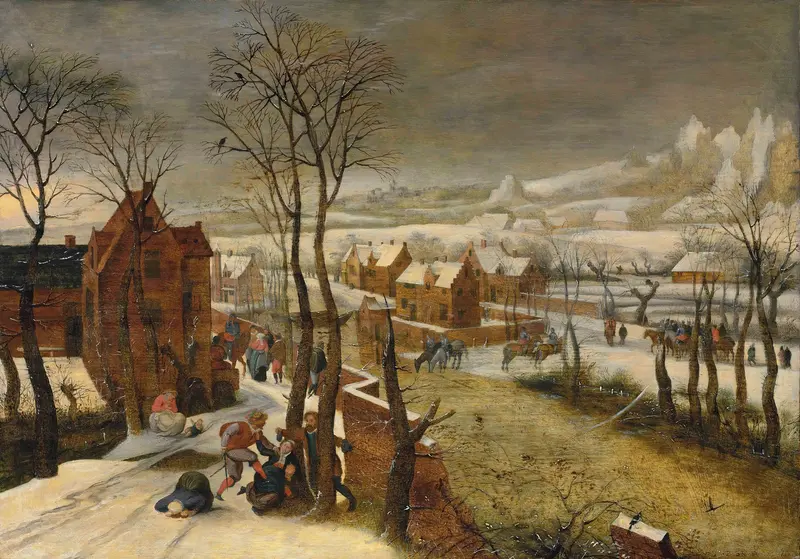
A Village Landscape In Winter With The Massacre Of The Innocents
Abel Grimmer
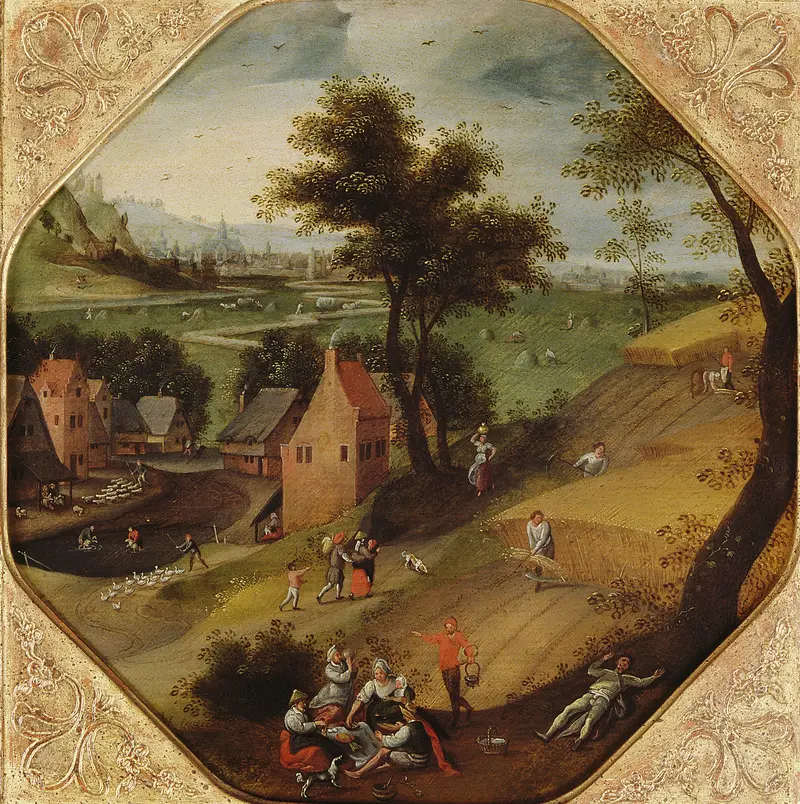
De Zomer
Abel Grimmer
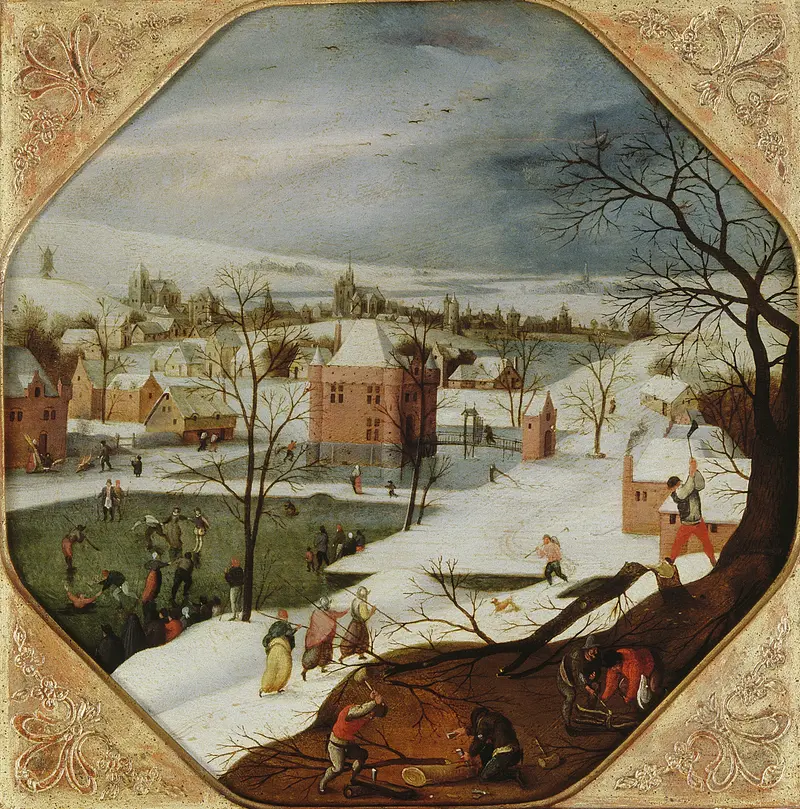
De Winter
Abel Grimmer
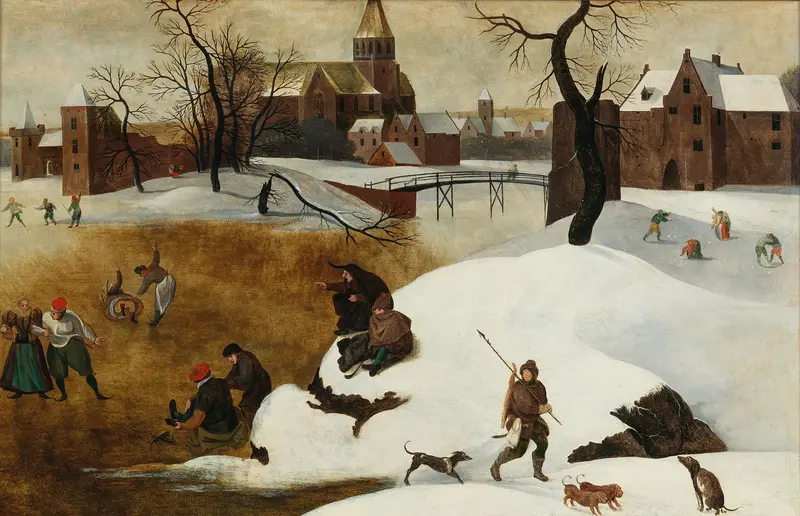
winter landscape with skaters
Abel Grimmer
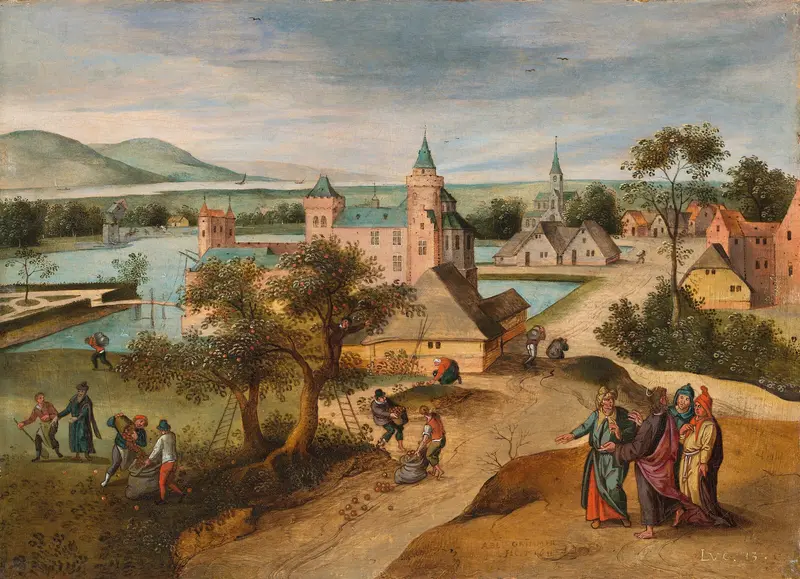
September – The Parable of the Barren Fig Tree
Abel Grimmer
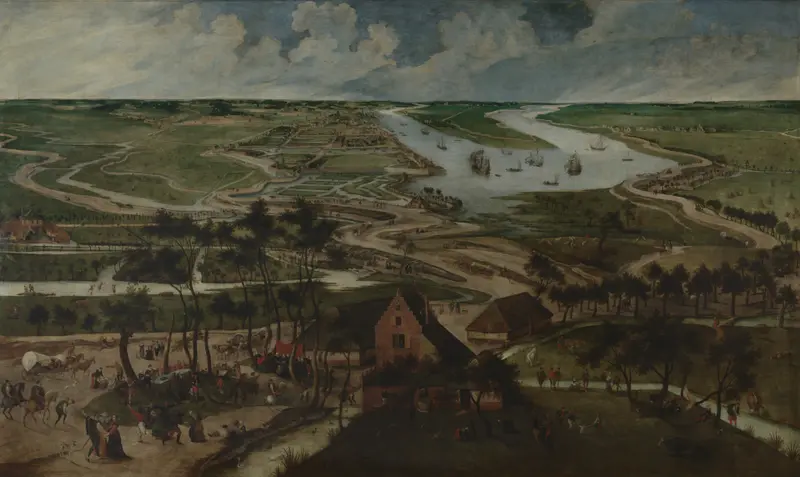
The Eel Huts in the Antwerp Polder outside the Lillo or Slijk Gate
Abel Grimmer
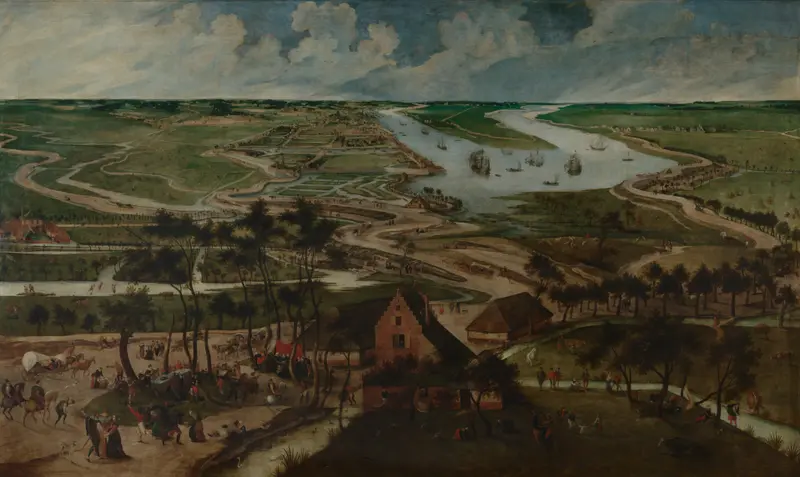
De Antwerpse polder en de Palinghuizen buiten de Slijk- of Lillopoort
Abel Grimmer
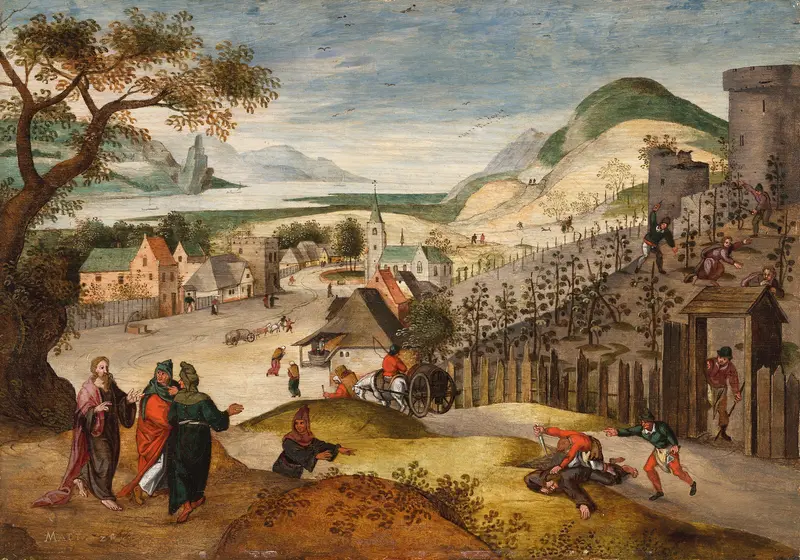
October – The Parable of the Vineyard
Abel Grimmer
The Marketplace in Bergen op Zoom
Abel Grimmer





